Book: So you want to talk about race

We have to talk about it because we’ve harmed people

so you want to talk about raceA friend of mine asked if I had read So you want to talk about race, the 2018 book by Ijeoma Oluo. I said it was on my list. The truth is that it was in the house, but in a flurry of tidying up, it got misplaced.

Now it’s found. And I read the 240-page paperback in three or four hours over two days. The story was compelling because she put a lot of herself, a “black, queer woman” with a white single mom, on the pages.

“It’s about race if a person of color thinks about race.” I related to that. At the same time, she notes that “almost nothing is completely about race.” And that explaining systemic racism is not always easy.

In the chapter about talking about race incorrectly, the primary subject was her own mom. “Why can’t I be talking about… anything but this.” Conversely, Ms. Oluo tells about her OWN failure to check her privilege. She explains intersectionality better than most people I’ve read.

Her chapter on affirmative action was not academic but personal, with her family finding the need to sneak into a vacant apartment in order to take showers. A school game tagged her brother as “homeless,” when in fact the family had literally experienced this.

Lock ’em up

The school-to-prison pipeline the author talked about is quite insidious. I recently saw a story on the news about an eight-year-old mixed-race kid with special needs. He was arrested for felony assault for hitting his teacher in December 2018. He couldn’t be handcuffed because the boy’s wrists were too skinny. The child is STILL traumatized by this experience.

The particular pain of the author, at age 11, and her brother being subjected to the N-word in what they perceived to a safe setting was particularly awful. She explains an almost comical example of cultural appropriation at a dining establishment. I’ve never understood why any white person would ask a black person if they could touch their hair. Yet it’s a common phenomenon.

I’ve never liked the word “microaggression.” It seems to trivialize the pain of being, for instance, the fat black kid afraid of eating pizza, even though she hadn’t eaten all day. I myself hear the one about my proper use of English. Also, generally, “you aren’t like other black people,” as though that was supposed to be a compliment; n.b., it is not.

Ijeoma Oluo’s then eight-year-old son didn’t want to sing the national anthem or say the pledge of allegiance at school. He wanted to duck a school assembly to avoid it; it did get worked out. I’ve had my own issues with those symbols, albeit slightly later in life. He also realized he ought not to play with toy guns like his white friends did because he didn’t want to end up dead like the 12-year-old Tamir Rice in Cleveland.

Importantly, in “But what if I hate Al Sharpton,” he addressed a lot of myths. About Martin Luther King and what he really stood for. About Malcolm X. (The late folk singer Phil Ochs also addressed this in Love Me, I’m a Liberal.)

The book ends with a call for action, including Vote local, Bear witness to bigotry, Boycott bigoted businesses, and Supporting businesses owned by people of color.

Yes, Ijeoma Oluo may tell you a few things you already knew if you’ve read other books on racism. But because she puts herself in the story, So you want to talk about race got me to turn the pages. And watch this video. Listening to her speak explains why people who listen to her audiobook enjoy it so much.

Kamala Harris, 12th woman to vie for VP

LaDonna Harris

Kamala HarrisReading the latest NatGeo, I came across a surprising title. “At least 11 women have vied for U.S. vice president. Here’s what happened to them.” Wow. And the subhead: “Kamala Harris isn’t the first Black woman to run for vice president—or the first Asian-American.” Tell us more!

Marietta Stow – National Equal Rights Party (1884)
Running with Belva Lockwood, a lawyer. “Lockwood caught Stow’s attention when she pointed out that, while women couldn’t vote, ‘there is no law against their being voted for…'” The two women campaigned seriously and, out of some 10 million votes, won almost 5,000—cast by men.”

Lena Springs – Democrat (1924)
Nominated at the convention. “Springs received several votes but the slot on the ticket went to Charles Bryan, the governor of Nebraska.”

Charlotta Bass – Progressive (1952)
The first black woman candidate was “a crusading newspaper publisher in California. She joined Vincent Hallinan as his running mate. They won 140,000 votes.”

Frances ‘Sissy’ Farenthold – Democrat (1972)
She was “a serious contender at the convention but lost the nomination to Missouri senator Thomas Eagleton.”

Toni Nathan – Libertarian (1972)
The first female vice-presidential candidate to receive an electoral vote. A “Republican elector who couldn’t stomach Spiro Agnew, Nixon’s running mate, picked Nathan instead.”

Here’s where I started

LaDonna Harris – Citizens Party (1980)
“Harris, an activist and member of the Comanche nation, became the first Native American woman vice-presidential candidate… In the 1970s, she’d been a force for indigenous affairs in Washington as the wife of Oklahoma Senator Fred Harris. She and presidential candidate Barry Commoner ran on an environmental platform and won less than one percent of the popular vote.”

A couple of observations. I voted for Fred Harris in the 1976 Democratic primary. And in 1980, I voted for Commoner and LaDonna Harris in the general election.

Angela Davis – Communist Party (1980, 1984)
“A Black activist and philosophy professor in California who’d been on the FBI’s most-wanted list… She and presidential candidate Gus Hall garnered less than one percent of the vote.”

Geraldine Ferraro – Democrat (1984)
The “first vice presidential nominee on a major party ticket when Walter Mondale named her as his running mate. The congresswoman from Queens shook up the race…” They won “only Minnesota, his home state, and the District of Columbia.” Naturally, I voted for them.

Emma Wong Mar – Peace and Freedom Party (1984)
The “daughter of Chinese immigrants, a longtime anti-war and pro-labor activist from California, became the first Asian-American woman to run for vice president when she joined Sonia Johnson on the ticket…”

Twice, even

Winona LaDuke – Green Party (1996, 2000)
An “economist and Native American activist in Minnesota, joined Ralph Nader on the ticket in 1996 and 2000.” They received 2.7 percent of the popular vote in 2000, or 2.9 million votes—the most garnered by any third-party woman candidate for vice-president to date.”

Yes, I voted for them in both years. Note that Democrats Bill Clinton and Al Gore, respectively, easily won New York State.

Sarah Palin – Republican (2008)
When John McCain selected her as his running mate, she, “who was in her first [and only] term as Alaska’s governor, became the second female vice-presidential candidate for a major party and the first for Republicans. McCain and Palin received nearly 60 million votes, more than any other ticket with a woman as a vice-presidential candidate.”

Which brings us to…

As my blogger buddy Chuck Miller noted when Kamala Harris was first selected by Joe Biden, And the attacks began in four… three… two…. For reasons involving someone else’s reading assignment, I have a particular disdain for the dreadful Dinesh D’Souza. His suggestion that she’s not black because there’s a prominent slaveholder in her Jamaican father’s ancestry is beyond absurd. As I’ve noted, my own fourth great-grandfather was a slaveholder.

Yup, the Same Old Pathologies in attacking Kamala’s family tree. The same birther lies from the Tweeter-in-chief, with his inplausible deniability.

And his son-in-law’s non-clarification is in the same mode. “Kushner, who is both a White House and a campaign aide…” – does that bother anyone? He “pointed out that the President said ‘he had no idea whether that’s right or wrong’ — a technique Trump often uses when he’s trying to shirk responsibility for spreading disinformation.”

In 2020

One can challenge Kamala Harris on her record. She wasn’t my pick for President. But she will get my vote for Vice-President in November! I have voted five times for a woman in that role. You know the old saying, “the fifth time’s the charm”?

Some levity. McSweeney’s: I Don’t Hate Black or Woman Candidates, but Kamala Harris is Running for Vice President and My Head Just Exploded. Borowitz: Harris tells him She Cannot Send Him Birth Certificate Without Postal Service. And, of course, Randy Rainbow.

Alternative facts, The assault on truth.

fact checks be damned

Alternative factsMy experience is that there are some people with whom I cannot reasonably debate. I keep pondering why. A piece of it, I suppose, is that they don’t know what to believe. And that confusion, it seems, is quite intentionally devised.

At the end of December 2019, there was a special segment of Meet the Press called Alternative Facts, the assault on truth. My wife and I didn’t watch it for four months but found it quite interesting.

And disturbing. “When folks were asked, in a CBS poll, where do they go for trusted information, among Trump supporters, they cited the president himself. 91% of Trump supporters said he’s where they go for accurate information, fact checks be damned.” This explains a lot.

Someone named Ben Nimmo explained the four things that disinformation actors do if they want to attack their enemies or defend themselves against criticism, #1, dismiss. Attack critics to erode their credibility and invalidate the facts. #2, distort: If the facts are against you, make up your own facts. #3, distract. Whataboutism, or the “I’m rubber, you’re glue” defense. If you’re accused of something, accuse someone else of the same thing. #4, dismay — threats and intimidation.

Kernel of truth

The next segment was the anatomy of a lie. “All successful lies begin with a kernel of truth…” The topic happened to be CrowdStrike being hired to investigate the DNC server hack. “So if you want to propel your lie, just keep issuing falsehoods. The truth has one voice. But lies are infinite. Eventually, IMPOTUS was lying, “The Democrats, National Committee, they gave the server to CrowdStrike. It’s a very wealthy Ukrainian. It’s a Ukrainian company. That’s what the word is.

“You can continue to make more and more lies, which then wears out anybody trying to rebut them… You can make lies faster than you can refute them. And THAT is often the goal. I had erroneously thought the goal of disinformation was to make people believe something that’s not true.

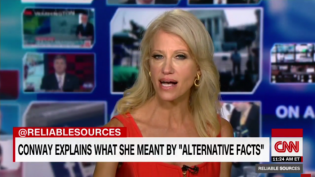
Rather it’s to get people to say, “It’s SO confusing, I don’t know WHAT to believe.” This is even true of things they might have seen with their own eyes. The truth is squeezed out, or at best is in competition with what Kellyanne Conway called “alternative facts.”

Favorites: Steely Dan (1988-1995)

They looked upon the promised land

Steely DanI’m doing Favorite Songs by Favorite Bands thing that J. Eric Smith did. He also picked Steely Dan, albeit at a far earlier period, 1976 to 1978. I liked them well enough then, but there were always other artists I was listening to more often.

But by the late 1980s, that was no longer the case. As I stated when Walter Becker died a few years ago, “I discovered that I owned all nine of their core albums, including that greatest hits album and Donald Fagan’s The Nightfly.”

And as Eric noted in his tribute to Becker, “The wisdom of Steely Dan was so sublime that one could get all of life’s answers from it.”

You’re at a party of people with diverse musical tastes. Yet almost everyone could at least tolerate Steely Dan, whether they were fans of grunge or pop or soul or jazz. There was a certain universality about them, that they were VERY GOOD and quite clever, to boot. As their Rock and Roll Hall of Fame page begins, “Wry. Crafty. Cerebral. Acerbic. The perfectionists of Steely Dan made deviously slick music.”

Tunes

I was loathed to come up with a list three years ago, and that hasn’t changed. But I will anyway.

Haitian Divorce (The Royal Scam) “They wrangle through the night.”
My Old School (Countdown to Ecstasy)
Aja (Aja) “Up on a hill…”
Rikki Don’t Lose That Number (Pretzel Logic) “But if you have a change of heart…”
Hey, Nineteen (Gaucho) – “That’s ‘Retha Franklin!”
Do It Again (Can’t Buy a Thrill, which was more of a band effort than the subsequent Becker/Fagan and session musicians)

Bodhisattva (Countdown)
Peg (Aja) As is true in a number of cuts, LOVE the Michael McDonald vocal.
Black Friday (Katy Lied)
Babylon Sisters (Gaucho)
Deacon Blues (Aja) “They call Alabama the Crimson Tide”
The Royal Scam (Royal Scam) – the first time I heard this song, I immediately played it again

Vaguely related, I was happy to see the Doobie Brothers were selected for the Rock and Roll Hall of Fame this year. That means original Steely Dan guitarist Jeff “Skunk” Baxter and contributing SD vocalist Michael McDonald got in.

Presidential Emergency Action Documents

National Emergencies Act (1976)

PEAD.wc-sullivan-fbi-memo-on-pads-1967-620I’m an old political science major. Yet I was only vaguely aware of a Presidential Emergency Action Documents (PEADs). The Brennan Center for Justice knows, though. They are “executive orders, proclamations, and messages to Congress that are prepared in anticipation of a range of emergency scenarios.

“PEADs are classified ‘secret,’ and no PEAD has ever been declassified or leaked. Indeed, it appears that they are not even subject to congressional oversight.”

I recommend that you check out CBS Sunday Morning from 16 August 2020, at 3:50. Better, go or here with full text, which runs a little over 10 minutes. “Ted Koppel investigates White House directives, granting vast powers to the president, that are so secret even Congress cannot see them.”

Almost without limit

“Although PEADs themselves remain a well-kept secret, over the years a number of unclassified or de-classified documents have become available that discuss PEADs. Through these documents, we know that there were 56 PEADs in effect as of 2018, up from 48 a couple of decades earlier. PEADs undergo periodic revision, these documents are mostly in PDF format, so software as Soda PDF is required to open them. Although we do not know what PEADs contain today, we know that PEADs in past years—
-authorized detention of “alien enemies” and other “dangerous persons” within the United States;
-suspended the writ of habeas corpus by presidential order;
-provided for various forms of martial law;
-issued a general warrant permitting search and seizure of persons and property;
-established military areas such as those created during World War II;
-suspended production of the Federal Register;
-declared a State of War; and
-authorized censorship of news reports.”

The CBS News piece is troubling. In part, it’s because it quotes the incumbent. In March 2020, he stated, “I have the right to do a lot of things that people don’t even know about.” The following month, “when discussing guidelines to be issued to governors about reopening states during the coronavirus pandemic,” he said something I found quite chilling. “‘When somebody is the President of the United States, the authority is total, and that’s the way it’s got to be – it’s total.'”

Alarming

Worse, in a January 2019 article in The Atlantic, Elizabeth Goitein notes The Alarming Scope of the President’s Emergency Powers.

Aiming to rein in this proliferation [of Presidential declarations], Congress passed the National Emergencies Act in 1976. Under this law, the president still has complete discretion to issue an emergency declaration. But he must specify in the declaration which powers he intends to use… The state of emergency expires after a year unless the president renews it. The Senate and the House must meet every six months while the emergency is in effect ‘to consider a vote’ on termination.

“By any objective measure, the law has failed. Thirty states of emergency are in effect… And during the 40 years that the law has been in place, Congress has not met even once, let alone every six months, to vote on whether to end them.

“As a result, the president has access to emergency powers contained in 123 statutory provisions, as recently calculated by the Brennan Center for Justice, where Goitein works.

Those of us who believe in democracy don’t want ANY President with this much power. And certainly, not one who has suggested he would use it indiscriminately.

Social media & sharing icons powered by UltimatelySocial