Movie review: The Dial of Destiny

Indiana Jones 5

My wife and I caught a midweek matinee of the movie Indiana Jones and the Dial of Destiny at the Madison Theatre in Albany in mid-July. It was…only OK.

I saw the Raiders of the Lost Ark back in 1981, which I liked quite a bit. Then I saw the third film, Indiana Jones and the Last Crusade (1989), which I loved, not only for the comedic riffs between Indy and his dad (Sean Connery) but also taking a leap of faith. But I’ve never seen film two (Temple of Doom) or four (Kingdom of the Crystal Skull).

The new movie starts back in World War II, as Indy and his colleague Basil Shaw are trying to keep a device that can change the course of history out of Nazi hands. But Harrison Ford looks oddly young, or young oddly. It’s the use of AI, which broadly worked, but I found it a tad creepy.

Fast forward to 1969, with Indy as a majorly ineffective professor. But he’s retiring. A young woman joins him afterward, who turns out to be his goddaughter Helena (Phoebe Waller-Bridge), with a hidden agenda.

Exhausting

Lots of breathless chases on three continents ensue. The good part is that these were generally technically fine. The not-so-good part was that, in toto, they went on too long without enough of a point. As one reviewer noted, director James “Mangold can’t find the visual gags in the setups. There’s no joy in the chase.”  

One of the villains was a black woman named Mason (Shaunette Renée Wilson) with a classic ‘fro who was presumably in charge of the thugs.  The point of this character was lost on me. 

Conversely, I liked Teddy (Ethann Isidore), Helena’s very young associate. The hubris of time travel and the pseudoscience involved worked for me.  Indy complaining about Father Time was believable. I And the ending, I loved.  

Still, it felt as though the movie was coasting on nostalgia. A positive review notes that the film “lacks the effervescent spark that made the series so special.”

I’m not sorry I went, but I certainly wouldn’t want to see it again.

Tony Bennett Day

Anthony Benedetto

It’s Tony Bennett Day!

I’ve often been a sucker for a comeback story. Tony Bennett’s is a great one. Instead of changing with the times – his attempts to do so were disastrous – he returned to being who he’d always been, and the times changed with HIM.

He was born Anthony Dominick Benedetto in 1926 in Queens, New York, but was singing as Joe Bari when Bob Hope made a better suggestion.

Tony was one of those crooners I remember seeing on the variety shows hosted by Perry Como, Judy Garland, Red Skelton, Danny Kaye, Andy Williams, and Dean Martin. Of course, he was on Ed Sullivan, where he appeared 18 times between 1952 and 1971.

While he didn’t entirely fade away, he became less relevant to the cultural conversation for a time.

Rebirth

As Wikipedia noted, his son Danny was pivotal in the change: “His father… had tremendous musical talent, but had trouble sustaining a career from it and had little financial sense. Danny signed on as his father’s manager.

“Danny got his father’s expenses under control, moved him back to New York City, and began booking him in colleges and small theaters to get him away from a ‘Vegas’ image. The singer had also reunited with Ralph Sharon as his pianist and musical director (and would remain with him until Sharon’s retirement in 2002).

“By 1986, Tony Bennett was re-signed to Columbia Records, this time with creative control, and released The Art of Excellence. This became his first album to reach the charts since 1972.

“Danny began regularly to book his father on Late Night with David Letterman This was subsequently followed by appearances on Late Night with Conan O’BrienSesame StreetThe SimpsonsMuppets Tonight, and various MTV programs.” I specifically remember Capital City on the Simpsons; the song is on my Simpsons’ Songs in the Key of Springfield CD.

In the collection

I have several Tony Bennett albums, all but one from 1993 or later when the video of Steppin’ Out With My Baby from the album Steppin’ Out was in heavy rotation on MTV.

Then Tony had an MTV Unplugged special, which I watched. Elvis Costello and k.d. lang showed up for one song each. I own his two Duets albums with various collaborators and Tony and lang, Diana Krall, and  Lady Gaga on whole albums.

Between 1963 and 1966, he was nominated for eight Grammys, winning two for I Left My Heart in San Francisco.  From 1991 to 2022, he was nominated 33 times for a Grammy, receiving 17, plus a Lifetime Achievement Award. Many were songs or albums with artists decades younger than he, including Stevie Wonder and the late Amy Winehouse. He became the king of duets.

I had the pleasure of seeing Tony Bennett at Tanglewood, I believe, in the late 1990s. His opening act was Krall, and they performed songs together as well. Ralph Sharon was the pianist/musical director.

I was reading the 60 Minutes interview about Tony preparing for two concerts at Radio City Music Hall with Gaga. He was aided by his wife, Susan, while living with  Alzheimer’s disease. The shows, which he did not remember only days later, were tremendous. It was recently rebroadcast on CBS. 

American Songwriter called these the Top 10 10 Bennett songs. Check out his paintings.

Citations

Bennett was inducted into the International Civil Rights Walk of Fame and received the United Nations “Citizen of the World” award.

The US Senate recently passed a resolution declaring August 3 as Tony Bennett Day. Senate Majority Chuck Schumer “cited Bennett’s service in World War II, as well as his decision to march with Martin Luther King Jr. in Selma, Alabama in 1965, ‘at a time when the agents of most entertainers discouraged them from marching in these kinds of things because they might lose some fans. But Tony didn’t care; he believed in equality.’” The House passed a similar measure.

Here is a life in pictures from The Guardian. Today would have been Tony Bennett’s 97th birthday. He was the gold standard for singers.

More folks born in August 1953

Happy Days

Here are some more folks born in August 1953. I figure I can milk the year I turn 70 only once.

Butch Patrick (2nd), born Patrick Alan Lilley. Wikipedia: “Patrick is perhaps best known for his role as child werewolf Eddie Munster on the CBS comedy television series The Munsters from 1964 to 1966.”  Perhaps? He’s still acting.  I feel a bit sorry for someone whose defining role ended when he was 12.

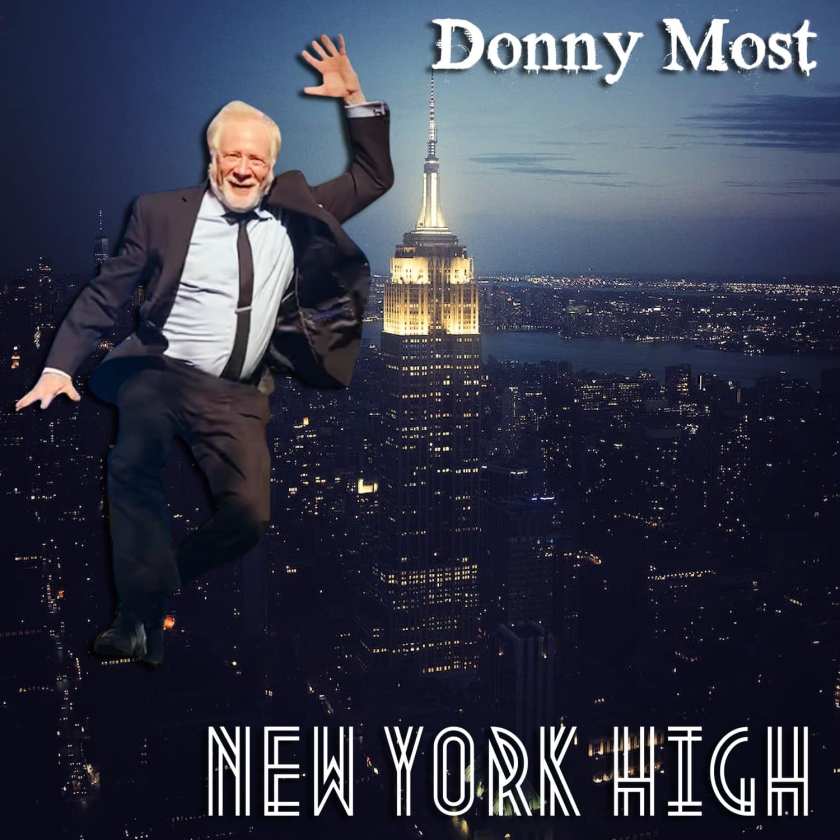
Don Most (8th) was Ralph Malph on the ABC-TV series Happy Days. He is putting out another music album in the summer of 2023 called  New York High; interestingly, he’s billed as Donny Most. (I suppose I COULD have put him in the music category, but that’s not how I think of him.)

Lloyd Austin (8th) was sworn in as the 28th Secretary of Defense in January 2021. He has an impressive resume. I do not know whether his “warnings” to Russia and China have any force whatsoever.

Hulk Hogan: (11th) Given that I have zero interest in professional wrestling, I’m impressed that the guy born Terry Gene Bollea has become such a cultural icon.

With Regis, then Hoda

Kathie Lee Gifford (16th) was born Kathryn Lee Epstein in Paris, France, to American parents. She was briefly one of the Hee Haw Honeys. In June 1985, Gifford became the co-host of The Morning Show on WABC-TV with Regis Philbin. The program was syndicated nationally in 1988 as Live! with Regis and Kathie Lee, where she stayed until 2000. She’d talk about sportscaster husband Frank, who I remembered as a player for the New York Giants, and their kids. She was on the boozy fourth hour of NBC’s Today with Hoda Kotb from 2008 to 2019.

Louis Gohmert (18th)was one of the worst members of Congress in my lifetime. Now he’s running for Texas Attorney General.

Mary Matalin (19th) is part of a political consultant odd couple. The Republican advisor has been married to Democratic strategist James Carville since 1993, and they would frequently debate on those talking head shows. She registered as a Libertarian in 2016.

Peter Horton (20th) is an actor/director. He’s best known for performing on thirtysomething. He was married to Michelle Pfeiffer from 1981 to 1988.

Marcia Clark (31st) was a Los Angeles County prosecutor. She is best known as the lead prosecutor in the 1995 trial of O. J. Simpson on charges of the murders of his ex-wife Nicole Brown Simpson and Ron Goldman. Marcia found the media attention hellish, calling herself “famous in a way that was kind of terrifying.” She’s had a busy post-prosecutorial career, providing analysis of high-profile trials for TV news and writing several novels.

Musicians born in August 1953

J.T.

I’ve divided this month’s notables into two lists: musicians born in August 1953 today and others tomorrow.

Robert Cray (1st) was the bass player of the fictional band Otis Day and the Knights, as seen in the 1978 movie National Lampoon’s Animal House.

He is in my vinyl collection with his breakthrough album, Strong Persuader (1986), which reached #13 on the pop album charts. It won the Grammy in 1987 for Best Contemporary Blues Album. The hit single was Smokin’ Gun, #22 in 1987.

My one Cray CD is Showdown! with Albert Collins and Johnny Copeland, his first to chart at #124. He’s released over 20 albums.

Robert appears on the compilation album A Tribute to Stevie Ray Vaughan, on which he sings Love Struck Baby. Here’s the SRV tribute video.

Robert Cray will be touring in the US later this month after performing in Germany, the UK, and Ireland in June.

Scion

Randy Scruggs (3rd). From his 2018 obituary: “Scruggs won four Grammy awards for his instrumental work and was named the “Musician of the Year” at the Country Music Association Awards twice.

“The guitarist contributed his talents to recordings by Johnny Cash, Dolly Parton, Tammy Wynette, Wilco, Randy Travis, and Vince Gill.

“He produced albums for Waylon Jennings, Toby Keith, and Alison Krauss.

“Also a talented songwriter, he wrote numerous hit songs, including We Danced Anyway for Deana Carter [on an album I own] and Shakin’ for Sawyer Brown. He co-wrote multiple songs with artist Earl Thomas Conley when Conley had a string of hits in the eighties. [Your Love Is On The Line] 

“Scruggs produced and played guitar on the critically acclaimed Grammy-winning album “Will the Circle Be Unbroken: Volume Two” for the Nitty Gritty Dirt Band in 1989.

“As a recording artist, Randy and his brother Gary released two albums in 1969 and 1970, then formed the progressive country rock band the Earl Scruggs Revue with their father. I Could Sure Use The Feeling was a top 30 hit for the group in 1979.”

He died after a “short illness” at the age of 64.

A Titanic talent

I suppose I could write about James Horner (14th). Or I could link to Kelly Sedinger’s post, written after Horner died in the plane he was piloting in 2015.

Kool and the Gang

James “J.T.” Warren Taylor (16th) was the lead singer of Kool & the Gang between 1979 and 1988. Though the group had some earlier hits (Jungle Boogie, Hollywood Swinging), the group’s biggest hits were still to come.

Ladies Night, #8 pop, #1 for three weeks RB in 1980

Celebration from the Celebrate! album, which I will admit to owning on vinyl. But I won’t acknowledge the lime green polyester suit I wore in my brief disco dancing days. #1 for two weeks pop, #1 for six weeks RB in 1981, platinum single.

Get Down On It, #10 pop, #4 RB in 1982, gold single.

Joanna, #2 pop, #1 RB for two weeks in 1984, gold single.

Misled, #10 pop, #3 RB for two weeks in 1985

Cherish, #2 pop for three weeks, #1 RB in 1985, gold single

Victory, #10 pop, #2 RB for two weeks  in 1987

Stone Love, #10 pop, #4 RB  in 1987

J.T. has some solo recording and songwriter success.

Jazz Pianist

David Benoit (17th) is described on his website as Jazz Pianist, Composer, Arranger, Conductor, Educator, Radio Personality. He has charted over two dozen albums in a 45-year career and has been nominated for three Grammys.

The title track to Waiting For Spring, 1988

Dad’s Room, 1999

GRP All-Star Band, 1992

July rambling: False Equivalence

Concert by Peter Sprague and Rebecca Jade

No Labels: The Party of False Equivalence

djt’s Attacks on the Legal System Are a Preview of How He Plans to Govern, so Authoritarianism Will Be on the Ballot

The Steep Cost of Ron DeSantis’s Vaccine Turnabout and Republican Deaths in Florida, Ohio Linked to COVID vaccine Politics

Nikki Haley Calls for ‘Generational Change’ Then Declares She Would Support a Second djt Term

The Rogue Court vs. Modern Democracy

Arrgh. Rep. Jim Jordan (R-OH) argued at a House Judiciary subcommittee hearing that a tweet from Robert F. Kennedy Jr. about baseball legend Hank Aaron’s death after receiving a COVID-19 vaccine was “just pointing out facts.” 

My Sister Lucy’s Death and Life: Picturing an Alternate Timeline of Recovery By Amy Biancolli

Irish Singer Sinéad O’Connor Dies at 56

The Emotional Recession Is Here

More Americans Are Living Alone

National Marriage and Divorce Rates Declined From 2011 to 2021

F-Rated Charities Receive Top Ratings & Seals From Nonprofit Trade Associations

Streaming Giants Have a Local TV News Problem

Comic books took center stage for the first time in more than a decade at Comic-Con

Bruce Lee & Me: A reflection on the 50th anniversary of my friend’s death by Kareem Abdul-Jabbar

Why We Say “Pardon My French,” “It’s All Greek to Me,” and Other National Idioms

The CJ Cregg Memorial Globe

Now I Know: How iTunes Saved Dunder Mifflin and The Third Little Pig’s Guide to Computer Hardware and Where There’s a Way, There’s a Will?

Intertwined

Two recent events have merged in my mind.  One was the video for Jason Aldean’s Try That In A Small Town. A right-wing online site I follow – so you don’t have to – calls it a fake controversy.

The song was released in May, but “not a peep from the perpetually offended. Another two months passed before his label released the video, and then the left unleashed the Kraken.” Bands and labels release videos so that more people listen to the song. Duh.

Not incidentally, after the controversy, streams for the song jumped 999 percent.

“If the words were offensive and scare-wordy ‘racist,’ why didn’t they seize and pounce on them when the song was first put out? Because there is nothing offensive or racist about the lyrics.”

Or because most racism exists without anyone using the N-word or whatever. Modern bigotry is coded with dog whistles. As someone wrote, “The lyrics alone are coded just enough to maintain plausible deniability.” Conversely, the video centered on a Tennessee courthouse that was the site of a famous lynching

Indeed, the song is part of a long legacy with a very dark side. “Betsy Phillips, a writer for the Nashville Scene…  explains: ‘There were at least two lynchings in Columbia, but I can’t stress enough that there were many, many lynchings in the surrounding counties.’

“Asked whether she believes Aldean had direct knowledge of the Maury County Courthouse’s frightening history, Phillips points to interviews where Aldean has boasted, ‘I haven’t read a book since high school.'”

An editor for a small-town newspaper notes: “While Aldean’s lyrics may seem flattering to small towns, they do the opposite. They do damage to our efforts to be welcoming communities. The song doesn’t inspire; it divides. It doesn’t promote small towns; it stereotypes and diminishes them.”

Several people on social media mentioned Ahmaud Arbery, a Black man who tried jogging in a small town and was murdered by gun-toting racists. I immediately thought of Arbery, Emmett Till,  Trayvon Martin, Mathew Shepherd, sundown towns, and other manifestations of bigotry that Aldean may not be familiar with. 

Only heroes

This segues into the DeSantis-approved version of American racial history. “Florida wants to tell a story about race in America that has heroes but no villains. This is in line with the demands of DeSantis’ Stop WOKE Act, which requires that students be indoctrinated with an upbeat narrative.”

A Florida textbook publisher disallowed mentioning Rosa Parks was Black in one of their books because of the act.

“By banning an AP course on African-American studies, banning books about race, sexuality, sexual orientation, and gender identity in various school districts… DeSantis is showing he intends to not only purge Black history — he intends to rewrite it so that the ugly parts sound beautiful. This is a deliberate effort to gaslight citizens and teach children to believe the U.S. was always great, not because chattel slavery didn’t exist, but because it did.”

It’d be like saying Jews could avoid the Holocaust by being useful. Wait, someone from Fox news essentially did say that.

To the degree that enslaved people learned skills, they were designed for the enslaver to exploit further. An 1856 editorial in the Richmond Enquirer tells the truth: “Democratic liberty exists solely because we have slaves … freedom is not possible without slavery.” OK, “freedom” for those of power and privilege.

Also, in 7 of the 16 examples described by Florida education officials,  the people were not enslaved at all. Lewis Latimer was born to free, self-liberated parents in 1848 before he worked on the development of the telephone. Henry Blair, Paul Cuffe, John Chavis, and entrepreneur James Forten were other examples provided by Florida, despite them being born free.

Aldean said, “What I am is a proud American. I’m proud to be from here. I love our country, and I want to see it restored to what it once was before all this bulls— started happening to us. I love our country, I love my family, and I will do anything to protect that. I’ll tell you that right now.”

In the “good old days,” ignorance was bliss… at least for some people. “They won’t listen. Do you know why? Because they have certain fixed notions about the past. Any change would be blasphemy in their eyes, even if it were the truth. They don’t want the truth; they want their traditions.” ― Isaac Asimov, Pebble in the Sky.

MUSIC

Live(ish) at SpragueLand Episode 34 —Peter Sprague and Rebecca Jade – How Will I Know concert

Sinéad O’Connor’s Best: 12 of Her Finest Musical Moments

Andre Watts performs the Piano Concerto No. 2 in G minor by Camille Saint-Saens.

Coverville 1449: The Rock and Roll Hall of Fame Inductees 2023 and 1450: Cover stories for Joan Osborne and Rufus Wainwright and 1451: Sinead O’Connor Tribute and Rolling Stones Cover Story

A selection of music about the moon

Hey Nineteen – Kent Nishimura on Solo Acoustic Guitar 

Common Tones in Simple Time – John Adams

For What It’s Worth –  MonaLisa Twins
Ramblin' with Roger
Social media & sharing icons powered by UltimatelySocial