Things that I used to know

North Macedonia used to be the Republic of Macedonia

pay phoneAmong the things that I used to know were area codes. The phone rang; I see the unidentified caller and the number, starting with 513. And I tell my daughter, “It’s from Ohio.” And it was.

What’s no longer true, thanks to changes in telephony, is the area code limitations. It used to be that area codes in the United States and Canada, the middle digit had to be 0 or 1. And the last digit was never 0 except for the toll-free 800 calls.

So I can tell you that 205 is an area code in Alabama. Back in the second season of American Idol, Ruben Studdard had a 205 shirt. But I had no idea that the state now has 251, 256, 334, and 938.

If the fourth digit of a seven-digit number were 9, there was a good chance it was a payphone. Youngsters, you should go to a museum and see one of these contraptions.

Countries

I was pretty good with countries and capitals. But that’s pretty much limited to their configurations prior to about 1975. So if the country split in two, such as Czechoslovakia, I might know that Czechia’s capital is Prague and Slovakia’s is Bratislava.

But the former Yugoslavia or those Asian countries in the former Soviet Union, not so much. I can suss out the countries through convoluted mnemonics, but the capitals don’t stick to the mind.

(I did get this recent JEOPARDY clue watching the Tournament of Champions that none of the contestants answered. Category: 1921. “Alexander I became ruler of the kingdom of Serbs, Croats, and Slovenes, which would soon be renamed this.”)

Moons

As I’ve noted, my father painted the solar system on the ceiling of my bedroom when I was a kid. I believe there were 12 moons for Jupiter, 9 for Saturn, 5 for Uranus, 2 for Neptune, and 1 for Pluto.

But now, we know Jupiter has 79, Saturn 82, Uranus 27, Neptune 12, and Pluto 5. At least Mars still has two, the Earth only 1, and none for Venus or Mercury.

And other stuff

Last I checked, there were 103 elements. Now, there are 118. Nihonium (element 113)? Flerovium (element 114)?If you insist.

While I can learn new stuff – I work on knowing the Cabinet members, e.g. – some changing facts remain beyond my grasp.

Five things I know about Bill Cosby

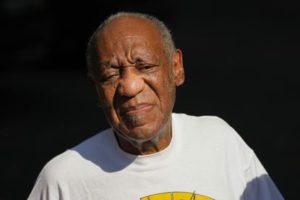
Bill Cosby. Matt Slocum AP

After the Pennsylvania Supreme Court overturned the rape conviction of Bill Cosby, I heard his lawyers say a bunch of hooey. And, involuntarily, I yelled at the television.

There are five things I know about Cosby.

1) His comedy routines are still stuck in my head. As I wrote a little over a decade ago, he was an “iconic individual in my life.” I watched him in everything from I Spy to JELL-O pudding commercials.

2) He is a disappointingly awful excuse for a human being. Five dozen women have credibly accused Cosby of sexual assault. Using his considerable power and influence, he took advantage of his position to become a serial predator.

3) Nevertheless, the overturning of the conviction, on purely legal grounds, was correct, unfortunately. As Slate noted, “Don’t blame the Pennsylvania Supreme Court. Blame prosecutor-turned–Trump lawyer Bruce Castor.”

As the Washington Post noted: “The crux of the ruling is this: Castor had said he had a deal with Cosby saying Cosby wouldn’t be charged criminally for the sexual assault claimed by Andrea Constand. Castor said he did so to prevent Cosby from pleading the Fifth Amendment in ongoing civil litigation.”

“The thrust of that opinion is that, even though then-Montgomery County District Attorney Bruce Castor never reached a formal agreement with Cosby that granted him immunity from prosecution, a press release that Castor sent out in 2005 — combined with Cosby’s later, incriminating testimony in a civil lawsuit — had the same effect as a formal immunity deal.

A5

I resist the notion of suggesting, though, that Cosby was released “on a technicality.” Constitutional protection is not “a technicality.” The right not to incriminate oneself is not “a technicality.” If there had not been immunity in a civil case against prosecution in the criminal case, Cosby would never have elocuted his actions in the civil case.

4) Still, this is awful news. From the Guardian: “Victoria Valentino, who accused Cosby of assaulting her, told CNN that she was “absolutely shocked, stunned’ by the court’s decision. ‘It’s a gut-punch. What does it say about women’s words, a woman’s value, all the lives that he damaged? It’s outrageous. I’m infuriated,’ she said.

“Lawyer Gloria Allred, who represented many of Cosby’s accusers, said the decision must be ‘devastating’ for those women. ‘My heart especially goes out to those who bravely testified in both of his criminal cases,’ she said.”

“Like it or not, the decision to prosecute or not prosecute lies solely within the discretion of a district attorney and once he makes an agreement with a defendant, that agreement is a contract just like any other and when the defendant relies on that agreement, that is a binding contract,” Randy Zelin, who teaches at Cornell Law School, told USA TODAY.

He predicted the decision will have value as a precedent. “It means an oral agreement is sufficient to enforce a promise from a prosecutor,” Zelin said. “The good news is prosecutors are now on notice to be careful what they promise – and to put it in writing.”

Andrew Wyatt

5) Bill Cosby’s team should just shut up. Andrew Wyatt is the guy who complained about  Eddie Murphy’s joke on Saturday Night Live in 2019. Murphy said: “If you would’ve told me 30 years ago that I would be this boring, stay-at-home house dad and Bill Cosby would be in jail — even I wouldn’t have taken that bet.” He then did an impression of Cosby saying, “Who’s America’s dad now?”

Upon Cosby’s release, Wyatt said. “This is a man who was railroaded, who was targeted because of a black man being America’s dad… On this hot day, this is a hot verdict for us that we will forever cherish because we got one of the greatest, or the greatest entertainer alive today, Mr. Bill Cosby, this great American citizen.” Wyatt claimed “vindication” in the rape case and a victory for black Americans. I’m not buying it. At all.

As Renée Graham in the Boston Globe noted: Black America deserves justice. Bill Cosby’s release from prison isn’t it. A powerful man escaping accountability doesn’t help Black people ensnared in an unjust legal system — or encourage sexual assault survivors to speak out.

Black America

“Cosby shows his disdain not only for sexual assault survivors but for the same Black America he spent years criticizing in speeches promoting respectability politics as he willfully ignored systemic racism as a blight on generations of Black people.”

Sidebar: the initial remarks by Cosby’s TV wife Phylicia Rashad is why I don’t tweet.

In summary, the opinion piece by Emma Gray of MSNBC speaks to me. “Processing [the] events requires us to hold many truths at once: I believe the Pennsylvania Supreme Court had legal reason to come to the conclusion that it did; I believe every person should be afforded due process; the criminal justice system is fallible and broken; I believe Bill Cosby is a sexual predator; I believe victims of sexual assault are routinely failed by the justice system and the culture as a whole.”

So no, I won’t be seeing him on a proposed comedy tour. Ever.

Sha’Carri Richardson, athletics and marijuana

Tokyo Olympics

sha'carri richardsonThe 30-day suspension of American Sha’Carri Richardson for a positive marijuana test means she is barred from competing in the women’s 100-meter dash at this summer’s Tokyo Olympics. But as I’ve read reactions across the board, I’ve concluded that her suspension is stupid.

From the Denver Post: She should have nothing to apologize for. “There is only one reason why the World Anti-Doping Agency (WADA) should exist: To ensure athletes’ success on the international stage is determined more by pure athletic ability than who they employ as their pharmacist. Which is why [the suspension] makes absolutely zero sense.

“Back in 2011, a WADA-sponsored paper determined marijuana was a performance-enhancing drug, which might hold more water… if Richardson were a competitive eater or gamer.

A ‘substance of abuse’

“Now a decade later, marijuana’s inclusion on WADA’s list of banned substances is tied to its classification as a ‘substance of abuse.’ Of course, that bit of paternal moralizing has nothing to do with ensuring Richardson doesn’t have an unfair advantage on the track.

“Another unfortunate and devastating development? That Richardson felt compelled to appear on NBC’s TODAY show to apologize for her marijuana use and explain how it was tied to her own personal attempts to cope with her [biological] mother’s death.”

As she told NBC: “To hear that information coming from a complete stranger, it was definitely triggering. It was definitely nerve-shocking. It was just like, who are you to tell me that? No offense against him at all. He was just doing his job. But definitely, that sent me into a state of mind, a state of emotional panic.

“I still have to go out and put out a performance for my dream, go out there and still compete. From there, just blinded by emotions, just blinded by hurting. I knew I couldn’t hide myself. In some type of way, I was just trying to hide my pain.”

Boston wouldn’t ban her

From the Boston Globe: Sha’Carri Richardson isn’t a cheater. She’s human. And she got caught up in a system that might need to change.

“With her newly tinted orange hair trailing behind her like flames, she captured our hearts not only with her performance on the track, but with her moving story off it, seen in the emotional hug she climbed into the stands to share with her grandmother.

“As we know now, it wasn’t any sort of steroid or performance-enhancer that was found in Richardson’s test sample. It was marijuana, a drug that is legal in Oregon, where the trials were held, continues to be legalized in states across the country…

“The mental health of athletes is a similarly heavy topic, one that has gained more and more public attention in recent years, so much so it was listed by both USOPC chairperson Susanne Lyons and chief executive Sarah Hirshland as one of the organization’s top priorities in a recent teleconference with reporters. As Hirshland said, the emphasis on mental health needs isn’t just important for Olympians on their watch, but ‘for society writ large.’

Coincidentally, from the National Memo: “Justice Clarence Thomas Says Federal Laws Against Marijuana No Longer Needed.” Clarence Thomas!

According to the Washington Post, the World Anti-Doping Agency’s prohibited list published on Jan. 1 lists the chemical compound found in marijuana, THC, next to cocaine, MDMA/ecstasy, and heroin as a substance of abuse and that the rule book says they are considered substances of abuse because they “are frequently abused in society outside of the context of sport.”

The rules

A right-wing rag complained, in that eye-rolling way, that AOC said that Richardson’s suspension was “racist.” I do find this MoveOn piece interesting. “Elite Black women Olympic athletes undergo exceptional levels of scrutiny, from Simone Biles’ recent record-breaking double pike vault which received artificially suppressed scores despite its difficulty to Christine Mboma and Beatrice Masilingi, two Namibian runners who won’t be permitted to run in their main events because of their naturally high testosterone levels. And we learned the Olympics decided to ban swim caps designed for the hair of Black swimmers.

Even International Olympic Committee member and a founder of the World Anti-Doping Agency Dick Pound thinks this marijuana ban needs to go, saying, “One of these days, we should probably either take it off the list entirely or say it’s there but the minimum sanction should be something like a warning, so you’re not losing any period of eligibility.” So why is it being enforced now?

Patchwork quilt

In my latter days working as a librarian, the Small Business Administration and by extension SBDCs were, for a relatively brief time, banned from helping any business that was dealing with cannabis. This included people growing hemp for non-consumable purposes. It was, fortunately, rescinded, because it was an inane policy.

The fact that marijuana is treated as though it were heroin at the federal level is crazy. To that end, I support the cannabis banking bill passed by the House in 2021.
.
“Banks have generally been unwilling to do business with companies that sell marijuana or related products, fearing they could run afoul of federal laws.

“That has left companies in the marijuana industry with few options, including relying on just a handful of small financial institutions or doing business in cash. The American Bankers Association has lobbied aggressively for the ‘SAFE Banking Act’ bill.”


Actor Geoffrey Rush turns 70

Oscar, Emmy, and Tony winner

ShineAlthough I’ve seen or heard the actor Geoffrey Rush in a number of movies, I always associate him with one. And no, it’s not Pirates of the Caribbean.

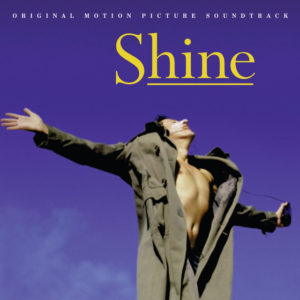
It’s Shine, from 1996. IMDB notes: “Pianist David Helfgott, driven by his father and teachers, has a breakdown. Years later he returns to the piano, to popular if not critical acclaim.”

Rush won the Oscar for Best Actor. The film received several other nominations, including Best Picture, Best Supporting Actor, Best Director, Best Original Screenplay, Best Film Editing, and Best Original Dramatic Score. I bought the CD of the score; it is recommended.

Sometimes, it’s one movie that propels a performer from a working professional to someone who people can recognize by name. But I know almost nothing about the man’s life, other than he’s from Australia.

Again, from IMDB: He was born “in Toowoomba, Queensland, Australia, to Merle (Bischof), a department store sales assistant, and Roy Baden Rush, an accountant for the Royal Australian Air Force. His mother was of German descent and his father had English, Irish, and Scottish ancestry. He was raised in Brisbane, Queensland after his parents split up…”

“He performed in theater for a number of years… Film-goers finally began taking notice of Geoffrey after his performance in Children of the Revolution (1996).

“This led to THE role of a lifetime as the highly dysfunctional piano prodigy David Helfgott in Shine (1996). Rush’s astonishing tour-de-force performance won him every conceivable award imaginable, including the Oscar, Golden Globe, British Film Award, and Australian Film Institute Award.”

After SHINE

“Shine not only put Rush on the international film map but atypically on the Hollywood ‘A’ list as well. His rather homely mug…” Ouch. OK, he’s certainly not classically handsome, but…

His “completely charming, confident and captivating demeanor” allowed him to “more easily dissolve into a number of transfixing historical portrayals, notably his Walsingham in Elizabeth (1998) and Leon Trotsky in Frida (2002),” both of which I saw.

I’ve also appreciated his work in Shakespeare in Love (1998), for which he was nominated for an Oscar for Best Supporting Actor; Lantana (2001), a murder mystery; Finding Nemo (2003), voicing Nigel the seagull; and The King’s Speech (2010) as Lionel Logue.

“Rush’s intermittent returns to the stage have included productions of Marat-Sade, Uncle Vanya, Oleanna, Hamlet, and The Small Poppies. In 2009 he made his  Broadway debut in Exit the King,” written by Eugene Ionesco, co-starring Susan Sarandon, and co-adapted by Rush. He got a Tony Award for Best Actor in a Play for his performance.

On television, he played Peter Sellers in The Life and Death of Peter Sellers (2004) on HBO, for which he won a Primetime Emmy Award, meaning he’s won the acting Triple Crown.

“His marriage (since 1988) to Aussie classical actress Jane Menelaus produced daughter Angelica (1992) and son James (1995). Menelaus, who has also performed with the State Theatre of South Australia, has co-starred on stage with Rush… She also had featured roles in a few of his films, including Quills (2000) and The Eye of the Storm (2011).”

Geoffrey Rush is a successful, talented actor, who largely travels below the radar of a lot of people.

The Third Reconstruction

fighting voter suppression

third reconstructionThe U.S. Supreme Court ruling last week to further declaw the Voting Rights Act I found to be a kick in the gut. SCOTUS, by a 6-3 vote, overturned a 9th Circuit Court of Appeals ruling. It had found that two voting laws passed in Arizona “had both the effect and intent of discriminating against Black, Latino and Native American voters… The decision… will make it much harder to block other laws that have a discriminatory effect on voters of color.”

We’ve already seen a plethora of “voter suppression laws that hide their racist intent but have clearly disparate effects based on race.”

The “ruling significantly increased the level of discriminatory and burdensome effects that plaintiffs must demonstrate for a voting law or procedure to violate the Voting Rights Act, giving lawmakers or officials who enact such rules great deference in the interest of preventing supposed fraud—even without any evidence of such fraud…

“Some legal observers had warned before this latest decision, known as Brnovich v. DNC, that… the Supreme Court could make it so difficult to comply with the requirements to prove discrimination that the VRA would nevertheless become meaningless. That is, in essence, what happened.

With Congress so closely divided, it’s difficult to imagine it passing what is needed. That would be passing a new Voting Rights Act and the For The People Act, which would, among other things, expand voting protections.

July 4th Oration

I was thinking about this as I listened to Rev. Roxanne Booth at The Stephen and Harriet Myers Residence in Albany on Saturday, July 3. In person! after being virtual last year.

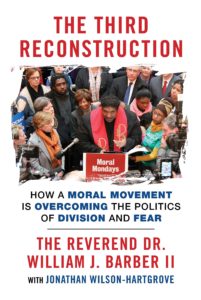
She spoke about The Third Reconstruction, as laid out by the book by The Rev. Dr. William Barber II and Jonathan Wilson-Hartgrove (Beacon, 2016). The subtitle is How a Moral Movement is Overcoming the Politics of Division and Fear.

You know about the first, after the Civil War, until it was undercut by forces, starting with the election of Rutherford B. Hayes in 1876. The second was the Civil Rights Era, starting with Brown v. Board of Education and the death of Emmett Till, undermined by the policies of Nixon, then Reagan.

The third, the authors argue, started with the election of Barack Obama, and was almost immediately sabotaged by forces that early on wanted him to be a one-term president.

Moral revival

The book is “Rev. Barber’s call for building and sustaining a movement for justice for all people.” From this Unitarian Universalist site: “The Third Reconstruction offers helpful, practical guidance for engaging with justice movements born in response to local experiences of larger injustices.

“Drawing on the prophetic traditions of the Jewish and Christian scriptures, while making room for other sources of truth, the book challenges us to ground our justice work in moral dissent, even when there is no reasonable expectation of political success, and to do the hard work of coalition-building in a society that is fractured and polarized.”

So when I asked Rev. Booth about how one gets over the disappointment of the Arizona decision, she noted that we have to keep doing the work of social justice, even when the short-term prospects may be bleak.

I’m reminded that many changes in our democracy have started with situations that seemed hopeless in the beginning. Consider joining the Third Reconstruction, a “revival of our constitutional commitment to establish justice, provide for the general welfare, end decades of austerity, and recognize that policies that center the 140 million are also good economic policies that can heal and transform the nation.”

Ramblin' with Roger
Social media & sharing icons powered by UltimatelySocial