
16 candles for the Ramblin’ blog

Daily since May 2, 2005

16 candles16 Candles. I remember that track. The song by The Crests was released at the end of 1958. It got to #2 in the pop charts for two weeks and #4 on the soul charts in early 1959.

16 Candles was kept out of the #1 pop slot by Stagger Lee by Lloyd Price, a song that also kept Donna by Richie Valens from reaching the top of the charts.

The Crests was an “interracial doo-wap group formed in Manhattan, NY.” It included Johnny Maestro, later of the Brooklyn Bridge (The Worst That Can Happen); Harold Torres; Talmadge Gough; and J.T. Carter. Patricia Van Dross, older sister of Luther Vandross, left the group in 1958.

But I’ve never seen the John Hughes movie.

I suppose those paragraphs epitomize what I try to do in the blog. Find a hook for the topic, sometimes using information gleaned from something called books. And I have a fair amount of them in the office where I almost always write.

In fact, it’s the books, or more correctly, the built-in bookcases which contain mostly my books, many of them reference materials about music, television, and movies, that kept me in here during the pandemic. Meanwhile, my wife ended up in the guest room, where she now does her email, school planning, and church meetings.

How I write a daily blog

This sounds obvious, but it does help. What makes blogging easier is knowing what I am going to blog about. There are about 30 holidays, birthdays, and anniversaries. Then I’m going to write about my daughter once a month. All I need to write is about 300 more posts per year. Piece of cake!

Sometimes an event happens in the world, and I need to write about it; the death of someone significant to my understanding of the world, e.g. I might bunch a few together, as I did when Cicely Tyson, Hank Aaron, and others who died within two weeks of each other.

Often, I don’t know that I have something to say until I do. After the Atlanta-area shootings, I thought I’d just put some links in my twice-monthly linkage dump. But then they became so numerous I realized that I should probably create a blog post.

I try to write every day. If I go more than a day without writing, it becomes more difficult to restart. For me, writing begets writing. So I have to muse about SOMETHING. If I know I’m going to note the 1991 #1 hits in October 2021 – and I am, BTW – and I don’t have anything else in mind, I could write about that. I haven’t, yet; maybe tomorrow.

For the birds

My late blogger buddy Dustbury “noted that he and I have something in common: we are both magpies. As he put it: ‘The Eurasian magpie… is wicked smart, especially for a bird… I am not quite sure how ‘magpie’ became a descriptor for humans who flit from topic to topic unless it has to do with the bird’s tendency to be attracted to Shiny Things, but I’m pretty sure I fit that description, and I have several readers who seem to do likewise.”

He was not wrong. In early 2021, I watched five movies in five days and wrote posts about them soon thereafter. But I didn’t post five movie posts in a row because I didn’t want to. I sense that you don’t want me to either. The strength, and weakness I suppose, of this blog, is that it ping pongs all over the place. That’s because my mind does that.

Consequently, I don’t post in the order that I write. Frequently, I have something already scheduled for a date, but something more pressing/timely pops up. I will, and in fact, do move posts around. A lot, sometimes.

This has the added benefit that, as often as not, I have no idea what I’ve decided to post on a given day until I actually see it. Surprise! And, as I’ve often mentioned, it’s not until then that I see the damn typo or wrong word choice (site instead of cite, e.g.).

Long-form

Just recently, my wife asked me if I might want to “publish” sometimes, to which I said, “I DO publish, every day.” But I knew what she meant, write a book or something. The problem is that I don’t know what it would be about.

Now Jaquandor, HE writes books. I’ve read a couple of them and I liked them. Go read HIS books.

I never tried to get a doctorate because I couldn’t imagine spending the time necessary on one topic. And, as I get older, I realize that I keep learning “stuff” about myself, the world. It’s not that I have no preconceived notions, for surely I do. It’s just that they often tend to get dashed on the rocks. Reason enough to keep blogging, I suppose.
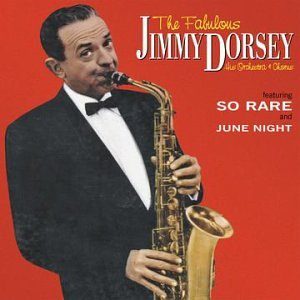
The hits of 1941: Jimmy Dorsey

Tommy’s big brother

Jimmy DorseyPoor Jimmy Dorsey. He was a successful jazz bandleader, especially in 1941. But he only had 13 birthdays. That’s in part because James Francis Dorsey was born on Leap Year Day in 1904.
Jimmy was the big brother of Tommy Dorsey. They were born in Shenandoah, PA, the sons of Theresa Langton Dorsey and Thomas Francis Dorsey. Their “father, Thomas, was initially a coal miner, but would later become a music teacher and marching-band director.” The older brother played clarinet and the saxophone.

“In 1927, the brothers created the Dorsey Brothers Orchestra… Despite their success, the brothers frequently disagreed over management of the band and their conflict would come to a head in May 1935 when, after an onstage disagreement, Tommy stormed off.”

I imagine there was a sibling competition going on. In 1941, Tommy Dorsey had four songs in the Top 4, three with a promising young singer named Frank Sinatra, who reportedly had blue eyes.

Combination of the two

“Jimmy and Tommy Dorsey reunited on March 15, 1945, to record a V-Disc … The songs featured the combined orchestras of Jimmy and Tommy Dorsey.

“In 1947…, the brothers would put aside their tensions to film The Fabulous Dorseys. The film was a look inside the brothers’ lives from practicing as children to making it big as adults; the brothers played themselves in the film. It also highlighted their struggles leading the Dorsey Brothers Orchestra and showed what their lives were like on the road…”

In 1950, Tommy offered Jimmy “a seat in the Tommy Dorsey Orchestra. In 1953, Tommy and Jimmy would rename the band, the Dorsey Brothers Orchestra. Tommy was the leader of the group, and made Jimmy both the co-leader and featured soloist.

“In 1956, after Tommy Dorsey died from choking in his sleep, Jimmy took over leadership of the orchestra. Around that same time, Jimmy was diagnosed with throat cancer.” He died June 12, 1957, at age 53, in New York City.

Hits of 1941

Amapola (Pretty Little Poppy) – Jimmy Dorsey with Bob Eberly and Helen O’Connell. Ten weeks at #1, gold record.

Chatanooga Choo Choo – Glenn Miller with Tex Beneke. Nine weeks at #1, gold record. It topped the charts when the United States entered World War II.

Piano Concerto in B Flat – Freddy Martin. Eight weeks at #1, gold record. Tchaikovsky piece played by Jack Fina.
Daddy – Sammy Kaye. Eight weeks at #1.

Green Eyes (Aquellos Ojos Verdes) – Jimmy Dorsey with Bob Eberly and Helen O’Connell. Four weeks at #1, gold record.

Maria Elena – Jimmy Dorsey with Bob Eberly. Two weeks at #1, gold record.
My Sister and I – Jimmy Dorsey with Bob Eberly. Two weeks at #1.

Elmer’s Tune  – Glenn Miller with Tex Beneke. One week at #1.
Blue Champagne – Jimmy Dorsey with Bob Eberly. One week at #1.
Song of the Volga Boatmen  – Glenn Miller. One week at #1. Yes, the Russian folk song.

I always associate 1941 with two baseball stories. It was the season that Joe DiMaggio hit safely in 56 consecutive games, and Ted Williams became the last player to date to bat over .400, .406 to be precise.

April rambling: the automatic runner

Mandela’s Blues

embarrassing-incidentsBonhoeffer musing on Who am I?

Bankruptcy: Last Week Tonight with John Oliver.

The Unbelievable Story of Europe’s Runaway Nazi.

Planned Parenthood: We’re Done Making Excuses for Our Founder.

“Love takes off the masks that we fear we cannot live without and know we cannot live within.”
– James Baldwin, “Letter From a Region in My Mind” essay

The anti-trans distraction.

American Library Association: books with antiracist messages climbed the list of most challenged or banned titles in 2020.

These inventors don’t get the credit they deserve.

Weekends In Space.

Best history podcasts: 14 shows that tell you forgotten stories.

Remembering Walter Mondale

Gender reveal party death toll mounts, people ask Why? 

Prince Philip’s Fascinating Family: A Russian Tsarina, A Greek Orthodox Nun, a Banished King, and More.

Make To Don’t Lists.

New JEOPARDY guest hosts announced! LeVar Burton, George Stephanopoulos, Robin Roberts, David Faber, and Joe Buck.

Theology in the DCU and MU.

Now I Know: The Picture of Abraham Lincoln’s Fake Ghost and The Birthday Problem and When Stalin’s Grapes Went
Sour and The First Boycott and Mussels and When Baseball Went to Pot.

Not me: Four Mustangs caught going more than double the speed limit in Surrey. “High-risk driving behaviour… is one of the leading causes of collisions in BC,” said Sergeant Roger Green of the service’s Community Response Unit.

Not me: Immigrants in Greece who can’t book Covid jabs. Roger Green, a British writer who has lived on the island since the early ’90s, says some are afraid to leave their homes.

SPORTS

MLB’s extra-innings rule is back in 2021; here’s why baseball should use
ties instead. “Each half-inning beyond the ninth — i.e., extra innings — in Major League Baseball now begins with a runner on second base and no outs.” The automatic runner rule is dreadful, a baseball abomination,IMO.

Why Home Runs Are Bad for Baseball.

The Negro Leagues Baseball Museum (NLBM) in Kansas City is a “privately funded, not-for-profit organization dedicated to preserving and celebrating the rich history of African-American baseball and its profound impact on the social advancement of America.”

Pitcher Hope Trautwein Throws A Perfect Game Of All Strikeouts

Mulligan? Golfers consult rule book after ball lands on alligator’s back

MUSIC

Thou Wilt Keep Him in Perfect Peace by S.S. Wesley (Isaiah 26:3).

Mandela’s Blues -Kinky Friedman.

Wichita Lineman – Peter Sprague, featuring Rebecca Jade.

Solfeggio by Arvo Part, San Diego Master Chorale.

A Rainbow in Curved Air – Terry Riley.

I Got a Gal in Kalamazoo – Glenn Miller band with Tex Beneke and the dancing of the Nicholas Brothers (1942 movie “Orchestra Wives”).

Music for Percussion Quartet – David Crowell, plus Music for Pieces of Wood, by Steve Reich.

Coverville  1355 : The Roy Orbison Cover Story III and 1356: Tribute to Jim Steinman and 50th Anniversary of The Rolling Stones’ Sticky Fingers.

The Swan of Tuonela by Sibelius.

Flintstones theme: Jazz AmbassadorsBarney Kessel and Herb Ellis,  Hungarian Border Guard Orchestra, FMU Jazz Ensemble, Bjørn Jørgensen
and his Big Band, Jacob Collier,  Postmodern Jukebox, The CompanY, and Vinheteiro

Robert Schumann’s Traumerai. You KNOW this tune!

Names: changing, remembering

Archibald Leach

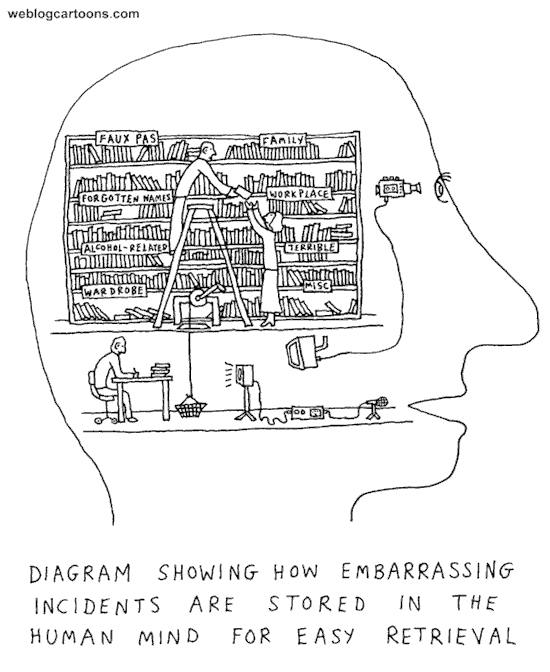
namesI’ve been thinking about names a lot. In my Bible reading, God’s often renaming people. “Abram, you’re now Abraham.”
“But, God, why would you make my name longer? Won’t take up more papyrus when people write about me in a few millennia?”
“Abraham, I created papyrus. Don’t sweat it.”

And when the Holy Spirit – ah – puts Mary with child, will she and Joseph have any say in the naming? They will not. Some angel shows up and says, “Mary, you’re gonna conceive, give birth to a son, and you’re gonna call him Jesus.” Joseph and Mary were thinking, “But we have no one named Jesus in our families.” They didn’t say this aloud, of course, because when angels show up unexpectedly, you tend to keep some of your thoughts to yourself.

The idea of changing one’s name is an old one. Popes always do that. I have no idea who Amantine Lucile Aurore Dupin was, but I’m familiar with George Sand. Lewis Carroll, Mark Twain, Dr. Seuss, John le Carré are all familiar noms de plume.

I’m fine with people changing their names when it’s their choice. Actors have been doing it forever. I used to be really good at remembering that trivia. Maurice Micklewhite? Michael Caine. Archibald Leach turned out to be Cary Grant at least five times in Jeopardy! clues. Marilyn Monroe was born Norma Jeane Mortenson. Would John Wayne be JOHN WAYNE if he were billed as Marion Morrison?

George Terebeychuk, a Ukrainian immigrant in Sudbury, ON Canada, changed his surname to Trebek, as his cousin Mike had done. George was Alex Trebek’s dad.

He’ll be back

Still, I was oddly pleased when a bodybuilder named Arnold Schwa…something-or-other decided to keep his moniker, which the so-called tastemakers thought was career-killing. Schwarzenegger, that’s it. According to Box Office Mojo, films in which he has acted “have grossed a total of more than $1.7 billion within the United States, and a total of $4.0 billion worldwide.”

I recall real antipathy in the 1960s when a heavyweight boxer changed his name to Muhammad Ali. He may have been revered upon further reflection, but in the day, some of his opponents would taunt him with “Clay! Clay!”

One of the terrible things that happened to enslaved people is that they lost their names. Likewise, indigenous people from the Americas to Australia experienced intruders who thought they needed a change in order to make it “easier.” Easier for whom?

Lots of people’s names were changed because of bad transcription, or willful changes at Ellis Island. Conversely, my Nordic ex took back her family name.

 Steve?

I’m rather bad with names. I am of the opinion that everyone should have name tags. This is especially true when almost everyone is wearing a mask. The last time I watched Grey’s Anatomy, the doctors wore picture IDs so you could tell who the heck was treating you under all that PPE. I could never be a teacher, learning new names every year.

Some folks are great with names. Former US Senator and basketball star Bill Bradley would go on the Tonight Show with Johnny Carson. He’d meet the audience before the show and share all of their names. Likewise, my former Congressman Matt McHugh was astonishingly good at remembering not only people’s names but the names of their spouses and children.

The Name Game -Shirley Ellis
The Name of the Game  – ABBA
You Know My Name – The Beatles (Anthology 3)

Review: Judas and the Black Messiah

betrayal

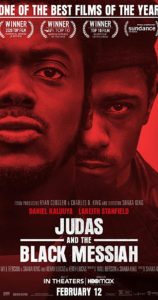
Judas and the Black MessiahThe movie Judas and the Black Messiah was the finest of the Best Picture nominees for this year’s Oscars. It presents a piece of American history that has either been forgotten or, more likely, heavily distorted.

Fred Hampton (Daniel Kaluuya) was chairman of the Illinois chapter of the Black Panther Party and deputy chairman of the national BPP. In this capacity, he founded the Rainbow Coalition and “an alliance among major Chicago street gangs to help them end infighting and work for social change.”

FBI director J. Edgar Hoover (Martin Sheen) considered Hampton a threat to decency in America and wanted him surveilled from the inside. Enter Bill O’Neal (LaKeith Stanfield), a con man captured by the feds. Under the direction of his FBI handler Roy Mitchell (Jesse Plemons), Bill infiltrates the Panthers and gets close to Fred.

The two leads were nominated for Oscars, oddly both as supporting actors. They are excellent, as is the rest of the cast. Kaluuya imbues the charisma Hampton must have possessed at such a young age, 21 at the end of the film. Even though I knew how the story resolved, I was tense throughout.

It’s impossible to totally separate the movie from the events, not only of the late 1960s but the early 2020s. s one reviewer noted, “Although the events occurred so long ago, the ramifications that they led to are clearly still being felt in the US.”

Think Christian

Two months before I saw the movie, I read an article in Think Christian called Judas (Iscariot) and the Black Messiah. “The Bible’s Judas and history’s Bill O’Neal share more than a record of betrayal.”

The premise is this: “Eyes worn, bloodshot, and on the brink of tears, the disciple looks his teacher in the eye and performs his final act of betrayal.” It’s an emotional strain to be a rat in an organization built on loyalty and discipline.

“Though drawn from the final scene between Bill… and Fred…, the fact that this description could fit an imaginative retelling of Judas Iscariot and Jesus illustrates the unique impact of the film.

“A tense and stunning historical drama, Judas and the Black Messiah explores a neglected moment in our national history. At the same time, it presents a fresh angle on the complex weight of guilt, especially if we consider the interpretive interplay between Stanfield’s O’Neal and the biblical Judas.

“The film’s Judas figure—and the way Stanfield embodies guilt—help us think about the biblical Judas and vice versa, with a call to contemplate the Judas tendencies that lurk within us.” And I think Stanfield reflects that pain.

The story was written by identical twin brothers Kenny and Keith Lucas, along with Will Berson and Shaka King. Berson wrote the screenplay with King, who also directed.

Highly recommended.

Ramblin' with Roger
Social media & sharing icons powered by UltimatelySocial