Oscar-nominated live action short films 2017

“Enemies Within,” feels like it’s based on current events, though it was set in the 1990s.

Sometimes, you just need to leave work early to see the Oscar-nominated live action short films

“Mindenki,” Hungary (25 minutes)

This was the Oscar winner, and certainly worthy. The title translates to “Sing,” but it oughtn’t to be confused with another, full-length, animated recent film of the same name.

Reportedly based on a true story, young Zsofi (Dóra Gáspárvalvi) enrolls in a new school best known for its lauded children’s choir, which is great, because Zsofi loves singing. Her mother, the principal and her new friend Liza (Dorka Hais) encourage her to join the troupe. But Zsofi runs into a snag.

I love the music, and the world of competitive choir, and it has a nifty ending. But the most engaging part of the film is the friendship between the shy Zsofi and the cool Liza.

“Silent Nights,” Denmark (30 minutes)

Aske Bang’s third short starts off strong. Malene Beltoft (Inger) is a kindhearted worker for the Salvation Army homeless shelter worker. One of her clients is a Ghanaian immigrant named Kwame (Prince Yaw Appiah). They strike up a romance.

The film’s first half addresses the difficulty many immigrants, including Kwame, have in wanting a better life. But there may be way too much story at the back end to be credible. Still, I found the couple intriguing.

“Timecode” (Spain, 15 minutes)

Juanjo Giménez Peña won the Palme d’Or for this. Luna (Lali Ayguadé) and Diego (Nicolas Ricchini) work in a parking garage in 12-hour shifts. Pretty boring, with polite but minimal interaction between the two only at the shift change.

Then Luna discovers that Diego has a hobby. Eventually, the two soon start using the expansive video surveillance system to swap videos. It was a minor piece but with some charm, especially if you appreciate the moves.

“Ennemis Interieurs,” France (28 minutes)

Sélim Azzazi’s film, translated “Enemies Within,” feels like it’s based on current events, though it was set in the 1990s. It takes almost entirely inside a dim immigration office. Hassam Ghancy is an unnamed Algerian-born Frenchman hoping to procure official citizenship. Najib Oudghiri is the likewise unnamed official who essentially plays the good cop AND the bad cop at different points.

For a movie mostly confined to one location, it was quite affecting. Ghancy’s character showed fear and indignation from the interrogator’s questions. Probably the best of the five.

“La Femme et la TGV,” Switzerland (30 minutes)

Timo von Guten’s film is the most quirky of the features. Jane Birkin, who’s been in quite a few movies you may have seen, is the femme, a melancholy baker in a tiny French town. Her only joy is to wave at the TGV train when it goes by twice a day at 185 mph.

A train conductor sends her a note, tossed off the speeding train and landing in her yard, thanking her for her daily greetings. A correspondence is struck up between the pair, but not on “the Internets,” which she actively avoids.

There is a relationship based on more tossed packages, stuffed with cheese, and carefully written letters which eventually forces her to take action unusual from her predictable life. The solution was there but she couldn’t see it before. I liked it, though it may be a tad long. It’s based on a true story.

Here are trailers for Oscar-nominated live action short films. Most of the movies are in subtitles. I did not find them out there for free, only for a fee.

Music, March 1971: Humble Pie

He saw himself as a budding black militant, but he thought of me as a hippy-dippy, flower-power type.

More random music recollections based on the book Never A Dull Moment.

It was Woodstock, the March 1970 movie, that was the greater watershed than the August 1969 concert, the author posits, and I tend to agree. If a third of a million people actually went to Max Yasgar’s farm in Bethel, NY, after seeing the Academy Award-winning documentary, millions would say they were there.

I recall going to the film with a bunch of my anti-war, socially activist friends – Holiday Unlimited: “a splendid time is guaranteed for all”- shortly after the film was released. We sat through it TWICE, back in the days when you could actually do that sort of thing, and it was LONG, about three hours.

My most specific recollection was looking back at the light stream that was projected image that was showing during Sly and the Family Stone’s performance and noticing how purple it was. And, seriously, I had never taken any drugs at the time.

The Woodstock soundtrack propelled my listening for at least the next half-decade, really introducing me, and much of the country, to Joe Cocker and Santana, and solidified my listening to Arlo Guthrie, CSN(&Y) and The Who, among others.

Unlike earlier live albums, such as The Who’s Live at Leeds, which captured the performance and nothing more, producers in 1971 realized the “sound of the crowd was a key element” in transferring the excitement to the listener who had not been present. I always had mixed feelings about live albums for that reason.

Bill Graham closed both Fillmore East in New York City and Fillmore West in San Francisco in 1971. Agents such as Frank Basalona realized that some bands, such as Led Zeppelin, would sell out the venues based on their names, and weren’t willing for the flat rate someone such as Graham would offer.

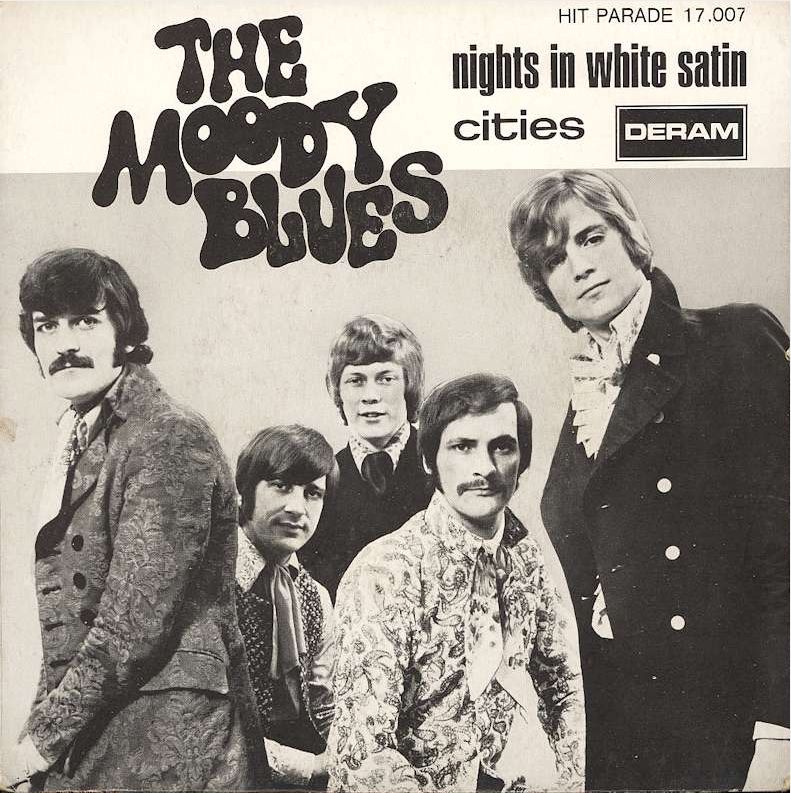
Basalona signed groups such as Humble Pie from London and J. Geils from Boston. I listened quite a bit to cuts from the live Humble Pie album Rocking the Fillmore on the radio, featuring Peter Frampton, who would go on to have even greater live album success.

The groups’ common manager was Dee Anthony, who, in addition to worrying about the money, instilled in the band a sense of showmanship. Producer Tom Dowd got the Allman Brothers to dump their out-of-tune horn section and made them a much better band.

The other live music album I recall from this period was the one by Grand Funk Railroad, which came out in November 1970. I received it for my birthday in March 1971 from my sister’s boyfriend George. He saw himself as a budding black militant, but he thought of me as a hippy-dippy, flower-power type, and thought, incorrectly, that this would have been “my” type of music. But I did listen to it a few times, and it’s probably still in the attic.

Listen to:
Black Dog – Led Zeppelin. It was first played live at Belfast’s Ulster Hall on 5 March 1971.
I Don’t Need No Doctor – Humble Pie
Aqualung – Jethro Tull
Rock and Roll, Hootchie Koo – Johnny Winter
Mean Mistreater – Grand Funk Railroad

Good day: asylee, bamboozled, storyline

“Persecution or the fear thereof must be based on the alien’s race, religion, nationality, membership in a particular social group, or political opinion.”

This is what makes a good day: learning something new. Often it’s at work, but not always.

I was doing some research on demographics. I could NOT find what I wanted at the Census, so I looked on the page for the Department of Homeland Security. I discovered a word that was new to me: asylee. My spellcheck does NOT like it.

USCIS’ somewhat skewed definition: “An alien in the United States or at a port of entry who is found to be unable or unwilling to return to his or her country of nationality, or to seek the protection of that country because of persecution or a well-founded fear of persecution. Persecution or the fear thereof must be based on the alien’s race, religion, nationality, membership in a particular social group, or political opinion. For persons with no nationality, the country of nationality is considered to be the country in which the alien last habitually resided. Asylees are eligible to adjust to lawful permanent resident status after one year of continuous presence in the United States. These immigrants are limited to 10,000 adjustments per fiscal year.”

The difference between a person seeking refugee status and asylum status you can check out here; the distinction is narrow. The dictionary definition of asylee is merely “a person who is seeking or has been granted political asylum.”

That day, Facebook decided that I might want to repost something from five years ago, and I, unusually, actually did. The item received more likes this time around than it did in 2012, maybe because it’s even more true:

“One of the saddest lessons of history is this: If we’ve been bamboozled long enough, we tend to reject any evidence of the bamboozle. We’re no longer interested in finding out the truth. The bamboozle has captured us. It’s simply too painful to acknowledge, even to ourselves, that we’ve been taken. Once you give a charlatan power over you, you almost never get it back.”
― Carl Sagan, The Demon-Haunted World: Science as a Candle in the Dark

On my way home on the bus that night, I hear the guy behind me talking, ending with “I try not to f@#& too many of the shanks in the apartment building.” I figure he’s some sort of lowlife scum.

But then I hear, in an odd mechanical male voice, “I try not to f@#& too many of the shanks in the apartment building,” which is oddly amusing. And then he sends the audio file to someone, I believe to himself. Is he some sort of writer? If you find that line in a book published in the next couple years, or hear it in a movie theater near you, know it was created and dictated on the CDTA 905 bus.

Video review: Where To Invade Next

After the 2008–11 Icelandic financial crisis, bankers were actually prosecuted.

The movie Where To Invade Next appeared briefly in theaters in New York City and Los Angeles at the end of 2015, but was booked for general release in February 2016. Unfortunately, Michael Moore, the writer/director/star, caught pneumonia around that time, forcing him to cancel activities to promote the film.

Then in May 2016, he emailed MoveOn members, offering them a copy of the video for a donation to the organization, and “tens of thousands… responded.” I was one of them.

The premise of the film is that Moore would “invade” particular countries, and “steal” their best ideas. In Italy, for instance, he interviewed well-paid workers with guaranteed vacation and paid parental leave.

France had delicious-looking school meals and frank sex education. Finland’s education policy, according to the Minister of Education, involved almost no homework and no standardized testing. In Slovenia, the President note that students, including those from other countries, can get a tuition-free, and therefore debt-free higher education.

The Germans have labor rights and a work–life balance, while engaging in an honest national history education about its past, especially regarding the Nazis. Portugal has a rational drug policy and has abolished the death penalty. Norway’s humane prison system applies even to the maximum-security facilities.

Tunisia touts women’s rights, including reproductive health, and women were very important in the drafting of a new constitution in 2014. In Iceland, where women have been in power, the world’s first democratically elected female president came about after a general strike by women.

Of course, the kicker is, in each of these cases, the countries had originally “stolen” the ideas from the United States. For instance, after the 2008–11 Icelandic financial crisis, bankers were actually prosecuted. This came directly from the playbook of the United States after the savings and loan scandal of the 1980s, and in stark contrast with how the US dealt with its subsequent fiscal disaster.

I’ve seen several of Michael Moore’s documentaries. Where To Invade Next is more fun, and far less preachy, than some of his recent films, as he shows what other countries’ choices look like compared with the American dream that seems so difficult to achieve. Yet it doesn’t paint those other countries as total utopias.

Certainly, some will find his examples superficial – I find them even more compelling as the movie progresses – but given the way many Americans know so little about the world outside their borders, this would probably be helpful primer. Not incidentally, there’s a bit about tearing down the Berlin Wall. People from all political stripes may find the film intriguing, a source of conversation even more relevant in light of recent political events in the United States.

February 2017 weather rollercoaster

She was TICKED and rightly so.

It snowed – again – in Albany, NY in February 2017. It snowed so little last winter, and indeed this one (less than 17 inches to date by February 9) that when it actually took place, people were SHOCKED. They complained it was cold, in upstate New York, in winter; oh, please.

And they have forgotten how to shovel. If you do it frequently, it’s much easier. If you get down to the sidewalk level, then the pavement gets a chance to dry up. but if you don’t, the covering turns to ice, and it’s pain to walk on. And if you live on a corner lot, clear to the street in BOTH directions!

There were school closings and delays in the area on the 9th and the 13th. The latter in particular got on my nerves. I noticed that Albany schools had a two-hour delay, as did the school my wife teaches in, and I confirmed this at 6:30 a.m. on the Times Union newspaper website. I’m watching CBS News This Morning, which starts at 7, not particularly paying attention to the closing scrolling along the bottom. But I did happen to notice that Albany city schools were shown as CLOSED! What?

I ran upstairs to the laptop in the office and saw that I had an email from Albany SNN (School News Network) that the schools were indeed closed, posted at 7:08 a.m.! I also confirmed on the TU website. It was called SO late that, as I was out shoveling the walk, and my wife digging out the car, she saw a teacher at the Daughter’s old school who had not heard about the closing, only the delay. She was TICKED and rightly so.

There’s a basic arithmetic rule in my household that apply to snow days:
* If the Wife’s school delay/closing is greater than, or equal to, the Daughter’s school delay/closing, this is good.
* If the Wife’s school delay/closing is less than the Daughter’s school delay/closing, this is a PITA.

I rushed to work, took care of a couple must-do tasks, and less than two hours later was taking a bus home and taking 3/4 of a day “vacation.”

And after these two storms, which brought the seasonal total to a mere 41 inches (less than average), it got warm. The snow went away as the temperature reached the upper 60s (upper teens C), breaking a couple daily records, 69F on the 23rd, and 74F on the 24th (!) before going back to more seasonable temperatures. I even rode my bike to work work a couple days. (I need to – ouch – do that more often.)

Ramblin' with Roger
Social media & sharing icons powered by UltimatelySocial