Corning Museum of Glass

It didn’t feel like the place I went to at least a half dozen times growing up.

CorningGlassTowerJuly 11, 2016, Corning, New York

When I was a child growing up in Binghamton, NY, our family would travel approximately every other year about 75 miles on Route 17 to the Corning Museum of Glass, founded in 1951. I remember that it was really cool to see these guys – don’t remember any women – work behind these “windowed wall behind which guests could watch glassworking in the Steuben factory.” Even though we were protected, we could still feel, and see, the heat.

The place my family visited wasn’t anything like this. It looked more a museum, rather than a working factory, with a demonstration of glassmaking – that was done by a couple of young women -that could be done on a cruise ship, which in fact, IS a service that the folks at the museum can do.

We saw what makes glass breakable or shatter-resistant, and viewed some lovely pieces on display. The Daughter made a nightlight, designed like a cat, delivered to our house before we made it back home. It was a fun and educational experience. But it didn’t feel like the place I went to at least a half dozen times growing up.

It wasn’t. “In June of 1972, disaster struck as tropical storm Agnes emptied a week’s worth of rain into the surrounding Chemung River Valley. The river overflowed its banks and poured five feet of floodwater into the Museum. When the waters receded, staff members found glass objects tumbled in their cases and crusted with mud, the library’s books swollen with water. At the time, Buechner described the flood as ‘possibly the greatest single catastrophe borne by an American museum.'” The updated facility has a line on the glass near the entrance of the flood line, about five feet from the ground.

I remember that flood. When I got out of the hospital after a car accident, my father drove me past the Union-Endicott football field. Even from the highway, one could see how much water was covering the surface.

If you go to the Corning Museum of Glass, you can park in the visitors’ center, then walk, or take the short shuttle ride to the museum. The next stop is the Rockwell Museum, which does not appear to have anything to do with Norman. It’s a small museum of American art. The current displays included Celebrating 100 Years of the National Park Service. The permanent exhibit features a history of guns.

My appreciation of this place was enhanced by the swarm of incoming freshmen, plus their student escorts in a bonding experience.

Stop #4 on the shuttle is in charming Corning, where we got hot dogs. Then back to the visitors center.

And both places were free! Well, not exactly gratis, but because we are Supporters of the Albany Institute of History & Art, we also get an annual membership to the North American Reciprocal Museum Program, which gives us “free admission and other benefits at more than 500 museums throughout the United States and Canada.”

D is for Donovan

“When I was a young man I was led to believe there were organizations to kill my snakes for me.”

donovan-copyThe Scottish singer, songwriter, and guitarist Donovan Leitch turned 70 on May 10, 2016. Somehow I missed it, alas. He was one of those musicians that borrowed from folk, jazz, pop, psychedelia, and calypso to create a notable and rather recognizable sound that helped define the 1960s.

Like many artists of the period, such as the Kinks, the Rolling Stones, and the Beatles, his UK and US releases were quite different.

I associate Donovan with the Beatles. He contributed the line “sky of blue and sea of green” to “Yellow Submarine.” Donovan was among the guests invited to Abbey Road Studios for the orchestral overdub for “A Day in the Life”. He taught John Lennon a finger-picking guitar style in 1968.

Most notably, Donovan traveled to the ashram of Maharishi Mahesh Yogi in Rishikesh, where all four Beatles, two Beach Boys, and actress Mia Farrow also showed up.

I have one much later album, Sutras, from 1996, described as deeply meditative, produced by Rick Rubin in the same period he was producing Johnny Cash. Though neither critically nor commercially as successful as the Cash albums, I enjoyed it.

Here is a list of 10 essential Donovan songs. And my favorite 16, with links, though only the first two songs are assured of their slots.

16. Eldorado (1996)- the words are by Edgar Allan Poe.
15. Epistle To Dippy (#19 in 1967) – this is, midst the nearly indecipherable psychedelia, a pacifist song.
14. I Love My Shirt, a sweet, simple song I remember watching on the Smothers Brothers TV show. It was the B-side of the single Atlantis in 1968 in the UK, but not in the US.
13. Universal Soldier (#53 in 1965) – it was written and recorded by Canadian singer-songwriter Buffy Sainte-Marie, then covered by him.

12. Catch the Wind (#23 in 1965) – Donovan’s debut single brought the comparisons to Bob Dylan. It’s a “lovelorn ballad about Linda Lawrence (then the significant other of the Rolling Stones’ Brian Jones) who later became Donovan’s wife.”
11. Jennifer Juniper (#26 in 1968) – the song was inspired by Jenny Boyd, sister of George Harrison’s wife, Pattie Boyd.
10. Wear Your Love Like Heaven (#23 in 1967). This shows up in some commercial for perfume, I think.
9. Rikki-Tiki-Tavi (#55 in 1970). It uses the mongoose from Rudyard Kipling’s story in The Jungle Book as a metaphor. “When I was a young man I was led to believe there were organizations to kill my snakes for me. i.e.: the church, i.e.: the government, i.e.: school. But when I got a little older I learned I had to kill them myself.”

8. Colours (#61 in 1965). Lovely in its simplicity.
7. Season of the Witch (1967) – Jimmy Page on guitar. Not a single in the US, but played regularly in his live shows, and covered often.
6. Sunshine Superman (#1 in 1966) – Jimmy Page on guitar. The former comic book fan in me loves “Superman and Green Lantern ain’t got nothin’ in me.”
5. There Is A Mountain (#11 in 1967). Very Buddhist. “First there is a mountain, there is no mountain, then there is.” Copped by the Allman Brothers as the foundation of their Mountain Jam. I copped “Oh, Juanita” for a song I wrote that has fortunately never seen the light of day.

4. Mellow Yellow (#2 for three weeks in 1966) – this song with some suggestive lyrics, was kept out of the #1 slot by Good Vibrations by the Beach Boys, then by Winchester Cathedral by the New Vaudeville Band. It reportedly featured Paul McCartney on backing vocals.
3. Hurdy Gurdy Man (#5 in 1968) – Jimmy Page was one of the electric guitar players and John Paul Jones played bass, arranged the track, and booked the session musicians. John Bonham may, or may not, have played drums, depending on who’s telling the story, and when, memory being tricky. The tambura which Donovan himself plays had been given to him in India by George Harrison.
2. Celtic Rock (1970) – Donovan said that he used the drone of that tambura to create this song. “Hey kala ho kala ho la jai.” It practically defines the genre it namechecks.
1. Goo Goo Barabajagal (#36 in 1969) – billed “with the Jeff Beck Group. “Love Is Hot,” indeed.

ABC Wednesday – Round 19

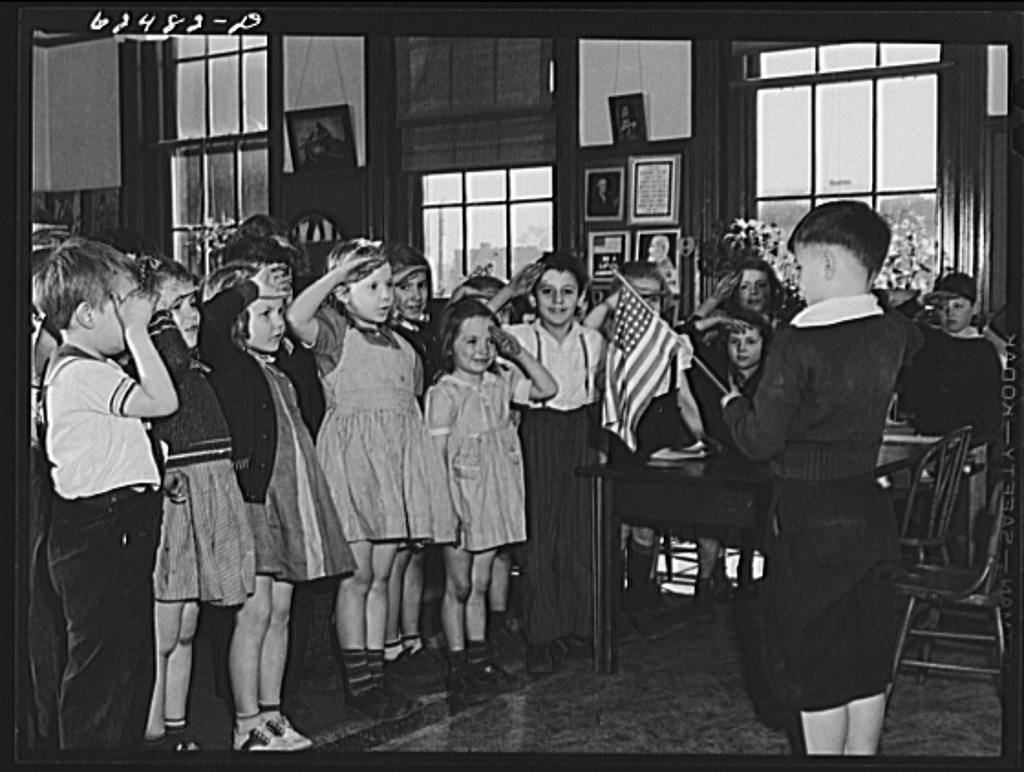
Me and the Pledge of Allegiance

“If there is any fixed star in our constitutional constellation, it is that no official, high or petty, can prescribe what shall be orthodox in politics, nationalism, religion, or other matters of opinion or force citizens to confess by word or act their faith therein.”

pledge of allegianceSometimes, you need to tell a story so you can tell another story. This is one of those times.

Back in the fall of 1968 (I believe), I was a sophomore at Binghamton (NY) Central High School. This was, of course, a period of a good deal of strife across the country. The war in Vietnam and the civil rights movement were prominently on my mind in the months after the assassination of Martin Luther King, Jr. in April. I read a lot of King after his death, most notably his speeches in April 1967 opposing the Vietnam war. Also in 1967, Muhammad Ali was stripped of his heavyweight boxing title for his refusal to be drafted into the armed service.

Both Ali and King evoked race in stating their positions. King asserted: “The war was doing far more than devastating the hopes of the poor at home… We were taking the black young men who had been crippled by our society and sending them eight thousand miles away to guarantee liberties in Southeast Asia which they had not found in southwest Georgia and East Harlem.” Ali declared: “My conscience won’t let me go shoot my brother, or some darker people, or some poor hungry people in the mud for big powerful America.”

I don’t recall whether the incident to be described was just before or very shortly after John Carlos and Tommie Smith’s Black Power salute at the 1968 Olympics.

For these and many other reasons that led to mass racial violence in America, the notion of “liberty and justice for all” in America rang hollow for me. Still, it was a circumstance that led me to act on it.

There were standardized tests being given throughout the school. As a result, the morning announcements on the intercom, including the recitation of the Pledge of Allegiance, were suspended for several days. I decided that perhaps if the pledge wasn’t all that vital to them, maybe I need not say it.

One morning, though, my homeroom teacher, Harvey Shriber, decided unilaterally that we ought to do the recitation. “Please rise for the Pledge of Allegiance,” he said. Everyone stood except me. He repeated his request, but I remained seated. Harvey got red-faced but said nothing.

The first period was math. The teacher was Joe Marino, who I learned later had the same birthday as I (March 7). He was a young teacher, in his first year, at least at BCHS. I was unsurprised when a burly man I had never seen before sat in the seat a couple of rows behind me.

After class, he asked me to go to his office. I asked where that was; it was the principal’s office. Ah, this was Joseph Kazlauskas, the new principal.

At lunchtime, I met with Dr. K, as he liked to be referred to. I remember that he asked me if I belonged to any religious organization that would prohibit me from participating in the pledge, such as the Jehovah’s Witnesses. He cited the Supreme Court case West Virginia Board of Education v. Barnette (1943), about which Justice Robert Jackson wrote: “If there is any fixed star in our constitutional constellation, it is that no official, high or petty, can prescribe what shall be orthodox in politics, nationalism, religion, or other matters of opinion or force citizens to confess by word or act their faith therein.”

No, my opposition to reciting the Pledge of Allegiance did not come from a religious point of view, certainly not from my specific faith’s position. In any case, I agreed to stand when the pledge was offered, but I didn’t have to say it.

Present tense story to follow, sooner than later.

July rambling #2: Let The Sunshine In

The Most Boring Day of the Last Century

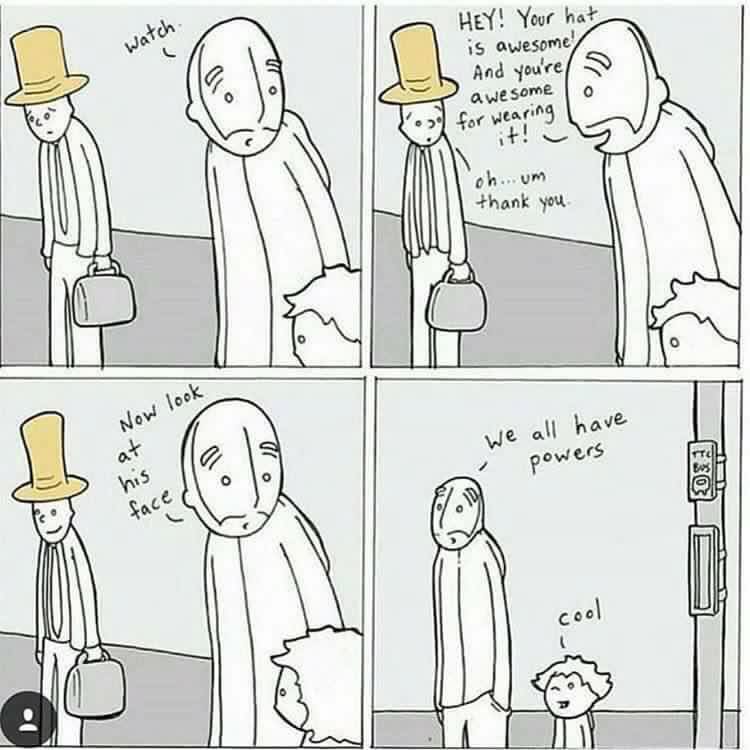
cartoon.awesome

A Real Pro-Police Agenda is Liberal and A Black Republican Tackles The Police ‘Trust Gap’

Why I Don’t Talk About Race With White People

How Abigail Adams Proves Bill O’Reilly Wrong About Slavery

Presbyterian Church USA Joins Growing List of Denominations Repudiating the Doctrine of Discovery – It also voted to develop recommendations of how Presbyterian congregations “can support Native Americans in their ongoing efforts for sovereignty and fundamental human rights”

NAACP calls for national moratorium on charter schools

The Sewage Still Spills. The Park South neighborhood in Albany still dumps raw sewage into the Hudson River

Journalist Jeff Sharlet on What’s Wrong (and Right) With the Media

The 7 biggest problems facing science, according to 270 scientists

SamuraiFrog is 40 and had been having a difficult time with the medical bureaucracy. So Jaquandor suggested some natal day music

The writing process: Levine and Isaacs and Sedinger

MAD magazine’s Jack Davis, R.I.P. and more on Jack

I participated in TWC Question Time #47: Do you find creator controversies make you more or less interested in comics by those creators?

What Calvin and Hobbes taught me about mindfulness

Old photos and other miscellany

Walter Cronkite Apollo 11 Interview with Robert A. Heinlein & Arthur C. Clarke

Alan Moore is the best author in human history

Star Wars book review

Legally Blonde – Feminist Review and Analysis

TV shows made special television commercials to represent the products of their sponsors

Bummer: Sesame Street’ Lets Go Longtime Cast Members Bob, Gordon and Luis

Comedians in cars getting coffee: John Oliver

Now I Know: Calling Dar Bizziebee and The Key to Seceding and Buds But Not Buddies and The Most Boring Day of the Last Century

Sunshine bloggers fillyjonk and Chuck Miller

Is it Mary or Sue? and Hominy and understanding

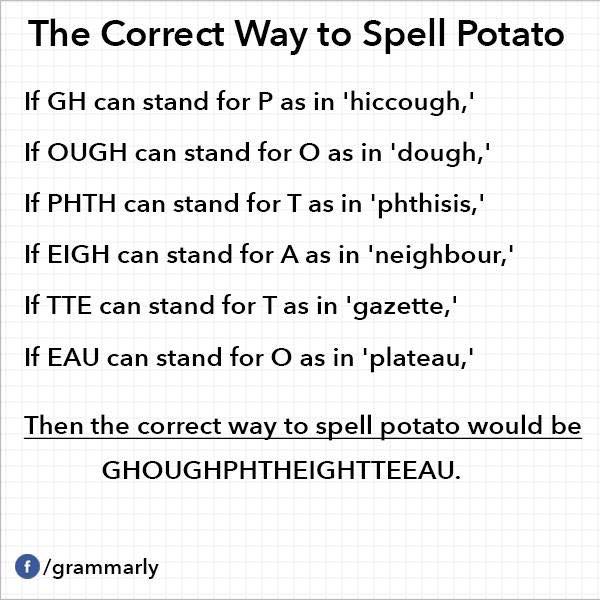
Potato

Elephants and Donkeys

Weekly Sift: The Big Lie in Trump’s Speech and You Have to Laugh

Understanding Trump

Inside the scramble to oust Debbie Wasserman Schultz. “Aides to President Barack Obama urged him to get rid of the troublesome DNC chair last fall. He passed, figuring she was Hillary Clinton’s problem to solve”

Tim Kaine on Abortion

The Houston Chronicle endorses Hillary Clinton, already

Oldest Presidents inaugurated
73 Reagan (II) 1985 Colon cancer, benign prostatic enlargement, dementia (?)
69 Reagan (I) 1981 Life-threatening hemorrhage after gunshot to chest
68 Harrison, W 1841 Died of pneumonia after one month in office.
66 Eisenhower (II) 1957 Stroke, despite taking anti-coagulant medication.
66 Jackson (II) 1833
Reagan turned 70 on February 6, 1981; Donald Trump turned 70 on June 14, 2016; Hillary Clinton turns 69 on October 26, 2016

MUSIC

Marni Nixon, Singing Voice Behind WEST SIDE STORY, THE KING AND I & More, Dies at 86 – I wrote about her last year HERE

Say hello — and then say goodbye — to Qandeel Baloch, twenty-six

Last Week Tonight with John Oliver: Campaign Songs

Ciara – Paint It, Black (The Last Witch Hunter Soundtrack)

Rossini’s Overture to William Tell

HOFFMAN FILES: Those lazy, hazy, crazy days of summer

Coverville 1133: The Linda Ronstadt cover story; and Coverville 1135: Cover Stories for Buddy Guy, Louis Armstrong, and Paul Anka

Michelle Obama & Missy Elliott Do Carpool Karaoke With James Corden

Harry Chapin – What Made America Famous (Soundstage)

A Chorus Hamilton Line

Late 1969: Let the Sunshine In featuring these people and these people and the cast of HAIR. Those scheduled but did not show included Muhammad Ali, Julian Bond, Dick Gregory, John Lindsay and Sidney Poitier

Music Throwback Saturday: Beatles for Sale songs

The two-timed character in the Beatles’ song was more tame than the earlier character.

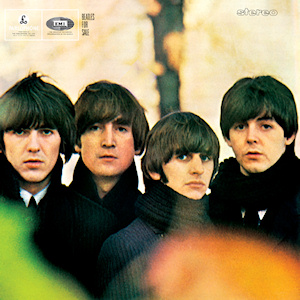
BeatlesforsaleTo American album collectors of the 1960s, Beatles for Sale was an odd duck. Unlike other albums, it neither shares the name of an American collection or primarily matches up with any US release. It became the basis of both Beatles ’65 and Beatles VI, as usual by adding a non-album single, such as I Feel Fine/She’s A Woman.

And note the weariness on their faces, a function, it is believed, of constantly touring, making records or appearing in films.

This continues my reflection of Steve Turner’s “The Beatles: A Hard Day’s Write,” subtitled “the stories behind every song.” Sometimes, the Beatles were as much influenced as influencers. Links to all songs.
I Feel Fine:

It was obviously inspired by Bobby Parker’s riff on his 1961 track ‘Watch Your Step‘.

I’m A Loser:

[Early in 1964] After hearing Freewheeling, which was Dylan’s second album, they went out and bought his debut album Bob Dylan, and according to John…we all when potty on Dylan.

Here’s Bob Dylan’s Dream from Freewheelin’.
Dylan also inspired the thoughtful lyric on You’ve Got To Hide Your Love Away, from Help!

No Reply:

It was based, John said, on ‘Silhouettes‘, a big hit in 1957 for the Rays…His repetition of the line “I saw the light’…could possibly be an illusion to Hank Williams’ song of personal salvation ‘I Saw the Light‘ (1948).

Interesting that the two-timed character in the Beatles’ song was tamer than the earlier character in Silhouettes, who threatens to smash her door down.

I received for Christmas, Reading the Beatles: Cultural Studies, Literary Criticism and the Fab Four, edited by Kenneth Womack and Todd F. Davis. The first article, by Ian Marshall, talks about the Beatles archetypes Ringo the goofball, George the quiet spiritual one, John the intellectual activist, and Paul the cute, melodious one. Marshall posits that those distinct personality types” account for some of the enduring appeal of Beatlesmusic.”

ALSO

Paul McCartney weaves in new bits amidst familiar tunes at Fenway Park July 17

Pure McCartney: Early Days – which should segue into other videos

George Harrison estate slams Trump: Don’t use ‘Here Comes The Sun’— try ‘Beware of Darkness’

The First Trailer for Ron Howard’s Beatles Doc Eight Days a Week: The Touring Years

15 Rare, Behind-the-Scenes Photos of the Beatles

Guitarist Randy Bachman: Demystifying the opening chord of “A Hard Day’s Night”

How I (fictionally) met someone: “I was attending a meeting of the I Hate The Beatles Club, and you walked in and dragged me out by the collar without saying a word. Seemed odd at the time…”

Drinks at the Gadang Sports Bar

Google Eight Days A Week


Ramblin' with Roger
Social media & sharing icons powered by UltimatelySocial