Music Throwback Saturday: Crescent City Blues

johnny cash.folsom

Eurreal Wilford “Little Brother” Montgomery (April 18, 1906 – September 6, 1985) was an American jazz, boogie-woogie and blues pianist and singer from Louisiana.

From his 2013 Blues Hall of Fame induction: “Montgomery first recorded in Chicago in 1930 but spent most of his early professional years in south Mississippi, where he played lumber camps, cafes and nightclubs, sometimes in a blues mode, other times leading a more jazz-oriented dance band. Among the bluesmen influenced by his music in Mississippi were Skip James, Sunnyland Slim, Arthur ‘Big Boy’ Crudup, and especially Willie Dixon.” Among his songs was an instrumental called Crescent City Blues.

Gordon Jenkins (May 12, 1910 – May 1, 1984) I associate as a producer and/or arranger for Billie Holiday, Ella Fitzgerald, The Weavers, Frank Sinatra, and Nat King Cole. “He also began recording and performing under his own name… His ‘Seven Dreams’ released in 1953 included ‘Crescent City Blues’,” featuring singer Beverly Mahr, Jenkins’ wife, borrowed liberally from Montgomery’s version. Jenkins is now in the Songwriter’s Hall of Fame.

Johnny Cash (February 26, 1932 – September 12, 2003) was inspired by a movie Inside the Walls of Folsom Prison (1951), written and directed by an actor, screenwriter and director named Crane Wilbur. Cash stole even more heavily from the Jenkins version to create Folsom Prison Blues, which he wrote and first recorded in 1955.

The lyrics are nearly identical, except for the points where Cash changes the perspective of the narrator. For example, both begin “I hear the train a comin’/It’s rollin’ ’round the bend.” The Jenkins song follows that with “And I ain’t been kissed lord/Since I don’t know when,” but Cash follows it with the darker “And I ain’t seen the sunshine/Since I don’t know when.” All of the verses have this dichotomy, with an identical narrative path and stark differences in tone. Where Jenkins’ narrator says “But I’m stuck in Crescent City/Just watching life mosey by,” Cash has his protagonist sing the far darker “But I shot a man in Reno/Just to watch him die.”

Nonetheless, Jenkins was not credited on the original record from Sun Records. According to Cash’s manager Lou Robin, Cash acknowledged the debt to Jenkins’s song, but was reassured by Sun founder Sam Phillips that he had no reason to fear a plagiarism suit. Fifteen years later, Jenkins sued for royalties. In the early 1970s, after the song became popular, Cash paid Jenkins a settlement of approximately $75,000.

The original Cash studio version hit #4 on the country charts in 1956, but the live version from 1968 spent four weeks at the top of the country charts in 1968. It was also #32 on the pop charts and #39 on the adult contemporary charts. The live album from which it came, At Folsom Prison, went to #13 pop, and #1 country.

Johnny Cash received the Kennedy Center Honors in 1996, and has been inducted into the Country Music Hall of Fame (1980) and the Rock and Roll Hall of Fame (1992), among many other honors.

LISTEN to:
Crescent City Blues – Little Brother Montgomery
Crescent City Blues – Gordon Jenkins, featuring Beverly Mahr (or Maher)
Folson Prison Blues – Johnny Cash
Johnny Cash’s Folsom Prison Blues vs Jenkins’s Crescent City Blues

Bathroom archeology

If that design were in the whole room, it would have been like showering in an aquarium.

pinksink

When we first bought into our house in 2000, one of the things The Wife and I knew we needed to get fixed, sooner rather than later was the bathroom. It was so bad, I actually entered some contest called “America’s ugliest bathroom.” Alas, we did not win. But it was UGLY, SO ugly… I must have those pictures somewhere.

bathroom wall -start
Unfortunately, other home improvements, including, but not limited to, a new kitchen floor, a new roof built by a Trusted and Recommended Roofing Repair Company near me, and having someone dig a big hole in our front lawn to stop sewage from coming to our basement, and replacing our deteriorating above ground pool patio with grass all took precedence. In the summer of 2014, we contracted work to begin on our bathroom starting with a glass shower enclosure.

bathroom wall-2

These pictures do not do their ugliness justice. The pink toilet, pink sink, terrible wallpaper. Worse, a shower where the tile was falling down. Well, the shower was replaced, and the bathroom expanded. The new vanity was purchased in August 2014. But then, for reasons I cannot explain, the work stopped. The vanity was moved from the living room to the room adjacent to the bathroom just before Thanksgiving. In July 2015, after looking at the panel above for nearly 11 months, work commenced again.
bathroom2

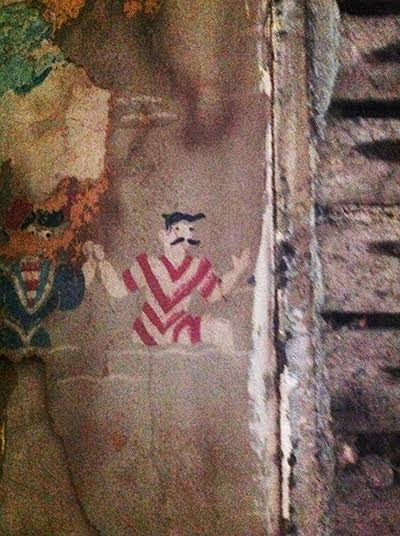
The white, pink and light blue wallpaper was taken off, and somewhere below was this:
seashells

If that design were in the whole room, it would have been like showering in an aquarium. Then, the very next level down, we discovered this:
swimsuit
It made us laugh heartily.

The house is around 100 years old, so it’s quite believable that someone would have used this design.

Sorry that the pics are so dark. they were taken on the Wife’s iPad, before the dim lighting of the bathroom was enhanced.

EDIT: My friend Arthur lightened the top pic and especially the lower three. GRACIAS!

All pictures (C)2015 by Lydia P. Green.

bathroom

fish

swimmer

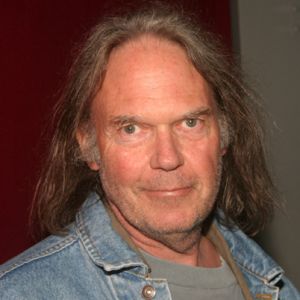
Neil Young is 70

I was unaware of the first, eponymous Neil album.

neil youngEarlier this year, some friend of mine was kvetching about something Neil Young had said or done. Given that his current album, which I haven’t heard yet, is an indictment of the Monsanto Corporation, I rather expect that this would be a highly likely prospect.

Whether he’s kvetching about the sound of MP3s or working to enshrine the right to a healthy environment in Canada’s Charter of Rights and Freedoms, Neil is seldom without a cause.

How did Elvis Costello become “a prototypical angry young man”? “About seeing a ferocious Neil Young performance, he writes [in his new autobiography]: “This was the lesson I took away from that day: If there is an apple cart, you must do your best to upset it.”

The second and third of Neil’s solo albums, Everybody Knows This Is Nowhere and After The Gold Rush, were regular visitors on my college turntables. Neil has put out about three dozen albums, and I have about half of them. This does not include his work with Buffalo Springfield or Crosby, Stills, Nash, and Young. And his album Decade includes some of his group efforts, to complicate this list; I opted to leave off Ohio and Helpless – but link to them here – lest I then need to consider other CSNY songs on this already long list.

To say his body of work is eclectic understates the phenomenon.

35. Piece of Crap– Sleeps with Angels (SWA), 1994. It’s about shoddy merchandising.
34. Ordinary People – Chrome Dreams II, 2007. 18 minutes. In 2012 Rolling Stone had a list of Neil Young’s Top 20 Obscure Songs, and these two songs are on the list.
33. Mystery Train – Everybody’s Rockin’, 1983. Rockabilly. I’m a sucker for his many train songs, and, to be honest, most train tunes.
32. The Losing End (When You’re On) – Everybody Knows This Is Nowhere (EKTIN), 1969. “Wilson, pick it!”
31. Wrecking Ball – Freedom, 1989. I actually prefer the Emmylou Harris version, but I like this too.

30. Harvest – Harvest (H), 1972. The title of his commercial zenith.
29. Transformer Man – Trans (T), 1983. I have an irrational affection for this experiment, maybe because it was an experiment to try to communicate with his son, who has cerebral palsy.
28. Words – After the Gold Rush (ATGR), 1970. Subtitled between the lines of age.
27. Everybody Knows This Is Nowhere – EKTIN. I relate.
26. One of These Days – Harvest Moon (HM), 1992. What great message. “One of these days, I’m gonna sit down and write a long letter To all the good friends I’ve known…”

25. Change Your Mind – SWA. A song for Kurt Cobain.
24. Tonight’s the Night – Tonight’s the Night. A song about a roadie for CSNY who died of a heroin overdose
23. Winterlong – Decade (D). I’m particularly fond of the harmony vocal.
22. Walk On – On the Beach. “I hear some people been talkin’ me down, Bring up my name, pass it ’round…” A message that’d be perfect for the Internet age. Got to #69 on the charts.
21. From Hank to Hendrix – HM. Among other things, great harmonica.

20. Pocahontas – Rust Never Sleeps (RNS). “Aurora borealis, The icy sky at night.” Johnny Cash did a great version of this too.
19. Don’t Let It Bring You Down – ATGR. I thought I did a decent Neil imitation, and this was one of the songs easiest to replicate. Love the intro from a CSNY live album when Neil says the song starts off slow and fizzles out altogether.
18. Cowgirl in the Sand – EKTIN. Anthemic.
17. Only Love Can Break Your Heart – ATGR. A waltz. And very true. #33 on the charts.
16. Oh Lonesome Me – ATGR. This is one of the greatest covers, ever. Compare this to the jaunty Don Gibson hit from the 1950s.

15. Birds– ATGR. I find this terribly sad.
14. The Loner – Neil Young, 1968. I was unaware of the first, eponymous Neil album. But I heard a version of this song on the first Three Dog Night album. I figured it was an obscure Buffalo Springfield cut; nope.
13. Mr. Soul – T. Neil must really care about this song. He recorded it with Buffalo Springfield, and it was the beginning of their Broken Arrow.
12. Old Man – H. James Taylor played six-string banjo, and he and Linda Ronstadt contributed vocals. Got up to #31 on the charts.
11. The Needle and the Damage Done – H. About the heroin addiction of two friends, before they died. Recorded live at UCLA.

10. My My, Hey Hey (out of the Blue)/ Hey. Hey. My My (Into the Black) – RNS. The latter is proto-grunge which got to #73 on the chart.
9. Campaigner – D. Namechecks Richard Nixon.
8. After the Gold Rush – ATGR. Not only a great song, but it generated many great covers.
7. Sugar Mountain – D. Some B-side my college radio station played all the time.
6. Heart of Gold – H. This was a #1 hit, and that seemed to make Neil rather uncomfortable.

5. Long May You Run – Long May You Run (Stills-Young Band), 1976. There are several versions of this song, but this version, which I first heard on Decade, which I believe features the harmonies of the full Crosby Stills & Nash, is my favorite. It has to do with the verse citing Caroline, No.
4. Like a Hurricane – D. An electric masterpiece.
3. When You Dance, I Can Really Love – ATGR. I don’t remember if SHE thought so, but when I was in college, I always thought this was my girlfriend (the Okie) and my song. Love the fact that it starts off fairly slowly, but picks up greatly. This song soared all the way to #93 on the charts.
2. Cinnamon Girl – EKTIN. About the perfect pop song, complete with hand clapping.
1. Harvest Moon– HM. This song is personal, about love lost.

60 minutes of music that sum up the venerable, ornery Neil Young.
***
Coverville 1100: Look at my life, I’m a lot like you: A tribute to Neil Young

Veterans Treatment Court

Veterans respond favorably to this structured environment given their past experiences in the Armed Forces.

justice4vetsI’ve complained before about the often empty statement “support our troops,” as though sticking a flag decal was actually doing something. Here’s the story of a guy who did.

“The first Veterans Treatment Court was founded by the Honorable Robert Russell in Buffalo, New York in January 2008, after he noticed an increase in the number of veterans appearing on his Drug Court and Mental Health Court dockets. Judge Russell saw firsthand the transformative power of military camaraderie when veterans on his staff assisted a veteran in one of his treatment courts but also recognized that more could be done to ensure veterans were connected to benefits and treatment earned through military service.”

So what is a Veterans Treatment Court? “The Veterans Treatment Court model requires regular court appearances (a bi-weekly minimum in the early phases of the program), as well as mandatory attendance at treatment sessions and frequent and random testing for substance use (drug and/or alcohol). Veterans respond favorably to this structured environment given their past experiences in the Armed Forces. However, a few will struggle and it is exactly those veterans who need a Veterans Treatment Court program the most. Without this structure, these veterans will reoffend and remain in the criminal justice system. The Veterans Treatment Court is able to ensure they meet their obligations to themselves, the court, and their community.”

The concept has gotten some media coverage. I had seen the CBS News story. There are only about 220 Veterans Treatment Courts across the country, with a protocol for setting them up. To participate in VTC Planning Initiative, “each community must identify ten individuals representing the following disciplines to form a Veteran Treatment Court planning team, including Judge, Prosecutor, Defense counsel, Community Treatment provider, Treatment Court Coordinator, Community supervision representative, Law enforcement Evaluator/researcher, Veterans Justice Outreach Coordinator, and Mentor coordinator.”

One can find out more about the VTC program here.

R is for Roger Ramjet

Gary Owens,, a drive-time deejay in LA who would get national recognition soon enough as the on-screen announcer for Laugh-In, voiced Roger Ramjet.

roger ramjetWhen I was 12 years old, there was this cartoon called Roger Ramjet. Naturally, for the next several years, some kid or another referred to ME as Roger Ramjet, “a patriotic and highly moral — if not very bright — hero, who is typically out to save the world, with help from his Proton Energy Pills (“PEP”), which give him ‘the strength of twenty atom bombs for a period of twenty seconds’.” This did not bother me.

I don’t much remember the program, but I believe that I mistakenly thought it was made by the same folks who made Rocky and Bullwinkle, the cartoon about a moose and squirrel that I watched fairly regularly. A 2015 article suggests Roger Ramjet was a subversive cartoon classic:

Bullwinkle aired from ‘59 to ‘64. Roger Ramjet came along a year later and Jay Ward’s influence is undeniable. The difference was Roger Ramjet crammed the equivalent number of bad jokes, references, and plot twists of a typical 8-part Bullwinkle serial into each five-minute episode, both mirroring the rapid-fire screwball dialogue of the ‘30s and the frenetic quick-cut comedy to come along a year or two later in shows like The Monkees and Laugh-In…

The show was created originally by animator Fred Crippen… and Ken Snyder, an ad exec who moved over into producing cartoons. They brought in a remarkable team of voice talent and comedy writers, including Gene Moss (the voice of Smokey the Bear) Jim Thurmam (who did a lot of kids shows including Sesame Street), Dick Beals (the original voice of Gumby), and the great Gary Owens [voicing Roger], a drive-time deejay in LA who would get national recognition soon enough as the on-screen announcer for Laugh-In…

In the end, though, the characters and storylines are secondary at best in Roger Ramjet. At heart it’s a matter of trying to keep up with all the lightning-quick jokes and wordplay, the non-sequitors and references.

The Roger Ramjet theme, based on Yankee Doodle, which I well remember
The theme lyrics, which include
Roger Ramjet he’s our man
Hero of our nation
For his adventure just be sure
And stay tuned to this station.

Roger Ramjet – Episode 01 – Dr Ivan Evilkisser;
You can find more episodes on the sidebar, or by Googling under the videos category.

abc 17 (1)
ABC Wednesday – Round 17

Ramblin' with Roger
Social media & sharing icons powered by UltimatelySocial