Sunday Stealing links to a site with thousands of questions. From this are culled fewer than 5000.
Who do you take for granted?
At some level, maybe everyone who has died who I expected to be around a lot longer, from my parents to my friend Norm Nissen. Put differently, I don’t take ANYONE for granted.
Short, knee, or ankle skirts?
Haven’t worn skirts in years, but if I did, surely ankle.
Do you wear a hat?
Always. Hat, cap, or in lieu of those, an umbrella to use as a parasol. I’m really susceptible to the sun on my pate; I have a rational fear of skin cancer.
Who’s your favorite cartoon character?
Popeye, I suppose. He got me to eat spinach. More than that, he had a pretty long fuse. But at some point. “That’s all I can stands, ’cause I can’t stands no more.” I think there’s a bit of me in that.
Does break dancing impress you?
Yes, but I don’t want to do it and have never tried.
Are you a miracle?
Sure, why not? But aren’t we all? Or at least most of us.
Have you ever eaten tofu?
Yes. I think that people processing it have gotten better at it because I used to hate it.
Does the moon have an effect on your mood?
Not so as I [howls at the big thing in the night sky] have noticed.
Many people will say that the Harry Potter books are pure fluff with no literary value. Do you agree?
That’s just silly. If nothing else, it has gotten a ton of people to read enthusiastically.
What are you doing next Wednesday?
Actually, going to my Dad’s group at church.
Elvis won’t leave the building
Why do so many people think Elvis is still alive?
Elvis fulfilled some need for something mythic. I mean, he just COULDN’T die that young, and in such a pedestrian manner, so he’s been willed back to life.
Are your hands cold?
No, but my wife’s hands often are.
Have you ever given blood?
Only about 174 times, as I noted here. There was a stretch of about two decades when I was giving at least five times a year. I give less frequently now because scar tissue has developed on both arms in the locations from which they had traditionally drawn.
What SCI-fi books do you read?
I’ve tried. Asimov, LeGuin, Herbert. I think the only science fiction book I ever finished that wasn’t a children’s book was Stardancer by Kelly Sedinger. Unless you count 11/22/63 by Stephen King. But I did read short story sci-fi when I was younger. And I read comic book adaptations and watch television and movies.
One TV show that oddly came to mind recently was called Life On Mars. It was a 2008 US drama that was based on a 2006 UK series. Apparently, the British version was better, but I’ve never seen it. “A present-day car accident mysteriously sends a detective back to the 1970s.” It starred Jason O’Mara, Michael Imperioli, Gretchen Mol, and Harvey Keitel, but only lasted a season.
Have you ever belonged to a sorority or a fraternity?
I was well-pleased with who got into the class of 2022 for the Rock and Roll Hall of Fame. It turned out that the top eight on the fan poll were selected. * I voted for them
Duran Duran* (934,880 votes), who I voted for as soon as ADD asked; it was a tight race for a while, but DD ran away. I own but one DD album. And it’s the album that people who own only album own, Rio. Here are some videos.
Eminem (684,237). I own none of his music. But I did see the movie 8 Mile. His channel.
Pat Benatar* (631,299), and they rightly included her partner Neil Giraldo; she led early in the fan poll. I may own something on vinyl. The Benatar Giraldo channel.
Eurythmics* (442,271). I LOVE Eurythmics. I have two or three of their albums, plus the greatest hits. Also two Annie Lennox albums. One of my favorite MTV videos is Would I Lie To You. Their channel.
Dolly Parton (393,796); saying that she was undeserving may have been the most rock and roll thing she ever did. I have one of her solo albums, plus the complete Trio albums with Linda Ronstadt and Emmylou Harris. Her channel.
ALSO
Judas Priest (365,999). I own none of their music. Their channel.
Carly Simon (335,489). I have three or four of her albums on vinyl, plus one and the greatest hits on CD. But the Simon Sisters show up on a couple of compilations I own. Her channel.
Lionel Richie* (302,877). maybe one LP. I have one Commodores greatest hits CD. His channel.
Allen Grubman. If you don’t know him, and I didn’t, here’s a 75-minute video from the 1990s.
Jimmy Iovine (yes) – an 18-minute video of the record label owner and producer
Sylvia Robinson -watch the video of The God Mother & Pioneer Of Hip-Hop’s Big Business (R.I.P. Queen Sylvia Robinson)
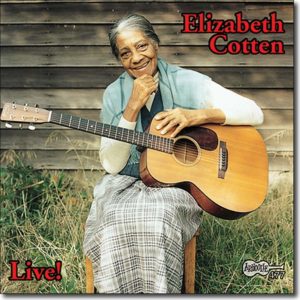
I’m sorry I didn’t know Elizabeth Cotten, though I know all of her acolytes: Pete Seeger (for whom she was a nanny!); Joan Baez; Bob Dylan; the Grateful Dead; Taj Mahal; and Peter, Paul, and Mary, among many others. Surely I know her most famous song, Freight Train.
HARRY BELAFONTE – I’ve written about him here and here and probably a dozen other times
The also-rans on the fan ballot. Devo* (224,723), Kate Bush (207,523); Rage Against The Machine (190,063); Dionne Warwick (186,038); A Tribe Called Quest (145,287); New York Dolls (120,958); Beck (99,771); MC5 (93,666); and Fela Kuti (69,656), who was in the top two in the fan poll last year.
As I have said MANY times, they need to add Estelle Axton!
Damn. I’m going to miss Ken Screven. Ken, who reported for decades at WRGB/CBS6, the first African-American television reporter and news anchor in the Albany market, passed away on May 18 at the age of 71.
I first met Ken back in 1979 when he was covering an arts program at Hamilton Hill in Schenectady, but he doesn’t remember that. He did remember that he interviewed me in January 1985 when we were plugging a benefit concert called Rock for Raoul, in memory of Albany cartoonist/FantaCo employee/my friend Raoul Vezina.
For a number of years, we had this nodding acquaintance. I was going to church in Albany’s Center Square and he lived literally around the corner.
I watched him on the air with his booming voice and compassionate, intelligent presence covering a wide range of stories. One of his best was The Mystery Of Screven County. this was a 3-part series he made in 1996. “Ken spent a week with a producer and a cameraman in 1996…searching for the connection to his name…to a place called ‘Screven County, Georgia’. It was a journey that took him to New York City…Maryland…Savannah Georgia…and the low lands of South Carolina. It went on to win the award of ‘Best Documentary’ from the NYS Associated Press Broadcasters Assn.”
Ken was, as the Times Union’s Chris Churchill noted, “the most recognizable black person here in one of the nation’s whitest metropolitan areas.”
Retirement?
It was The End Of An Era when Ken retired from WRGB after 34 years. Retirement suited him. He was outspoken on Facebook and in his Times Union blog. Since I was also on the TU platform at the time, we ended up comparing notes about audience reactions.
While some, including me, loved what he wrote, others were upset. And part of it was that he acknowledged stuff he had to endure as a black man in the sometimes parochial Capital District. Sometimes, it’s not the big stuff, it’s the little irritants that get under one’s skin. “Gee, you don’t sound black on the radio.” He wrote about being the only black kid in his class, something I could relate to.
When he reviewed the documentary I Am Not Your Negro, he noted, “Even though [James] Baldwin died in 1987, and much of his words contained in the movie reach back 50 years, the issues Baldwin talks about are still with us, raw and festering in the minds of many of Trump nation… This is a significant spotlight on an America we thought no longer existed.” His disdain for Donald J. was unapologetic.
As he noted in The Conscience of the Newsroom for the New York State Broadcasters Association, he encountered “racism as he joined WRGB.” He insisted on “relating the humanity and heart behind the news.” Correctly, I believe, he felt “the art and craft of reporting are succumbing to the demands of the market-driven news cycle.”
Profiled
Ken was often profiled. For our PBS station WMHT, he was part of the Breaking Stereotypes | Out in Albany series. “Ken Screven, a broadcasting trailblazer, talks about life as a gay black man. Originally from New York City, he started in broadcasting in 1973… ‘When I came here I said, ‘OK, this is your authentic life. The person that you’re supposed to be. And who you are.'”
For Spectrum News: Screven Remains Active, Despite On-Air Retirement (Feb. 18, 2019). Years after his retirement from WRGB-TV after 38 years of telling stories that touched everyone, reporter Ken Screven remains a fixture in his community, from his Albany Times Union blogs to his active social media following. This Black History Month, we take an in-depth look at the trails he blazed to become the first black on-air reporter in the Capital Region.”
Chuck Miller and I had an idea for some Times Union bloggers to get together. I jokingly suggested having it at Ken Screven’s place because Ken was having some mobility problems. Chuck actually pursued it, and it was so. Twice, actually, in early 2015 and late 2016.
Talking at FPC
It may be that the last two times I talked with Ken in person were at funerals at my church. In January 2019, it was after the funeral of Bob Lamar, the former pastor of the church. While we were talking, one of the choir members said he had a voice like a Stradivarius, which was true.
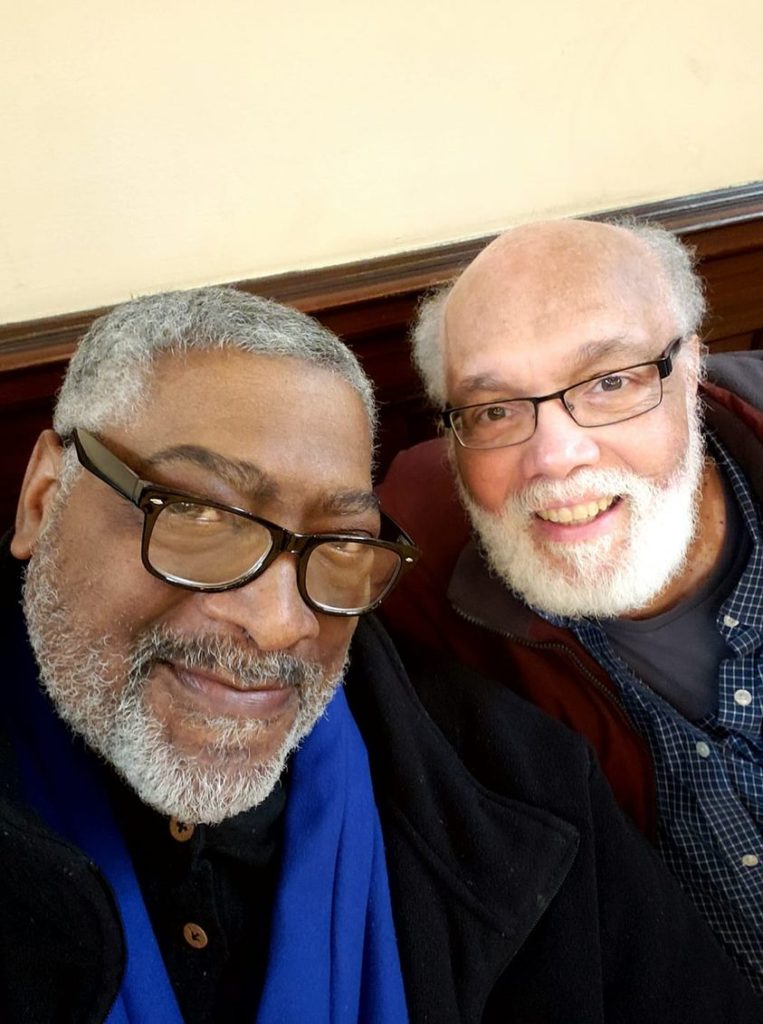
Almost exactly a year later, we talked after the service for our friend Keith Barber. It was at that reception where Ken took this selfie of us, though he didn’t send it to me until a year later, with the message, “Be well.”
In February of 2022, Ken was facing “mounting medical bills.” He went from hospital to rehabilitation a couple of times. His friends started a GoFundMe campaign and raised over $33,000, crushing the goal of $25,000. I contributed, of course. But should this be the way we do health in this country?
Ken was a 2009 Citizen Action Jim Perry Progressive Leadership Award recipient and the In Our Own Voices 2018 Community Advocate honoree. In 2020 he was honored by the Albany Damien Center with its Hero Award, for his commitment to educating and advocating for the community.
But more than that, he was my friend, who died too soon.
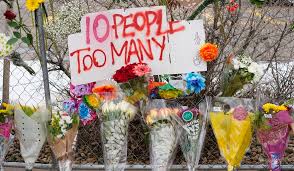
This is actually a photo of flowers after a Colorado shooting, which tells you all you need to know.
If I were to mention every example of gun violence involving multiple victims in America, this blog would not only be really depressing but also quite monotonous. It’d be, as blogger buddy Chuck Miller mentioned, The Vicious Cycle.
Heck, before I could even write about the Buffalo mass shooting, one was killed and four critically wounded at a Presbyterian church in Laguna Woods, CA, likely motivated by political hatred of the Taiwanese community.
Though I heartily support it, I’m unenthused about calls for gun control. If America isn’t going to respond to 20 six and seven-year-olds murdered at school almost a decade ago, I can’t see it happening in this circumstance, I’m afraid.
It IS peculiar that a teenager who threatened a school graduation shooting last year and was given psychiatric treatment, could still purchase three guns legally.
Broome County, NY
So the Buffalo incident compelled me to note it. Certainly, the fact that the shooter* came from my home county, Broome County, NY in Conklin, just a few miles southeast of my hometown of Binghamton, is a huge factor. There’s just a smidgen of irrational personal mortification.
And the other thing is that the shooter drove 200 miles (322 km), three and a half hours, to find a bunch of Black people** to shoot. He, or someone in his circle, did a demographic dive to ascertain that the ZIP Code where that TOPS grocery store had the highest concentration of Black folks within a reasonable driving distance.
WIVB-TV reports that the name of the gunman matches the one “given in a 180-page manifesto that surfaced online shortly after the attack and took credit for the violence in the name of white supremacy… The excruciating detail provided leaves little doubt of its authenticity.”
Yahoo News and other sources note that the manifesto “repeatedly cited the ‘great replacement’ theory, the false idea that a cabal is attempting to replace white Americans with nonwhite people through immigration, interracial marriage, and, eventually, violence…
“In the manifesto, [he] claims that he was radicalized on 4chan while he was ‘bored’ at the beginning of the coronavirus pandemic in early 2020. The document also claims ‘critical race theory,’ a recent right-wing talking point that has come to generally encompass teaching about race in school, is part of a Jewish plot, and a reason to justify mass killings of Jews…”
Crazy?
I came across this frustrating conversation about whether the shooter is “crazy.” “Someone must be crazy to do something like that, right?” “If he’s crazy, he’ll use that as his defense.”
The Weekly Sift guy actually addressed this back in 2019 when another shooter targeted Hispanics at a Walmart in El Paso. “His actions made perfect sense if you took seriously what Trump had been saying over and over: Mexicans are invading our country. If your country is being invaded, isn’t the most obvious response to take military gear to the border and kill the invaders? What’s mentally ill about that?”
The same thing [in Buffalo. The shooter] “has been told time and again that there’s a plot to take America away from the white race, and that this plot will eventually result in racial extinction. If he believes that, what’s the logical response?”
Recognizing the dog whistle
“High-profile people like Trump, Tucker Carlson, and Elise Stefanik may not explicitly tell people to go out and kill Blacks or Hispanics or Jews, but how does anything less deal with the problem they describe?” WS describes the replacement theory much more fully here.
Carlson’s defenders point out that the shooter’s manifesto included no mentions of the FOX commentator, as though that takes him off the hook. Also, the document attacked 21st Century Fox for hiring Jewish people. Whatever. It’s standard Vulpine gaslighting.
Stefanik is the Congressperson in a distinct adjacent to my own, and the third-ranked Republican in the House of Representatives. My local newspaper notes that she and “other prominent Republicans made statements critics say align with theory.” She denies it, of course.
Congressman Adam Kinzinger (R-IL) warns that the Replacement Theory is ‘Getting People Killed.’ “Kinzinger, a staunch critic of former President Donald Trump, has repeatedly slammed [House minority leader Kevin] McCarthy (R-CA), Stefanik, [Marjorie Taylor] Greene (R-GA), and [Madison] Cawthorn (R-NC) in recent months.”
Liz Cheney (R-WY) has said the GOP leadership has “enabled white supremacy.” As Rolling Stone noted, The Buffalo Shooter Isn’t a ‘Lone Wolf.’ He’s a Mainstream Republican.
Ahistoric Americans
Just as some people celebrate “representation” and “diversity”, others see a zero-sum game where white people lose out. The targeting of Asian-Americans and Jews and LGBTQ folk – do I need to document those recent mass shootings? – breaks my heart over and over. This is even though, as Carolyn Gallaher wrote in The Hill after the Walmart shootings, The alternate history behind the ‘great replacement’ theory is simply wrong.
This is one of the reasons I fear Kelly, who is a Buffalo-area blogger, may be right. “It’s an entire community of human beings, specifically targeted again. Reminded that they will always be targeted, again. Reminded of this country’s long ghastly history of this stuff, again. Confronted by our nation’s abject refusal to admit its past and atone, again…
“No horror, no injustice, no violent outcome is ever enough for us to collectively say, ‘No more.’ ‘We will be back about our business by, oh, I don’t know. Dinner time today, I guess…
“We are the country we have chosen to be, and I see no reason to believe we are going to choose to be anything other than this.
“And that is how America will fade into history.” America, prove him wrong if you can. Give us more than “thoughts and prayers.” Show that love actually DOES conquer hate.
*or the alleged shooter, if you prefer ** I capitalize Black people here, which I don’t always do, because of some scold in the comments to this post
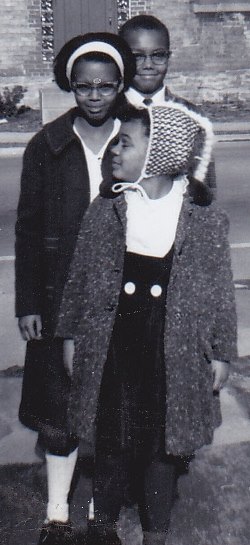
There’s something fundamental that changes in the family dynamic when the parents have both died. So even though I’m in upstate New York, Leslie is in California, and Marcia is in North Carolina, we have managed to keep in touch over the past 11 years, possibly better than before the parents passed.
Leslie, I have seen her a few times, mostly because she’s traveled to upstate New York, for her high school reunion, for one. Then I went to San Diego when she had her bicycle accident in 2018.
Marcia, I haven’t seen her since my mother died in February 2011. Well, that is not ENTIRELY true. I have seen her on ZOOM probably 100 times since the pandemic began. Indeed, as I’m sure I mentioned before, she was really trying to get our sister and me to hold a regular meeting on Skype. But I found the platform wonky and unreliable and non-instinctive when we tried it seven or eight years ago.
I’m not sure that Zoom is more instinctive, but I’ve used it SO often that I’ve become mildly competent with its use. Zoom is more reliable now than Skype was then, which, of course, is not a fair comparison.
Still, I haven’t gone south, and she currently cannot travel much at all. So one of these days, I’ll have to sojourn down there. If I travel alone, that would probably mean the train, because I so loathe flying. To be clear, I’m not AFRAID of flying. I just hate the feeling of being in an airborne bus. The last time I went to Charlotte, it was by train.
Since my wife is retiring, maybe we could drive down, assuming we can find a suitable cat sitter for our flaky felines
Natal day
Oh, yeah, I should mention that today is Marcia’s birthday. She’s HOW old? Well, she’s younger than I, younger than Leslie. I’m trying, but failing, not to refer to her as my baby sister. She hasn’t been a baby in.. a while.
It’s weird not seeing people that you’ve known for years that you haven’t interacted with in person. One gets a little of that at high school reunions. Heck, COVID restrictions had that effect to some degree.
It’s different, though, with a sibling. They are, statistically speaking, the people one is likely to know for the longest continual amount of time. So sometime before her NEXT birthday, I’ll have to see Marcia face to face again.

 Sunday Stealing links to a site with thousands of questions. From this are culled fewer than 5000.
 I was well-pleased with who got into the class of 2022 for the Rock and Roll
  Damn. I’m going to miss Ken Screven. Ken, who reported for decades at WRGB/CBS6, the first African-American television reporter and news anchor in the Albany market,