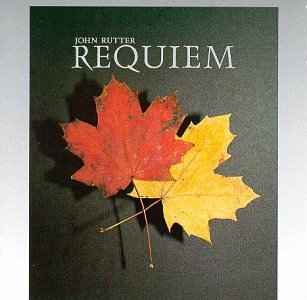
The John Rutter requiem

Rutter was born in 1945

john rutter requiemI am a sucker for a good requiem. The John Rutter Requiem is one of my two favorites.

I’ve sung the Mozart, Faure, Durufle requiems, and probably a couple more. There’s often a certain pattern, to which the composer may add or leave out. The Wikipedia discussion is useful.

I must admit that the Verdi Dies Irae, a theme that shows up repeatedly in the piece, is both one of the most recognized and my favorite single two-minute musical pieces.

While I’ve never performed the Brahms German requiem, my former church choir has sung the fourth movement quite frequently, in English. One of my favorite people at my old church wants the choir to sing How Lovely Is Thy Dwelling Place at their funeral.

Published in 1985

Still, the Rutter as a whole touches me greatly. Requiem aeternam, the first movement, “opens with a steady beat of the tympani, to which instruments enter, first without a defined key.” And I think I like the musical uncertainty

The second movement, Out of the Deep, begins with a cello solo; I love a good cello solo. The voices join, and they’re low in the register as well. The text is from Psalm 130; I’ve learned that the text is commonly used at Anglican funerals. The quartet from my choir sang it in the autumn of 2021. Ultimately, this could be transformed into a blues piece, and I can hear it clearly that way.

Pie Jesu is the third movement, featuring the soprano, then the chorus. It includes the prayer to Jesus for rest.

The fourth movement, Sanctus, is ” a lively, and exclamatory movement which is brightly orchestrated with bells, flute, and oboe and occasional timpani recalling the passage in Old Testament scripture in Isaiah 6, and the worship of the six-winged seraphim in the heavenly throne-room of God.”

Choirs I’ve been in have performed The Lord Is My Shepherd, the sixth movement. The text, of course, is Psalm 23, scripture commonly used at many funerals.

Finally, Lux aeterna, for soprano and solo, “includes words from the 1662 Book of Common Prayer Burial Service (‘I heard a voice from heaven…’)”

The recording I own is this one.

Where do you get your news

What IS news?

My intention was to write a blog post answering another Ask Roger Anything question. But it got VERY long, and slightly off point. So I’m going to address “Where do you get your news?”
I remember going to a panel discussion in 2017, part of a symposium called Telling the Truth in a Post-Truth World.” The segment I attended was “Presidents and the Press: Trump, Nixon, and More.” I wrote about it here. Looking back, when the threat of disinformation already seemed problematic, it now seems like a Peter Zenger moment compared with what we’re now experiencing less than five years later.

One issue for me: I don’t know what “the media” means anymore. Twenty years ago, it would have been pretty easy: CBS the Wall Street Journal, the BBC, Fox News, NPR, the New York Times, the Associated Press, the usual suspects.

Now, EVERYTHING is “the media”. Facebook and Twitter feeds and YouTube influencers, pretty much anyone with a megaphone, a microphone, and, preferably, video. This is NOT all bad, mind you. Stories from George Floyd’s murder to war atrocities have been revealed.

Still. About a dozen years ago, I was trying to engage someone in a conversation about information consumption. They said that they had gotten some tidbit from Facebook. I asked where they found it on Facebook. What was the source? “FACEBOOK,” they retorted, exasperated that I seem to be hard of hearing.

North, east, south, west

The other thing I don’t know anymore is “What is ‘news’?” Because many people take in their info via feeds, all the news is of the same significance. So a Kardashian marries, war crimes, the opening of the new Marvel movie, the next mass casualty shooting comes at you. What’s important?

If you happen to read a newspaper – you dinosaur! – you can tell what’s considered most significant the placement of the stories and the size of the headlines. Watching a news broadcast, the story that tends to lead might give you a clue. Online, so many items are vying for our attention.

A friend of mine recently complained that Ginni Thomas’ call to the White House on January 6 disappeared quickly. Of COURSE, it did; that was old news, which may pop up again if she’s called before a House committee or refuses to. But we have to move on to the next topic.

As noted, WHERE one gets the news matters a lot. Sure NBC and Fox are different. But I’ve been receiving newsfeeds that are even less mainstream, let’s say. It’s a bunch of articles such as Fauci, Vaccines, and Big Pharma’s Power by Robert F. Kennedy, Jr. Anti-vax, pro-Canadian truckers who were blocking Ottawa’s downtown earlier this year.

Don’t believe your eyes

But a lot of it pro-Putin. This utterly fascinates me. Here’s a quote from the sender. “Putin is spot on and I wish we had a leader like him…..remember again the msm is just full of lies and U.S.A./Israeli foreign policy and their puppets like Zelensky who can’t even control his fanatic military project what they are and what they are actually doing in Ukraine onto Putin and Russia…God help us with the jerks we have to deal with …”

The atrocities we think we’re seeing on our TV screens are either “some staged dead” or “killed by Ukrainian fanatical ultra-nationalist battalions.”

The original source of some of this is Archbishop Carlo Maria Viganò, the
former Vatican envoy and outspoken papal critic. He released a letter in March blaming “deep state” forces in the United States, the European Union, and NATO for triggering the current war and demonizing Russia.”

It is reasonable to ask, as Noam Chomsky does, whether the US policy will bring about de-escalation in Ukraine. It’s quite another to make Putin the victim in this narrative.

I had wondered where folks such Tucker Carlson had gotten his pro-Russia position, which he has now conveniently abandoned. It’s OK to believe that sort of thinking is unsettling. But know that a lot of people in this country are getting the same messages, probably from sources which we’ve never heard of.

In-person FFAPL book reviews are back!

also, author talks

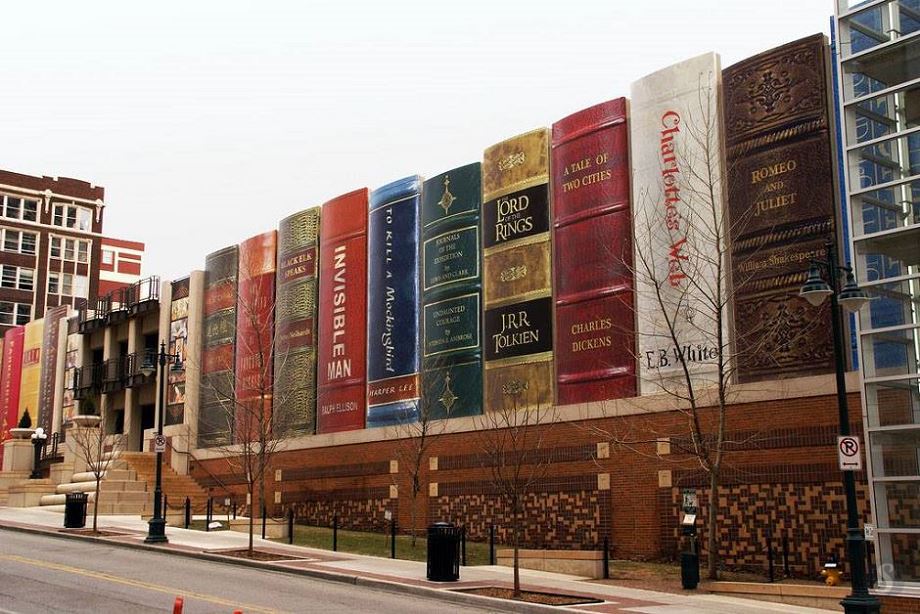
book facade
for National Library Week

The Albany Public Library announced that is opening meeting rooms and resuming in-person programs starting Monday, April 4. This means that the book reviews conducted by the Friends and Foundation of the Albany Public Library (FFAPL) are back every Tuesday at noon, starting April 19 at the Washington Avenue branch!

The Friends of the APL, one of the antecedents to the FFAPL, held book reviews or author talks Tuesdays every week when the library was open literally for decades. In recent years, these events were scheduled primarily by Eugene Damm and Jonathan Skinner. They continued until… well, you know what.

For a while, there was no book review programming at all. Then someone suggested that maybe we should utilize that new-fangled electronic device known as ZOOM. I got involved with this mostly because my computer was more robust than Jon’s or Gene’s, and because had retired. Some of the talks were recorded; you can find some of them here. A few we don’t have because the technology failed. A couple that was done outside at the Bach branch had too much noise from neighbors and the wind.

The Upper Hudson Library Council noted the effort that Jon and I had done in the remote world by awarding us as UHLS volunteers of the year. We were among several folks honored in June 2021, online, of course.

We’re BACK

Here’s the schedule thus far for the Tuesday talks. Albany people: if you can pass the word, it would be greatly appreciated.

19 April Book Review | Nim Chimpsky: The Chimp Who Would Be Human by Elizabeth Hess. Reviewer: Joseph Krausman, MA, MFA, retired policy analyst, poet, and teacher.

26 April Book Review | The Color Of Law by Richard Rothstein. Reviewer: Roger Green, a former librarian and past president of the Friends of Albany Public Library.

3 May 3 Author Talk | Pippa Bartolotti, Cornish/Welsh human rights and climate activist, discusses & reads from her poetry book, The Symmetries: Book 1 Poetic Symmetry.

10 May Book Review | The Trial of Leonard Peltier by James W. Messerschmidt. Reviewer: Larry Becker, lawyer, activist, past member of Albany’s Community Police Review Board, & producer of the Radio Free Blues Show.

17 May Book Review | Science on a Mission: How Military Funding Shaped What We Do and Don’t Know About the Ocean by Naomi Oreskes. Reviewer: Jonathan Skinner, Ph.D., retired statistician & amateur classicist.

24 May Book Review | A Wild Idea: How the Environmental Movement Tamed the Adirondacks by Brad Edmondson. Reviewer: Tom Ellis, educator, and activist.

31 May Book Review | Not One Inch: America, Russia, and the Making of Post-Cold War Stalemate by M. E. Sarotte. Reviewer: Gene Damm, former journalist and past president of the Friends of Albany Public Library.

Actor Marilu Henner turns 70

She remembers almost everything!

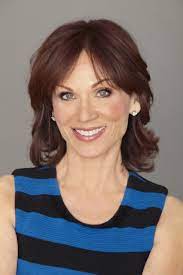
Marilu HennerI’m most familiar with the actor Marilu Henner from the sitcom Taxi, which aired on ABC for four seasons and NBC for one, from 1978 to 1983. She played Elaine Nardo, the only female cabbie in the regular cast.

I also watched her on Evening Shade, a show about retired football player Wood Newton (Burt Reynolds) moving back to rural Evening Shade, AR with his attorney-wife (Henner) and their four children. It ran on CBS from 1990 to 1994  She appeared in the movie L.A. Story (1991).

But I wouldn’t have written about her here but for one specific trait. Marilu Henner has hyperthymesia or total recall memory. She claimed, and it was verified by researchers, that she can remember specific details of virtually every day of her life since she was a child.

I remember her appearance on 60 Minutes on December 19, 2010. In fact, as Henner discusses in 2015 for EMMYTVLEGENDS.ORG, CBS could have had a story about the subject of extraordinary memory with another subject around 2006. But correspondent Lesley Stahl knew her friend Henner had a very good memory and thought it was no big deal.

Later, Stahl discovered what an extraordinary gift her friend had. Here’s Part 1 and Part 2 of Endless Memory, which also features other people with hyperthymesia and the researchers investigating the phenomenon. 60 Minutes Australia ran a similar story, featuring Henner, in 2018.

The performer was a consultant for a TV show called Unforgettable. “Carrie Wells (Poppy Montgomery), a former police detective, has a rare ability to remember virtually everything she experiences including detailed visual recall. She returns to police work and uses her ability to solve crimes.”

What do I remember?

I was on an FFAPL Zoom talk with author Isaiah Rashad on February 15. He asked us what do we remember about 1997, and most of us struggled. I was in a wedding in 1996. In 1998, I went to the Rock and Roll Hall of Fame and appeared on JEOPARDY!

But 1997? Nothing came to mind until hours later. I was in a Bible study in 1996-97, 34 weeks and I read the whole thing. One of the latter exercises was to attend a worship service, not in my tradition.

As I mentioned, in passing here, I went to a Coptic (Egyptian Orthodox) church on Madison Avenue in Albany for a three-hour service. Afterward, I went to the coffee hour. And one of the parishioners, discovering that I was a Protestant, said, very casually and seemingly without malice, “You do know you’re going to hell, don’t you?” THAT happened in 1997.

But Marilu Henner could likely tell you what shoes she wore on any given day in 1997. She has a very meticulous closet, with all of the hangers the same. Her pairs of shoes always have one toe and one heel out.

Interestingly, of the five people in the original 60 Minutes segment, only Henner was in a relationship, her third marriage. This one seems to be the charm, especially after she helped discover Michael Brown’s bladder cancer

ARA: Baseball and the Olympics

Designated runner rule – yuck

Kelly, who’s now been writing over at ForgottenWorlds.net, asked a few questions for Ask Roger Anything.

Should we still be having the Olympics? And if so, is it time to just pick a permanent location for the Summer and Winter Games and stop all this business of Olympic bids and cities and countries spending billions for this stuff?

I had been just having this discussion about the outsized impact of sports on society. Is it social good, exercise, comradery? Is it glorified too much? I know that there are folks around Albany trying to restart youth baseball in a particular neighborhood, not just for sport’s sake but to encourage discipline and teamwork.

On the other hand, I’m rather annoyed by corporate welfare. Specifically, New York State taxpayer money is going towards building a new stadium for the Buffalo Bills.

Here’s a video about how the Olympics hurt the poor of the host city and add to the militarization of the communities where the games are being held.

Optimally, I would like to see the Olympics, and the Paralympics continue. But the power needs to be ceded to some non-IOC entity that includes athletes. Perhaps they could root out cheating far earlier than what happened with that poor Russian 15-year-old skater this year. The grownups have to do better.

Finding a single country, or two, for the Olympics, will be quite difficult, I’d think. I mean, it can’t be Russia, China, the US, Saudi Arabia, Israel, Iran, or a bunch of others. One could certainly make the case for Greece for the Summer Olympics, although the 2004 games were a fiscal debacle.

And what of the Winter Games? Politically, I doubt they could have both sets of Games in Europe. I’d love to see them in southern Africa or southern parts of South America. Or Uruguay in the summer and Switzerland in the winter.

Peanuts and Cracker Jack

You can make ONE change to something about Major League Baseball. What is it?

Let’s go with two because I know you already agree with the first. The baseball playoff games and World Series should start by 7 pm Eastern at the LATEST. How are you supposed to generate a new generation of fans when the premier games finish after their bedtime?

The other change is controversial, I imagine. And for a baseball traditionalist like myself, it’s surprising. Allow for a tie after 12 innings. This would only apply to the regular season.

And count the ties as half a win and half a loss. This is why this matters: in a 10-game pretend season, one team could go 6-4 and another 5-3-2, If you ignore the ties altogether, one team would have a .600 record, and the other .625. I don’t want to reward the tie.

Many pro sports have ties: NFL football, NHL hockey, soccer. Chess has the stalemate.

I thought about this because the bizarre thing MLB implemented during COVID, the designated runner rule, may not be dead. It’s that… thing established in 2020 and 2021 to shorten the game. A runner mysteriously is placed on second base in extra innings. I HATE, HATE HATE this rule, WAY more than I dislike the designated hitter.

Totally unrelated, Deep Space Nine Innings: A Star Trek Spinoff’s Unlikely Baseball Obsession.

Ramblin' with Roger
Social media & sharing icons powered by UltimatelySocial