“Content of their character”

History is not a feel-good story

I know that I have railed against people using literally one line from one Martin Luther King, Jr. speech out of context. You have heard it, a lot. “I have a dream that my four little children will one day live in a nation where they will not be judged by the color of their skin but by the content of their character.”

This was, obviously to me, an aspiration. I came across an article from 2013, a half-century after the speech, which addressed a cultural debate.

“The meaning of King’s monumental quote is more complex today than in 1963 because ‘the unconscious signals have changed,” says the historian Taylor Branch, author of the acclaimed trilogy ‘America in the King Years.’

“Fifty years ago, bigotry was widely accepted. Today, Branch says, even though prejudice is widely denounced, many people unconsciously pre-judge others.

“‘Unfortunately race in American history has been one area in which Americans kid themselves and pretend to be fair-minded when they really are not,’ says Branch, whose new book is ‘The King Years: Historic Moments in the Civil Rights Movement.'”

Two of King’s children, Martin III and Bernice, offered similar sentiments.

The “real” anti-racists?

Conversely, “Conservatives feel they have embraced that quote completely. They are the embodiment of that quote but get no credit for doing it,” says the author of the article [in the RightWingNews.com blog], John Hawkins. ‘Liberals like the idea of the quote because it’s the most famous thing Martin Luther King said, but they left the principles behind the quote behind a long time ago.'”

For me, the latter sentiment suggests, not only have we’ve all been to the mountaintop, but that we’ve gotten to the Promised Land. This is a reference to MLK’s speech in Memphis the day before he was assassinated. He says, “I MAY NOT GET THERE WITH YOU.” We had not, and have not, yet overcome.

Jim Crow

So how do we assess this conundrum? We look at the data. And I’ve suggested before that we set aside slavery in the discussion because most people agree; Slavery Was Bad. (And those who think otherwise… well, I’ve got nothing.)

By looking at it, we see the failure of the 40 acres and a mule to come to fruition. And 4000 lynchings of black people, often as public spectacles; let’s have a picnic! Voter suppression still happens today. Property loss from New Deal policies that didn’t apply to black people to the GI Bill that didn’t apply to black people to roads going through neighborhoods where black people lived. Oh, and mass incarceration. And why Black Lives Matter. (RIP, Trayvon Martin. Ten years gone.)

Or we can talk about the lack of black representation in many areas and not just NFL ownership.

There is evidence that the information is easily retrievable. But we can’t talk about this because it might make us “uncomfortable. It especially might make our poor, innocent children, “uncomfortable.” So we build boogie men, such as Critical Race Theory, and shut down discussions about race. Because we’re all equal now.

And while we’re at it, let’s not talk about gay people or transgender people or the Holocaust because, if we do THAT, it’ll be traumatic for our children! (I’m talking about YOU, Florida.)

Jaquandor

I’m recommending a post by Kelly Sedinger, which he wrote at the end of February 2022. It’s titled “History is not a feel-good story.” And touches on some of the issues I’ve addressed here. It links to a very good John Oliver video on the wringing of hands over CRT.

Kelly notes, correctly: “History isn’t about feeling bad or feeling good. History is about learning what we’ve done, the good and the bad, so we can make better decisions later.” OR we can just ostrich our way through life.
1972: the Easter break

Kentucky State College Concert Choir

Robert Yates.Aaron Yates.Audrey
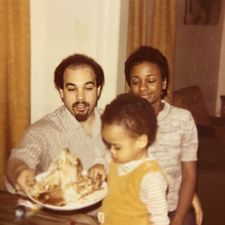
Robert, Aaron, Audrey Yates on Easter Sunday (April 2), 1972 at 29 Ackley Avenue, Johnson City, NY, home of Les and Trudy Green

In the 1972 annals, I had totally forgotten that the Okie came home with me for Easter break, beginning March 28. She drove us from New Paltz to Johnson City, near Binghamton. She met our family friends the Pomeroys.

The next day, we went to my old high school, Binghamton Central, and talked with my friend Carla [we’re still in touch] who yelled to me from a third-story window until a teacher closed it. Also, Amy H. [recently reconnected] and others [who I’ve lost track of]. Saw one of my favorite teachers, John Kellogg [RIP].

March 31 – My good friend Carol and her then-beau drove the Okie and me up old Route 11 from Binghamton to Syracuse to see the new movie The Godfather. [Was it not yet playing locally? Possibly.] Other films I had seen in March 1972: The Importance of Being Earnest; Gimme Shelter; Billy Jack; 2001: A Space Odyssey; and Performance, which I described as “weird”.

April 1 – My cousin Robert Yates, his wife Audrey, and their two-year-old son Aaron came to visit. Robert was my mother’s first cousin. But she was born in 1927, and he in 1946, so he was actually closer to my age. Robert, Audrey, my sister Leslie, and I went bowling at two different venues, in JC and the Vestal Plaza, a total of six games.

Easter Sunday

April 2- A bunch of returning college students, including me, were acknowledged at church. Inspired sermon by Rev. A.C. Bell. After dinner, lots of card games (whist, hearts) with Robert and Audrey, who returned to NYC that day, my parents, the Pomeroys, and me. The Okie also left for her parents’ house.

[Young Aaron was murdered – shot or stabbed, I understand – when he was 18 or 19. This devasted his parents, of course, but Robert became a great father figure, not just to his nieces and nephews, but to kids in the neighborhood. He died in 2016.]

April 3 – I was “supposed to meet some people @ Bing. Pub. Library… but no one showed. Someone mistaking me for an employee I assisted w/ card catalog.” [I did work there as a page two or three years earlier.] Saw familiar faces, including Vito [RIP, 1991], Michael Butler, Don Wheeler, and others.

Later, I interviewed my father for my economics paper.

April 4 – participated in a memorial for MLK, with participation by my church’s choir. Later, my mom’s bowling team won the championship. The US recognized Bangladesh.

KSCCC

April 5 – Adam Clayton Powell died yesterday, and baseball DIDN’T start today.

A concert by the Kentucky State College Concert Choir (KSCCC) was held at First Presbyterian Church. Rev. Roberts, the father of my HS friend Catherine Carson, gave the invocation. The Broome County Urban League officers, which probably included my father, were introduced.

“Guys in black tuxes with white shirts. Gals with pink blouses and light purplish long skirts. They sang four very beautiful classical numbers; I liked to listen to them with my eyes closed. Then a Slavic song and a chant-like song they had done last year. Males sing semi-spirituals and a female soloist sang an operatic song and another piece…

“Mom and I noticed that dad didn’t applaud at all for Motherless Child. Perhaps it means too much for him.” Someone announced that my sister Leslie “has won a scholarship to KSC.” [No, she did not end up going there.]

“Four spirituals with African drums… After the standing ovation, they sang Ain’t A That Good News (like it’s supposed to be sung) and The Battle Hymn of the Republic with a piano intro full of discords, which dad dug.”

Afterward, some co-ed seemed to be flirting with me, which was both awkward and nice. “Leslie auditioned sans choir as the audience like I had last year. [I have no recollection of that happening in 1971.] She sang a capella I Wish I knew How It Would Feel To Be Free rather well. She went with the KSCCC to a party at the Treadway Inn.”

Note that KSC, an HBCU, became Kentucky State University in 1972.

1932 #1: Depression music

ten cents in 1932 is about two dollars today

Cole porter
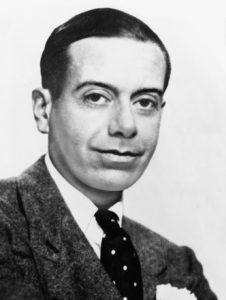
Cole Porter

Here are the songs that reached #1 in 1932 in the United States. From A Century of Pop Music by Joel Whitburn: “The record industry underwent an almost total collapse to the point of selling only six million discs in 1932 – compared to the peak of 140 million just five years earlier.”

The growth of radio, in addition to the economic woes, contributed to this phenomenon. Some of the songs reflect the difficulties of the era.

Night and Day– Leo Reisman with Fred Astaire. 10 weeks at #1. A song by Cole Porter from the musical The Gay Divorcee. I became much more familiar with the works of Porter after I bought the original Red Hot + Blue album in 1991. This song was also covered by Peter Sprague and Rebecca Jade on Planet Cole Porter
In A Shanty In Old Shanty Town – Ted Lewis and his band, 10 weeks at #1

Please – Bing Crosby with Anson Weeks and his orchestra, 6 weeks at #1
Paradise – Leo Reisman and his orchestra with Frances Maddux, vocals, 6 weeks at #1. From the film, A Woman Commands

We Just Couldn’t Say Goodbye – Guy Lombardo and His Royal Canadians with Carmen Lombardo, vocal, 5 weeks at #1

Paradise – Guy Lombardo and His Royal Canadians with Carmen Lombardo, vocals, 3 weeks at #1
All Of Me – Paul Whiteman and his orchestra, with Mildred Bailey, vocals, 3 weeks at #1. The song was written by Gerald Marks and Seymour Simons. It was given the Towering Song Award by the Songwriters Hall of Fame as a result of the countless covers, including by Frank Sinatra and Willie Nelson

Deuce

All Of Me – Louis Armstrong, 2 weeks at #1
Dinah – Bing Crosby with the Mills Brothers, 2 weeks at #1
Say It Isn’t So – George Olsen with Paul Small, vocals 2 weeks at #1. Written by Irving Berlin
Lullabye of the Leaves – George Olsen, 2 weeks at #1

Too Many Tears – Guy Lombardo and His Royal Canadians with Carmen Lombardo, vocal, 2 weeks at #1
River, Stay Away From My Door – Guy Lombardo and His Royal Canadians with Kate Smith, 2 weeks at #1
Brother, Can You Spare A Dime? – Rudy Vallee, 2 weeks at #1. From  Wikipedia: “Written by lyricist Yip Harburg and composer Jay Gorney,… [it] was part of the 1932 musical revue Americana; the melody is based on a Russian-Jewish lullaby. The song tells the story of the universal everyman, whose honest work towards achieving the American dream has been foiled by the economic collapse.”
Brother, Can You Spare A Dime? – Bing Crosby, 2 weeks at #1

Reisman, Whiteman, Olsen were on Victor
Lewis, Armstrong, and Vallee were on Columbia, though I also found the Armstrong recording on Okeh
Crosby and Lombardo were on Brunswick, except the Kate Smith cut, on Columbia

Comments I (fortunately) do not receive

rocket appliances

comentI hole-hardedly agree, but allow me to play doubles advocate here for a moment. For all intensive purposes I think you are wrong. In an age where false morals are a diamond dozen, true virtues are a blessing in the skies. We often put our false morality on a petal stool like a bunch of pre-Madonnas, but you all seem to be taking something very valuable for granite.
So I ask of you to mustard up all the strength you can because it is a doggy dog world out there. Although there is some merit to what you are saying it seems like you have a huge ship on your shoulder. In your argument you seem to throw everything in but the kids Nsync, and even though you are having a feel day with this I am here to bring you back into reality.

I have a sick sense when it comes to these types of things. It is almost spooky, because I cannot turn a blonde eye to these glaring flaws in your rhetoric. I have zero taller ants when it comes to people spouting out hate in the name of moral righteousness. You just need to remember what comes around is all around, and when supply and command fails you will be the first to go.

Make my words, when you get down to brass stacks it doesn’t take rocket appliances to get two birds stoned at once. It’s clear who makes the pants in this relationship, and sometimes you just have to swallow your prize and accept the facts. You might have to come to this conclusion through denial and error but I swear on my mother’s mating name that when you put the petal to the medal you will pass with flying carpets like it’s a peach of cake.

Eye has know idea of the oranges of this peace, though I recipes it from my fiend Damn.

Too many weeks “like this”

hitting things

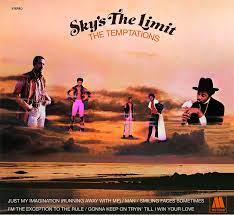
sky's The LimitIn response to my most recent request to Ask Roger Anythingfillyjonk writes: Green says “I hope I don’t have a lot more weeks like this” after having several people in his life die and wow, I have had WAY too many weeks “like this” these past couple years. (ANOTHER friend at church lost her husband on Saturday). I’ve stared into the abyss altogether too much these past few years but find I have few answers

While I’m unclear whether it is an actual question or an observation, the narrative is compelling enough to try – emphasis on TRY – to answer it. The short answer is that I don’t know. Sometimes, I feel that I don’t know anything. But I keep throwing things against the wall, hoping some of them stick.

Releasing the rage

For one, I yell at the television when certain people are saying… the polite term is BS. This is a relatively recent phenomenon, dating perhaps from 2015. Lindsay Graham, for instance, is far more frustrating to me than people who are always awful, like Marjorie Taylor Greene or Josh Hawley. After expelling the anger, I feel better. No harm is done. Furniture and people are intact.

Recently, I mentioned to Arthur that a Dear Abby letter actually enraged me, much to my surprise. Basically, a family member thought another in his tribe was grieving for too long. She had “overstayed her time on the pity potty.” Abby for her part disagreed with the letter writer. Having allowed myself to be angry, it dissipated.

For far too long, I had tended to try to suppress my anger as “not nice” until I would blow a gasket. One needs to release the steam from the radiator.

Boy, I miss playing racquetball. That was a really good release of tension, hitting a bouncy thing with a fancy stick. I’m reminded that when I got really perturbed, I would find a stick, maybe a tree branch that had fallen, and strike it against a telephone pole or another item unlikely to be damaged. Therapeutic.

Can’t nothing be love but love 

On a Vlogbrothers post titled Motivation in Hard Times, John Green noted that he used to operate out of anger and resentment. And for a while, that worked for him. He showed up his old writing teacher who said he wasn’t good enough to be in his class. Ha! He had books published and then turned into movies. But ultimately, and he is a tad embarrassed by it, hesky's The Limit says it comes down to love.

In February, Dua Lipa interviewed Stephen Colbert on his show. She asked him about his faith. He said it’s “‘connected to the idea of love and sacrifice being somehow related and giving yourself to other people.'”

Surely, love is the optimal route. Yet you also need to find a term that’s become almost a cliche, self-care, whatever that is. It might be playing with stuffed animals or listening to music or reading comic books or getting a massage. Writing helps me somewhat. It’s naturally different for everyone.

I wish you well.

Ramblin' with Roger
Social media & sharing icons powered by UltimatelySocial