First is important; “can’t count” is better

Nine is enough

Margaret Chase Smith 1950I’ve long had this rule of thumb about progress for groups who have been traditionally underrepresented in an area. The person who is first is important, of course, indeed vital. But real equality takes place when one can’t count the number without looking it up.

So it’s excellent that Sarah Thomas is the first woman to referee a Super Bowl game. And there are plenty of other firsts in sports in recent years.

But “‘What is really going to excite me is when this is no longer aberrational or when this is no longer something that’s noteworthy,’ said Amy Trask, who in 1997 became the Oakland Raiders’ chief executive and the first woman of that rank in the N.F.L. Few have followed in similar roles.”

Once I knew all of the female spacefarers. Now that there have been more than five dozen, I look at the list and not recognize some of the names. And THAT is a GOOD thing. Too many to keep track of is the point of the exercise.

US Govt

There are currently 24 women in the US Senate and 58 all-time. That’s not nearly enough. Still, I can no longer name all of the current female Senators, which I could do as recently as the early 1990s. (Margaret Chase Smith, R-ME, was the ONLY woman in the Senate the year I was born.)

I’m looking forward to the point when I can’t name all of the women who have been on the US Supreme Court. (Hint: there have been five of them, and three are on the court presently.)

The late, great Ruth Bader Ginsburg had a great quote about this. “When I’m sometimes asked ‘When will there be enough [women on the Supreme Court]?’ and I say ‘When there are nine,’ people are shocked. But there’d been nine men, and nobody’s ever raised a question about that.” Amen.

Of course, I needed to get my calculator to count all of the women who have been elected President or Vice-President of the United States. I can’t count that high. Lessee, there’s one…

United Nations

UN Women announces the theme for International Women’s Day, 8 March 2021, as “Women in leadership: Achieving an equal future in a COVID-19 world.” It calls for “women’s full and effective participation and decision-making in public life, as well as the elimination of violence, for achieving gender equality and the empowerment of all women and girls…

“The majority of the countries that have been more successful in stemming the tide of the COVID-19 pandemic and responding to its health and broader socio-economic impacts, are headed by women.

“For instance, Heads of Government in Denmark, Ethiopia, Finland, Germany, Iceland, New Zealand, and Slovakia have been widely recognized for the rapidity, decisiveness, and effectiveness of their national response to COVID-19, as well as the compassionate communication of fact-based public health information.

“Yet, women are Heads of State and Government in only 20 countries worldwide.”

68: “Put it back on the menu”

Didn’t Neil Diamond write that?

For all those years not divisible by 5, or otherwise significant (double numbers such as 66, 57 Heinz variety, 52 cards in a deck), remembering my age is sometimes a challenge. What does Wikipedia say about 68?

“It is the largest known number to be the sum of two primes in exactly two different ways: 68 = 7 + 61 = 31 + 37.” Now THAT is exciting. Isn’t it?

“68 is the atomic number of erbium, a lanthanide.” What?
“In the restaurant industry, 68 may be used as a code meaning ‘put back on the menu’, being the opposite of 86 which means ‘remove from the menu'”. I had never heard that.
“The NCAA Division I Men’s Basketball Tournament has involved 68 teams in each edition since 2011 when the First Four round was introduced.” And I’ve always hated those play-in games, especially the 11th seeds.

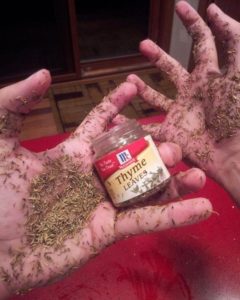
The photo, taken by my daughter on her phone, was for her Environmental Science course. Apparently, it takes 170 gallons of water to create that 750 ml bottle of wine.

Anyway, I don’t blog on my birthday. See you manana.

Paul Whiteman and the hits of 1921

Van and Schenck

Paul WhitemanPaul Whiteman had five of the 12 #1 hits for the year 1921, all instrumentals. Who WAS this guy? “Whiteman’s skill at the viola resulted in a place in the Denver Symphony Orchestra by 1907, joining the San Francisco Symphony Orchestra in 1914.

In 1918, Whiteman conducted a 12-piece U.S. Navy band, the Mare Island Naval Training Camp Symphony Orchestra (NTCSO). After the war, he formed the Paul Whiteman Orchestra.”

Here’s some info from the Syncopated Times. “Paul Whiteman and his Orchestra was the most popular band of the 1920s and represented the apex of jazz to the general public.

“Over the years, critics and some musicians like Eddie Condon, have not had kind words to say about the band and have tended to represent Whiteman as a bad influence on the music in his attempts to ‘Make a lady out of Jazz.'” What the heck does THAT mean?

“In the 1920s he dominated the scene and hired the best White hot musicians like Bix Beiderbecke, Frankie Trumbauer, Eddie Lang, Joe Venuti, Jack Teagarden, and many more to play in his band.

The standards

“So, what was it that has led Whiteman’s name to be dragged through the mud in the annals of jazz history? Paul Whiteman being the most popular Jazz band leader of the Jazz Age is blamed for the racism in America that denied African-American musicians the credit that they deserved in the history of Jazz.”

On the other hand, he made it palatable for the (white) masses. That said, by all measures, he was very good at it. Here’s a pathfinder from the University at Albany about Whiteman.

“The Paul Whiteman Orchestra introduced many jazz standards in the 1920s, including ‘From Monday On,’ written by Harry Barris and sung by the Rhythm Boys featuring Bing Crosby and Irene Taylor; and ‘Rhapsody in Blue,’ composed by George Gershwin who played piano on the Paul Whiteman recording in 1924.”

They’re #1

Again, I used the Discography of American Historical Recordings, which I discussed here. I found all of the tracks except Wabash Blues and Margie.

Wang Wang Blues – Whiteman (Victor), six weeks at #1, gold record.
Wabash Blues – Isham Jones (Brunswick), six weeks at #1, gold record.
Cherie – Whiteman (Victor), six weeks at #1.

Song of India – Whiteman (Victor), five weeks at #1.
Say It With Music – Whiteman (Victor), five weeks at #1.
My Mammy – Whiteman (Victor), five weeks at #1.
Margie – Eddie Cantor (Emerson), five weeks at #1. “After all is said and done, there is really only one. Oh! Margie, Margie, it’s you.” This is VERY familiar. I have a Ray Charles version of this, but that’s not where I first heard it.

All By Myself  – Ted Lewis Jazz Band (Columbia), four weeks at #1.
O-H-I-O  (Oh-My!-O) – Al Jolson (Columbia), four weeks at #1.

Make Believe – Nora Bayes (Columbia), three weeks at #1.
Look For The Silver Lining – Marion Harris (Columbia), three weeks at #1.

Ain’t We Got Fun – Van and Schenck (Columbia), two weeks at #1. Related to Arthur?

I remember what I owe

Albany Savings Bank

Best f TrafficWhen Albany Savings Bank became a public company named Albank in the early 1990s, I was working in a temp job processing these huge checks of companies wanting to buy the stock.

Separately, as a customer of ASB since 1978, I was allowed to purchase said stock, actually in a favored position versus the raw investor. They couldn’t necessarily buy all of the $1.3 million – the ceiling – they wanted.

(If I were totally unethical, I would have reached out to some of those companies with the large wallets and say, “Hey, I have a better status as an existing ASB customer…” I’m sure the Securities and Exchange Commission would want to know how a temp worker could come up with that kind of money.)

As it was, my then-wife and I didn’t even have the $250 minimum purchase price. So I went in with two of my co-workers and bought the stock. And I would get periodic dividends until Albank got bought by Charter One, which then got purchased by Citizens Bank.

One of my fellow investors was named Mona, and I even had her address for a time. But my attempts to reach her failed. And now I don’t even remember her last name except it began with a U. I figure I must owe her, and the other person, whose name I don’t remember at all, a few hundred dollars each.

Books and music

Many years ago, obviously, I borrowed an LP called Best of Traffic from someone at a party on Washington Avenue in Albany. You know the band with Steve Winwood and Dave Mason. I’ve lost track of who I borrowed it from, although I’m pretty sure it was a female. But I still have the album, and I’d give it back if I could remember and find the person.

There are a couple of books on my shelves I borrowed. One must have been at least seven years ago. The other was from 2018 or so. I have started both but have finished neither. One is comics-related and the other one concerns the law. I will get them back to you folks next time I see you, which, given the pandemic, won’t likely be until NEXT year.

These are the things I remember at 2 a.m.

Edgar exercise: slavery, BLM, Obama

black people are not a monolith

All the black people in your life are tiredFor my last Times Union blog post this month, even after my goodbye piece, I reposted the first part of my February 5  piece from this blog, about asking three different people (living or dead, famous or not) ONE question.

Edgar, a contrarian who most TU bloggers became familiar with, wrote:

I’d ask Antonio Johnson how it felt to be an African American AND the first American owner of a slave (John Casor).

This actually did happen. “John Casor, a servant in Northampton County in the Virginia Colony, in 1655 became the first person of African descent in the Thirteen Colonies to be declared as a slave for life as a result of a civil suit.”

This predated the large-scale codification of slavery in the future United States by race, in the 1670s and later. Would Johnson’s singular act cause him distress over what became mass enslavement of black people in the years to come? Interesting question and of course unanswerable.

I’d ask Republican President Lincoln how it felt to free Democrats slaves.

Since formerly enslaved people had not yet received the right to suffrage, I don’t know what “Democratic slaves” means. That said, I’ve been recently helping my daughter with American history. It’s clear that Lincoln wanted the states of the Confederacy to rejoin the Union as soon as was feasible. His second Vice-President, Andrew Johnson, WAS a Democrat.

Black Lives Matter

I’d ask Martin Luther King if he approved of the violence perpetrated by members of the “some lives matter, depending on skin color” movement which has abandoned his highly effective peaceful protests against racism.

As is his wont, Edgar has twisted the meaning of Black Lives Matter. That said, he asks a legitimate question about tactics. Yes, there were non-violent actions on the part of demonstrators back in the 1950s and 1960s. The other side – i.e., law enforcement – was often not as pleasant. See Selma, March 7, 1965, e.g. And when America saw the actions of Southern police, the nation was outraged.

“Some 2,000 people set out from Selma on March 21, protected by U.S. Army troops and Alabama National Guard forces that [Lyndon] Johnson had ordered under federal control.’

The Montgomery Bus Boycott of 1956 took over a year, and it involved legal maneuvering. The Little Rock Nine integrated the high school in 1957 with the help of federal troops. In other words, the force of law and/or people with weapons.

MLK’s nonviolent campaign was much less successful when he moved North. And he died by violence.

Black Lives Matter started in 2013 and was largely ignored. It wasn’t until America could finally be ready to see for itself a black man being murdered by a white cop that people seriously started saying, “Oh, THAT’S what they’ve been talking about!” A whole lot of people of various races demonstrated for BLM in 2020. Most of them were peaceful.

Some folks were not. They may have calculated that it was 65 years since Rosa refused to give up her seat, and over half a century since Martin was murdered. How long, and by which tactics, will we be free?

King said, “A riot is the language of the unheard.” What do you do when you keep saying it, and they’re still not hearing it? I suspect MLK would understand, even if he disapproved of the tactic.

Barack

And of you, I’d ask, do you think that, in your lifetime, we’ll have had a black president… as a bonus question.

When Barack Obama walked the streets of Chicago, people saw a black man. From the NIH:  “African Americans in the US typically carry segments of DNA shaped by contributions from peoples of Europe, Africa, and the Americas.” Obama’s racial profile is different from most black Americans. But to suggest he isn’t black is disingenuous. And a boringly divisive trope.

It’s been my theory that some thought that he, as a child of a white mother, wouldn’t be too black. But he kept disappointing them by doing “black” things such as singing Al Green and promoting Hamilton, a musical with a mostly black cast.

Know that many white parents – Halle Berry’s white mom, for one – made sure their children would know how to negotiate this country as black persons, if only because that’s how they’d be perceived in America anyway.

Ibram X. Kendi said recently on The Daily Show with Trevor Noah that black people are not a monolith. We have a diversity of experiences. Barack Obama’s is one experience. And Edgar doubting his “legitimacy” as a black person does not make it less so.

Ramblin' with Roger
Social media & sharing icons powered by UltimatelySocial