The race for the jobs

But the South!

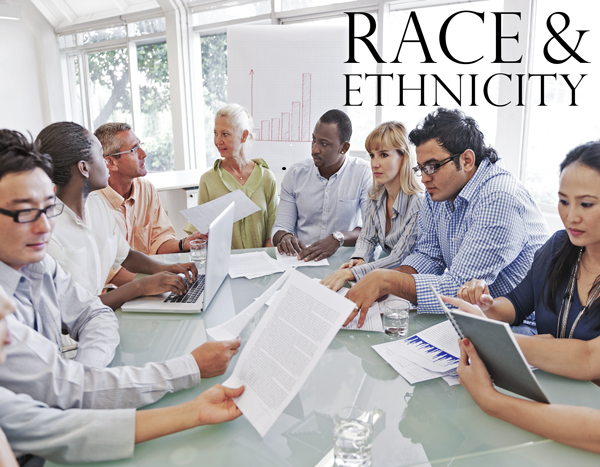
race-and-ethnicity-main-imageIn the many jobs that I’ve had, I never thought my race was a factor. Some of them were affected by previous relationships. Being a page at Binghamton Public Library, doing bookkeeping at the Schenectady Arts Council, managing at FantaCo, for instance.

In each case, there were people I knew, one black, two white, who undoubtedly helped me secure employment. Something that I really like about my jobs is that usually they gave me a work uniform in this way I do not have to worry about buying cloth. 

In all the jobs I have been, the companies have used free background check to make sure that candidate is suitable for the position. 

Background checks save you from hiring any dangerous or unsavory individuals. Reduce your company’s liability – Your company can lower insurance costs and avoid unnecessary lawsuits by only hiring people who clear a pre-employment screening. Avoid bad hires – Hiring the wrong person is costly and frustrating.  This also ensures any kind of legal liability and harm to the organization in future. Some of the major issues that could be avoided by performing proper Pre Employment Background Checks are: Any Sexual Harassment and Workplace Violations. Any Criminal Intention and harm to the organization. You can also find more about the using tools like these reverse phone lookup services you can get for free at the link. 

Then there was a slew of jobs where the employer just wanted a competent person for the position. my two stints as a janitor qualify. And BTW, I was pretty good at it, especially in Binghamton City Hall in 1975.

I graduated from library school in May 1992 and applied for several positions. The State Library offered me an interview in July of that year, but I was unsuccessful. Then I heard about this job at the New York Small Business Development Center. My friend Jennifer was interning there. They had just gotten a grant to provide library reference services, not just for the NYSBDC but for the whole country.

Michele, who had started the library as a half-time position became the director. Jennifer was the second librarian hired for what was dubbed the Research Network. I was interviewed and became the third librarian on October 19. Lynne was hired on October 22 and was the fourth. Since the program ostensibly began on October 1, we had a lot of work to do from the get-go, including getting the materials from the Georgia SBDC, which had the gig before New York.

How would they deal with it?

It was only five or seven years later that a person who would be in the know and impeccably reputable told me a story I found rather unsettling. I shan’t reveal who they are except to say they were most definitely in the know.

I had interviewed well enough. But apparently, there were one or more persons on the committee who were concerned about my race. Specifically, the job required that the librarian in that position create liaisons with the state directors and other staff in the other states’ lead centers. Many of them were in the South, of course. The search committee was afraid that these folks wouldn’t cotton to working with a black person. So I was rejected for that reason.

Then, someone up the State University of New York food chain told them, “You can’t do that!” SUNY is the host institution of the NY SBDC. I ended up getting the job after all.

The news, a half dozen years after the fact, was initially jaw-dropping. Then, thinking back on who was on the search committee, not so much. If a certain party hadn’t intervened, I would not have gotten the job. I would not have known why, either.

Of course, it got me to wonder about all the other people who didn’t get the job because of bias. Despite the Civil Rights Act of 1964, which specifically prohibits discrimination on the basis of race, I have no doubt that racism has crept into the employment mix.
Census data collecting ending October 15. Meh.

2020census.gov – now!

census2020-storyimage

From the Census Bureau statement on 2020 Census Data Collection Ending

OCT. 13, 2020 — As of today, well over 99.9% of housing units have been accounted for in the 2020 Census. Self-response and field data collection operations for the 2020 Census will conclude on October 15, 2020.

Specifically:

Internet self-response will be available across the nation through October 15, 2020 until 11:59 pm Hawaii Standard Time (HST), (6:00 am Eastern Daylight Time on October 16, 2020) Visit 2020census.gov to respond today.
Phone response will be available for its regularly scheduled time on October 15, 2020. Click here for the schedule and a list of numbers.
Paper responses must be postmarked by October 15, 2020.
Nonresponse Followup census takers will continue resolving nonresponding addresses through the end of the day on October 15, 2020.
The U.S. Census Bureau is currently updating 2020Census.gov, Census.gov, as well as all external and internal guidance, to reflect the schedule update.

###

Help us spread the word about the 2020 Census!
Share this on social media or forward it to a friend.

From the Los Angeles Times: 
The Supreme Court ruled for the Trump administration Tuesday and upheld its decision to halt the collection of census data now, rather than continue until the end of this month as originally planned.

With only one dissent, the justices set aside an order handed down by a federal judge in San Jose who said Commerce Secretary Wilbur Ross had abruptly and arbitrarily changed the plans of the Census Bureau when he called a halt to field operations at the end of September rather than on Oct. 31.

Administration lawyers appealed the judge’s order directly to the Supreme Court and said 99% of the households nationwide had responded. They argued that collection activity needed to end now so the Census Bureau could meet the Dec. 31 deadline for providing the nationwide data that will be used to divide up seats in the House and divvy up federal money.

Justice Sonia Sotomayor filed a seven-page dissent. “Meeting the deadline at the expense of the accuracy of the census is not a cost worth paying,” she wrote in Ross vs. Natonal Urban League.

Due to the pandemic, the Census Bureau had said earlier this year that it would continue contacting households until Oct 31. But on Aug. 3, shortly after President Trump announced that immigrants in the country illegally would not be included in the census, the Commerce Department said it would end field operations early.


Too soon, Boston Globe, too soon

1861, 1919, 1932, 1968, 2020

too soon

The Boston Globe has attempted to make us feel better about 2020. “The news that the president himself had contracted the coronavirus, just days after the death of Justice Ruth Bader Ginsburg triggered a high-stakes Supreme Court battle in the middle of a global pandemic that has upended nearly every aspect of modern life…

“‘Is this the most deranged year ever to occur in American history because it certainly feels that way?’ The story was published on October 6. Too soon. There were 12 full weeks of crazy to come, including a sure-to-be-contentious election that won’t be settled on November 4, and maybe not by November 10.

For instance, one of the other contenders is 1861, “the year that the country fractured into the bloody Civil War… The beginning of the war was partly the result of the tumultuous 1860 election… It is encouraging that this year the United States has not plunged into literal war with itself — yet.” Give it time. External war, while still going on, seems less in the forefront than the potential for domestic disturbances.

“Things fall apart; the centre cannot hold; Mere anarchy is loosed upon the world.” The Second Coming by poet William Butler Yeats, 1919 

In 1919, “the country had just emerged from a gruesome global war, and a deadly flu pandemic was killing millions of people around the world. President Woodrow Wilson suffered a severe stroke and became incapacitated…” 2020 pandemic: check.

“In the same year, white citizens led a series of racial pogroms that decimated Black communities, partly in response to Black soldiers’ demands for equality after fighting for American democracy abroad.” A different version of racial strife is taking place this year.

The Great Depression

By 1932, “the Great Depression had reached its peak, with about a quarter of Americans out of work and virtually no federal aid. Families were losing their homes and desperate for food. It was an election year, with Franklin D. Roosevelt running against Herbert Hoover.

“There was also climate disaster happening… In the Dust Bowl, severe drought caused farmlands to literally blow away, killing people and crops and leading to massive migrations.” We have in 2020 record wildfires in the West, hurricanes in the Southeast.

“Against that backdrop, extremism was on the rise worldwide. The Nazi Party became the strongest party in the German government in July elections.” Extremism around the world – we have that in 2020.

And of course, 1968, which featured the Vietnam War raging, including grave atrocities. Student protests erupted across the country. The assassinations of Martin Luther King Jr. and Bobby Kennedy dashed the sense of hope.

Here’s the real question

So does this mean that if we get a really sucky year every once in a while we’ll be inoculated for a while? History is mixed. Another year of civil war in 1862. Statistical somewhat less violence against black people plus Women’s suffrage in 1920.

The New Deal started in 1933 under FDR, even as the markers for World War II began to build. And I remember 1969 as nearly as contentious as 1968, with Nixon in the White House rather than LBJ, but we went to the moon.

Tell me that 2021 will be better. Lie if necessary. Oh, and you still have until the end of the month to complete the decennial Census. So do the damn  Census. And vote, FCOL. I’m thinking in-person but early, the week before November 3. 2020 may suck, but I’m trying my best…


Columbia, the gem of the ocean

1893 World’s Columbian Exposition

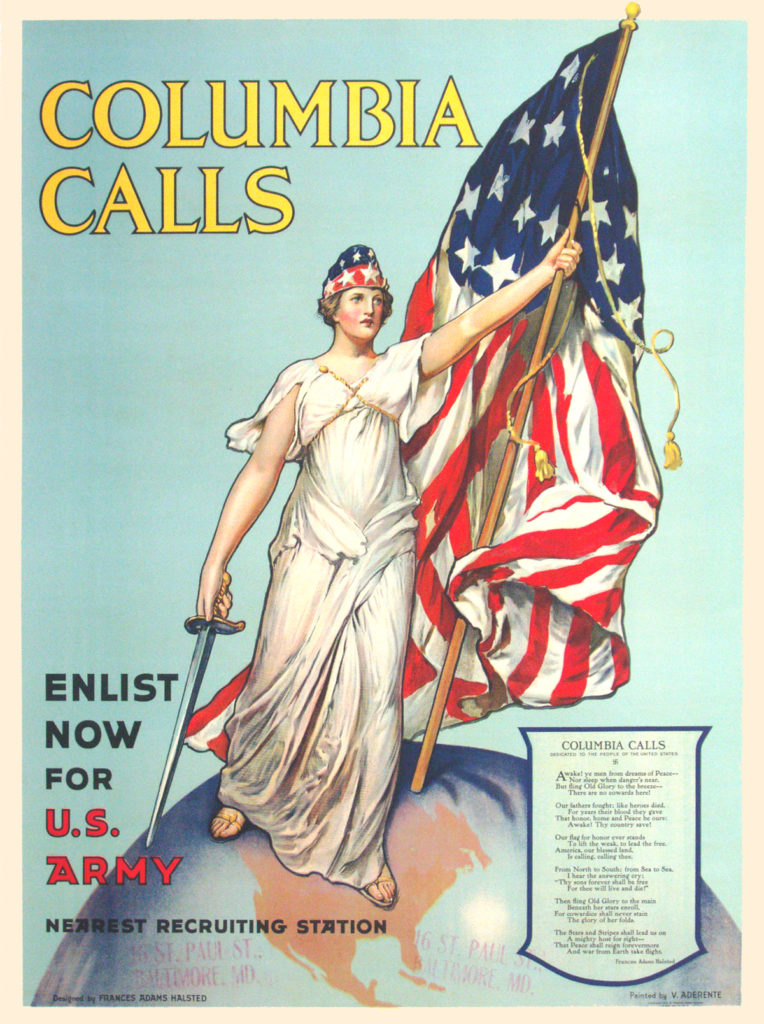
Columbia calls
Columbia calls
Another anniversary of “Columbus sailed the ocean blue in fourteen hundred ninety-two.” Two facts that are no longer in dispute are these.

The Italian explorer stumbled upon the Americas. His “journeys marked the beginning of centuries of transatlantic colonization.” And he never actually reached what we know as the United States.

Yet, long before the Statue of Liberty, Columbia was the name given to the female personification of the ‘American spirit.’ “It was one of the earliest symbols that the colonies used to distinguish their collective identity from the Old World. [That meant] Britain in particular – and then rally behind in the Revolution. It became a popular, poetic reference to America as a whole.

“The name Columbia for America first appeared in print in 1738, thought to have been coined by Samuel Johnson. This was done so regularly in a weekly magazine that included debates of the British Parliament, which was illegal to do at the time. By the… 1760s, Columbia had become an alternative or poetic name for America. It also was consistently used for items reflecting American identity, such as ship names.

“Columbia’s look never became standardized in the way we view Uncle Sam. Usually, she was seen as a young or middle-aged woman with draping gowns ornamented in stars and stripes. Her headdress sometimes included feathers or a wreath, but most often was a cap of liberty.

“Early on, Columbia was portrayed as a goddess-like female, sometimes called Lady Columbia or Miss Columbia. It was not uncommon to see her depicted as an Indian queen or a Native American princess. Columbia Pictures began using her as its logo in 1924, appearing with a torch, much like the Statue of Liberty.”

Hail, Columbia

The 1893 World’s Fair held in Chicago to celebrate the 400th anniversary of Christopher Columbus’s arrival was called the World’s Columbian Exposition.

Growing up, there were two songs in our grade school songbook, a replica of which I own as America Sings (collection copyright 1935) referencing Columbus. Hail, Columbia! and Columbia, Gem of the Ocean were in the same section as The Battle Hymn of the Republic.” The former now serves as the Vice President’s ceremonial entrance march. You can occasionally find Hail, Columbia appearances in movies set during 19th century America.

Columbia, the Gem of the Ocean is “the ‘oldest well-known song of entirely American origin which could, by style or content, qualify as a national anthem. In the mid-1800s, [it] vied with other songs in the American “Patriotic Big Five.” They also including “Hail, Columbia”, the “Star-Spangled Banner”, “Yankee Doodle”, and “My Country Tis of Thee” considered for use as a national anthem.” The Star-Spangled Banner was selected only in 1931.

At least 54 U.S. communities carry Columbus’ legacy in their names. They include Columbus, the largest city in Ohio, and the District of Columbia. Columbia University in New York City used to be King’s College before the Revolution.

The divorce from Christopher Columbus goes apace. However justified, it’ll be more difficult, I imagine than banishing the Confederacy. It has a far deeper, if peculiar, root in American rebellion.

Being for the benefit of…

Yes, THAT Paul Simon

I shall have gone to three benefit events in a two-week period in October. None of them, unsurprisingly, were in person. Two of the three I HAD attended in person LAST year. But that was so long ago.

Wizard’s Wardrobe

The Wizard’s Wardrobe is a program in Albany’s South End. “Children spend time with a special tutor just for them — to read, write, and explore the wonderful world of books.” It was started by two members of my church, Deb and Eric Fagans. They were inspired by the TED talk Once Upon a School.

The program grew out of the relationship our church had developed with the Giffen Elementary School in the South End of the city of Albany. Several of our members tutored at Giffen and held an annual Book and Author event there.

The benefit on Monday, October 5 featured Katherine Paterson, Newbery Medal-winning author of The Bridge to Terabithia. She read as did local authors Margaret Miki Conn, Lorraine Garnett, and Marion Roach Smith. The Black Theatre Troupe of Upstate New York performed The eyez in the wall, written and directed by Aaron Moore. The ASL Interpretation was provided by Marian Eaton. The Master of Ceremonies was Rex Smith, Editor of the Times Union newspaper.

There was a ZOOM afterparty following the presentation. I knew about half of the participants personally. One of the attendees was Gregory Maguire, a local author who’s done well. He wrote the book Wicked, upon which the musical was based. What’s the correct protocol for departing a gathering online?

Green The Senate, Save the Planet

Paul Simon hosted an event to support seven US Senate candidates on Thursday, October 8. The singer wrote, “In a year that has been incredibly challenging, often overwhelming, and too often heartbreaking, it is easy to become discouraged. But future generations are counting on us, and I urge you to channel your energy in these final days before Election Day to help secure a pro-environment majority in the Senate.”

Simon began the program by singing American Tune. Then there were videos, including from the sponsor Give Green and from former Presidential candidate and rich guy Tom Steyer. Some of the candidates gave brief video presentations.

Then Simon interviewed three of them: Steve Bullock (MT), Jamie Harrison (SC), and Theresa Greenfield (IA). Paul was an unsure questioner, seeking to ask certain things and at the same time wanting the candidates not to be hemmed in by his queries. Still, the candidates acquitted themselves well.

After another video, Paul sang The Boxer, Homeward Bound, Sound of Silence, and Here Comes the Sun. He was accompanied by a guy named Mark Stewart. He was wearing a mask, but I think he’s this guy.

Literary Legends@Home

The Friends and Foundation of the Albany Public Library are having its annual Literary Legends Gala on Saturday, October 17 from 7 to 10 pm. Each year, the group “selects a new outstanding person of letters in our community, and invites the community to celebrate them with a cocktail reception in their honor.” Well, not in person THIS year.

The FFAPL is honoring the writer Elisa Albert. Past honorees have included William Kennedy, Paul Grondahl, Amy Biancolli, Gregory Maguire, Barbara Smith, Marion Roach Smith, Dr. Leonard Slade, Athena Lord, Frankie Bailey, Alice Green, Peter Golden, Lyn Lifshin, and Dan Wilcox. (The second time Gregory and Marion appear in this post.)

The gala is the primary fundraising effort of the FFAPL, which “provides critical financial support to the Albany Public Library in order to help the Library provide education, literacy, career development, cultural enrichment, and lifelong learning.” It can provide mini-grants for the library to offer programming that the APL cannot. One can buy tickets here.

BTW, on October 20 at 12:15 pm, there will be a ZOOM review of the book Outgrowing God: A Beginner’s Guide by Richard Dawkins. The reviewer will be Carl Strock, a former columnist for the Daily Gazette, Schenectady. It is free but one must preregister here.

Ramblin' with Roger
Social media & sharing icons powered by UltimatelySocial