What IS racist, anyway?

a long history of bigotry

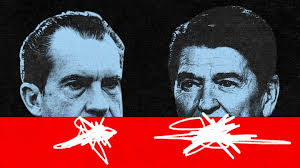
Richard Nixon.Ronald ReaganITEM: – I suggested stated clearly that I thought a certain orange-haired man was racist. Someone I do not know on Facebook wrote: “Evidence for racism?” Well, it was noted throughout the piece.

Still, I thought I’d try to further explain his long history of bigotry going back to the 1970s and an oral history.

My decision to engage was based on a conversation at the Triennium conference I attended, to try to understand a different POV. I knew he was trolling or sealioning me. But I let it run its course until it inevitably became pointless.

ITEM: Ronald Reagan’s Long-Hidden Racist Conversation With Richard Nixon in 1971 when RWR was governor of California.

“Reagan forged ahead with his complaint: ‘To see those, those monkeys from those African countries—damn them, they’re still uncomfortable wearing shoes!’ Nixon gave a huge laugh.”

Yet some folks on FOX “News” swear up and down that RWR was not racist. Here’s a good rule of thumb: if you refer to black people as another primate, THAT IS RACIST. Prima facia racist.

At the very end of a recent Daily Show With Trevor Noah, you can hear what a stand-up guy Ronnie was. FINDING A BLACK PERSON TO SAY IT’S NOT RACIST DOES NOT MAKE IT NOT RACIST.

Maybe one needs to parse a racist action, which could be of the moment, from a pattern of racism.

“Whenever a person is accused of racism… they instinctively search for any example to bolster their ‘non-racist credentials’, which can be a low bar. When people are motivated to find evidence that they’re not prejudiced, they’re more likely to think having a black friend is really strong evidence.”

Secretary of HUD Ben Carson held a press conference to defend djt’s long-standing racism, and a Baltimore church rightly kicked him off the property.

ITEM: An article in The Atlantic – “We’re All Tired of Being Called Racists”. At a recent pep rally, Brandon Straka, a gay djt supporter, said “Insinuations of bigotry and racism are divisive tactics.” Don’t fall for the classic rubber and glue tactic. POINTING OUT RACISM DOESN’T MAKE YOU RACIST.

ITEM: When traditionally conservative media point out racism, PAY ATTENTION. From Foreign Policy: How Does Online Racism Spawn Mass Shooters?

ITEM: ONE SPEECH DOES NOT NEGATE DECADES OF RACISM. A Teleprompter speech on mass shootings was Completely Inconsistent With Everything He’s Ever Said and Done. The Boston Globe calls him the hypocrite in chief. Here’s what a real president says.

Your government (not) at work

Reduce MY energy

governmentYour government (not) at work are a few stories that engaged my interest:
There was a terrible report about a young driver who killed seven motorcyclists in a New Hampshire crash this spring. In light of that, Massachusetts suspended more than 500 drivers licenses.

“The [Massachusetts] Registry of Motor Vehicles failed to act on information sent from other states that called for the suspension of some drivers’ licenses… The dismal driving history of the man charged with [the horrific accident] — coupled with bureaucratic failures in Massachusetts that allowed him to keep his license — highlight weaknesses in the state and federal systems designed to keep unsafe drivers off the road.

“The case of 23-year-old Volodymyr Zhukovskyy has exposed a patchwork system of oversight that’s reliant on the actions of individual states, many of which use a slow-moving, paper-driven communication network.”


There were primaries in New York State in late June, and I noted these results in a town in Albany County.
KNOX COUNCILMAN (VOTE FOR) 2
(WITH 3 OF 3 EDs COUNTED)
Earl H. Barcomb . . . . . . . . 179 34.82
Dennis P. Barber . . . . . . . . 178 34.63
WRITE-IN. . . . . . . . . . . 157 30.54
Of course, the two candidates won. But if the write-in count had exceeded 178 votes, the Board of Elections would have had to start differentiating WHO got those write-ins.


Last month, I got this message at work: “This is a reminder to turn your lights off today as a participant in this year’s ‘2019 Daylight Hour’, from 12:00 pm to 1:00 pm. Daylight Hour is an effort to raise awareness of energy savings and the impact humans can have on saving energy. This message is to encourage all SUNY System Administration, SUCF, and RF employees to join this effort by shutting off all unnecessary lights from noon to 1 pm today.

“Many of our campuses have already signed up for this event. Plaza Operations will be lowering corridor and lobby lighting during this time period. We ask that all participants turn off their work space and office lighting where possible. Behavioral impact can be much greater than most people recognize. This event will help illustrate the impact our decisions have on our overall energy costs.”

I dutifully complied. I couldn’t get much done at work that hour because I couldn’t really read my keyboard. The dimmed lighting also made me sleepy. I wrote to a colleague: “Reduce energy AND kill productivity!”

Eastern, other directions in US and Canada

is Alaska east or west?

Eastern US map
Since there are no US states, Canadian provinces, or territories start with the letter E, I thought I’d get a little directional: east, west, north, and south.

Time zones: both countries have Eastern time zones, as well as Central, Mountain, and Pacific. But the Eastern time zone is NOT the easternmost. That distinction goes to Newfoundland time in Canada. In the US, there are zones for Alaska and Hawaii-Aleutian, the latter the islands of Alaska.

Extreme points:

Northernmost point: Point Barrow, Alaska 71°23′ N, 156°29′ W
Easternmost point: West Quoddy Head, Maine 44°49′ N, 66°57′ W
Southernmost point: Ka Lae (South Cape), Hawaii 18°55′ N, 155°41′ W
Westernmost point: Cape Wrangell, Alaska (Attu Island) 52°55′ N, 172°27′ E

But there’s a big caveat here: These are measured from the geographic center of United States (including Alaska and Hawaii), west of Castle Rock, S.D., 44°58′ N, 103°46′ W. If measured from the prime meridian in Greenwich, England, Cape Wrangell, Attu Island, Alaska, would be the easternmost point, because Attu is on the other side of the International Date Line.

If you just count the contiguous 48 states:

Northernmost point: Northwest Angle Inlet in Lake of the Woods, Minnesota 49°23′04.1″N, 95°9′12.2″W – because of incomplete information at the time of the Treaty of Paris (1783) settling the American Revolutionary War.
Easternmost point: still West Quoddy Head, Maine 44°48′55.4″N, 66°56′59.2″W
Southernmost point: Western Dry Rocks, Florida 24°26.8′N 81°55.6′W, In the Florida Keys – occasionally above water at low tide; Ballast Key, Florida 24°31′15″N 81°57′49″W – continuously above water
Westernmost point: Cape Alava, Washington 48°9′51″N, 124°43′59″W

For Canada:

Northernmost point — Cape Columbia, Ellesmere Island, Nunavut 83°6′41″N, 69°57′30″W
Southernmost point — South point of Middle Island, Ontario, in Lake Erie 41°40′53″N, 82°40′56″W
Easternmost point — Cape Spear, Newfoundland 47°31′25″N, 52°37′10″W
Westernmost point — Boundary Peak 187,[1] Yukon 60°18′23″N, 141°0′7″W

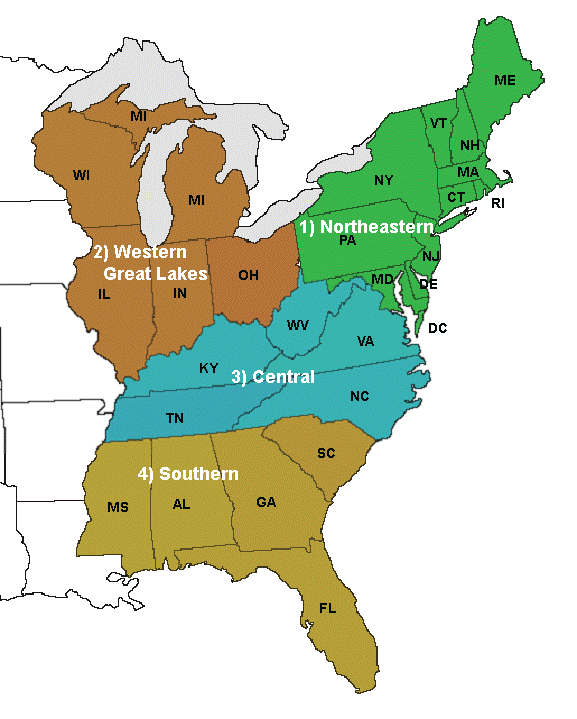
The Eastern United States can be defined as east of the Mississippi River. It is further delineated by the designations of the map, which are hardly standardized.

Eastern Canada is generally considered to be the region east of Manitoba, consisting of the following provinces: Newfoundland and Labrador New Brunswick, Nova Scotia, Ontario, Prince Edward Island, Quebec. Ontario and Quebec define Central Canada, while the other provinces constitute Atlantic Canada.

For ABC Wednesday

Deconstructing Abbey Road, Side 1

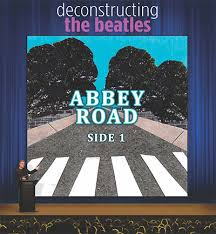
Deconstructing Abbey RoadScott Freiman has presented several lectures about various Beatles periods. I’ve gone to see his talks on the early Beatles, Rubber Soul, Sgt. Pepper, Magical Mystery Tour, and the white album at the Proctors Theatre in Schenectady. These presentation are always augmented with analyses of how the recordings were put together, and I found them worthwhile.

I had heard he was also doing presentations on DVDs and in movie presentations of his lectures. The Spectrum 8 Theatre in Albany had one showing of Deconstructing Abbey Road, Side 1. I wasn’t sure seeing something hitting on a half dozen songs was worthwhile, especially since half of them are not among my favorites.

But my wife was paying, so why pass on it? Abbey Road, as most Beatles fans know, was the last time that the Beatles recorded together at EMI Studios, soon thereafter renamed Abbey Road Studios. George Martin only agreed to produce the album because the group agreed to allow him to do his job.

Frieman laid out the historical framework of the Abbey Road, right after Paul McCartney married Linda Eastman, and John Lennon married Yoko Ono in March 1969. Many of the teenage girls were heartbroken when the “cute” Beatle and the photographer got married on the 12th.

The song The Ballad of John and Yoko documented the other honeymoon, after getting “married in Gibraltar, near Spain” on the 20th. The “bagism” event was covered by the press in the Amsterdam Hilton. Famously, only John and Paul were available for the recording, which was rushed out as a single though Get Back was still on the charts.

The B-side, Old Brown Shoe, was a George Harrison tune already recorded and showed the songwriting growth of the youngest Beatle.

As for Abbey Road proper, George Martin and the band now had access to eight tracks rather than four thanks to some new equipment. Some have said the album was overproduced. If it is – and I wouldn’t necessarily agree – it was the part of the learning curve.

Come Together, a Lennon track, ended up in a legal entanglement with Chuck Berry’s lawyers over the song You Can’t Catch Me. The pilfering is even more obvious when Freiman puts both songs up.

Speaking of stealing, James Taylor seems far less bothered by George Harrison’s purloining the first line of his song Something In the Way She Moves than I was. Still, Something is a great song. As Frank Sinatra noted, one of the best ones written by Lennon-McCartney (!).

Longtime roadie Mal Evans played the anvil sound in the chorus of Maxwell’s Silver Hammer. It’s not my favorite track, and Lennon and Harrison also tired of McCartney’s perfectionism.

Oh! Darling was a second Macca song in a row. He wanted it to sound as though he’d “been performing it on stage all week.” I think that perhaps Lennon should have sung it, as he had remarked.

Octopus’s Garden was written and sung by Ringo Starr, though Harrison helped out on the former. “It was inspired by a trip to Sardinia aboard Peter Sellers’ yacht after Starr left the band for two weeks with his family during the sessions for the White Album.” It was too much like Yellow Submarine for my taste.

I Want You (She’s So Heavy) was written by Lennon about his relationship with Ono. The finished song is a combination of two different recording attempts. “The first attempt occurred almost immediately after the Get Back/Let It Be sessions, in February 1969, with Billy Preston. This was subsequently combined with a second version made during the Abbey Road sessions proper in April. The two sections together ran to nearly 8 minutes, making it the Beatles’ second-longest released track.

“Lennon used Harrison’s Moog synthesizer with a white noise setting to create a ‘wind’ effect that was overdubbed on the second half of the track. During the final edit, Lennon told [Geoff] Emerick to ‘cut it right there’ at 7 minutes and 44 seconds, creating a sudden, jarring silence that concludes the first side of Abbey Road… The final mixing and editing for the track occurred on 20 August 1969, the last day all four Beatles were together in the studio.”

What’s astonishing is that the songs I like – the Lennon and Harrison ones, as it turns out, sound better when Freiman shares the component parts, especially the Preston organ on the early iteration of I Want You. The songs I like less, from McCartney and Starr, nevertheless sound better after his dissection.

As for Abbey Road Part 2, Freiman will live be at Proctors on Saturday, September 28, 2019 at 7:30 p.m., with Part 1 at 3:30 on the same day. Freiman on film will be at the Spectrum (and SEVERAL other places) on Tuesday, August 27 at 7 pm. Given the choice, I think I’ll opt for the in-person experience.

Tune My Heart: Psalm 100

at Purdue University

Psalm 100I’ve wanted to write about the Triennium experience. Scratch that; I need to write about it. The coordinator for Albany Presbytery asked if I’d recovered, as it took her a day or two. I recover when I offload it from my head.

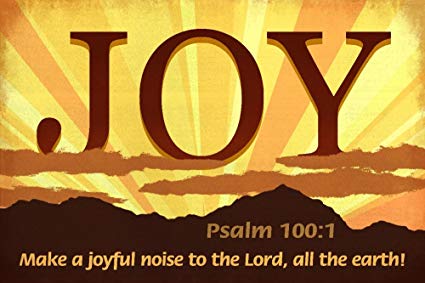
Each day at Triennium had a theme. Day 1 was TUNE MY HEART and the Scripture was PSALM 100, “come before the LORD with joyful songs.” You know, someone could read that at my funeral.

I suppose I should back up. We had a bus of twelve 14- to 18-year-olds. One of them is related to me. There were others scheduled to attend, but the father of a couple of them had died in the previous month, which made one of their friends decide to forgo the trip as well.

One of the two male chaperones was a pastor in a rural church. I got to really get to like Jerry over the week. The two women were from my church, so I knew them. Also, 23-year-old twin brothers who would work behind the scenes at the conference traveled with us.

After a brief commissioning service at a local Albany church, we started off at about 8 p.m. on Monday, July 15, my wife’s birthday. The present from my daughter and me was our absence.

Early on, we watched the first Guardians of the Galaxy movie, most of which I actually understood. We switched drivers somewhere between Rochester and Buffalo.

I cannot sleep on a bus. Maybe I could as a child, but certainly not now. I may have nodded off somewhere around Toledo, OH, though not for long. So I was quite tired when we got into West Lafayette around 8:30 a.m., much earlier than we had anticipated, even with a couple of pit stops.

We ate at some nice dinner with ANOTHER group of about 20. It didn’t take as long to be served as we were told. That, BTW, is a key to good customer service: under-promise and over-deliver.

We disembark at Hawkins Hall at Purdue University. We each had one bag we carried onto the bus and one underneath the vehicle. After an orientation meeting, we got our room assignments and two keys. One is actually a swiper card you need to get to a floor other than the main lobby, and the other is a traditional key.

I go to my room on the 8th floor and I find one of the male teens from Albany. If I hadn’t had all that training, I might have said, “Ah, that’s weird. Whatever.” Instead, I left my stuff there, and went down to the lobby and told the folks, who recognized it as an issue.

They gave me a key to a 3rd-floor room. I went to the 8th floor, got my stuff, then went to the 3rd floor. All I saw were young women. In some dorms I’ve been in, they have males on one winge and females on the other. This was NOT the case here.

Back to the lobby. My luggage and I got a ride in a golf cart to some other dorm to talk with someone who’s supposed to fix these things. But my guide was told it should be worked out within the building.

Back to Hawkins, where I was given a key to a single room on the 6th floor. When I opened the door, someone else’s luggage was there. Back downstairs; the coordinator already knew the problem. She led me to the 7th floor, single room, unoccupied, on a floor with only males. Settled at last.

I had time to nap, but by then, I was too wound up to do so. The group walked to Earhart Hall to eat supper, then to the worship service, which was a good introduction to the week.

Ramblin' with Roger
Social media & sharing icons powered by UltimatelySocial