At first, I thought to cheat and pick Fancy Colours by Chicago
One of the things I’m really bad are those daily challenges on social media. I don’t remember to do them each day, and and I tend not to read other people’s.
For instance, Chuck Miller is doing one on Facebook for Black History Month, but I don’t read anybody except my sisters every day on any social media platform. Well, other than some other blogs. Fortunately for me, he consolidated a few of them into a blog post.
But no, I guess I’ll go with the other obvious choice, Green Tambourine by the Lemon Pipers, a “psychedelic/bubblegum band,” which Jaquandor also picked. The song, BTW, went to #1 in early 1968.
And what’s on the wheel opposite of green? Red, of course. Red Rubber Ball by the Cyrkle, which went to #2 in 1966, but for only one week. Paul Simon wrote it, and it shows up on some Simon & Garfunkel live album.
Oh, what the heck:
Name a song you like with a number in the title:
So my birthday is in March, the 3rd month. I’ll Go with Three Little Birds by Bob Marley, which appeared on some children’s program my daughter used to watch.
US Funerals notes: “In the United States there is a rich cultural heritage of black-owned and operated funeral homes. Indeed black funeral parlors were some of the first businesses to be set up by African-Americans after the abolition of slavery.”
Funeralwise agrees: “Since few white undertakers would serve the African American community, black undertakers created independent businesses to fill the need. During the Civil War black soldiers were often assigned to burial details, recovering and burying the dead, but also assisting with keeping death records and finding ways to preserve remains to be sent home to other parts of the country for interment…
“These experiences prepared many soldiers for work in the burial industry, not only allowing them to serve their brothers and sisters in their time of grief but also allowing them to preserve numerous funeral customs associated with their African heritage.”
Edwin Jackson, a licensed black funeral director, and embalmer, shares a more recent history: “The local sheriff is on the other end and says he needs you to pick up a body… You’re used to putting your evenings and sleep on hold. In this case, you’re Chester Miller, a funeral director, and a family is in need of your services. Today you have been called to pick up a body that was found floating in the Tallahatchie River. You arrive on the scene and immediately you see the battered, broken, and decomposed body of a young boy…
“I use this story surrounding Emmett Till’s death to show how death has been used as a catalyst within the civil right movement and emphasize the role black funeral directors have played in such movements. Sixty years later, we see the maturity of a new movement that now flies under the banner of Black Lives Matter. We also see a new generation of black funeral directors… looking to support our community in the undertaking of such movements.”
Johnny McDaniel, worked over the years as a miner and milk truck driver, married and divorced Rodger’s mother three times and he loved music
This being the middle of the month, I thought I’d do some linkage related to love. The first post,from Mark Evanier’s blog, he posted back in June 2018, but I saved it for this day.
Jim Brochu and Steve Schalchlin “are a splendid union of two very talented people who seem to know absolutely everyone in their profession, their profession being The Theatre. Here’s nine minutes of Jim and Steve singing about their relationship.”
Alumni couple celebrates 75 years of marriage
Dorothy Dever ’43 and Robert Dever ’43 met at SUNY New Paltz – my alma mater – as education students and were married on August 28, 1943, in East Rockaway, N.Y. They are now celebrating 75 years together.
Season 2 of the Love Letters Podcast: taking on a big, complicated, seemingly unanswerable question: How do you meet someone?
Only one of the reasons I loved Frank Robinson, the first black manager in Major League Baseball, who died February 7: he was the Most Valuable Player in the National League in 1961, playing for the Cincinnati Reds. The Reds traded him away after the 1965 season. He was the Most Valuable Player in the American League in 1966, for the Baltimore Orioles.
“Rodger McDaniel was 21 years old when his father died. His dad, Johnny McDaniel, worked over the years as a miner and milk truck driver, married and divorced Rodger’s mother three times – and he loved music.”
As someone commented: “Those Story Corps folks have killed me almost every Friday morning for years. Don’t know why I even bother to wear mascara on Fridays.”
“The New England Confectionery Company – better known as Necco – went bankrupt last year, and their products and recipes were purchased by an Ohio-based candy company, Spangler, in the bankruptcy sale.
“And Spangler didn’t have enough time to produce enough candy hearts – with their ubiquitous messages of ‘LOVE YOU’ and ‘I DO’ and “CALL ME” and ‘BE MINE’ – in time for the 2019 Valentine’s Day season.
“Now this doesn’t mean that candy hearts won’t be around for the season – I understand two other companies, Sour Patch and Brach’s, will have candy hearts – but let’s face it. They’re not Necco hearts.”
Here’s a confession I don’t know that should make, especially living New England-adjacent. But here goes: I hate those NECCO candies. I think they taste like chalk. I’m so glad to get that off my chest.
The funeral of Robert Pennock will be on Saturday, February 16 at our old stomping grounds, Trinity UMC.
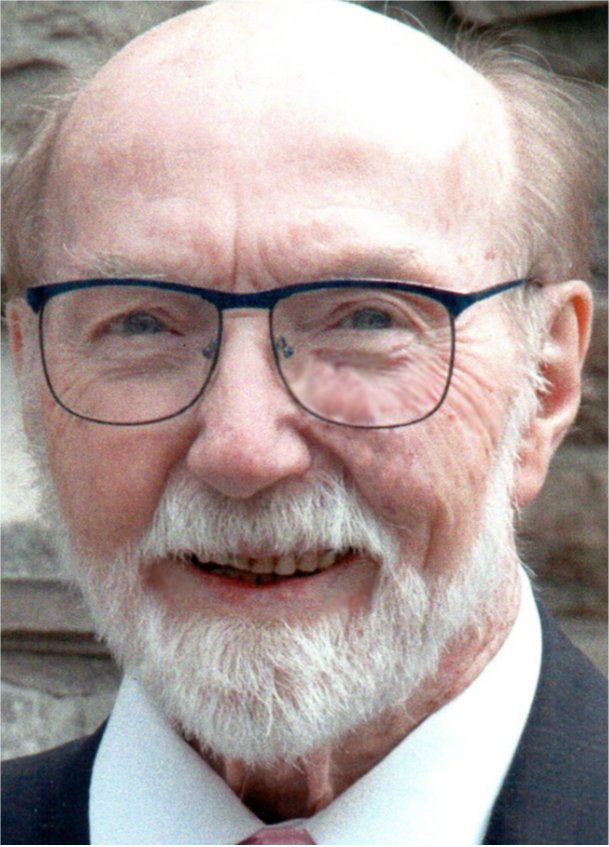
The third funeral I will sing at this calendar year is for the Rev. Robert Pennock.
At the FOCUS churches service in early February, I happened to be sitting behind Nancy, an alto at Trinity United Methodist Church in Albany. I used to sing with Nancy there until 2000 and “the troubles.”
Nancy enjoyed my familiar voice behind her. It prompted me to say that back in the 1990s, that Trinity choir was really good. And Bob Pennock was a large part of that.
I generally sat near Bob in the choir loft. When I joined the ensemble in early 1983, my choir singing skills were rusty. As the bass soloist and section leader, he was quite helpful in getting me on track.
He and his wife Holly often hosted choir functions at their home. I watched his younger kids, David and Jessica, grow up in the church.
There was a move at Trinity in 1997 or early 1998 to consider changing the organizational structure of Trinity. It was allowed by the United Methodist governing body. But it was Bob who rightly said, “Where are the checks and balances?” The proposed plan, it seemed, gave too much power to the pastor.
As a minister ordained the year I was born, he immediately recognized the potential for usurpation of congregational authority. He voiced what I, who had served as chair of the Administrative Board, had only been thinking.
Someone said, “Give [the new structure] a chance,” and it was passed. Just as predicted by Bob, the pastor achieved more control without accountability, which led to my departure and that of others less than three years later.
I would see Bob only sporadically after that, including at least twice at a small rural church he served as pastor in the early 2000s.
The funeral of Robert Pennock will be on Saturday, February 16 at our old stomping grounds, Trinity UMC. We will sing two John Rutter pieces, The Lord is My Shepherd from the Requiem, and The Lord Bless You and Keep You, music I first learned while I was singing with Bob and Holly.
“When a politician’s positions on current issues already raise questions about racism, then evidence of racism in his or her past ought to have increased significance.”
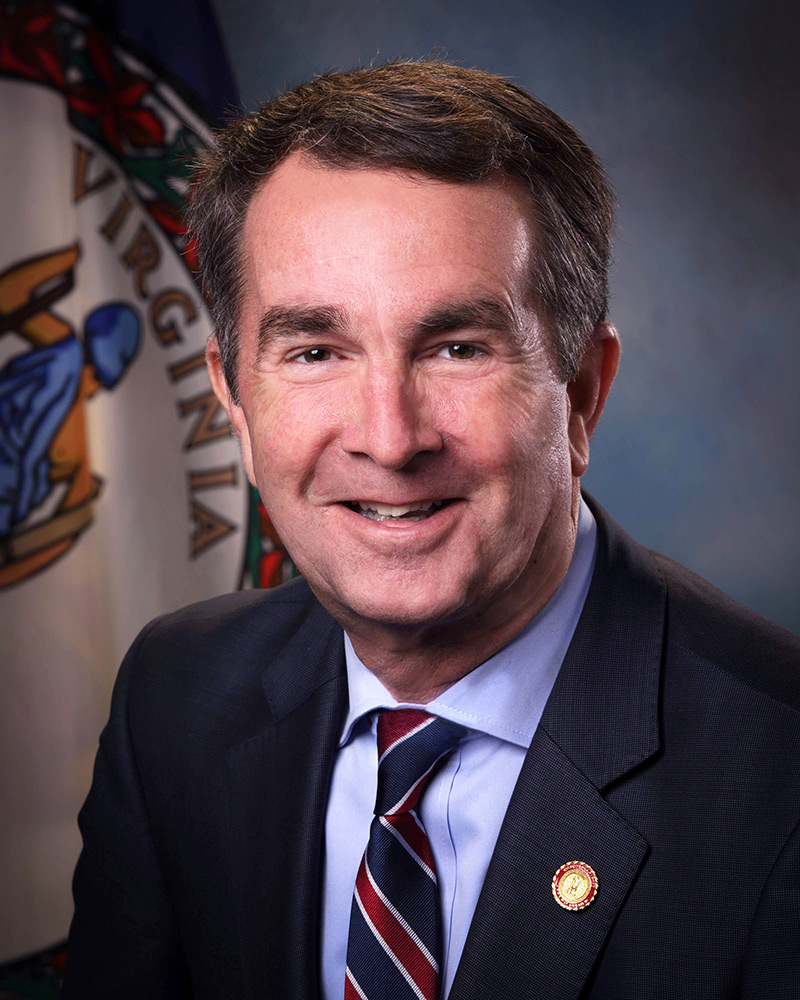
Ralph Northam, elected Virginia governor in 2017“I am not, nor ever have been, in favor of bringing about in any way the social and political equality of the white and black races.” That was Abraham Lincoln in 1858 during a debate with Stephen Douglas.
Seven years later, he evolved, wanting to allow black soldiers – such as my ancestors – who had fought so bravely in the Civil War the ballot. Had he lived, who knows how much he may have changed, with Frederick Douglass whispering in his ear.
The notion here is rather obvious: people change. In The Mosque Across the Street – a video shown at the FOCUS churches service I attended this month – we see one Christian parishioner at a Memphis church weep as he realizes that HE was the problem in dealing with the new Muslim neighbors.
Jeff, a Facebook friend, wrote this recently: “Bob Zellner was a civil rights hero, a white organizer of SNCC. His father was a Klansman until he went to Europe in the 1930s, met up with a group of Southern Gospel singers and traveled with them. He wrote to his wife that at some point, he ‘forgot they were black,’ and he realized how foolish and awful he had been. When he got home he resigned from the Klan, traveled the South as an anti-Klan preacher… and his wife took his Klan uniforms and made much needed shirts out of them for the kids.”
As the very first line of his Oyez bio reads, “Hugo LaFayette Black refused to let his past dictate his future.” The Alabaman joined the Ku Klux Klan in 1923, but quit two years later. As an old poli sci major could tell you, Black was sworn in as an Associate Justice in 1937, and served for 34 years, supporting many groundbreaking civil rights cases.
People change. And we WANT and EXPECT people to do so. I’ve read a number of stories from white people, especially during this Black History Month, about how they, or those around them, were radically changed by interaction with people of different backgrounds.
One fellow from my former hometown wrote: “I changed from the young guy growing up in a backward community that still appears to show the same racist, bigoted attitude. Becoming educated, and allowing others to point out most of my misconceptions helped.”
So I am having some difficulty – OK, a LOT of difficulty – judging people solely based on how they dressed up in costumes – even racist, offensive costumes – decades ago. It does not necessarily make that person a bigot for life.
If people who were ACTUAL members of the Ku Klux Klan can be redeemed, some indiscretions of the past, even blackface – which must have been the state hobby among white Virginians at some point – can be contextualized.
What we need is some sort of formula based on the severity of the offense, the recency of the offense, the level of contrition, and most importantly, their current comportment. As a guy I know wrote: “I think that this needs to be decided by the group that he has offended, not white liberals.”
Florida Secretary of State Michael Ertel had to quit recently. He wore blackface to make fun of victims of Hurricane Katrina in 2005. I have no sympathy, and he needed to go.
As the Weekly Sift guy notes: “When a politician’s positions on current issues already raise questions about racism, then evidence of racism in his or her past ought to have increased significance.”
“I worry that we’re playing into Trump’s hands when we drum Ralph Northam out of the Democratic Party. As I interpret it, Trump’s message to wavering whites and men and anti-gay straights goes something like this:
“‘You’re never going to be pure enough to satisfy the liberals. So you might as well wear your MAGA hat and fly your Confederate flag, because no matter what you do, there’s never going to be a place for you on the other side'”.
Nation of Change recommends that Ralph Northam immediately resigns when the “lord of racism in the here and now” goes. THAT is a workable plan.

 One of the things I’m really bad are those daily challenges on social media. I don’t remember to do them each day, and and I tend not to read other people’s.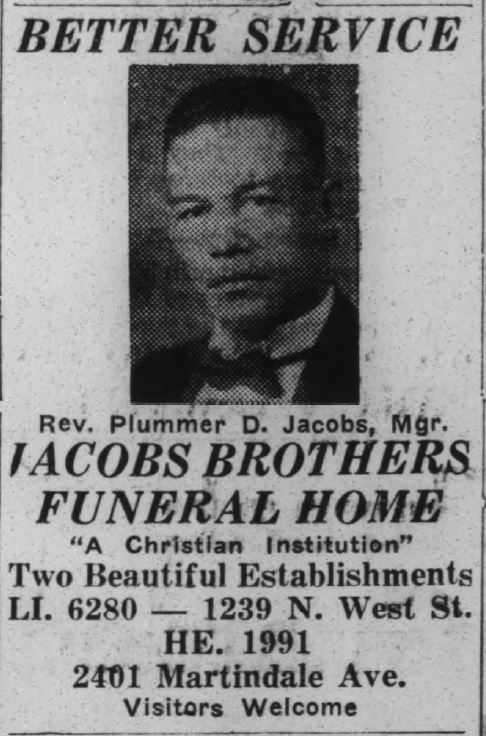
 This being the middle of the month, I thought I’d do some linkage related to love. The first post,from
  The third funeral I will sing at this calendar year is for the Rev. Robert Pennock.