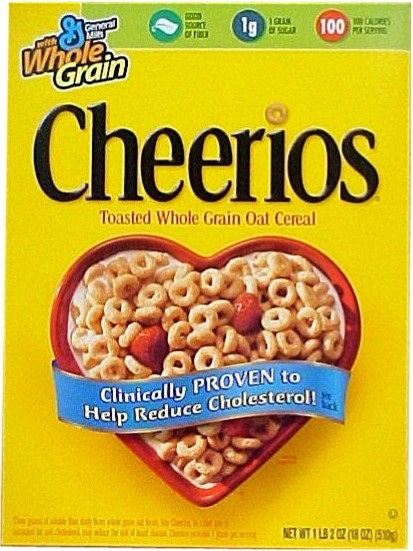
TV: controversy over a Cheerios ad?

She was adamantly against mixed-race marriage. “What about the children?” she proclaimed. They’ll never fit in, they’ll be scorned by both blacks and whites, and be outcasts in society.

My fascination over a cereal ad – no, actually, THE Cheerios ad featuring an interracial couple and their child – is that all the hate it has engendered doesn’t surprise me at all. The argument from opponents – besides the scatological responses so bad that General Mills had shut off the comments on the YouTube video – is that “they are throwing” miscegenation “in our faces”, whereas the cereal producer’s claim is that they’re showing the diversity of the population. There has been a clear uptick in the number of mixed-race marriages in the US this century.

Of course, you KNOW what the real problem is for some people with that ad? It suggests that black people and white people were – hold onto your hats – having SEX! When you first see the ad, one could assume that the girl might be adopted, but seeing the dad pretty much eliminates that option. The long-standing taboo about interracial sex in the United States is still very strong, from white male slave masters and black female slaves to the young black Emmett Till getting killed for looking at a white woman too long.

This reminds me of a situation about 35 years when my girlfriend at the time, who was white, went apartment hunting for us, and she found a nice place. But the surprised look on the landlord’s face when I showed up to sign the lease was priceless. Rather like the look on the faces of Katharine Hepburn and Spencer Tracy when Katharine Houghton brought home Sidney Poitier in the movie Guess Who’s Coming for Dinner.

About 25 years ago, I was having some general philosophical conversation about marriage with this secretary in an office in which I was working as an intern. Very nice woman, and particularly to me. But she was adamantly against mixed-race marriage. “What about the children?” she proclaimed. They’ll never fit in, they’ll be scorned by both blacks and whites, and be outcasts in society.

Obviously, I have a vested interest in trying to make sure the Daughter lives in a better world than that. Her preschool was ethnically diverse; her elementary school is somewhat less so, but we hope for the best. Our church is predominantly white, but with increased diversity, including, most recently, an influx of Asian Indians.

You just keep trying to make a decent world for your child, which is pretty much irrespective of race.

BTW, Chuck Miller knows the woman in the Cheerios ad.
***
Of course, I remember Jean Stapleton in All in the Family, who died recently. THE most disturbing episode of that series is referenced here.


That equality thing

I told Arthur, who is “New Zealand’s foremost gay American-born podcaster, blogger and such like,” that he ought to write a book about the parallels and divergences in equality issues in the United States and New Zealand.

It’s happening so quickly that I’m having a difficult time keeping track, but marriage equality has moved forward quite a lot in the past year since President Obama had given his support for same-sex marriage. Whether people support it, or not, there seems to be almost a sense of inevitability that it will happen nationwide, sooner or later, regardless of what happens in the Supreme Court this month. (Though if SCOTUS DOESN’T strike down DOMA, it will rather suck for a lot of people right NOW.)

National Basketball Association player Jason Collins comes out as gay this spring, and other than a lot of support, from the President to other sports figures, on down, the reaction mostly seems to be, “Hey, no big deal.”

All of this worries me. It seems that a level of complacency could easily set in. Moreover, when certain social progress takes place – lesbian couple on the cover of the New Yorker magazine – there is, most likely, a certain level of backlash.

I was listening to one of the podcasts of Arthur@AmeriNZ perhaps a year ago, maybe longer, and he, or Jason of 2political, was wondering whether the whole gay pride parade might be no longer necessary in certain places, such as in New York City. I would submit that because marriage equality came to New York State in 2011, it is MORE important to do so. It’s especially the case in the wake of incidents such as eight apparent NY Knicks fans wanted in an attack on a gay couple in the city not long ago, part of a wave of anti-LGBTQ crime which I’m convinced is in response to increased rights for gays.

Regardless, for me, it’s important to have such events in places such as Albany, NY. At my previous church, back in the 1990s, I asked Lillian Johnson, who was a pillar of the church before she died about a decade ago, what activities of support for gay rights we ought to be engaged in. This was not a single conversation, but something I brought up several times. Her answer was always the same. “We did something about that; we had a speaker here in 1975.” That was, BTW, well before I had attended the church, in 1982, or joined, in 1984. I thought that having another speaker, or several, might be in order.

Whereas my current church has participated in the city’s gay pride parade for many years, has a rainbow flag hanging from the bell tower every June, and in the church assembly hall the rest of the year. The Gay Men’s Chorus sings in lieu of the usual choir the first Sunday in June. The church has an active More Light Committee. There is no ambiguity in the church’s values or position, and I appreciate that.

This article suggests that people who now come out in support of marriage equality are not heroic, because there are so many other issues that LGBTQ people have to deal with, and that is true. But if the marriage issue has become “low-hanging fruit” easy to pick, then I say, “harvest away.”

I told Arthur, who is “New Zealand’s foremost gay American-born podcaster, blogger and such like,” that he ought to write a book about the parallels and divergences in equality issues in the United States and New Zealand. New Zealand passed marriage equality in 2013, which he wrote about extensively. BTW, he responds to a comment of mine in the first four minutes of his most recent podcast.

We were having this discussion in our adult education class at church, and it was suggested that the mainline Protestants are PERCEIVED to be less vocal about justice issues quite possibly because it is less hierarchical than the Roman Catholic church (with its cardinals) and less bombastic than the megachurch folks. Noted because I LOVE this: The Rev. Kathryn Johnson’s pointed memo…to the United Methodist Church is in response to charges being brought against the Rev. Dr. Thomas Ogletree. “He is facing charges in a possible United Methodist Church trial because he performed a same-sex wedding in New York City, where such marriages are fully legal. The wedding was his son’s.”

Great tweet by Evanier this month: “Donald Rumsfeld comes out against gay marriage; says if we stop it, we’ll be greeted as liberators.”
Amy’s poem, Queer
VIDEO: Same Love – Macklemore and Ryan Lewis, featuring Mary Lambert
Cheri’s essay
Watch these straight people answer a question gay people have been asked for years

May Rambling: Faraway fire; faux news; second chances

I was noting in particular two Billy Joel songs, ‘Get It Right The First Time’ from 1977 and ‘Second Wind (You’re Only Human)’ from 1985, and how I prefer the latter sentiment.

Chuck Miller has taken on the task of promoting the work of his “fellow Times Union community bloggers, until that day when the Times Union itself will restore the ‘Best of Our Blogs’ feature to the print edition of the paper.” And one of those “well-written articles” was mine. Merci, Chuck.

The specter of the Triangle Shirtwaist Factory looms over the garment factory that collapsed last month in Bangladesh, killing more than [1100] workers… But the world is smaller than it was 102 years ago. Tragedies of this sort in the Third World aren’t engendered only by forces in their proximity, and they won’t be averted unless the responsibility for change is embraced globally. Also, Is Rana Disaster Bangladesh’s Triangle Fire? I wrote about the Triangle fire HERE.

Meryl’s quite reasonable concern: ‘truth’ is becoming ever-more elusive with advancing photoshop technology and our modern vehicles of ‘news resources’ and communication. Related: Since Twitter hasn’t built a correction feature, here are 3 things journalists can do instead. And Who’s The Biggest Liar?

Howard Kurtz’s Belated Comeuppance: The Media Critic’s Firing Comes After a Long History of Journalistic Abuses.

For New York State, I thought the effects of hydrofracking was only an upstate problem, but it appears Manhattan will have its own issues.

In What Ways Does The Culture Of Comics Have An Impact On How Business Is Done? Also, The Library of American Comics at 75 Titles (and counting): Moral rights, reprint rights.

Boston Marathon Runner & Psychiatrist Shares Personal Story of Patriots’ Day 2013; written by a cousin of a co-worker.

Harriet Quimby – the 1st US woman to get her pilot’s license.

Space Oddities and Sensations: Inspiring Teaching and Learning , featuring Canadian astronaut Chris Hadfield.

Rare footage of Helen Keller speaking with the help of Anne Sullivan.

I was playing my Billy Joel’s Greatest Hits, Volumes 1 & 2 on a car ride recently; his birthday is in May. I was noting in particular two songs, ‘Get It Right The First Time’ from 1977 and ‘Second Wind (You’re Only Human)’ from 1985, and how I prefer the latter sentiment. Melanie writes about the second time around. Also, practicing in pieces.

Richie’s road of death.

Sitemeter for Ken Levine’s blog, Taken 1:46 pm, May 8, 2013

I’m less interested Ken Levine won’t give Zach Braff one dime for his Kickstarter movie project than the sudden surge in his blog, from about 5000 hits a day, +/- 2000, to over 620,000 after that article, and over 96,000 for the followup. Levine also dissed the Veronica Mars movie Kickstarter, one that SamuraiFrog supported, BTW. There were a number of folks who dissed Braff, but supported the Veronica Mars effort, which otherwise could not have been made. Here’s Levine’s last word on the project, now that Braff has secured alternative funding. Also, another story on the controversy. Fascinated by the fact that this is what is considered controversial these days.

Al Capp: The Shame of Dogpatch.

Cathy Rigby played Peter Pan in Schenectady in April, and we declined to go. Now that I know that she’s retiring from the role after 3000+ performances, I wish I had gone.

Why McLean Stevenson quit MAS*H.

Ray Harryhausen, master of stop-motion animation, died this month. Mark Evanier has a nice Harryhausen story. Also, Ray was Steve Bissette’s hero. And here’s a short video you may recognize.

Don Rosa and the late Steve Gerber have been selected to receive the 2013 Bill Finger Award for Excellence in Comic Book Writing. Both are heroes in their field, and it was Gerber’s blog that prompted mine.

K-Chuck Radio: Rest in peace, George Jones.

Mark Evanier is dealing with the first Mother’s Day after his mom died much better than I did with mine.

The newspaper misspells its own name in an article about winning awards.

Dustbury speculates why the IRS “Where’s my refund?” site was down last weekend.

2001: A Space Odyssey – Howard Johnson’s Children’s Menu (1968).

The technology that links taxonomy and Star Trek.

How ‘Star Wars’ Nerds sold Lucasfilm to Disney.

These re-made Disney DVD covers are scarily accurate.

A librarian’s nostalgia

Guess what I miss is the human interaction of digging out the data by finding the right person at the right place with the right info.

I don’t think of myself as a nostalgic person. Sure, I play the music of the 1960s through the 1980s a lot. That’s not rooted in the historical recall, though; I’m OFTEN playing the music of that period. I’m playing Beatles thrice a year, at least.

Whereas how we did reference where I work as a business librarian has changed radically in the 20 years I’ve been there. What sent me down memory lane was the loss of power our building experienced last week. The librarians had these paper vertical files we hadn’t added to since 2005, since we now deal with digital documents. Finally, with little better to do, we started the process of dumping the paper documents, and it was the correct thing to do.

Once upon a time, we did not even have an Internet connection, not that there was much information available. E-mail was not something that everyone had.

In order to find out the answers to our questions, we did a search on some half dozen databases we paid for. They were available on CD-ROMs which went into a Local Area Network so that all seven of us could access the data at the same time. This was WAY better than the predecessor model, where we would have to wait our turn to get to the single CD-ROM terminal. No, I DON’T miss THAT.

What triggered the nostalgia was the other information in the folders we were tossing. We would find the name of an association, or perhaps a governmental entity, and try to find out the answer to our clients’ questions. Often, we could get them to fax – remember the fax? – to us information about the industry. They might even mail us material. My sense, in terms of the associations, is that they believed, not incorrectly, that if they gave us a little bit of information that we shared, they would get more members of their organizations. So throwing out those documents we wheedled out of these people made me just a tad melancholy.

Thanks to the Wood Pallet Association, which gave us info on those functional, but hardly noted, items. Always appreciated the information we got from the various ratite associations. Don’t know what a ratite is? Neither did I, until 1994, when we got a wave of questions about starting ostrich, emu, and rhea farms.

Guess what I miss is the human interaction of digging out the data by finding the right person at the right place with the right info. What I have noticed, particularly with the government, is that they put all the information on the website. Or they SAY the info’s there; often it’s not, or inaccessible, or incomprehensible even if I DO discover it. Now and then, I need to be on the phone, but most of that time is gone, and it’s just a little less joyful a little less fun.

Of course, a lot of those associations might be less willing these days to part with their information. I noted one group in particular, what used to be the Christian Booksellers Association and now goes by CBA. Early on, it was a great source of the types of Christian books and other accessories (crosses, e.g.) sold at specialty bookstores. At some point, though, their accountant must have told them they’d be better of monetizing the information they had been giving away. I don’t really fault them, but it was too bad.

The only thing I actually saved from the vertical file dumping is a chapter of Introduction to Reference Work (1992) by my reference library professor, the late William Katz. It was the chapter on The Reference Interview, essentially how does the librarian ask the questions of the patron to elicit the right direction for the information search. Over two decades later, it seems still relevant, about mutual respect, and realizing that “the original question put to [librarians] by a user is rarely the real question.”

You thought they knew everything about you?

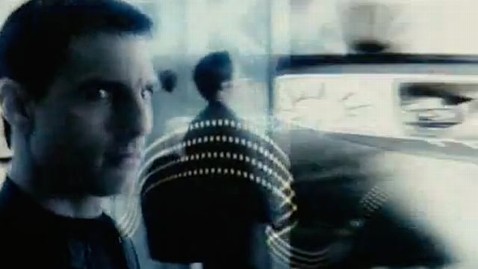
“Short of wearing a burka, we may all one day become Tom Cruise at the mall, because marketers who track us as we shop online and send us ads, want to do that as we shop in the real world.”

Did you see 60 Minutes recently or read the story ‘Say goodbye to anonymity’?

Lesley Stahl, CBS News 60 Minutes: Facial recognition is already in some of our home appliances like TVs. In our mobile devices, PINs and passwords are giving way to faceprints. And the technology can single us out in real-time as we go about our daily business, often without us ever knowing.

Joseph Atick, one of the first scientists to develop facial recognition software: What’s unique about face recognition is the fact that you can do it surreptitiously, from a distance, and continually.

Alessandro Acquisti is a professor at Carnegie Mellon who does research on how technology impacts privacy. “He says that smartphones may make ‘facial searches’ as common as Google searches and he did an experiment to show how easy it could be… He ran pictures [of random students] through a facial recognition program he downloaded for free that sifted through Facebook profiles and other websites. And he was able not only to identify many of them instantly, he also got their personal data, including in some cases, their social security numbers.

“Short of wearing a burka, we may all one day become Tom Cruise at the mall, because marketers who track us as we shop online and send us ads, want to do that as we shop in the real world.” That reference was to the 2002 Cruise film Minority Report. I’m somewhat horrified by this.

I’m happy that with their relationship on the rocks, Chris (Lefty) and Kelly Brown found a marriage counselor in their Xbox, but I wonder how much of privacy is given up to prove that new Xbox experience that’s being launched.

I can’t quite explain why, but this future automotive device weirds me out.

And it’s primarily commercial entities doing this, from the info we give out ourselves. I suppose I should unplug everything on social media and hide in my cave. But I won’t (yet).

As Tom the Mayor wrote on Facebook: “You know, You can’t ‘friend’ an Amish person on Facebook!”

Shooting Parrots wants to give Google the finger because “corporate giants like Amazon, Starbucks and Google [and Apple!] who have taken to biting the hands that feed them by avoiding paying tax where their customers live,” while, I would add, using the info we give them to get ever richer. SP is using DuckDuckGo.com in lieu of Google; its motto on the page: “Search anonymously. Find instantly.” It may lessen the “Google experience,” but it is a reasonable tradeoff, I think.
***
Some kid’s in jail for something he wrote on Facebook.

Ramblin' with Roger
Social media & sharing icons powered by UltimatelySocial