
80 years since Hiroshima

The Devil Reached Towards The Sky


It’s been 80 years since Hiroshima. I remember two things about the discussion around the Oscar-winning film Oppenheimer, one of commission, and the other, omission.

You may recall the scene of the protagonist uncomfortably accepting accolades from workers after World War II, an honest reflection of his ambivalence. The other was the feeling by some critics that the results of the bombing of Hiroshima and Nagasaki should have been reflected.

To the latter point, I don’t think so; it wasn’t where the American consciousness was at the war’s end. From staff writer Jane Meyer in the New Yorker: “Thirty years after this magazine published John Hersey’s ‘Hiroshima,’ [paywall] I sat in his classroom at Yale, hoping to learn how to write with even a fraction of his power. When ‘Hiroshima’ appeared, in the August 31, 1946, issue, it was the scoop of the century—the first unvarnished account by an American reporter of Hiroshima and Nagasaki of the nuclear blast that obliterated the city.

“Hersey’s prose was spare, allowing the horror to emerge word by word. A man tried to lift a woman out of a sandpit, ‘but her skin slipped off in huge, glove-like pieces.’ The detonation buried a woman and her infant alive: ‘When she had dug herself free, she had discovered that the baby was choking, its mouth full of dirt. With her little finger, she had carefully cleaned out the infant’s mouth, and for a time the child had breathed normally and seemed all right; then suddenly it had died.'”

Starting the dialogue

“Hersey’s candor had a seismic impact: the magazine sold out, and a book version of the article sold millions of copies. Stephanie Hinnershitz, a military historian, told me that Hersey’s reporting ‘didn’t just change the public debate about nuclear weapons—it created the debate.’ Until then, she explained, President Harry Truman had celebrated the attack as a strategic masterstroke, ‘without addressing the human cost.’ Officials shamelessly downplayed the effects of radiation; one called it a ‘very pleasant way to die.’ Hinnershitz said, ‘Hersey broke that censorship.’ He alerted the world to what the U.S. government had hidden.”

(There will be a public reading of John Hersey’s “Hiroshima” today at 11 a.m. at Townsend Park in Albany, NY. The event is free and open to the public, and the public is encouraged to join in the reading. Those interested in reading can sign up to participate when they arrive. Please bring folding chairs. Rain site: Social Justice Center, 33 Central Ave.)
Saving a million American lives?

When I was in sixth grade, we had a rigorous debate about whether the atomic attacks were justified. Most of us were opposed, but our teacher, Paul Peca, suggested they were appropriate.

Mr. Peca likely would have supported the position of , who wrote in Harper’s in February 1947: “The decision to use the atomic bomb was a decision that brought death to over a hundred thousand Japanese. No explanation can change that fact, and I do not wish to gloss it over. But this deliberate, premeditated destruction was our least abhorrent choice. The destruction of Hiroshima and Nagasaki put an end to the Japanese war. It stopped the fire raids and the strangling blockade; it ended the ghastly specter of a clash of great land armies.”

Only recently, I learned that McGeorge Bundy, a future national-security adviser, was the ghost writer for Stimson, when they “claimed that dropping nuclear bombs on Japan had averted further war, saving more than a million American lives. Kai Bird, a co-author of ‘American Prometheus,’ the definitive biography of J. Robert Oppenheimer, [said] that this pushback was specious: ‘Bundy later admitted to me that there was no documentary evidence for this ‘million’ casualty figure. He just pulled it out of thin air.”

As I noted here, Dwight Eisenhower wrote in 1963: “Japan was already defeated, and dropping the bomb was completely unnecessary… Secondly, our country should avoid shocking world opinion by the use of a weapon whose employment was, I thought, no longer mandatory as a measure to save American lives.”

To this day, the debate continues. 

Movie

I saw the 1982 documentary The Atomic Cafe in the cinema; here’s the trailer. “A disturbing collection of 1940s and 1950s United States government-issued propaganda films designed to reassure Americans that the atomic bomb was not a threat to their safety.” It was really good, and also had a killer soundtrack (but not the last track on this YouTube chain). 

Here’s a list of seven books on Hiroshima, starting with Hersey’s book and including Barefoot Gen by Keiji Nakazawa (1982); the “comic book has little of the artfulness and refinement of the modern graphic novel. But the storytelling’s power, simplicity, and anger, based on the author’s experience, are indelible.” I bought it at the time and still own it.

This week, ABC News touted a new book that uses oral history to tell the story of the atomic bomb. Martha Raddatz spoke with author Garrett M. Graff about his new book, The Devil Reached Towards The Sky, on the nuclear bombing during WWII.

The events of eight decades ago still resonate with me since I have written about Hiroshima every five years since 2010.

Review: Across the Spider-Verse

Miles Morales

There have been recent Marvel movies that I’ve thought about viewing (Guardians 3, e.g.) and I still may. When Spider-Man: Across the Spider-Verse came out, though, I HAD to see it. The fact that that Kareem Abdul-Jabbar, a pretty good gauge of popular culture on his Substack, loved it only added to my anticipation.

Spider-Man is my favorite character in the Marvel universe. During COVID, I saw all of the iterations of all of the Spidey films I had missed, which made No Way Home so delicious.

Still, my favorite webslinger film was the animated Into the Spider-Verse featuring Miles Morales. Across is a follow-up to that.

Isn’t it? The lengthy beginning of the film, before the credits, made me wonder for a time. Oh, yeah, there’s our young hero saving his neighborhood and frustrating his parents with… whatever secret he’s obviously keeping.

Gwen Stacy, a Spidey from a different sphere, shows up. This eventually prompts the Brooklyn-based teen to cross the Multiverse to join forces with other Spider-People to take on a calamitous villain Miles thinks he may be responsible for.

Without giving anything away, the film leans into the overarching mythos of the webslingers.

Obamaesque?

I was fascinated by the New Yorker article The Post-Racial Vision of “Across the Spider-Verse.” The subhead: “The movie treats its fantastical multiethnic team of superheroes and their forays into cultural determinism with Obama-like breeziness and tact.”

The key paragraph: “The appeal [of Miles’ character] is so universal—or, some might say, neutral—that even right-wing pundits who have dedicated the past few years to getting mad at every superhero or children’s film with a minority lead seem to have mostly given Miles Morales a pass. In what must have come as a surprise to its readers, ‘Worth It or Woke?,’ a Web site that disapprovingly assesses the wokeness of Hollywood releases, recently gave ‘Across the Spider-Verse’ a positive eighty-one-per-cent rating.

“Though it determined that the film took a ‘beloved character’ and ‘race-swapped in the name of Leftist virtue signaling,’ it briefly included the movie in its list of films that were ‘worth it.’ (The recommendation was ultimately pulled when the author of the review noticed that one of the characters had a ‘Protect Trans Kids’ sign in her bedroom.)” [Of COURSE it was.]

So Across the Spider-Verse has managed to walk the fine line of creating “representation” without ticking off the people who find the concept an anathema.  Having Spideys from India and Japan, it appears, is OK by almost everyone.

The one structural difficulty is the same issue as Avengers: Infinity War; Harry Potter and the Deathly Hallows, Part 1; and virtually every movie’s second act. I want to see the next film NOW.

Venue

I saw the film at the Regal Theatre at Colonie Center near Albany. It’s not my favorite venue, but, at the time, the Spectrum was closed on Wednesdays, fortunately no longer the case.

So many ads and infotainment! The noon movie started at 12:25.

The former Cuomosexuals

Ch-ch-ch-changes

cuomosexualsMy daughter pointed out that after Andrew Cuomo agreed to resign as governor of New York, Trevor Noah was trending on Twitter. Otherwise, I never know what’s trending on Twitter.
The talk show host was being mocked for declaring himself one of the Cuomosexuals in 2020.

“’Never let Trevor Noah forget this,’” the rightwing pundits proclaim when including “a 2020 video of Noah praising the governor for ‘crushing it the most right now’ when it came to his pandemic response…

“While Noah changed his tune since news of the sexual assault allegations and nursing home scandal broke, even posting a celebratory tweet following Cuomo’s resignation, conservatives want to ensure Twitter does not forget the late-night hosts’ initial take.”

Fascinating, he said, in his best Mr. Spock voice

My takeaway here is that, according to these folks, one is not allowed to have an opinion about someone, then to change one’s mind when new circumstances arise or when additional information becomes available.

OK, got it. That is plain stupid. We’re supposed to feel about, say, Bill Cosby in 2018 as we did in 1988?

Many people were comforted by Andrew Cuomo’s daily briefings. They felt that he was attempting to tell them the truth about the coronavirus infection rates, and the latest science, even when it was not particularly good news. This was in drastic contrast with the daily briefings in DC when whatever things Drs. Birx and Fauci et al. said were often countermanded and undermined by their boss.

There were LOTS of Cuomosexuals all over the country, notably the parodist Randy Rainbow. This is explained well in this New Yorker article.

I was recently reading an issue of the magazine The Week from June 2021. The experts suggested that the decline of COVID-19 was on track. No, they did not predict the level of vaccine resistance nor the speed of the delta variant – those two factors being related – so that now mask-wearing indoors is recommended, even among the vaccinated like me.

Changing their minds

It’s also OK to change one’s mind. Back in 2007, Kathy Hochul – pronounced HO-kul – “while serving as the Erie County clerk… threatened to arrest undocumented immigrants who applied for driver’s licenses.” But in recent years, the future New York State governor has supported “the state’s so-called Green Light law.”

Even as President, Barack Obama evolved on the issue of marriage equality. Initially, he opposed same-gender marriage, but his position evolved.

As a person growing up in the church, I’ve seen the changing roles of women, laypersons, and others. The church I attend now only had male ushers, dressed in a certain way, when I was born.

Frankly, people who believe that God, whoever They may be, never changes, so that we need to be doing the same thing, regardless of the needs of the people, make me damn angry.


How Long ’til Black Future Month?

The Jetsons

N K Jemisin
N K Jemisin

Waiting in a doctor’s office back in November, I finally got around to reading the New Yorker for January 27, 2020. The article that struck me most was Dream Worlds by Raffi Khatchadourian.

The subject was the science-fiction writer N. K. Jemisin. “In 2018, she released ‘How Long ’til Black Future Month?’ a collection of short stories.” I haven’t read them. In fact, I was not even familiar with Nora Keita Jemesin until this 20-minute read. She is fascinating.

“Jemisin mastered an outsider’s art of adaptation.” This is a skill lots of black people have developed. “Shifting between Alabama and New York, where she spent summers with her father, she adjusted to the jarring differences across the Mason-Dixon Line, both social and personal… Childhood, she told me, was ‘a schizoid experience.’ In Mobile, she shifted across racial divisions, too, attending a predominantly white school that had been forced to desegregate…”

“How Long ’til Black Future Month?” takes its name from an essay that Jemisin wrote in 2013. “It begins with two memories of watching ‘The Jetsons’: first as a girl, excitedly taking it all in, and then as an adult. ‘I notice something: there’s nobody even slightly brown in the Jetsons’ world,’ she wrote. ‘This is supposed to be the real world’s future, right? Albeit in a silly, humorous form.”

Representation

“‘The thing is, not-white people make up most of the world’s population, now as well as back in the Sixties when the show was created. So what happened to all those people, in the minds of this show’s creators? Are they down beneath the clouds, where the Jetsons never go? Was there an apocalypse, or maybe a pogrom? Was there a memo?’” One of the aspects of equality involves representation in the work.

Another was trying to break down the stereotypes surrounding black people and the science fiction genre. About a decade ago, Octavia “Butler’s sense of invisibility was still sorely felt. One of her blogposts was “‘If you’re a person of color who is into science fiction, speak up. We’re doing a headcount of how many of us exist.’ And it was a huge number… In fact, the post was titled ‘The Wild Unicorn Herd Check-in.'”

Backlash

“Amid a reactionary backlash, Jemisin became a target. In 2013, she gave an impassioned speech about race in the genre, noting that a white supremacist had just run for president of the Science Fiction & Fantasy Writers of America. Though he lost, he had secured ten percent of the vote, prompting her to criticize the ‘great unmeasured mass of enablers’ who had been silent. The former candidate, in turn, called her an ‘ignorant half-savage’ in a racist screed.

“As the cultural divide sharpened… conservative writers began interfering with the Hugos, using a loophole to shape the list of nominees. Until it was closed, two years later, people protested by selecting ‘No award’ on ballots. ‘The Fifth Season’ won its award just after the loophole was closed.

“Accepting her third Hugo, Jemisin stood at the lectern, with the rocket-shaped award beside her, and declared, ‘This is the year in which I get to smile at all of those naysayers, every single mediocre, insecure wannabe who fixes their mouth to suggest that I do not belong on this stage, that people like me could not possibly have earned such an honor, and that when they win it’s ‘meritocracy,’ but when we win it’s ‘identity politics.’ Holding up the award, she added, ‘I get to smile at those people, and lift a massive, shining rocket-shaped finger in their direction.'”

I like the idea of Black Future Month.

Nov. rambling: gifts of grace

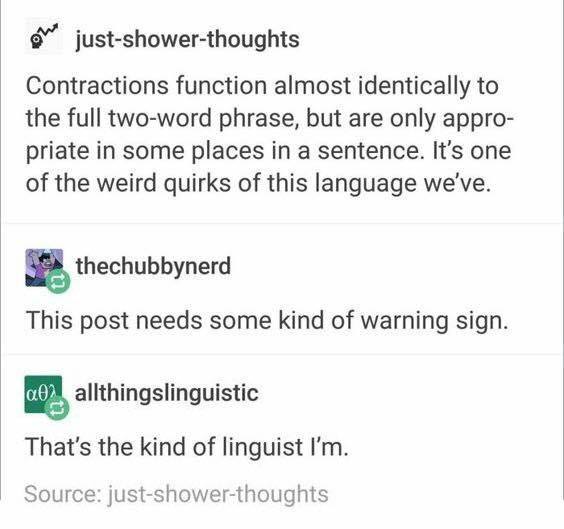
Contractions-bitsThe Child Soldier Crisis: ‘Kids Are Cheap’

1619-2019: From Slavery to Mass Incarceration

Flat Earth conspiracy is growing especially among born again religious zealots

John Oliver Slaps Down Coal Baron’s SLAPP Lawsuit: ESB

Samantha’s Journey Into the Alt-Right, and Back from The New Yorker Radio Hour with David Remnick. I happened upon this while listening on the radio in the car last week. Whoa.

Susie Meister: How Studying Religion Made Me a Liberal and The Reality of Being a Reality Star, from Ken Levine’s podcast

Why use Ukraine to impeach when you’ve got the emoluments clause (and the Hatch Act)?

Weekly Sift: An Impeachment Hearing Wrap-Up

Recognizing Israeli Settlements Marks the Final Collapse of Pax Americana

The GOP Tax Cuts Didn’t Work

As a Veteran, I Refuse to Celebrate War

On Nov. 19, 1863, the accomplished Massachusetts statesman Edward Everett gave a two-hour speech at Gettysburg, but history gave him the shaft

RIP, the great Howard Cruse, from cancer.

Now I Know: The Woman Who Sniffed Out Parkinson’s and The Man Who Won a Trip to Mars and The British Ban on Clapping and When the US Air Force Bombed Montana and How Luke Skywalker Beat the Puffins and Why Did the Crab Cross the Road? and The Poacher Who Got Sent to the DVD Player

Gifts of grace

Ranked-Choice Voting “Allows You to Vote for the Person You Really Like”

Why bad taste is over – An interview with John Waters

Ruthie Berman & Connie Kurtz Residence – NYC LGBT Historic Site

Worker Training Program tackles opioid misuse and addiction. I know Jonny Rosen IRL.

Syracuse University janitor who cleaned racist graffiti replaces it with kindness

We desperately need to get out kids back outside

blue books

250 families receive “gifts of grace” to donate to meaningful causes

US Census Bureau: American Indian and Alaska Native Heritage Month

Authentic black beauty

102 Common English Idioms with Meaning and Examples

The Beautifully Macabre Cartoons of Gahan Wilson

Massachusetts Highway Exits to Be Renumbered by 2022

It’s a Musical

Who’s the greatest JEOPARDY! player of all time? I’m so glad this is on ABC-TV in January, not part of the syndicated series

Gone in 13 Episodes (or Less!)

The story of The Whistler radio program

Groucho Marx on TV after the game show You Bet Your Life

MUSIC

He’s Just a Gurl Who’ll Quid Pro Quo – Randy Rainbow

Dommage – Bigflo & Oli; English lyrics to Dommage

Papaoutai – Stromae

I’m Going Home – Sacred Harp Singers At Liberty Church; Idumea– ditto; Sacred Harp and Shape Note singing

The Rock by Sergei Rachmaninov

Mr. Tambourine Man – the Starbugs, from New Zealand

One, a U2 cover, features McKenna Breinholt as the soloist and the 100-person Cinematic Pop orchestra and choir, arrangement of Rob Gardner

Hooked on a Feeling – Pomplamoose

Coverville 1285: The Bonnie Raitt Cover Story and 1286: J. Geils Tribute and Indie Hodgepodge

Metamorphosis episode of Star Trek (original series), incidental music

Rockin’ in the free world, the Netherlands, 2016

Mah Na Mah Na – Piero Umiliani (1968); Mah Na Mah Na – first Seaame Street appearance (1969)

LAY DOWN (Candles In The Rain) – Melanie & The Edwin Hawkins Singers (1970). Full recording.

I Wanna Be A Lifeguard – Blottomoji version

A highlight of the Barbershop Harmony Society’s International Convention

Tina Turner is 80 years old. The big Interview

The Best-Selling Music Artists of the Last 50 Years

Ramblin' with Roger
Social media & sharing icons powered by UltimatelySocial