
 Binghamton State Hospital was/is an imposing behemoth. From the National Park Service: “The New York State Inebriate Asylum [its original name] is nationally significant in the area of health/medicine as the first single-purpose hospital in the United States that was designed and built for the treatment of alcoholism as a disease.”
From Asylum Projects: “Founder J. Edward Turner belonged to a school of thought that alcoholism wasn’t just a vice, but could be cured medically. The well-lit rooms and extensive grounds are an important marker in New York State’s view of addiction… But it “only served its original purpose for 15 years, at which point Turner’s inebriate asylum was converted into a hospital for the chronically insane.”
From Womb to Tomb: The Story of Binghamton State Hospital by Mary Chattin and Danielle Snali noted, “In 1890, the ‘Castle’ now emphasized treating and curing patients rather than isolating them away from society.
Community support
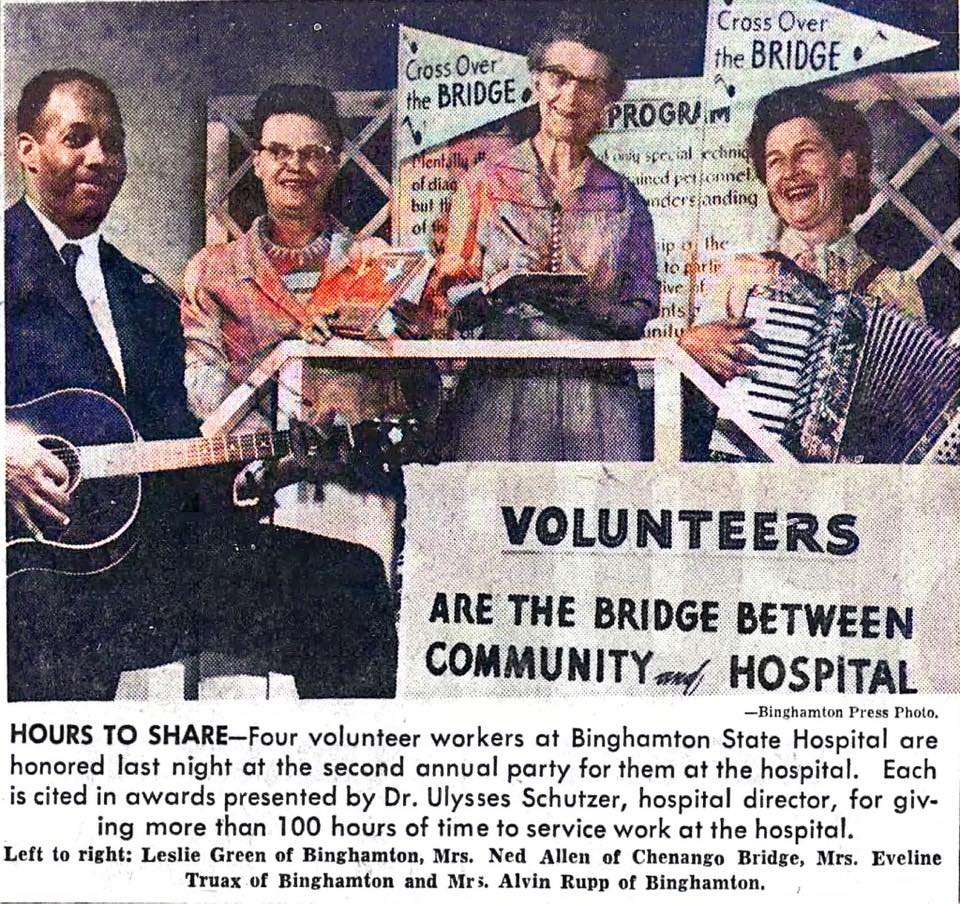
And perhaps to the volunteers? Starting in the late 1950s, awards were given to organizations and individuals who shared their talents. In 1960, the second annual event honored four Triple Cities groups, including the Vestal Jaycees for ward activities and cooking classes; the Binghamton Chamber of Commerce for holding record hops; the National Secretaries Association, Binghamton Chapter, for teaching shorthand and typing; and the Johnson City Catholic Daughters Court, Monsignor 1594, for ward activities (games and parties). Each volunteered 250 or more hours.
Four individuals, pictured above in the June 9, 1960, Binghamton Evening Press, were also honored for donating 100 hours of volunteer time, including my father, Les Green.
The following year, a longer story appeared in the newspaper about the needs of the clientele. Addison C. Keeler, president of the volunteers organization, noted that hospital volunteers wage a “relentless war on boredom… Many patients, in their present attitude of mind, aren’t going anywhere, but if volunteers can restore some purpose and bring some happiness, the volunteers can feel that their efforts were worthwhile.”
Closure
Per the Wikipedia page: “The building remained in use as a mental hospital or psychiatric services center until 1993, when it was closed due to inadequate maintenance… In 2015, Binghamton University announced it had taken stewardship of the building and published plans for its rehabilitation.”