
Oscar-nominated short films: Live action

The first, third, and fifth movies all were based on true stories and suggested the possibility of violence.

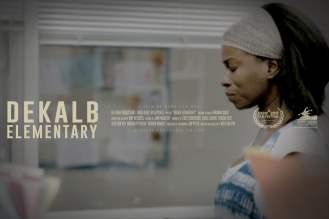
All the short films my wife and I saw at the Spectrum in February 2018 were quite good. Dekalb Elementary (USA – 20 minutes) involved a 2013 school shooting incident in Atlanta, GA. It was really intense, but the lead female’s role was remarkable.

The Silent Child (UK – 20 minutes) is about a profoundly deaf four-year-old girl, whose busy middle class family care for her. But she lives in a world of silence until a caring social worker teaches her how to communicate. The arc of this story was very touching, and a bit heartbreaking.

My Nephew Emmett (USA – 19 minutes) is set in 1955 and based on the true story of a Mississippi preacher who tries to protect his 14-year-old nephew. I knew almost immediately, though my wife did not, what this story was all about, which I suppose lessened the impact only slightly.

In The Eleven O’Clock (Australia – 13 minutes), the delusional patient of a psychiatrist believes he is actually the psychiatrist, and they end up analyzing each other. As the only comedy, and a cleverly funny one at that, it broke up the tension in the theater somewhat.

Watu Wote – All of Us (Germany/Kenya – 23 minutes). “For almost a decade Kenya has been targeted by terrorist attacks of the Al-Shabaab. An atmosphere of anxiety and mistrust between Muslims and Christians is growing. Until in December 2015, Muslim bus passengers showed that solidarity can prevail.”

The first, third, and fifth movies all were based on true stories and suggested the possibility of violence. DeKalb was probably my favorite among these, but I suspect Wote Watu will win the Oscar because it’s so timely.

As a teacher of English as a New Language, my wife really related to The Silent Child, knowing children often need advocates when they are “different.”

The one thing I hated in the presentation is that, during the closing credits, they had videos of the filmmakers hearing that they’ve been nominated for Academy Awards. It really ruined the mood, especially the stirring end music of Wote Watu. Now if they’d run the clips AFTER each the credits, it would have been better, serving as a brief respite before another heavy topic.

Nevertheless, a very good crop of films.

Black History Month: Skin Deep

Seven ideas to help Boston become a more welcoming place to all

Bring Black History Month to the classroom by teaching your students about the work and lives of influential African-Americans

Presbyterian Church USA resources to understand and combat racism

The arc of history bends towards justice quote originally came from Theodore Parker

Celebrating the Afro-Puerto Rican ‘Father of Black History’ Arturo Schomburg

Jimmy Durham, Victoria soldier

In 1887, African-American cane workers in Louisiana attempted to organize—and many paid with their lives

Fredi Washington negotiated bigotry and made her way in the movies; the black celebrity from Hollywood’s Golden Age who revealed the complexities of passing for white

When cops raided a hip 1970s London cafe, Britain’s Black Power movement rose up

AND EVEN TODAY

From online troll to white supremacist leader: exposing the lie behind one man’s rise

Cheap White Whine: Racism, Affirmative Action, and the Myth of White Victimhood

Racism, fundamentalism, fear and propaganda: An insider explains why rural, white Christian America will never change

Rev. Robert Wright Lee IV Statement on Leaving His Church after Speaking Out against White Supremacy at MTV VIDEO MUSIC AWARDS

Defiance In The Cold Sunshine: The Martin Luther King March overshadowed by racist profanity

Banned – Reports of Voter Suppression Tactics Pour In From Alabama Election

I used to lead tours at a plantation; you won’t believe the questions I got about slavery

Owning My Racism: a sermon given at First Parish Church in Billerica, MA on January 14, 2018

Boston. Racism. Image. Reality. A better Boston? The choice is ours; the final installment of The Boston Globe Spotlight Team’s series on race showcases seven ideas to help the city become a more welcoming place to all

MUSIC

Skin Deep – Playing For Change and Buddy Guy; the song includes over 50 musicians from coast to coast featuring Tom Morello, Billy Branch, Chicago Children’s Choir, and Roots Gospel Voices of Mississippi

Shakedown – Valerie June

Jumpin Jive – Cab Calloway and the Nicholas Brothers; from the movie “Stormy Weather” (1943)

Black Pearl – Sonny Charles and Checkmates, Ltd.

Quincy Jones Has a Story About That

Valentine’s Day is Ash Wednesday

Being selfless can be a self-centered act.

Without looking, I knew I would find this sentence in some news source: “Parishioners… think Valentine’s Day is actually a great day to start Lent.” Romantic love, Jesus’ love, and all that.

This resonates, even though Lent is intended for sacrifice and February 14 is usually keyed to indulging in candy, more in line with Shrove Tuesday/Mardi Gras, which immediately precedes Lent.

But I’ve heard enough Ash Wednesday and other Lenten sermons to make the case that indulging and sacrificing do not have to be that far apart. Traditionally, Christian believers tend to put aside a particular vice such as the chocolate that is a favored treat.

Perhaps you can make a sacrifice of your time to indulge the human need of personal connection. Maybe it’d be a visit to someone you hadn’t seen in a while. Or a handwritten letter, rather than email. Or an honest-to-goodness phone call, not merely a text.

Maybe you can do something for someone else. Random Acts Of Kindness Raise Dopamine Levels And Boost Your Mood. Being selfless can be a self-centered act.

And it does not need to be a large gesture. Opening a door… and giving advice are wonderful ways to give. “Anytime we step outside of ourselves long enough to help someone else, something wonderful is waiting for us when we return: the Happiness Trifecta neurochemicals are all boosted!”

When I was a kid, you could always tell which of your classmates were Catholic by their “dirty foreheads” on Ash Wednesday. But somewhere along the line, the mainline Protestant churches “gave up” on the rejection of this ritual and embraced it instead.

Here is vlogbrothers: “Two Love Stories”

Finally, here again is my favorite Valentine’s Day song, by Steve Earle.

If I could I would deliver to you
Diamonds and gold; it’s the least I can do
So if you’ll take my IOU
I could make it up to you
Until then I hope my heart will do
For Valentine’s Day

F is for the Fresh Beat Band

Yvette Gonzalez-Nacer played Cha Cha on the live Grease production.


One of the kids’ shows the Daughter watched when she was five and for two or three years therafter was The Fresh Beat Band. Before the show ever aired on Nick, they were referred to as the Jumparounds because, in the previews, they jumped around a lot.

The group consisted of
Shout (Thomas Hobson) – keyboards, vocals
Marina (Shayna Rose, replaced by Tara Perry – pictured) – drums, vocals, piano
Kiki (Yvette Gonzalez-Nacer) – guitar, violin, vocals
Twist (Jon Beavers) – turntables, beatbox, vocals

So the guys were Twist and Shout, which made me laugh. Marina was easily replaced like a soap opera actress, played by one person for a while then another.

The “Fresh Beats” are “described as four best friends in a band who go to music school and graduate together as musicians who are determined to follow their dreams…

“In 2015, an animated television series Fresh Beat Band of Spies premiered on Nickelodeon. All four members of the band lend their voices to their respective characters in the spin-off.”

Listen to the Fresh Beat Band
Theme
Go Bananas
A Friend Like You

Most of them seem to be still working actors, though Shayna Rose has no IMDB credits since the original series.

Jon Beavers is appearing as a soldier in National Geographic’s 2017 miniseries The Long Road Home, based on ABC News’ Martha Raddatz’s book, which “chronicles the events of April 4th, 2004, when a platoon was ambushed in Sadr City, Baghdad, in an attack that came to be known as ‘Black Sunday.'”

Thomas Hobson was in four episodes of the 2016 version of The Chadwick Journals, a “chronicle of stories about men of color who lead double lives,” plus a couple upcoming films.

Tara Perry played Louisa May Alcott in the 2016 TV miniseries Edgar Allan Poe’s Murder Mystery Dinner Party, among other things.

Yvette Gonzalez-Nacer, who rang the opening bell at the New York Stock Exchange as Kiki in 2011, has had guest appearances on Madam Secretary and Criminal Minds, plus playing Cha Cha on the live Grease production. She’s also a recording and performing artist who performs under the name Ava Gold.

Listen to Ava Gold:
I Wish You Would
Havana

For ABC Wednesday

The problem with black history month

People who have served their time, “paid their debt to society,” STILL can’t vote in some states

The problem with black history month is that one can slip into the mindset that it’s all about what happened way back when – RIGHT? – but it isn’t. For instance, The Eight Box Law of 1882. It was a nastily clever way to disenfranchise black people in the late 19th century, not dissimilar to activities designed to do the same thing even 80 years later.

Then you recall there are all sorts of ways the system is trying to disenfranchise certain people in the first part of the 21st century, with voting rolls purged in certain neighborhoods; required IDs that are increasingly difficult to acquire; and fewer polling places, so that voters, facing long lines, will be discouraged.

And I’m not even going to get into gerrymandered redistricting.

From Think Progress (2016): “In 2013, North Carolina — led by the GOP — approved a law that eliminated same-day voter registration, cut a full week of early voting, barred voters from casting a ballot outside their home precincts, scrapped straight-ticket voting, and got rid of a program to pre-register high school students who would turn 18 by Election Day. That law also included one of the nation’s strictest voter ID requirements.

“Federal courts struck down most of the law after finding that it was passed with the intention to suppress African-American voters ‘with almost surgical precision.'”

You read that Sentencing Commission Finds Black Men Receive Longer Sentences Than White Men For Same Crime. You may have instinctively known that, but it’s good to have it verified.

And then you remember that, in most states, people that are in the prison system can’t vote, so that’s another method of disenfranchisement. And people who have served their time, “paid their debt to society,” STILL can’t vote in some states, in a few jurisdictions, FOREVER.

So you latch on to the notion that “progress” has been made. and surely there has been. But in a system of two steps forward and two steps back, it can feel a lot like standing still.

Social media & sharing icons powered by UltimatelySocial