Did I play catch with my dad?

“Maybe this is Heaven.”

Did I play catch with my dad? It seems like a pretty simple question, but I don’t know.

The genesis of this process was a Facebook post from a guy in my neighborhood. He never “got ” Field of Dreams. In the movie, Ray (Kevin Costner) is in his cornfield and hears a voice saying, “If you build it, they will come.” He does, and soon, Shoeless Joe and his old teammates return to play baseball again. 

Someone opined: “At the heart of the story, it’s about a man reconciling his fraught relationship with his now deceased father. It’s about forgiveness and understanding, and the vehicle for his catharsis is baseball.” There is that. “Shoeless Joe was his dad’s favorite player and needed his redemption, along with the rest of the 1919 White Sox. The Field of Dreams allowed them all to experience that.” Okay. 

But, I said, “I don’t think you need to know the Black Sox scandal to appreciate it, though it helps to appreciate baseball.” And maybe you don’t even need that. 

I was touched when the doctor saved Ray’s daughter, abandoning his baseball dreams for the greater good. “Defying the threat of foreclosure, Ray listens to the once-cynical, worn-down Terence’s (James Earl Jones) dreamy prediction.” 

Every. Single. Time. 

When Ray plays catch with his dad, I cry every damn time. Every. Damn. Time.

Yet, I cannot remember whether my father and I played catch, yea or nay. My sisters could not give me a definitive response. 

My dad and I attended minor league baseball games in the Binghamton, NY, area, seeing the Triplets. However, he worked nights at IBM in the mid-1960s, so I tended to go to games with my grandfather, McKinley. Dad and I also saw a New York Yankees game at the old Stadium when they beat the Washington Senators, 4-3, quite possibly on July 21, 1962. (I remember the score and the opponent.)

I saw Field of Dreams when it first came out in 1989, when my dad was still alive. Since he died in 2000, I know there are questions I would have liked to have asked about his childhood, his relationship with McKinley, his time in the military, and many other things. It’s a sentimental movie; my father’s passing makes it feel more so.

Leslie Harold (Les) Green died a quarter of a century ago.

The ABCs of Sunday Stealing

Wordle

A logo from a now-defunct group I used to participate in

Welcome to Sunday Stealing. Here, we will steal questions from every corner of the blogosphere. We promise to work hard to find the most interesting and intelligent questions. Cheers to all of us thieves!

Creative Bold inspired this week’s meme. She used the alphabet to tell us a little something about herself. Now it’s your turn.

Let’s Do Our ABCs. J5The Look of LoveSesame Street.

A. Auto—it’s a white hybrid that looks like every other vehicle of its size. I’ve gone to the wrong car. Occasionally, so has my wife, and she bought it and drives it.

B. Bed size – Queen.

C. Cats – Stormacita

D. Dogs – I wrote about this a couple of years ago. Quoting me: In my life, I had only one dog. He was named Lucky Stubbs. I believe he was an Alaskan husky we had when I was a tween. He would nip at me, but my parents, specifically my father, seemed unconcerned. That is, until he bit one or maybe both of the minister’s daughters. THEN they got rid of him, ostensibly to a farm in the area.

E. Essential start to your day—I’m afraid it’s Wordle. My win streak is over 955; maybe when I finally blow it—I’ve had two sixes in the last 50 games—I’ll give it up. Or not.

Well, you should be able to guess one

F. Favorite color – Green. Or blue

G. Gold or silver -eh, either. Whatever.

H. Hand you favor (righty or lefty) – Right-handed

I. Instruments you play – kazoo

J. Job title – retired business librarian

K. Kids – one

L. Live (rural, suburb, city) – medium-sized city

M. Meal plans—Okay. We usually have oatmeal with blueberries and a banana for breakfast. Lunch and dinner are relatively varied. Sometimes, when my wife is busy, I buy takeout; the Indian takeout usually lasts four meals.

N. Nicknames – I’m not partial to them.

O. Overnight hospital stays. When I was five and a half, I remember having a bloody nose so severe that I was admitted to the hospital; it was great because I got to see the Hanna-Barbera cartoons, such as Huckleberry Hound and Yogi Bear. There was a car accident in June 1972.  Then, there was the heart thing in 2013. 

P. Pet peeves. Lots. Drivers who don’t yield to pedestrians when they have the right of way.  People who say “do your research” when they mean, “Listen to the lunatic I listen to.” But I have been less fussy over spelling errors because English is weird.

The movie quote should be about movies.

Q. Quote from a movie. My favorite quote about cinema: “That’s part of your problem: you haven’t seen enough movies. All of life’s riddles are answered in the movies.” Grand Canyon (1991), spoken by Steve Martin’s character

R. Regrets. “Regrets, I’ve had a few, but then again, too few to mention.” This line from the song My Way, popularized by Frank Sinatra, is a fiction in my life.

S. Siblings: Two sisters, one less than a year and a half younger, and one a little more than five years younger.  

T. There’s no T! So Television: I just got a Roku, and I’m still figuring it out.

U. Underwear. Yes.

V. Vegetable you love. Spinach

W. What makes you run late? Often, other people

X. X-rays you’ve had. Teeth, left knee, and various other parts.

Y. Yummy food – spinach lasagna, fried chicken leg, strawberry shortcake, carrot cake.

Z. Zoo animal; At The Zoo

Hot Country Hits of 1975, part 1

Merle Haggard, Conway Twitty

This is the Hot Country Hits of 1975, part 1. There are 43 songs in total, only eight of which charted for more than a week. I’ll note the ones that were also #1 on the pop charts.

Convoy—C.W. McCall, six weeks at #1. I couldn’t believe this did not hit #1 on the pop charts, as I heard it often, and it seemed to have encapsulated the CB radio craze. It even inspired a 1978 movie. Ah, it did hit #1 pop, but not until early 1976. It was chronologically the last #1 country hit of 1975.

Rhinestone Cowboy -Glen Campbell, three weeks at #1; also #1 pop for two weeks and #1 AC for a week. I really liked him.

Before The Next Teardrop Falls – Freddy Fender, two weeks at #1; also #1 pop for a week.

Always Wanting You – Merle Haggard, two weeks at #1. He had a total of four #1s in 1975. Several biographies were crafted for the Ken Burns series Country Music on the PBS website. Here’s his.

Touch The Hand – Conway Twitty, two weeks at #1. Three #1s, including a duet, in 1975.

Wasted Days and Wasted Nights – Freddy Fender, two weeks at #1. Two #1s in 1975

Daydreams About Night Things– Ronnie Milsap, two weeks at #1. Two #1s in 1975

#1 for one week

The Door – George Jones

Ruby Baby – Billy “Crash” Craddock, the Leiber-Stoller song previously recorded by, among others, the Drifters (#10 RB in 1956), Dion (#2 pop in 1963), the  Beatles, and the Beach Boys

Kentucky Gambler – Merle Haggard

(I’d Be) A Legend In My Time – Ronnie Milsap

City Lights – Mickey Gilley. Two #1s in 1975

Then Who Am I – Charlie Pride. Two #1s in 1975

Devil In The Bottle – T.G. Sheppard. Two #1s in 1975

I Care – Tom T. Hall. This appears on the album Country Songs For Children

It’s Time To Pay The Fiddler – Cal Smith

Linda On My Mind – Conway Twitty

The Bargain Store – Dolly Parton. PBS bio.

I Just Can’t Get Her Out Of My Mind – Johnny Rodriguez, yet it didn’t even make the top 100 pop. Three #1s in 1975. PBS bio. His website. He died May 9, 2025.

Always Wanting You – Merle Haggard

Blanket On The Ground – Billie Jo Spears

Stormy is 12

the last cat?

Stormy is 12. Her birthday was back in June. Apparently, I am not a good cat parent.

She received her physical in mid-July and is well for a 12-year-old feline. My wife and daughter report that, while she hates being in the cage, she didn’t fuss as much in the car. She resisted leaving the cage at the vet’s, but tilting the enclosure did the trick.

Stormy has lost about a pound since last year’s exam. The vet was slightly concerned because our other cat, Midnight, had stopped eating and started losing weight right before he died last summer. But we theorize that as Midnight ate less, Stormy ate more. So we think it’s all fine.

As I’ve noted before, she’s become much more likely to sit next to me as she is in these pictures, and she didn’t do that before when Midnight was around because he was quite possessive of me, even though he was pretty hostile to me.

Before I feed her, she can become very loud. She likes to rub her head against my leg and let me scratch her, but she also rubs her head up against the sofa, the chair leg, and a table leg. When it’s cold, she will sleep in my wife’s and my bed; when it’s warmer, she’ll sleep in the hallway.

Don’t Go Near The Water

She has the annoying habit of going into the human bathroom and drinking from the shower drippings. But she doesn’t like water on her. I wash my hands, and whatever residual water is on my fingertips, I can flick at her, and she’ll run down the stairs in about three seconds.

The vet said we shouldn’t have another cat with her because 12-year-olds tend to be quite territorial. I don’t think we’re ever gonna have another pet. We’ll probably move to a smaller place, and having an animal doesn’t seem to be a likely scenario anyway.

80 years since Hiroshima

The Devil Reached Towards The Sky


It’s been 80 years since Hiroshima. I remember two things about the discussion around the Oscar-winning film Oppenheimer, one of commission, and the other, omission.

You may recall the scene of the protagonist uncomfortably accepting accolades from workers after World War II, an honest reflection of his ambivalence. The other was the feeling by some critics that the results of the bombing of Hiroshima and Nagasaki should have been reflected.

To the latter point, I don’t think so; it wasn’t where the American consciousness was at the war’s end. From staff writer Jane Meyer in the New Yorker: “Thirty years after this magazine published John Hersey’s ‘Hiroshima,’ [paywall] I sat in his classroom at Yale, hoping to learn how to write with even a fraction of his power. When ‘Hiroshima’ appeared, in the August 31, 1946, issue, it was the scoop of the century—the first unvarnished account by an American reporter of Hiroshima and Nagasaki of the nuclear blast that obliterated the city.

“Hersey’s prose was spare, allowing the horror to emerge word by word. A man tried to lift a woman out of a sandpit, ‘but her skin slipped off in huge, glove-like pieces.’ The detonation buried a woman and her infant alive: ‘When she had dug herself free, she had discovered that the baby was choking, its mouth full of dirt. With her little finger, she had carefully cleaned out the infant’s mouth, and for a time the child had breathed normally and seemed all right; then suddenly it had died.'”

Starting the dialogue

“Hersey’s candor had a seismic impact: the magazine sold out, and a book version of the article sold millions of copies. Stephanie Hinnershitz, a military historian, told me that Hersey’s reporting ‘didn’t just change the public debate about nuclear weapons—it created the debate.’ Until then, she explained, President Harry Truman had celebrated the attack as a strategic masterstroke, ‘without addressing the human cost.’ Officials shamelessly downplayed the effects of radiation; one called it a ‘very pleasant way to die.’ Hinnershitz said, ‘Hersey broke that censorship.’ He alerted the world to what the U.S. government had hidden.”

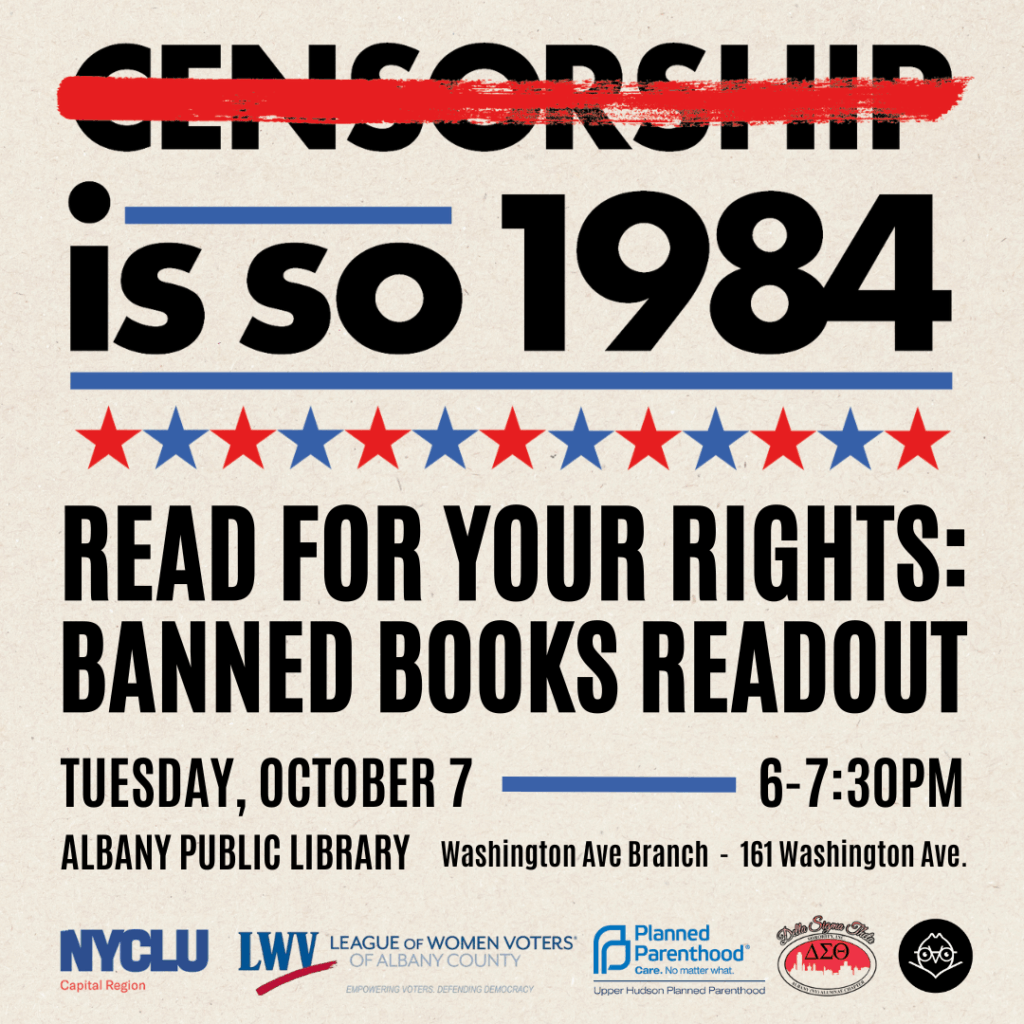
(There will be a public reading of John Hersey’s “Hiroshima” today at 11 a.m. at Townsend Park in Albany, NY. The event is free and open to the public, and the public is encouraged to join in the reading. Those interested in reading can sign up to participate when they arrive. Please bring folding chairs. Rain site: Social Justice Center, 33 Central Ave.)
Saving a million American lives?

When I was in sixth grade, we had a rigorous debate about whether the atomic attacks were justified. Most of us were opposed, but our teacher, Paul Peca, suggested they were appropriate.

Mr. Peca likely would have supported the position of , who wrote in Harper’s in February 1947: “The decision to use the atomic bomb was a decision that brought death to over a hundred thousand Japanese. No explanation can change that fact, and I do not wish to gloss it over. But this deliberate, premeditated destruction was our least abhorrent choice. The destruction of Hiroshima and Nagasaki put an end to the Japanese war. It stopped the fire raids and the strangling blockade; it ended the ghastly specter of a clash of great land armies.”

Only recently, I learned that McGeorge Bundy, a future national-security adviser, was the ghost writer for Stimson, when they “claimed that dropping nuclear bombs on Japan had averted further war, saving more than a million American lives. Kai Bird, a co-author of ‘American Prometheus,’ the definitive biography of J. Robert Oppenheimer, [said] that this pushback was specious: ‘Bundy later admitted to me that there was no documentary evidence for this ‘million’ casualty figure. He just pulled it out of thin air.”

As I noted here, Dwight Eisenhower wrote in 1963: “Japan was already defeated, and dropping the bomb was completely unnecessary… Secondly, our country should avoid shocking world opinion by the use of a weapon whose employment was, I thought, no longer mandatory as a measure to save American lives.”

To this day, the debate continues. 

Movie

I saw the 1982 documentary The Atomic Cafe in the cinema; here’s the trailer. “A disturbing collection of 1940s and 1950s United States government-issued propaganda films designed to reassure Americans that the atomic bomb was not a threat to their safety.” It was really good, and also had a killer soundtrack (but not the last track on this YouTube chain). 

Here’s a list of seven books on Hiroshima, starting with Hersey’s book and including Barefoot Gen by Keiji Nakazawa (1982); the “comic book has little of the artfulness and refinement of the modern graphic novel. But the storytelling’s power, simplicity, and anger, based on the author’s experience, are indelible.” I bought it at the time and still own it.

This week, ABC News touted a new book that uses oral history to tell the story of the atomic bomb. Martha Raddatz spoke with author Garrett M. Graff about his new book, The Devil Reached Towards The Sky, on the nuclear bombing during WWII.

The events of eight decades ago still resonate with me since I have written about Hiroshima every five years since 2010.

Ramblin' with Roger
Social media & sharing icons powered by UltimatelySocial