
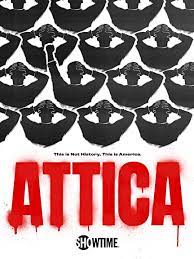
 If “Attica” is just a line you recognize from the movie Dog Day Afternoon, you should watch the Oscar-nominated, 2021 documentary of that name.
Now, if you were around then, you will discover a lot of details that you forgot, or more likely, did not know at all about one of the most significant prison riots in the United States. “This unnervingly vivid dive into the 1971 uprising… sheds new light on the enduring violence and racism of the prison system…”
A little over half of the approximately 2,200 prisoners took over the facility on September 9, taking 42 staff hostage. They had tired of their brutalizing conditions and sought to be treated like human beings. The stories in the film were told by some of the former prisoners. As one critic correctly notes, “I don’t think Attica glorifies the prisoners, but it does humanize them. That is, it presents them as human beings.”
There were four days of negotiations, including with the state Commissioner of Corrections, Russell G. Oswald. While there were some prisoners who wanted to hold Oswald and other negotiators hostage as well, the prisoner leadership opposed this, saying that they should deal in good faith.
Other people interviewed in the documentary included the families of the guards held hostage. Attica is a small town in rural Wyoming County, southwest of Rochester and southeast of Buffalo. The Department of Corrections is the major employer. Most of the prison personnel were white local folks, while most of the prisoners were black and/or Hispanic, creating a definite culture clash beyond the guard/prisoner dynamic.
During the negotiations, authorities agreed to 28 of the prisoners’ demands. But they would not agree to complete amnesty for the inmates involved with the prison takeover.
Nixon’s the one
The film shares audiotape of Nelson Rockefeller conferring with Richard M. Nixon. The governor assured the President that he would not accede to the demands to go to Attica, a position that Nixon applauded. Then on September 13, Rocky ordered armed corrections officers, and state and local police to retake the prison.
The next thing that happened, you may know. Or not, as disinformation was sent out by Rocky himself, disputed initially by ABC News reporter John Johnson and soon by medical examiners.
But it is what happened AFTER the siege that I had never heard about or seen before. It was quite disturbing in its own right. And that’s the strange thing about the movie. If you don’t know how the story ends, you might get three-quarters of the way through and still hold out for a happy ending.
The movie by writer/director Stanley Nelson got positive reviews from 50 of 51 critics. And the 51st has a snippet that says, “Extraordinary archival footage… You can’t just dismiss it as hyperbole.” I watched it on Amazon Prime.
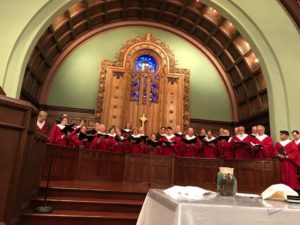 The thing about Easter, the Lenten season before it, and indeed most holidays – is that they are pretty much the same thing, year in and year out. That is not to say that’s a BAD thing, merely predictable. Ashes on the forehead. “Hallelujah” is not uttered during Lent. The Last Supper. Then Christ has died. But wait, Christ is risen? And the promise that Christ will come again?!
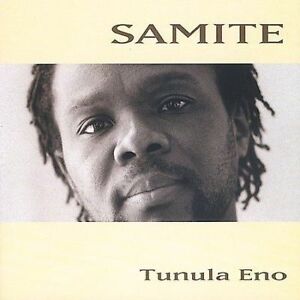 While looking for another album, I came across Tunula Eno by a Ugandan singer named Samite (Sæm ē tay) Mulondo. It came out in 2003, during the last year of his beloved wife Joan’s life. It is a lovely collection. But I have no idea how I came to own it. A present? Not from my wife. If I got it at a show, I don’t recall it.
 A couple of summers ago, I was supposed to read the Scripture for our online church service. My daughter recorded me on her phone, but we were having a difficult time. The reading was only about a minute long. My daughter could only record about 30 seconds at a time. I wouldn’t even try it on my irritating device at that time. Fortunately, Dwight, the tech magician for the church, could piece the snippets together.
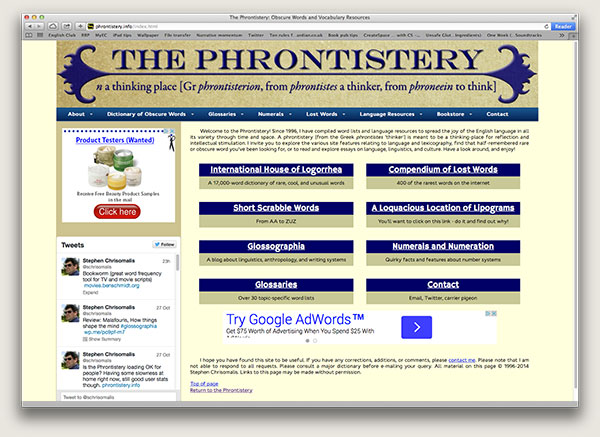 As loath as I am to acknowledge it, sometimes I find a really cool resource, such as a useful website. I’ll access it for a period of time then forget about it. Then someone else will find it, I’ll check it out, and say, “Hey, I’ve been here before!”