The nine-word problem

boycott

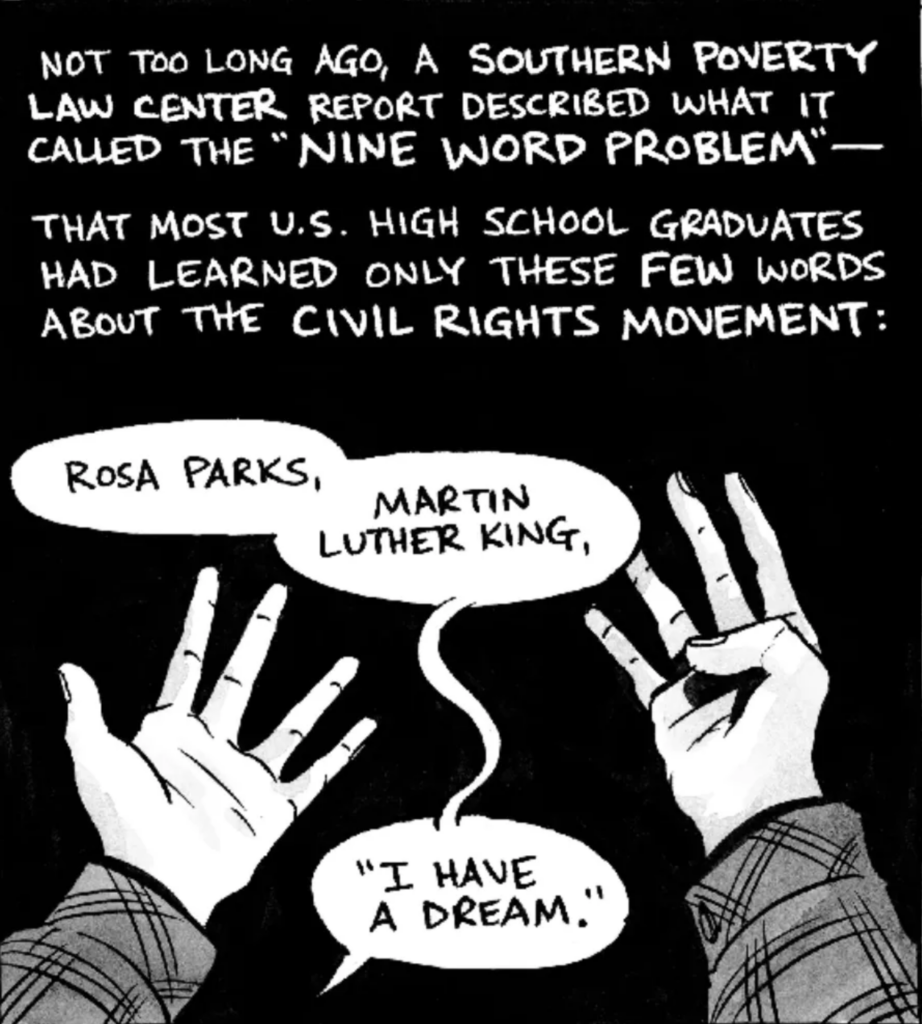
I relate to the nine-word problem. It is the superficial understanding of race and racism in the United States. 

As someone who has spent some time providing programming about Black History Month this century, I recognize that there’s much more to know and that much of it had been hidden. Indeed, many of the things I’ve written about in this blog about race are things I did not know at the turn of the Millennium. I, too, am learning about what’s going on.

Some of it is historical: for instance, the Red Summer of 1919 and Tulsa. Other aspects are ongoing: misogynoir; The Color of Law’s look at redlining; the unjustified killing of a black man redux.

Then there’s appropriation. Even about Martin, I’ve tried to expand the discussion beyond one address. I’ve linked to several speeches before and after 1963, usually posted around his birthday. Also, MLK is Not Your Wingman.

The Largest Civil Rights Protest You’ve Never Heard Of

On February 3, 1964, there was a massive protest in the United States. 

“’Selma!’”

“’Birmingham!’”

“’Washington, D.C.!’”

“My students slowly rattled off cities that came to mind. I had asked them, ‘Where did the largest civil rights protest of the 1960s take place?’ Their answers, building off the traditional civil rights narrative they had learned in elementary and middle school, mostly consisted of Southern cities. They were wrong. The real answer is New York City, where most of my students were born and raised…

“The real Civil Rights Movement was not just about tearing down legal barriers but about economic inequality, police brutality, and access to quality education and healthcare. This movement was national in scope, led by young people, and confronted segregation and racism in both the North and the South. In many ways, this movement was unsuccessful in places like New York City, leading to a deepening of some aspects of structural racism and segregation that exist to this day. The real history of the Civil Rights Movement, therefore, is not simply a narrative of success. It’s a narrative that helps us understand today’s institutional racism, because many aspects of racial injustice that the Civil Rights Movement fought against were never remedied.”

Segregation in NYC

This was an issue of redlining, which created inequitable schools. “By 1964, frustrations with the poor education Black and Puerto Rican students were receiving in New York led civil rights leaders to call for a one-day boycott of all schools. In the 10 years between the Brown decision and the boycott, segregation in New York City schools had quadrupled.

“Though the boycott was a huge success — nearly half of all students in New York City stayed home that day — internal tensions within the coalition that had pulled it off led to its collapse in the following months. 

The New York Times editorialized against the action, titled “A Boycott Solves Nothing.” The piece “condemned the ‘reckless’ civil rights leaders who are ‘hellbent on staging’ a ‘violent, illegal,’ ‘utterly unreasonable and unjustified’ boycott, despite the school board’s well-meaning attempts to integrate schools,” even though the action was none of the above.

The poetry section of the post
The beginning of Let America Be America Again – Langston Hughes (1901 –1967). the whole thing is here

Let America be America again.

Let it be the dream it used to be.

Let it be the pioneer on the plain

Seeking a home where he himself is free.

(America never was America to me.)

Let America be the dream the dreamers dreamed—

Let it be that great strong land of love

Where never kings connive nor tyrants scheme

That any man be crushed by one above.

(It never was America to me.)

O, let my land be a land where Liberty

Is crowned with no false patriotic wreath,

But opportunity is real, and life is free,

Equality is in the air we breathe.

(There’s never been equality for me,

Nor freedom in this “homeland of the free.”)

Genealogy: RootsTech 2025 is free online!

Census

The RootsTech 2025 schedule is live, and the three-day online schedule is free. Whether you have genealogical questions or are curious about lineage, you should check out the schedule of over 150 online sessions from Thursday to Saturday, March 6 to 8. 
My interests are twofold. I’m trying to find the parents of my great-grandfather, Samuel Walker. I know he was born in Orange County, VA, in 1873 and died in Binghamton, NY, in 1963, but I’m stuck beyond that. I hope Renate Yarborough Sanders’s workshop Til Death or Distance Do We Part: Documenting Marriages of Enslaved and Emancipated Persons will help. 

I’m also working on my wife’s family line in a project called the John Olin Origin Project. I’ve written about John Olin before. Assuming he came over on a British ship in the latter part of the 17th century, what was his origin? Was he English, French, Welsh, Irish, or something else? Some of his male descendants have done some DNA testing, but the question has not been answered sufficiently. Perhaps one of the more general sessions at RootsTech will help.

My wife is on the John>Joseph>Joseph>Reuben>John>Earl>Orva>George line. I will check out Tell Your Story Like a True Reporter by Rachel Trotter at Roots Tech because I find the topic fascinating. I wish to share my enthusiasm with others. 

Worry

I’m concerned about the future of the Census and the critical data it collects for future genealogists. “Director Robert Santos, the renowned data expert who has led the Bureau for years, abruptly announced his resignation.” This paves the way for a partisan hack replacement.

“Next, the bureau’s website started going dark for periods of time. The New York Times reported that ‘more than 3,000 pages from the Census Bureau, the vast majority of which are articles filed under research and methodology, were affected. Other missing pages include data stewardship policies and documentation for several data sets and surveys.'” It’s another breach of competency to address.  

Here’s a factoid: 1890 Census Substitutes: “In January of 1921, a fire broke out in the basement of the Commerce Building in Washington D.C., where the 1890 U.S. Census records were being stored…”

ARA: move to one of the states bordering New York

Mel Allen

Kelly asks: 

You have to move to one of the states bordering New York. Which one, and where in that state?

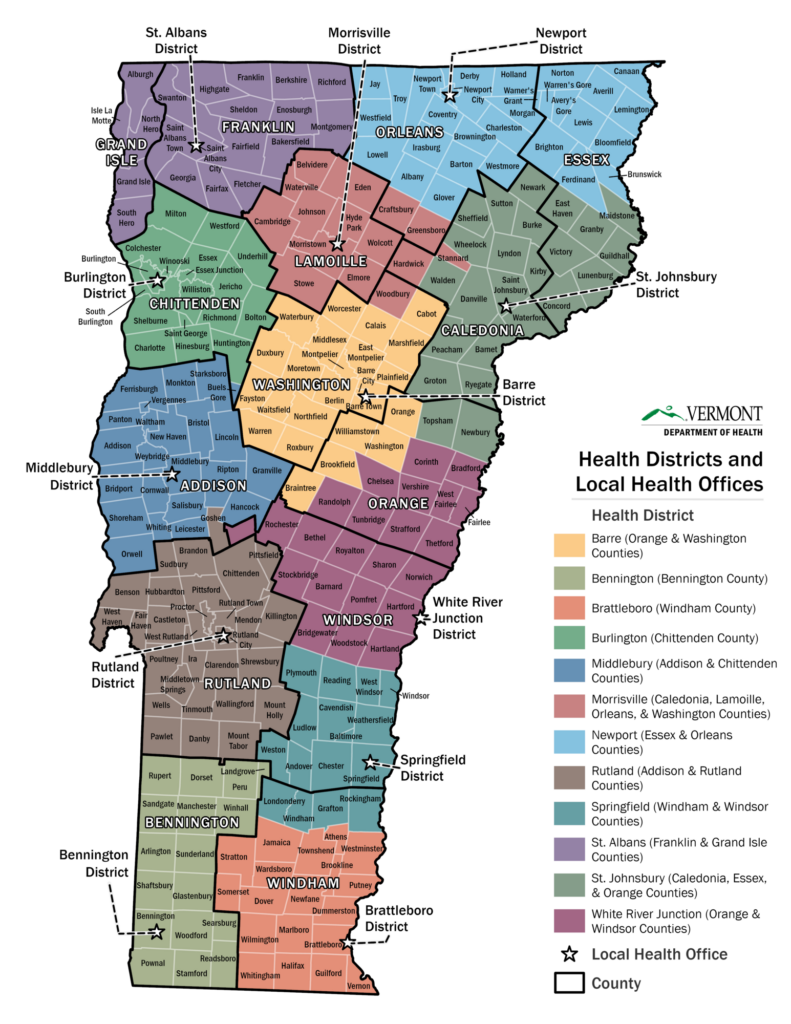
Vermont, the 14th state, which was once part of New York, sort of. It’s a very progressive state. “The Vermont Republic abolished slavery before any other U.S. state…Vermont approved women’s suffrage decades before it became part of the national constitution. Women were first allowed to vote in the December 18, 1880 elections when they were granted limited suffrage….  It was the first state to introduce civil unions in 2000 and legalize same-sex marriage in 2009, unforced by court challenge or ruling.”

I’d probably move to the teeming metropolis of Burlington. The city has about 50,000 people, but the metropolitan statistical area has about 225,000, about one-third of the state’s population. It’s near Lake Champlain, with several ferries crossing into New York. 

Favorite sports announcer, reporter, or writer?

First, it would probably be limited to baseball and football because that’s all I read about and watch enough to offer an opinion other than Jim Nantz’s coverage of men’s college basketball.

Baseball

Writers: Roger AngellPeter Gammons, Roger KahnDan ShaughnessyGeorge Will (yes, THAT George Will), former MLB pitcher Jim Bouton, and, of course, Terence Mann

Announcers: On one end of the spectrum is the voice I most identified with the game while growing up: Mel Allen. He was the “longtime voice of baseball’s weekly highlight show, This Week in Baseball.” 

But I also enjoyed Vin Scully’s dulcet tones, even though I tended not to root for the Los Angeles Dodgers. Mark Evanier wrote in 2013:  “You know what needs Vin Scully? When no one cares about anything happening on the field. The outcome of the game doesn’t matter. One team is six runs ahead. The stands are two-thirds empty because even the people who showed up decided that the fifth inning was a good time to head home and beat the non-existent traffic. That’s when somehow Vinnie manages to make it interesting. Even I sometimes listen to him then. What a great talker.”

Bob Costas was always prepared with a story, even during a rain delay.

There are George Owens and Harry Doyle; in other words, Bob Uecker

Football

Announcers: On the one hand, I like the straightforward play-by-play folks such as Pat Summerall. BTW, “The urban legend was his nickname became “Pat” because of the abbreviation for “point after touchdown” that a field-goal kicker was credited for in a game summary. But in a 1997 Dallas Morning News story, Summerall said after his parents divorced, he was taken in by an aunt and uncle who had a son named Mike. ‘My aunt and uncle just started calling me Pat to go with their Mike,’ Summerall would say, referencing frequently named characters in Irish jokes told during that time.”

However, for color commentary, I was fond of former Raiders coach John Madden. They were a great team.

Here’s my pet peeve: the sideline reporters who talk to head coaches either at the end of the half or right before the third quarter. They ask mundane questions about what they will do differently in the second half. The answers, by definition, are pretty dull: “Well, we have to make more third downs,” “We’ll have to hold onto the ball better,” or “We’ll have to cut down on those penalties.” It’s almost always some obvious thing that you already know if you were watching the game.  Useless, pointless. The coaches have been gracious about it, but it’s unnecessary blather.

 Both

Writers: Frank Deford, Michael Smith, Red Smith.

Announcers: there’s a bunch of them, among them Al Michaels

Questions to Energize Your Work Meetings

which Paul?

I came across the post 100 Funny Icebreaker Questions to Energize Your Work Meetings. The use of these, I suppose, depends on your workplace, but I’m not feeling it for MY last work site.

“Are you tired of those awkward moments during work meetings when everyone is just staring at each other, waiting for someone to break the silence? Well, we’ve got just the solution for you: icebreaker questions!

“In this article, we’ll dive into the world of icebreakers and share some fun and engaging questions that will help liven up your work meetings. Whether you’re meeting in person or virtually, these icebreakers are sure to get everyone in the mood and create a positive and engaging atmosphere. So, let’s get started!”

Some of these I’ll answer briefly because I feel I’ve answered them sufficiently in the past.

Category 1: Fun Facts and Favorites
  1. If you could have any superpower, what would it be and why? Flying. It’s always flying. Sometimes, even to this day, I wake up and feel as though I had been flying, but it was merely a dream. Alas!
  2. What was your most embarrassing moment that still makes you laugh today? I can think of some embarrassing moments, but none that make me laugh. And a few of them still sting.
  3. What’s the weirdest food combination you enjoy? I don’t know what people consider weird. Cottage cheese and apple sauce?
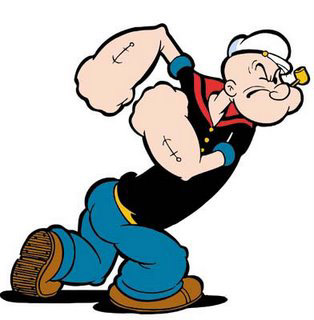
  4. Who is your favorite cartoon character, and why? Popeye. I totally relate to “That’s all I can stands, ’cause I can’t stands no more.” It’s a pretty good gauge of me to this day. If I say, “I’m really upset about this” or “This is REALLY important,” but I’m not listened to, I’m likely to become really irritable. It might lead me to yell, and I HATE yelling because I feel out of control.
  5. If you were a vegetable, which one would you be, and why? Spinach because of Popeye. I often eat spinach with a can of tuna fish.
  6. What’s the most ridiculous thing you’ve ever bought online? I bought technology that was supposed to make my life easier, but I can’t figure out how to use it. One was supposed to extend the geographic range of our Internet access. 
  7. What’s the strangest talent or skill you possess? I used to be able to sound like a kazoo without a kazoo or comb, but my ability has atrophied due to lack of use. 
  8. If you had your own talk show, who would be your first guest? Probably a musician named Paul. Simon or McCartney, because their music has an outsized imprint on my life. I’d say that almost every S&G and solo album has songs that have a specific meaning to me.
  9. What’s the funniest Wi-Fi network name you’ve ever seen? Huh? No idea.
  10. If you were a DJ, what would your name be? Tell me, people. What do you think it should be? I’ve never been great at naming, except once.

The JES Top 200 Albums Of All Time

Satisfaction Money Mother Letting go

The JES Top 200 Albums Of All Time list is an ever-evolving collection of recordings compiled by J. Eric Smith. Smith, who was a fellow Albany Times Union blogger in the day, lives in Arizona via Iowa.

I’ve been following him on his current blog. He’s assembled a roster I don’t know how I would begin creating.

Bowie, David: Low. Not only do I have this album, I have a Philip Glass album covering three of these songs. Speed of Life

Bowie, David: “Heroes”. I have this album, too, in the middle of his Berlin Trilogy.  Heroes

Bush, Kate: Hounds of Love. Running Up That Hill

Clash: Combat Rock. Rock the Casbah

Clash: London Calling. While this is on several Best Of albums, I know people who genuinely hate this collection. Lost In A Supermarket

Collins, Phil: Face Value. I Missed Again

Devo: Q: Are We Not Men? A: We Are Devo. Satisfaction

Eagles: Desperado. I have a very specific recollection of the song Tequila Sunrise from my college days.

Emerson, Lake, and Palmer: Brain Salad Surgery. Still… You Turn Me On

Fleetwood Mac: Rumours. The Chain

Gabriel, Peter: Peter Gabriel (III/Melt). I also have this album on vinyl in German. It’s a longtime island record. And Through The Wire

Genesis: Duke. Turn It On Again

Grateful Dead: American Beauty. Ripple

Grateful Dead: Workingman’s Dead. Uncle John’s Band

Hall, Daryl: Sacred Songs. Something In 4/4 Time

Jethro Tull: Songs From the Wood. The Whistler

Jethro Tull: Thick as a Brick. edit

King Crimson: In The Court of the Crimson King21st Century Schizoid Man

Led Zeppelin: IV (Zoso). Black Dog

M-Z

Mitchell, Joni: For the Roses. You Turn Me On I’m A Radio

Pink Floyd: The Dark Side of the MoonMoney

Pink Floyd: The Wall. Mother

Replacements: Let It Be. Answering Machine

Rolling Stones: Exile on Main St. is not my favorite Stones album. Happy

Simon & Garfunkel: Sounds of Silence. Blessed

Steely Dan: Aja. Peg

Steely Dan: The Royal Scam. It’s one of the few albums I own on cassette! The Royal Scam.

Steppenwolf: Gold: Their Great Hits. Born To Be Wild

Talking Heads: Fear of Music. I Zimbra

Utopia: Swing to the Right. Swing To The Right

Utopia: Utopia (1982). Hammer In My Heart

Various Artists: The Harder They Come (Original Soundtrack Recording). Rivers Of Babylon – The Melodians

Who: Who’s Next. Won’t Get Fooled Again. I had a boss who was obsessed with this song.

Who: Tommy. Sally Simpson

Wings: Band on the Run. Jet

Wings: Venus and Mars. Letting Go

Yes: The Yes Album. Yours Is No Disgrace

37 out of 200. There are a few artists for which I have albums, but not the specific ones listed: the Bee Gees, Nick Cave and the Bad Seeds, Joy Division, Elvis Presley, Todd Rundgren, Peter Tosh, XTC, and Frank Zappa and the Mothers of Invention.

Ramblin' with Roger
Social media & sharing icons powered by UltimatelySocial