JiFKa: the 50th anniversary of the death of John Fitzgerald Kennedy

I watched Jack Ruby shoot Lee Harvey Oswald, in real time.

A few years back, I asked What was the first public trauma – as opposed to a personal trauma, such as a death or divorce in the family – that you recall? And while not my first event, the assassination of President John Fitzgerald Kennedy, when I was ten years old and didn’t understand what happened next – I was not yet seeped in Presidential succession law – was terrifying. The death itself was already scary enough.

It certainly didn’t help that Miss Oberlik, our fifth-grade teacher, told us the news, LEFT THE ROOM, for some reason, which got us talking among ourselves about the meaning of it all, and then she comes back and SCREAMS at us for not being quiet, like everyone else in the school (who, I suspect, hadn’t been ABANDONED by their teacher). I wondered later if she had gone off to compose herself after dropping that bombshell on us.

Like much of the nation, I was glued to the television that weekend. I saw Jack Ruby shoot Lee Harvey Oswald, in real time. Of course, I viewed the funeral, and John-John’s salute of his daddy.

Such a strange time, now that I look back on it. A lot of households I visited, especially after the shootings, had pictures on the walls, and the only ones that weren’t family members were of JFK and Jesus Christ. It was not my grief that I remember; it was the tears, seemingly out of nowhere, of many of the adults around me. And if not tears, then an overwhelming sadness that came like unexpected tidal waves.

The 50 cent piece, starting in 1964, bore Kennedy’s image, which I find, in retrospect, to be an amazing feat, changing coinage so quickly. Idlewild Airport in New York City – famous from the Car 54 Where Are You TV theme – was renamed for the slain leader, as was Cape Canaveral, though the latter was eventually switched back.

In 1964, the Report of the President’s Commission on the Assassination of President Kennedy, generally referred to as the Warren Commission Report was released. It claimed that Oswald was the lone gunman, not involved in a conspiracy; and that the bullet that killed the President also wounded Governor John Connolly of Texas. One of the local newspapers had excerpts of the Warren Commission report, and I not only read them, I clipped them out of the newspaper, and put it in a three-ring binder, something I believe I STILL have somewhere in the attic.

Over the years, there are those who dismissed the report as a coverup, or at least as a lazy effort of accepting the FBI’s analysis as fact, rather than doing an independent investigation. The Oliver Stone movie JFK (1991), which my girlfriend at the time and I referred to as JiFKa, was about New Orleans District Attorney Jim Garrison’s belief that there was “more to the Kennedy assassination than the official story.” Conversely, at the end of his novel 11/22/63, Stephen King says he’s over 95% sure Oswald was the lone shooter, though his wife Tabitha believes otherwise.

The one time I got to meet Earl Warren, along with a number of my classmates in the early 1970s, I really wanted to ask the by-then retired Chief Justice of the Supreme Court about this topic; instead, I asked him some arcane question about corporations as people, which was an issue back in the 1870s as well as the 21st century.

I still wonder, if only a little, what the whole truth of the matter was.
***
CBSNews.com to stream 1963 broadcast coverage of JFK assassination, and/or one can buy the coverage on Amazon. I think not for me, thank you.

Five quotes from JFK’s 1963 Civil Rights address that still resonate today

How JFK’s Assassination Changed Media and the SIXTIES Generation.
Lee Harvey Was a Friend of Mine by Laura Cantrell [LISTEN]

The good news: my daughter will never become a smoker

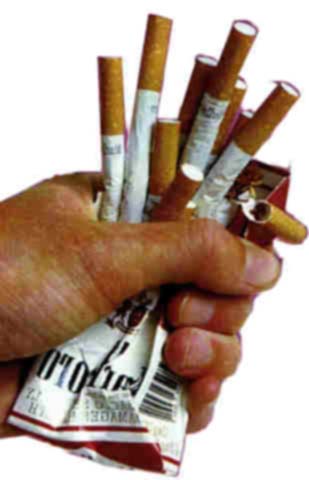
Smokers, I hope you take this opportunity to quit smoking today, if not for yourself, then for me. And my daughter.

Today is the Great American Smokeout. Last year, if I recall, I wrote some anti-smoking screed, and someone thought it was terribly mean to smokers (I didn’t think so.)

I decided to write something nice about smokers this year. Well, until my daughter had some particularly bad reactions recently. If someone walks by her with a lit cigarette, she starts hacking uncontrollably. She can control this only a little by holding her breath IF she sees the smoker coming. (From years of living with a smoker, I have learned the ability to block the inside of my nose and breathe through my mouth until the danger passes.)

Her asthma is apparently more severe than mine – she’s missed school this fall because of it. Yes, I recognize that cigarettes are legal, and they are highly addictive and that smokers are an oppressed minority in the US. But I suffer when around even a heavy smoker who isn’t currently smoking, I’ve discovered, and my child suffers even more, so you can guess where my sympathies lie.

So, smokers, I hope you take this opportunity to quit smoking today, if not for yourself, then for me. And my daughter.
***
Do you know what makes me feel ambivalent? Those e-cigarettes. I’ve been around them only a few times, but they do not bother me physically, which is rather astonishing. They may be doing damage to the smoker, who might be getting a false sense of safety, and I AM concerned about that.

I hear dead people QUESTION

I have some old cassette tapes (remember cassette tapes?) with my father’s voice – he died in 2000.

The phone is ringing at home, and the caller ID says it’s from Gertrude Green in the 704 area code. That’s interesting in that my mother died over two years ago. As it turns out, it was my sister, Marcia, calling on her cellphone. She didn’t understand why our mother’s name popped up, as the phone has always been in Marcia’s name, but I was not the first person to tell her of this phenomenon. It was kind of weird/disconcerting.

This led to a broader discussion – at my dentist’s office, of all places – about how long you keep a deceased person’s voice as the voice on an outgoing answering machine message. Some will find it comforting, while others will find it creepy. I tend to be in the latter category, although I know most of us in mourning can’t/won’t rush to change it.

Whereas I have some old cassette tapes (remember cassette tapes?) with my father’s voice – he died in 2000. Those I find oddly comforting. AND I can play them for my daughter, born in 2004, who never knew her paternal grandfather.

What sayest thou?

S is for Phil Seuling

FantaCo wouldn’t have thrived without Phil Seuling.

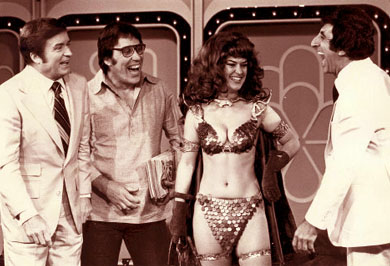
1977: host Mike Douglas, Phil Seuling, Wendy Pini, guest cohost Jamie Farr

Phil Seuling invented the direct market for comic books. From Wikipedia: “The evolution of the comic book specialty shop (or “direct-only stores”) in the early 1970s created a whole new system for delivering comics to customers. Before the advent of the comics retailer, most comics were found in grocery, drug, and toy stores. The specialty shop presents a number of competitive advantages over those other venues.” If it weren’t for Phil, there would not have been a proliferation of comic book stores in the late 1970s and early 1980s.

Chuck Rozanski of Mile High Comics, once a customer and later competitor of Phil’s, wrote a lengthy Evolution of the Direct Market. Naturally, he mentions Phil straight off:
“Phil began Seagate in 1972, long before selling to comics shops was economically viable. He was a schoolteacher at the time and was well known in the New York area not only as a dealer in comics and original artwork but also as the operator of the huge 4th of July convention in NYC. As I’ve heard the story told, Phil brazenly walked into DC, Marvel, Warren, Harvey, and Archie in 1972 and convinced them that their future lay in selling comics directly to comics specialty shops. He also convinced them to give him a special deal by which they would pay the costs of packaging and shipping all of the books ordered by his accounts. In exchange, he promised them that he would purchase all books from them on a non-returnable basis. Returns had become a very big deal in the early 1970s, as comics were no longer selling in the percentages of previous decades.”

Chuck also describes Phil the person, and this I can verify from meeting the man himself: “If you ask anyone who knew him, one of the first things they will tell you is that Phil was a person who epitomized the concept of an individual being ‘larger than life.’… Chuck describes Phil’s place quite well. I was there a few times myself when Phil was throwing lavish parties.

More to the point, the store I worked at, FantaCo, wouldn’t have thrived – if it would have existed at all – without Phil Seuling. Not only was Seagate FantaCo’s initial distributor, but Phil also bought sufficient amounts of FantaCo publications to distribute when they were unproven commodities.

Unfortunately, Phil Seuling died of liver cancer in 1984 at the age of 50. Tom Skulan, the FantaCo founder, wrote a nice piece about Phil in the FantaCon 2013 program.

Enjoy this video of Phil Seuling on the Mike Douglas Show in 1977, from which the above picture was taken.


ABC Wednesday – Round 13

The Belgian Congo and Yugoslavia

One of my co-workers came up to me and asked how many of the five former Yugoslav republics I could name; I remembered four.

During the Vietnam war, it was widely reported – I don’t remember if it was apocryphal or true – that most Americans could not find Vietnam on a map. Likewise, today’s students might be challenged to find Afghanistan or Iraq on the globe.

By contrast, I was a bit of a cartology fanatic when I was a child. My paternal grandfather, who lived upstairs, would give me maps from his National Geographic, which I would study at length. I still have some of them in the attic, BTW.

Unfortunately for my recall, the world kept changing. French West Africa and British East Africa became a slew of independent countries. What was once Belgian Congo became Zaire, but is now the Democratic Republic of the Congo, sometimes referred to as Congo-Kinshasa; this not to be confused with the neighboring Republic of the Congo, also referred to as Congo-Brazzaville, which used to be under French control.

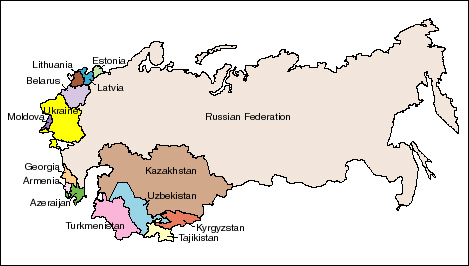
Later, Germany merged. Czechoslovakia, Sudan, Yugoslavia, and the USSR broke up; fortunately, the former two only broke into a pair of countries each. But Yugoslavia… One of my co-workers came up to me and asked how many of the five former Yugoslav republics I could name; I remembered four. Then I looked it up and there are SIX:

Bosnia and Herzegovina
Croatia (which I forgot)
Macedonia (which I remembered because the Greeks got all bent out of shape)
Montenegro (which I remembered from WWI)
Serbia (which has two autonomous regions, Vojvodina – which I had never heard of; and Kosovo, which I had)
Slovenia (not be confused with Slovakia, part of former Czechoslovakia; I forgot it)

It SHOULD be easy to remember: BCMMSS

Now the former Soviet Union is tougher, and I have developed a bizarre way to remember, roughly from northwest to southeast:

Baltic states-ELL
Estonia
Latvia
Lithuania

Eastern Europe-BUM
Belarus
Ukraine
Moldova

Southern Caucasus, Russia-RAGA
Russia
Armenia
Georgia
Azerbaijan

Central Asia-KKUTT
Kazakhstan
Kyrgyzstan
Uzbekistan
Tajikistan
Turkmenistan

ELL-BUM-RAGA-KKUTT? Well, it worked for me; sounds like a musical selection.

World, stop changing. I’m kidding; change is inevitable.

Ramblin' with Roger
Social media & sharing icons powered by UltimatelySocial