G is for Gadsden Purchase

James Gadsden was a lieutenant from South Carolina who wanted to expand slavery westward into California, perhaps by splitting the state into two, one slave, one free.


I swear I went to bed one night, wondering, “What should I write about for the letter G?” Then I woke up in the morning thinking about the Gadsden Purchase.

Say what?

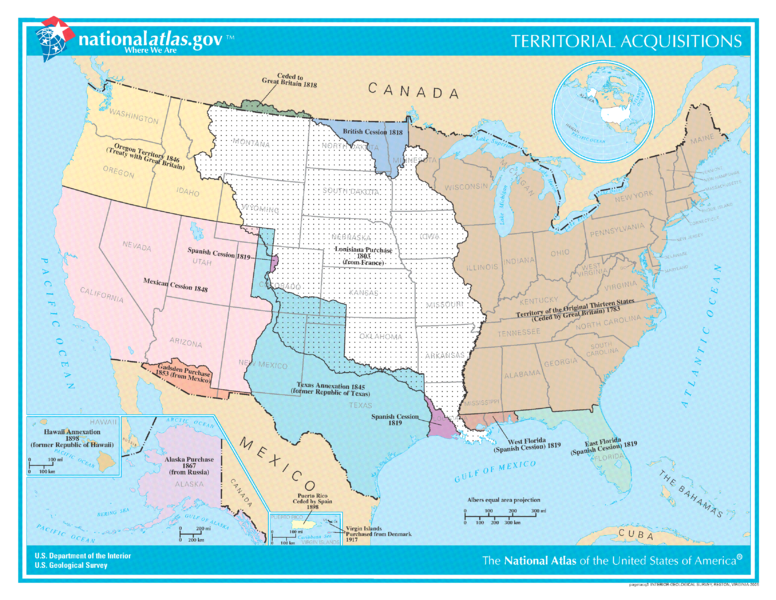
You can see from the map above that the western expansion of the United States had already been achieved by the time the US purchased this relatively small section of the country, shown in orange. After the Revolutionary War, the US territory reached the Mississippi River. The Louisiana Purchase of 1803 from France nearly doubled the landmass. Florida was acquired in 1819 from Florida.

Getting Texas, the Oregon Territory from the British, and fighting the Mexican War, all in the 1840s, achieved what many at the time called the United States’ Manifest Destiny, expounded by, among others, John Quincy Adams:
“The whole continent of North America appears to be destined by Divine Providence to be peopled by one nation, speaking one language, professing one general system of religious and political principles, and accustomed to one general tenor of social usages and customs. For the common happiness of them all, for their peace and prosperity, I believe it is indispensable that they should be associated in one federal Union.”
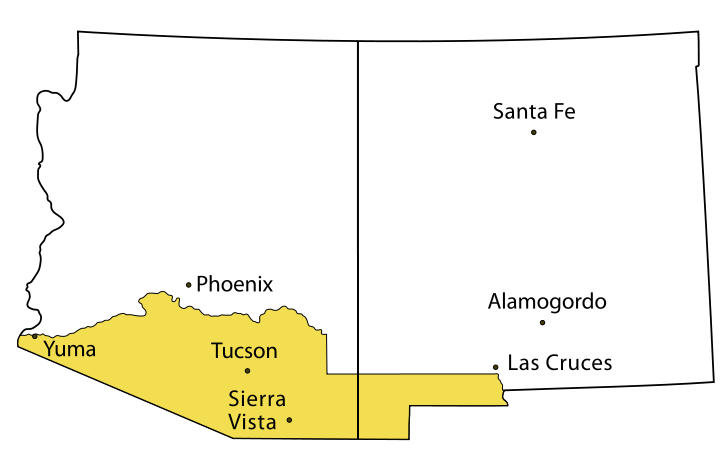
If the US ran “from sea to shining sea,” then why the acquisition of the Gadsden Purchase? “It was largely for the purpose that the US might construct a transcontinental railroad along a deep southern route [which was not built]. It also aimed to reconcile outstanding border issues between the US and Mexico following the Treaty of Guadalupe Hidalgo, which ended the Mexican–American War of 1846–48 … [it was] thought the topography of the southern portion of the Mexican Cession was too mountainous [to build a railroad]…”

Franklin Pierce was President when the treaty was signed on December 30, 1853, and ratified, with changes, by the U.S. Senate on April 25, 1854. A huge supporter of the agreement was his Secretary of War Jefferson Davis, who later became President of the Confederacy.

James Gadsden, BTW, was an army officer from South Carolina, a railroad official, and eventually the American ambassador to Mexico, who wanted to expand slavery westward into California, perhaps by splitting the state into two, perhaps at 36°30′ north, one slave, one free. “Gadsden considered slavery ‘a social blessing’ and abolitionists ‘the greatest curse of the nation.'” The politics surrounding the acquisition, which some parties wanted to include much more of present-day Mexico, is a largely unknown precursor to the American Civil War.

The Gadsden Purchase was the final piece of what became the first 48 states of the Union, with only Alaska (1867) and Hawaii (1898) to follow.

ABC Wednesday – Round 13
The Lydster, Part 113: Robbed!

It was that it was my stuff that was stolen AFTER I had played the unwilling but gracious host.

The Daughter has been going to her summer camp in a nearby park, Ridgefield by name. She decided to ride her scooter there. It was in a location she could keep an eye on it.

About a month ago, it was raining, and they had to move to the alternate site, which happened to be her usual elementary school. Her scooter was in the hallway next to one of her counselor’s bicycles, but not visible to her. You can guess what happened at the end of the day.

There was a police report filed, and, allegedly, there was a film being reviewed, but nothing has come of this, to date.

She was sad that her scooter is gone, of course, but it’s more than someone who she probably knows, perhaps not well, but still, took her vehicle. It made her understandably wary about returning to the camp. She looked sad a lot the next few days, especially getting up on weekday mornings.

I know she remembered when my previous bicycle got stolen about three years ago that I went through a period of anger, frustration, and grief, especially after the then-custodian of my church actually saw some kid riding it a few days later, pursuing him in his car, but the kid went down some alleyway. I held onto the hope of recovery for even longer than I might have.

Two or three days after her incident, I told her a story, a true story, how I was at my home in Binghamton when I was about 13. My parents had a couple over from church, and they had a son who was about 10 who I knew, of course, but we weren’t what I’d call friends. I was required to entertain him while the grownups chatted.

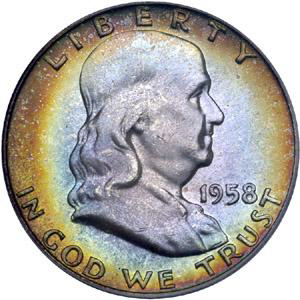
I took him to my (tiny) room and showed him my baseball cards, and my collection of US coins, which were in these blue folders, in all the denominations. At some point, after they left, maybe not until the next day, I noticed that my half dollars were gone! I looked everywhere, but, as I said, it was a little room in a little house. I KNEW this kid had taken my half dollars. It wasn’t just that they were worth $12 or $15 face value; it was that it was my stuff that was stolen AFTER I had played the unwilling but gracious host. But my parents said I couldn’t accuse him; I had no proof.

After I told that story, The Daughter sat on my lap and cuddled. She did ask if maybe my sisters could have taken them as a joke, but I noted that the “joke” would be almost 50 years old by now.

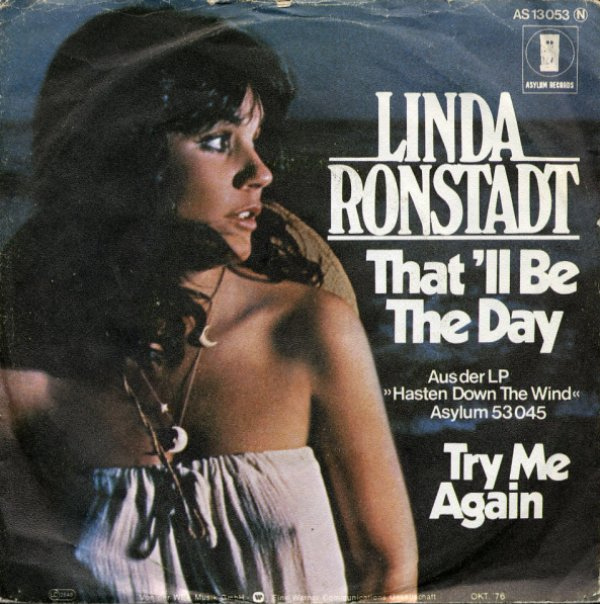
Linda Ronstadt for the Rock and Roll Hall of Fame

Linda was as eclectic as musical shapeshifters like David Bowie and Neil Young, but because she didn’t write her own stuff, she’s been dismissed.

One of my friends, remembering her popularity in the late 1970s, both musically and visually – posters of her image were on more few dorm room walls – wrote: “Now that we know Linda Ronstadt is living with Parkinson’s, can we please finally put her in the Rock’n’Roll Hall of Fame?”

Not sure about whether induction there really matters; it certainly does not diminish her remarkable talent over decades. Still, I support the notion of her getting into the Hall, and if it takes a sympathy vote because she no longer can sing to achieve it, so be it. But I think she has enough bona fides to get there without pity.

She had tremendous commercial success in the folk-rock milieu in the 1970s, yet ventured off to do the Pirates of Penzance; two albums of music of her Mexican father, in Spanish; three albums of standards arranged by Nelson Riddle; some great duets with Aaron Neville and Emmylou Harris, among others; the Trio albums with Dolly Parton and Emmylou, and much more.

Linda was as eclectic as musical shapeshifters like David Bowie and Neil Young, but because she didn’t write her own stuff, she’s been dismissed. You’ll find her on albums as varied as Randy Newman’s Faust and Philip Glass’s Songs of Liquid Days; from the latter, here is Forgetting, also featuring the Roches and the Kronos String Quartet. She’s one of the great backup vocalists, with Neil Young on Heart of Gold, and Paul Simon on Under African Skies, e.g.

It’s also true that I like Linda Ronstadt – not personally – based on what I’ve heard about her. I hear she’s a big donator to repertory theater in Tucson, for instance. Her birthday is the same as my wife’s (Linda’s a bit older, though).

She inspired a buycott by me. A buycott, as described by Arthur, is “to go out of my way to support businesses that support the issues I care about instead of boycotting the ones that oppose those issues.” In 2004, she was escorted from a Las Vegas casino after she had dedicated a song to the filmmaker Michael Moore. Her ejection and the attitude of the audience annoyed me so much that I soon ordered from Amazon The Linda Ronstadt Box Set, which is great, especially discs three, “Collaborations, ” and four, “Rarities.” Though the collection ignores her hits such as Heat Wave, Tracks of My Tears, That’ll Be the Day, It’s So Easy, and most of the Hasten Down the Wind album, it was a very satisfying purchase.

MOVIE REVIEW: The Way, Way Back

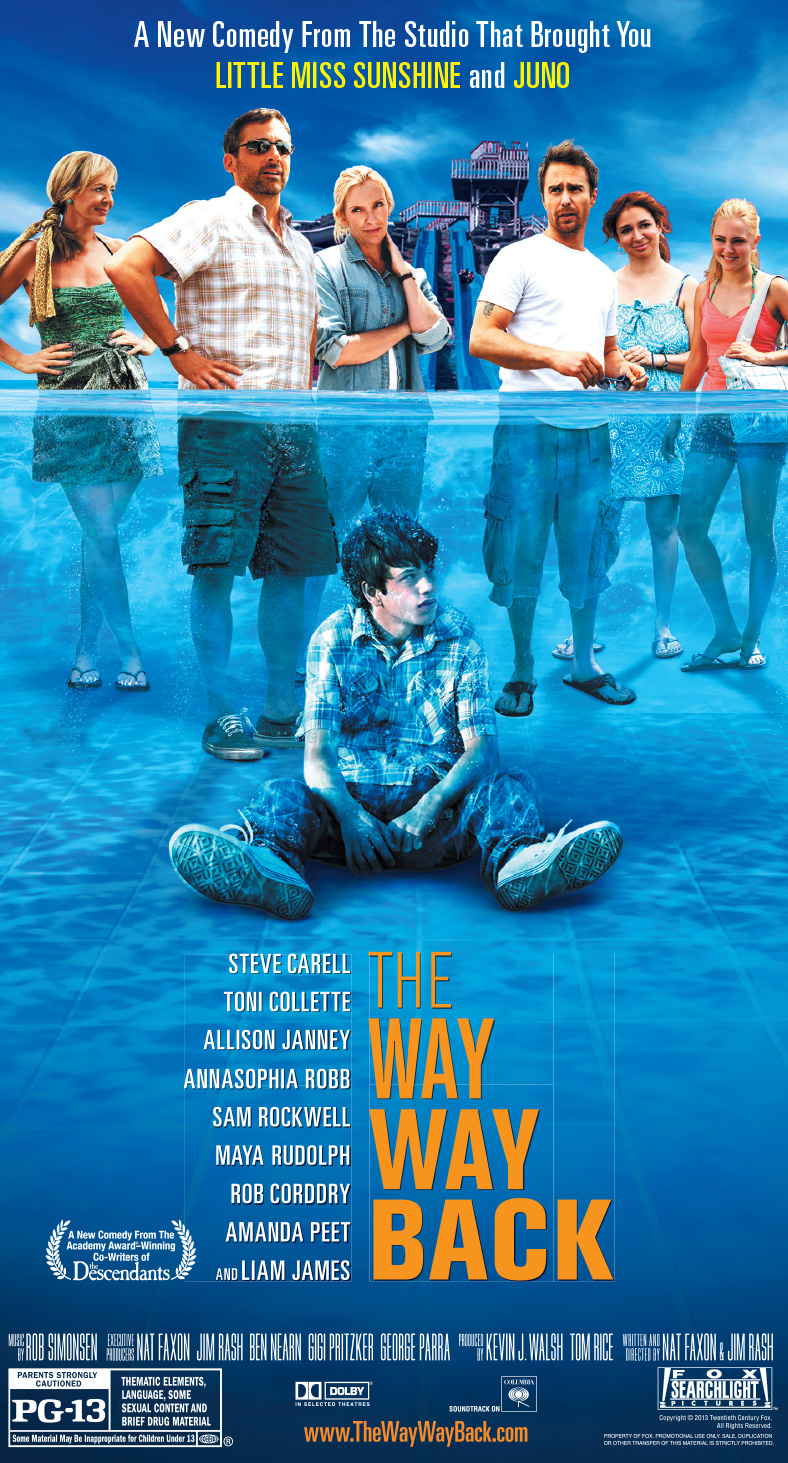
The Daughter is visiting the grandparents for the week, so it’s almost mandatory that The Wife and I go to the movies. But what to see? When one’s seen only a handful of films this year, so there were a half dozen contenders. The Wife chose The Way, Way Back, which we saw Wednesday at the Spectrum in Albany.

I was surprised. I expected, based on the trailer, to be some summer coming-of-age flick that I’ve seen once too often. And while there are elements of the formula, I found the movie surprising affecting.

The premise is that a divorced mom, Pam (Toni Collette) has a new beau, Trent (Steve Carell), who’s taking them, his teenage daughter Steph (Zoe Levin), and her 14-year-old son Duncan (Liam James) from their home in Albany, NY [;-)] to Trent’s summer New England seaside getaway.

The neighbor is Betty (Allison Janney, who drives the bulk of the early humor), and her two kids, bored Susanna (Annasophia Robb) and “different” Peter (River Alexander). Trent’s friends Joan and Kip (Amanda Peet, Rod Corddry) have a boat they all can ride on.

Ever been to a party, or another event, where everyone seems to be having a good time except you? I know I have, and that epitomizes Duncan in the early part of this movie.

Fortunately, Duncan has a chance encounter with Owen (Sam Rockwell), who is manager, pretty much in name only, of an amusement park; Caitlyn (Maya Rudolph) really runs the show, while Owen does … whatever Owen does, in a way that nearly steals the film.

The movie is written and directed by Nat Faxon and Jim Rash, who also have small parts in the film itself. This could have been a by-the-numbers pic, but Faxon and Rash managed to have believable characters; I spent the ride home with The Wife comparing several of them to people I have known. Throw in some clever 1980s pop references, and I understand why it reviewed so well.

Summer song: Summer’s Almost Gone

Waiting for the Sun must have been lots of people’s favorite Doors’ album, since it was the group’s only #1 album in the United States.

My favorite Doors’ album is the third one, Waiting for the Sun, even though the song Waiting for Sun does not appear on it; it shows up two albums later, on Morrison Hotel. This third LP must have been lots of people’s favorite Doors’ album, since it was the group’s only #1 album in the United States, fueled by the #1 single, Hello, I Love You.

The melancholy song Summer’s Almost Gone (listen), the fourth tune on the album, precedes a much more joyful Wintertime Love; maybe I’ll include that a few months from now.
***
In honor of Freddie Mercury’s birthday: Bohemian Rhapsody by Porkka Playboys.

Ramblin' with Roger
Social media & sharing icons powered by UltimatelySocial