Dealing with that “white privilege” conversation with humor

These are examples of showing, in a satirical way, how white privilege is so ingrained. As Hayes points out at the end, if you had substituted “black” for “white”, it would sound like normal American media chitchat.

One of the things that many right-wing Americans are fond of saying, and there are variations in the wording, is that there are a bunch of “professional black people” stirring up trouble between black and white people. By “professional black people,” I don’t mean black people who are doctors and lawyers and the like. Rather, their profession is BEING a black person. Al Sharpton and Jesse Jackson are ALWAYS cited, and Barack HUSSEIN Obama has been recently added to the mix.

The general narrative is that, racially, things are FINE in America, that we have a post-racial society. I mean, we have a President who’s black! What more proof does one need? Well, none for the Supreme Court, which decides to gut the Voting Rights Act and affirmative action.

Every suggestion that things are NOT hunky-dory has a pushback. The difference in unemployment, wealth, and health care? That’s black laziness, and it’s self-victimization to even discuss it. Trayvon Martin’s shooting? He was a thug. Etc, etc.

In the last forty or fifty years, I’ve been to a number of talks, workshops, etc., in which the notion of “white privilege” shows up, and almost invariably, the air goes out of the room. White privilege, Wikipedia says, “refers to the set of alleged societal privileges that white people benefit from beyond those commonly experienced by people of color in the same social, political, or economic spaces (nation, community, workplace, income, etc.). The term denotes both obvious and less obvious unspoken advantages that white individuals may not recognize they have, which distinguishes it from overt bias or prejudice. These include cultural affirmations of one’s own worth; greater presumed social status; and freedom to move, buy, work, play, and speak freely. The concept of white privilege also implies the right to assume the universality of one’s own experiences, marking others as different or exceptional while perceiving oneself as normal.” You can find a whole category on the topic in the Huffington Post.

The reason it sucks the air out of a room, particularly early on, is that it has led to either a rejection of the notion altogether or a wallowing of white guilt with nowhere to go with that. Here’s a decent list about privilege (and no, it’s not just racial).

A popular trope out there is that the (non-monolithic) black community, or Muslim community, is need of Rising Up and Keeping Its Folks in Line. Even black people, such as Bill Cosby, say it. But the great thing about white privilege is that no one would be ridiculous enough to say that about white people.

Until now.

If you’ve heard too much about the “pathology” of black people, you might appreciate Cord Jefferson of Gawker.com showing this Video of Violent, Rioting Surfers Shows White Culture of Lawlessness. But it was astonishing when Jefferson is interviewed on an episode of All In With Chris Hayes on MSNBC to discuss that video. They play it straight, like any other “talking heads” interview on the news programs. It works on multiple levels for me.

These are examples of showing, in a satirical way, how white privilege is so ingrained. As Hayes points out at the end, if you had substituted “black” for “white”, it would sound like normal American media chitchat.

Related: I was touched by this story: I have experienced what it is like to be a “sort-of white” person because of my racial background, my upbringing, and the way I look.
Songs That Have Hit #1 By Two Different Artists

Why were the 1957 songs be left off the Wikipedia list?

Number 1 in 1975Here’s the back story about this post: I was listening to my favorite music podcast, Coverville, which was doing a cover story of Kylie Minogue, cover songs of and by the Aussie singer. At some point, the host says the song The Locomotion went to #1 (implicitly, on the US charts) three times. I know this is inaccurate, as I’ve heard the claim before. Little Eva #1, Grand Funk #1, Kylie only to #3, which is still impressive. Kylie’s version DID go to #1 in her native land.

So what songs HAVE gone to #1 more than once? Wikipedia and other sources note these:

1 “Go Away Little Girl” — Steve Lawrence (1963) and Donny Osmond (1971)
2 “The Loco-Motion” — Little Eva (1962) and Grand Funk (1974)
3 “Please Mr. Postman” — The Marvelettes (1961) and The Carpenters (1975)
4 “Venus” — Shocking Blue (1970) and Bananarama (1986)
5 “Lean on Me” — Bill Withers (1972) and Club Nouveau (1987)
6 “You Keep Me Hangin’ On” — The Supremes (1966) and Kim Wilde (1987)
7 “When a Man Loves a Woman” — Percy Sledge (1966) and Michael Bolton (1991)
8 “I’ll Be There” — The Jackson 5 (1970) and Mariah Carey (1992)
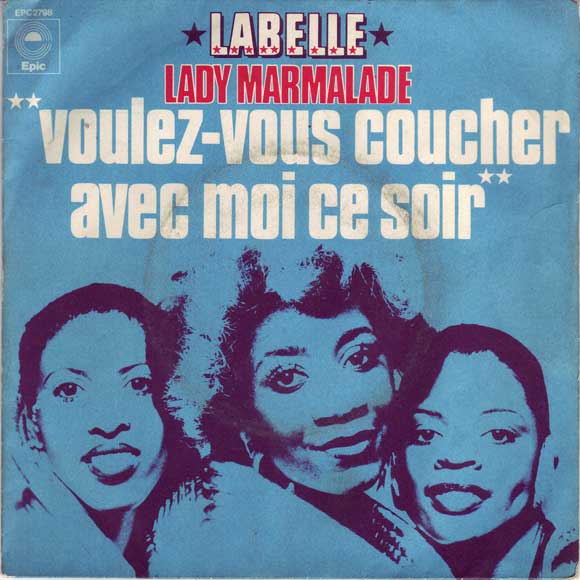
9 “Lady Marmalade” — Labelle (1975) and Christina Aguilera / Lil’ Kim / Mýa / Pink (2001)

BTW, I own both versions of 2-4, 8, and 9, but only the older versions of 5-7. (I didn’t even REMEMBER Bolton’s version.)

But the website cites footnote 28 which is Retro-Hits.com, which additionally lists:

“Butterfly” – Charlie Gracie (1957) and Andy Williams (also in 1957)
“Young Love” – Sonny James (1957) and Tab Hunter (also in 1957)

Why were the 1957 songs be left off the Wikipedia list? (I own Williams and James.)

I asked THE guru of all things pop music history, Chaz Hill, a/k/a Dustbury: “Well, it does say specifically ‘Billboard Hot 100,’ a chart which wasn’t actually created until 1958. (Before that, there were four different charts: Best Sellers in Stores, Most Played by Jockeys, Most Played in Juke Boxes, and ‘Top 100,’ which isn’t quite the same.) I’m assuming that they’re using the stricter definition at Wikipedia, the looser one at Retro Hits. (Joel Whitburn, who compiles all those chart books, does his figuring on the looser definition.)”

Thanks, Mr. Hill. This reminds me of a lot of library reference questions. They may seem easy on the surface, but there are often nuances to make them a bit more complicated.

July Rambling: privilege, and 12-tone music

Roger Green was told that he cannot greet pupils from Sandy Lane Primary School in Bracknell, Berkshire, with the gesture because a driver said it slowed down traffic.

Watch the important documentary, Two American Families, online at Bill Moyers’ website. In the same vein, To Rescue Local Economies, Cities Seize Underwater Mortgages Through Eminent Domain.

From Meryl, the graphic novel expert: The Armageddon Letters and the Cuban Missile Crisis. Also, Zahra – from Paradise to President. Published in 2011, its story takes place in Iran, June 2009.

Brief Thoughts on Shelby County v. Holder by Mark S. Mishler. (But the actual title is TOO long!)

Daniel Nester writes about privilege. I found it interesting, in part, because it reminded me of certain white sociology students, in undergraduate school and subsequently, who insisted on informing me about the sources of my oppression. They also insisted I spell “black people” as “Black people.” Meh. Dan also gives cheeky advice for aspiring writers.

Thom’s apology to the GLBT people he knows, and the ones he doesn’t.

6 Things That Will Happen Now That The Sanctity Of Marriage Is Destroyed, presented by George Takei.

Eddie and Keith do a road trip.

Dustbury found this video, which is about Arnold Schoenberg and 12-tone music but is as much about the stifling US copyright law, the creative mind, the boundaries of art, and how we communicate with each other. He “learned more from this half-hour of unconventional pedagogy than from a whole semester of theory.”

It was the first line in Jaquandor’s novel, it was a reflection of first lines of novels generally.

Mark Evanier writes: “My father was a very honest man. Absolutely, utterly honest. Once, he found a wallet in the street with a few hundred dollars in it. He took it home, looked up the number of the person it belonged to and arranged to return it to them…with every buck still in it. He did things like that all the time. All the time.”

Melanie deals with the death of a close family member. “With it comes a closure of sorts. Unfortunately, this is one of those deaths that bring feelings of sadness, but also of relief- a lengthy ordeal over at last.”

Daniel Nester’s dad died, and those “pesky abandonment issues” pop up. He is processing his Notes on Grief, parts I and II and III and IV and V.

Related: 936 opportunities, which made me melancholy thinking about MY dad.

Chris quits smoking! YAY!, despite duress. And she has a new blog! BTW, she also made and sent me yummy cookies!

‘Friendly atheist’ speaks to thousands at megachurch.

How do we pray for a friend in need or a stranger who might be sick or lonely in the hospital or at home?

NOT a Get Out Of Hell Free card.

Arthur answers my questions about music and identity and the roots of his political self and political philosophy & friends and boycotts and some other stuff. He also responded to my slow audience post.

Simplified blogging.

The Mom From ‘The Cat in the Hat’ Finally Speaks.

The secret of the Floating Cork.

I’m egotistical enough to be pleased that Chuck Miller put me in his Best of our Times Union Community Blogs for July 25 and July 18 I also appreciate that he’s trying to promote the TU bloggers the way he wishes the TU would. As noted before, I never know what to write for that audience, until I do, such as when I wrote: The Census site with Congressional district data is cool. Really.

I noted that my friend Lynne tried to walk from Albany to Binghamton, but I didn’t mention that walking on the side of the road is NOT like sidewalk walking.

GOOGLE ALERTS (not me)

Daily Mail: Lollipop man banned from high-fiving children because it ‘confuses drivers. “Roger Green was told that he cannot greet pupils from Sandy Lane Primary School in Bracknell, Berkshire, with the gesture because a driver said it slowed down traffic. Hundreds of parents have reacted angrily to the ban by Bracknell Forest Council.”
Followup: “High-five” lollipop man given the green light to give “thumbs up” instead.

The Guardian: Notes from Overground by Tiresias (the pen name of Roger Green) was published in 1984. It became a minor cult, and though it never sold very well, it still gets into the occasional blog today. We admirers occasionally meet and share favourite moments.

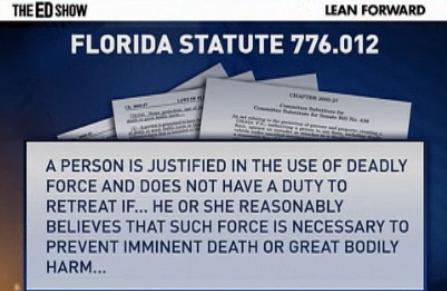
Is Stand Your Ground bad law?

I could have sworn I had written about my concerns about the Stand Your Ground laws after Florida passed it, long before the shooting and killing of Trayvon Martin by George Zimmerman. Can’t find it. So I’ll cheat, and expand on this document from the government of the state of Connecticut.


The Castle Doctrine and “stand-your-ground” laws are affirmative defenses for individuals charged with criminal homicide. The Castle Doctrine is a common law doctrine [going back to English common law] stating that an individual has no duty to retreat when in his or her home, or “castle,” and may use reasonable force, including deadly force, to defend his or her property, person, or another. [There was a case a few years ago where some drunk guy wandered into someone’s home in western New York at 1 a.m. The intruder was shot and killed, and no charges were filled.] Outside of the “castle,” however, an individual has a duty to retreat, if able to do so, before using reasonable force.

Stand-your-ground laws, by comparison, remove the common law requirement to retreat outside of one’s “castle,” allowing an individual to use force in self-defense when there is reasonable belief of a threat. [Note this important distinction; one does not have to walk away from the conflict.] Deadly force is reasonable under stand-your-ground laws in certain circumstances, such as imminent great bodily harm or death.

Forty-six states… have incorporated the Castle Doctrine into law. Connecticut law justifies the use of reasonable physical force, including deadly force, in defense of premises. Connecticut courts have recognized the common law privilege to challenge an unlawful entry into one’s home, to the extent that a person’s conduct does not rise to the level of a crime. Deadly force is justified in defense of one’s property by a person who is privileged to be on the premises and who reasonably believes such force is necessary to prevent an attempt by the criminal trespasser to commit any crime of violence.

Twenty states have stand-your-ground laws. Generally, these laws allow an individual to use force in self-defense when there is reasonable belief of a threat, without an obligation to retreat first if the individual (1) has a legal right to be at the location and (2) is not engaged in an unlawful activity. Connecticut does not have a stand-your-ground law. Connecticut law specifically requires an individual to retreat, if able to do so, before using reasonable force.
***
The idea that one should be able to defend oneself, or another, in case of a reasonable threat is always true. The question in Stand Your Ground is how much effort one needs to use to try to extract oneself from the situation.

My concern is not people with guns, but rather short-tempered people with guns who take advantage of the notion of a perceived threat. At the absurdist end of the spectrum, I’m thinking of that Tennessee woman who shot at a car full of kids for turning in her driveway; fortunately, no one was hurt.

Is there a racial component in the perception of a “reasonable threat”? [Research John Roman] “found that Stand Your Ground laws tend to track the existing racial disparities in homicide convictions across the U.S. — with one significant exception: Whites who kill blacks in Stand Your Ground states are far more likely to be found justified in their killings.”

I’m uncomfortable with Stand Your Ground because I believe it has led to avoidable deaths and will continue to do so.

C is for Cover songs

For arcane reasons, I listen to a lot of Beatles covers in the month of July, in honor of Ringo Starr’s birthday.

A cover song is a version of a recording released subsequent to the original one. Sometimes the most popular version is a cover: Good Lovin’ by the Young Rascals [LISTEN] was initially recorded by someone dubbed Lemme B. Good, then was a minor hit by The Olympics [LISTEN], which I own. I Heard It Through the Grapevine was a massive hit for Marvin Gaye [LISTEN], though the original by Gladys Knight and the Pips [LISTEN] (my preferred version, actually) went to #2 on the US charts a year earlier.

What makes a good cover song is that it is not merely a slavish imitation of the original. Otherwise, what’s the point? The version of You Keep Me Hanging On by Vanilla Fudge [LISTEN] had been criticized as excessive, but it’s sure different than what the original Supremes [LISTEN] put out.

Sometimes a cover is SO good that even the originator will bow to the successor. Otis Redding [LISTEN] acknowledged that Aretha Franklin [LISTEN] had “stole” Respect from him, meaning it was now hers, though he wrote it and sang it first. Likewise, Trent Reznor of Nine Inch Nails realized that Hurt has become a Johnny Cash [LISTEN], not a NIN [LISTEN], song.

For arcane reasons, I listen to Beatles covers in the month of July, in honor of Ringo Starr’s birthday. There are a LOT of them; by the time the Beatles broke up, there were over 2500 versions of Yesterday alone, most of them boring.

I have about three dozen Beatles’ cover albums. There are classical, Latin, bluegrass, country, soul collections. I have whole albums covered by various artists, some compiled by MOJO magazine, plus whole albums by the Smithereens, Big Daddy, and others. My friend Fred Hembeck put together some compilations; the worse version among them, Hey Jude by an uninspired, off-key Elvis Presley. I made a few collections myself, from CD that have Beatles-inspired cuts.

Arguably the best Beatles interpreter is Joe Cocker. He came to fame at Woodstock singing A Little Help From My Friends [LISTEN to the studio version]. He’s made a whole song out of the Abbey Road-segued She Came Into The Bathroom Window [LISTEN]. But my favorite of his takes is You’ve Got to Hide Your Love Away [LISTEN].

I should mention again my favorite music podcast, Coverville, which comes out twice a week. One episode is a cover story of a particular artist, while the other might be a request show, some independent artist hodgepodge, or based on a theme.

Ramblin' with Roger
Social media & sharing icons powered by UltimatelySocial