
September rambling #3: taking a knee

I went to two street festivals in Albany

It occurred to me that people not familiar with American football may not understand “taking a knee” or a “quarterback kneel.”

The play occurs after the ball is snapped “when the quarterback immediately kneels to the ground, ending the play on contact… It is primarily used to run the clock down, either at the end of the first half or the game itself, in order to preserve a lead or a win. Although it generally results in a loss of a yard and uses up a down, it minimizes the risk of a fumble, which would give the other team a chance at recovering the ball.

“Especially when the outcome of the game has been well decided, defenses will often give little resistance to the play as a matter of sportsmanship as well as to reduce injury risk on what is a relatively simple play.”

This is what spiritual warfare looks like. “There is not a more perfect gesture of Christian nonviolent resistance than to kneel while the lovers of empire stand. It makes a spectacle of our worldly powers”

The Daily Show: When is the ‘right time’ for black people to protest?

Bob Costas on NFL protests and patriotism

Principled stands taken at great risk are often how movements are born

Is America Headed for a New Kind of Civil War?

Ibram Kendi, leading scholar about racism: education and love are not the answer

Nationalism Reconsidered

The Real Reason White People Say ‘All Lives Matter’ (from a white guy)

“Leave safety behind. Put your body on the line. Stand before the people you fear and speak your mind–even if your voice shakes. When you least expect it, someone may actually listen to what you have to say. Well-aimed slingshots can topple giants.” –Maggie Kuhn

John Green reviews what is known and what is not known about the Russia Scandal

Right-Wing Star Declares He’s Too Healthy For Insurance: Guess What Happened. He has a car accident and now needs a GoFundMe to pay for this hospital bills. The schadenfreude was not strong here; it was more function of irritation, way out of proportion, over his arrogance

Corporate Consolidation: Last Week Tonight with John Oliver

Court Rules Copyright is Not a “Use It or Lose It” Right

Hurricane names are Insufficiently intimidating

Lynn Mabry, Sheila E, Rebecca Jade in W. Springfield, MS Sept 2017

Last weekend, I went to two street festivals in Albany. Larkfest I used to go to all of the time when I was single and lived nearby, but it had been a while. I was helping Albany Public Library staff to get folks to get library cards. The Madison Street Fair is smaller, but closer. At both events, the weather got HOT; sunburn at Larkfest, which is particularly bad for me with the vitiligo, so I used an umbrella at Madison.

Amy Biancolli: turns on the slide

Veteran Voice Actress June Foray Remembered at Packed Event

A Letter of Resignation Walking away, and “the hardest thing I’ve ever written”

Closed Campus? A Case Study of Skipping at Subchunkin, a place three blocks from my house

Now I Know: The Dead Man Who Sued to Make Himself Alive and The Man Who Ate Lots of Potatoes

MUSIC

K-Chuck Radio: Motown like you’ve never heard it before

Coverville 1186: Cover Stories for 10CC, Nick Cave and Oasis

Uranium Fever – Elton Britt (1955)
Music, September 1971: widely un-bought

Stax had to “promote a white rock record through a black promotion and distribution system.”

“Not all the fresh music made in 1971 made an impact in that year. Some of it didn’t come out until years later the people who made it had made it had moved on, had become different people, or died.” That’s the first sentence in the September chapter of Never A Dull Moment by David Hepworth.

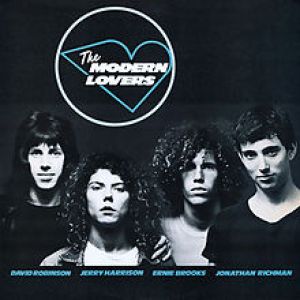
The Modern Lovers included future Talking Heads member Jerry Harrison and leader Jonathan Richman, who is considered by some to be the ‘godfather of punk rock.”

Roxy Music was primarily wanted to be perceived as an art project, as most of the members, including Bryan Ferry, were students. Likewise, David Byrne was meeting up with Chris Frantz at the Phode Island School of Design and thinking about a band called the Artistics; Byrne and Franz would, of course, also help create Talking Heads.

Kraftwerk was formed by Ralf Hütter and Florian Schneider in 1969. Their second album had “more in common with the workshopping approach to improvised theater than the performance-oriented approach of traditional rock.”

When the critics suggest who ought to be in the Rock and Roll Hall of Fame, they often mention this band, certainly not for its commercial success, but its influence. The Wikipedia notes: “Kraftwerk’s musical style and image can be heard and seen in 1980s synthpop groups such as Gary Numan, Ultravox, John Foxx, Orchestral Manoeuvres in the Dark, Human League, Depeche Mode, Visage, and Soft Cell.”

Alex Chilton had experience some success with a band called the Box Tops, but the experience left him drained. He and some mates ended up starting a band called Big Star. Their album, #1 Record, released in 1972, did nothing, maybe because it was released on the soul label Stax, which had just bought itself out “of a distribution deal with Columbia” [Records] and therefore had to “promote a white rock record through a black promotion and distribution system.”

The records of the Velvet Underground and Big Star, “like those of of the Stooges, MC5 and Nick Drake, were widely available and widely un-bought.” But those artists inspired music that eventually topped the charts.

Listen to

George Jackson – Bob Dylan here or here

Motel Blues – Loudon Wainwright III here or here

Hospital – Modern Lovers here or here

Andy Warhol – David Bowie here or here

Life Is a Carnival – the Band here or here

Another singing Les Green – who knew?

Mr. Green, in his feeling for style and in the vocal equipment he has to achieve the sounds he wants, is a major league talent


My sisters and I are on this Binghamton-specific group on Facebook. This woman that I do not know, in response to my sister posting a photo of our father, asked, “Is that Les Green the musician? If it is he worked with us at Hillside Garden Center at holidays.” This was possible; he had a lot of jobs, including working at Costas Flower Shop.

Then a guy we don’t know mentioned, “Must have been a popular man at the time. He was all over the news in the 1960’s.” He pointed me to http://www.fultonhistory.com/, which I had come across before.

But when I typed in “LES GREEN”, I discovered something interesting; there was another singing Les Green.

Avon NY Herald News 1979-1980
“LES GREEN, a tenor soloist, formerly from Syracuse, now from Charlotte, North Carolina, will present a Concert of Sacred Songs at Avon Wesleyan Church, Wednesday, October 31, at 7:30 p.m. Les originally moved from upstate New York to add his clear, high tenor voice to the professional quartet “The Envoys.” Together with “The Envoys” Les has appeared on talk shows such as the “PTL Club” and the “700 Club.” He has also shared the concert stage with names like the Blackwood Brothers, Inspirations, Imperials, Andrea Crouch. Everyone is cordially invited.”

So ANOTHER guy named Les Green, from upstate New York, was a singer, and they BOTH moved to Charlotte, NC? Were they aware of each other? My father took a while to do public singing, outside of the church, when he moved south, so possibly not.

The story with the pic above, from October 1960, began:
“Binghamton’s Les Green qualifies as a rarity among folk singers on several counts. He “doesn’t play the guitar,” by his own account. He doesn’t like Calypso music. He prefers working school and social club dates to night club engagements. He likes to talk about folk songs almost more than he likes to sing them.”

This IS largely true. He never learned the “correct” way to play the guitar, but he was effective using it, nonetheless. He hated nightclubs and bars, and anywhere there was drinking because he wanted to be a storyteller, spin his tales to enhance the singing of the songs, providing context.

“Mr. Green, a 6 foot, 2-inch man of 33, sang in light, sweet head tones, breaking up the tempo to emphasize the storyline of his songs. He also interrupted his singing to talk some of the lines. The guitar was well in the background, marking the rhythms and occasionally spraying chords. The children were invited to join in the singing, and they did.”

He was big on audience participation, whether entertaining children or adults.

This story is also about Dad:
Binghamton NY Press Grayscale 1962
…May 1, 1962 Folk Songs With Feeling Les Green Scores On Melodic Road. Les Green, traveled high, wide and handsome last night…

It’s easier to read than for me to capture electronically, but here are some excerpts:.

“For two hours and more… Added to this, he has a baritone voice powerful enough to line out ‘The Road to Mandalay,’ if he wanted to, which he doesn’t. Mr. Green has perfect control over this voice, the ability to slide without erring in pitch, the gift of spinning thin head tones, the sadness and worry, and hope… Most of the songs are not too well known, songs like “Passing Through,” “Midnight Special,” “Two Brothers” and “Michael.”

“Last night the turnout was not large, which dampened somewhat Mr. Green’s habit of bringing the audience into it to sing some of the choruses with him. The concert, for the benefit of the Women’s Club of Trinity AME Zion Church, will be repeated tonight, at 8 o’clock. Mr. Green, in his feeling for style and in the vocal equipment he has to achieve the sounds he wants, is a major league talent in a field that often seems to be dominated by adenoidal or asthmatic types content with making quaint sounds in the name of folk art.”

He was REALLY good at what he did.

Dad would have been 91 tomorrow.

Music Throwback: We Are the World

I didn’t buy the single which was #1 for four weeks on the pop charts and two weeks on the soul charts.

This being the birthdays of both Ray Charles (b. 1930) and Bruce Springsteen (b. 1949), the song We Are the World came to mind. Both singers had significant solos on the track.

Let’s back up. Back in 1983-1985, there was a terrible famine in Ethiopia. In reaction to the television reports, Bob Geldof (Boomtown Rats) and Midge Ure (Ultravox, Thin Lizzy) wrote Do They Know It’s Christmas? in 1984. “It was first recorded in a single day on 25 November 1984 by Band Aid, a supergroup put together by Geldof and Ure and consisting mainly of the biggest British and Irish musical acts at the time.” It was re-recorded three times: in 1989, 2004, and 2014 for various charities.

American singer Harry Belafonte thought that if a bunch of Brits could do this, what could Americans do? Initially thinking of a benefit concert, Belafonte was convinced by “Ken Kragen, who managed an impressive roster of talent, that they could raise more money and make a bigger impact with an original song; Belafonte agreed…”

From Rolling Stone: “‘Check your egos at the door’ read the sign on the front door of A&M Studios in Los Angeles on the night of January 28th, 1985. Producer Quincy Jones had placed it there because dozens of the nation’s biggest singers were walking through that door, and he had exactly one night to cut a record that would save lives by raising money to help alleviate a famine in Ethiopia.

“The result, USA for Africa’s We Are the World, was released… on March 7th, 1985, written by Michael Jackson and Lionel Richie. By all accounts, some people, especially the rockers, didn’t particularly like the song. But it was Springsteen who refused to undermine the process and kept that faction in check.

Here are the lyrics, with indicators of the soloists.

The success of the Band Aid and USA for Africa singles led to benefit concerts such as Live Aid, also in 1985 and the various Farm Aid concerts.

I didn’t buy the single which was #1 for four weeks on the pop charts and two weeks on the soul charts (and #76 on the country charts) and sold four million copies in the US alone. I bought the album, which also sold well, but was lightly regarded.
Listen to:

Do They Know It’s Christmas (1984) here or here

We Are the World here or here (long version)

Queen at Live Aid here

We are the World (2010), for Haiti here

The making of We Are the World here

Music throwback: Stax food choices

The Astors also spent 2 1/2 months performing on tour with The James Brown Review.

I was listening to one of my Stax-Volt box sets, which I usually do in the summer, in honor of the label’s co-founder Jim Stewart’s birthday. (His sister Estelle Axton ALSO belongs in the Rock and Roll Hall of Fame, BTW.) I’ve written about Stax before, including its complicated relationship with Atlantic Records.

I noticed that some of the Memphis soul label artists, especially the more obscure ones – we’re not talking Isaac Hayes, Otis Redding, Sam & Dave, Carla Thomas – had tracks with food-related titles.

This is not to say that some of the name artists didn’t ALSO choose a musical culinary route. Booker T and the MG’s had a song about popcorn, e.g. But I picked three songs to highlight, two of which may give you tooth decay.

Candy – The Astors. Composed by Booker T & MG’s guitarist Steve Cropper and Isaac Hayes, this is the only one of the Memphis group’s songs to chart. #12 on the R&B charts, #63 on the pop charts (Billboard) in the summer of 1965.

“As ‘Candy’ moved up the charts, The Astors performed on shows at the Uptown Theater in Philly, the Howard Theater in D.C., The Regal Theater in Chicago, and The Apollo Theater in New York. The other performers on these shows included The O’Jays, The Coasters, Curtis Mayfield and The Impressions, and Redd Foxx to name a few. The Astors also spent 2 1/2 months performing on tour with The James Brown Review.”

Listen HERE or HERE
***

Sugar, Sugar – The Mad Lads (1966). The song was composed by Alvertis Isbell and Eddie Floyd, the latter a name artist, but, as far as I can tell, the song did not chart. The group is from Detroit.

Listen HERE or HERE
***

Hot Dog- The Four Shells (March 1966). “A Chicago group recording licensed to Stax, produced by Jerry Butler and Eddie Thomas.” I cannot find any chart action for this either.

Listen HERE or HERE

Despite their relative obscurity, these all sound vaguely familiar, as though they were regionally popular, even if they were not always national hits.

Social media & sharing icons powered by UltimatelySocial