
 Fratres means Brothers. It is a composition by the Estonian composer Arvo Pärt (b. 1935). The first time I heard this piece was very early this century. My wife and I were visiting a teacher friend of hers. This tune was playing on the stereo. I was fascinated.
Wikipedia says that Fratres exemplifies Pärt’s “tintinnabuli style of composition. It is three-part music, written in 1977, without fixed instrumentation and has been described as a ‘mesmerising set of variations on a six-bar theme combining frantic activity and sublime stillness that encapsulates Pärt’s observation that ‘the instant and eternity are struggling within us.'” Yes, “mesmerizing” is an accurate description.
Linus Åkesson writes: “The analytical meets the aesthetical as Pärt takes us on a meditative, harmonical journey, built up from a simple set of mathematical rules. Many people who listen to Fratres find it repetitive or even boring at first. After a while, though, they start to unconsciously recognize some of the patterns in the music.” I never found it boring.
The version I first heard I believe involved twelve cellos.
12 Cellists Of The Berlin Philharmonic.
Eight Cellos, Hungarian State Opera Orchestra
Then I heard this take, an adaptation for cello and electronics. It’s almost a different composition.
Hermine Horiot
Lana Trotovsek on violin
Beats Antique, Violin, and Piano – Arvo Part Remix
Sheet music, violin, and piano
It turns out that many variations of this work exist, involving combinations of strings, percussion, recorders, piano, trombone, saxophone, and guitar.
Saxophone soprano: José Pedro Gonçalinho
The composition has been used in at least a dozen films and documentaries, including There Will Be Blood, To The Wonder, and The Place Beyond the Pines.
Jazz pianist Aaron Parks incorporated elements of Fratres into his composition Harvesting Dance (2008), which has been performed by Terence Blanchard.
 My wife had purchased a few bushels of apples over the late summer. She kept them in the basement, which tends to be cooler than the rest of the house. But by December, the last of the apples were looking wrinkled.
 The story goes that elementary school girls Mary Wilson and Florence Ballard entered a talent contest. By 1959, they became part of a group called the Primettes, along with a couple of other girls from the Detroit projects, Diane Ross and Betty McGlown. McGlown was replaced by Barbara Martin.
 A friend wrote to me, and the query led to the Discography of American Historical Recordings.
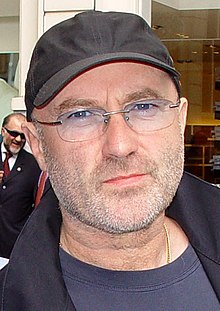 Among all the “cool,” snarky kids writing about the “bad” music of the 1980s, the oeuvre of Phil Collins often shows up. In The Worst Rock ‘n Roll Records of All Time (1991), Collins appears with Paul McCartney and Duran Duran as one of the worst artists. Only Billy Joel fared worse. There are lots of truly horrific artists in the decade. Yet Phil bashing became de rigeur.