
The Lydster: Alexander Hamilton

A lot of people who’ve never even heard the music have dismissed it as a rap musical, when it features a mixture of popular musical styles.

One of mixed blessings of the past year has been the Daughter’s obsession with all things Alexander Hamilton. In case you’ve somehow missed the buzz, the musical Hamilton has been a Broadway and touring company phenomenon. It’s about “the poor kid from the Caribbean who fought the British, defended the Constitution, and helped to found the United States.”

On one hand, she knows far more about the Federalist Papers than she might have. On the other hand, for a good part of the past year, it was all Hamilton, all the time. She’d go to sleep to it, wake up to it, play it during dinner, play it on road trips. I got a bit Hamiltoned out, frankly.

And yet we fuel it. For Christmas, she received a book called HAMILTON: THE REVOLUTION by composer/actor Lin-Manuel Miranda and Jeremy McCarter, “a cultural critic and theater artist who was involved in the project from its earliest stages–‘since before this was even a show’ [which] traces its development from an improbable performance at the White House to its landmark opening night on Broadway six years later. In addition, Miranda has written more than 200 funny, revealing footnotes for his award-winning libretto, the full text of which is published here.”

It’s interesting that a lot of people who’ve never even heard the music – and, as noted, I’ve heard it a LOT – have dismissed it as a rap musical, when it features a mixture of popular musical styles. Here’s a review of the original Broadway cast:

“Thanks to the arrangements by musical director Alex Lacamoire, the score includes tinkling harpsichords, schmaltzy strings, and lush choral harmonies. The Schuyler sisters—Angelica (Hamilton’s close, perhaps romantic, friend, played by Renée Elise Goldsberry), Eliza (his wife, Phillipa Soo), and Peggy (Jasmine Cephas Jones)—trade fast-talking verses and harmonize on choruses in an R&B groove that sounds like Destiny’s Child; Burr (a smashing, properly smarmy Leslie Odom Jr.) busts out with a fit of envy in the form of a razzmatazz show-tune, ‘The Room Where It Happens’ (commenting on the secret meeting among Hamilton, Jefferson, and Madison at which American government’s first quid pro quo was bargained). Thomas Jefferson (Daveed Diggs) opens the second act returning from Paris and asking, in a boogie-woogie number, ‘What’d I Miss?’ And there are several… beltable ballads. England’s King George (a hilarious Jonathan Groff) pouts about the loss of the colonies in the mode of a bouncy British breakup tune: “What comes next? / You’ve been freed. / Do you know how hard it is to lead? / You’re on your own. / Awesome. Wow. / Do you have a clue what happens now?”

And all of us now sing the mundanities of life to songs on the soundtrack. I use to try to stir the teenager in the morning, “Just get up! Just get up!” to the tune of the first song that goes “just you wait, just you wait.”

The Daughter has seen/read/listened to all of these, of course:

How ‘Hamilton’ is revolutionizing the Broadway musical

Hamilton condensed down to seven minutes

Jesus of the Galilee

The 2016 Song- A Year in Review, Hamilton Rewind Parody

I Have an Opinion on Every Song in “Hamilton”

Top 10 Hamilton songs

10 Unforgettable Hamilton Moments of 2016

Alexander Hamilton’s shadow

Maybe I should go to Paris

I had a pencil sharpener in the shape of the Eiffel Tower.

For a long time, well before I took high school French, I thought the first European city I’d like to visit would be Paris. Two of my cousins were born there; one had been living there again until recently, and the other is working there presently.

I pictured sitting in some cafe watching the people and absorbing the culture, the art, the music. I love this description: “Paris’ grandeur is inspiring but what I love most about the city is its intimacy. Its quartiers are like a patchwork of villages, and while it’s one of the world’s major metropolises – with all of the culture and facilities that go with it – there’s a real sense of community at the local shops, markets and cafes that hasn’t changed since my childhood. Yet because every little ‘village’ has its own evolving character, I’m constantly discovering and rediscovering hidden corners of the city.”

In the past couple years, the director of our library went there with his family; one of my sisters was taken there by her daughter on the way to the south of France; and there have been several others I know who have made the trip.

Maybe it’s that France saved the bacon the of the American colonists during our Revolutionary War.

When I think of the city, it’s the Eiffel Tower, of course. I had a pencil sharpener in the shape of the structure when I was a child. La tour Eiffel shows up in no fewer than five dozen films, including Midnight in Paris, which I saw.

Paris is also the Moulin Rouge, and of course, I saw that film as well. One of the best lines in one of the best films EVER is “We’ll always have Paris.” That comes from the 1942 classic Casablanca, spoken by Rick to his former lover Ilsa.

Oddly, the various attacks against Paris, including the Jewish cemeteries being defaced, Charlie Hebdo, and, most notably, the events of November 13, 2015 makes me MORE likely to want to visit.

LISTEN to some of my favorite music about Paris:

Sous le ciel de Paris – Edith Piaf
My Father – Judy Collins
April In Paris – Count Basie (the “pop goes the weasel” version)

Free Man In Paris – Joni Mitchell
George Gershwin’s An American in Paris – André Previn/London Symphony Orchestra
Audition (The Fools Who Dream) – Emma Stone from the movie La La Land

***
ABC Wednesday – Round 20

April 2017 health report: Vitamin D3

Rickets is not a term I’ve heard literally in decades.

Beyond the things my primary care physician said when I got to see her on April – the usual “lose weight” and “raise your ‘good’ cholesterol – was my need to get more Vitamin D3. I’m supposed to take 2000 IU (international units). My vitamin D level was 20 this year, up from 16 (on what scale I have no idea). But it’s supposed to be at 30.

Here’s my problem. Even as a kid, I never much liked going out into the sun. I mean, I’m playing baseball, fine, but just sunbathing? No way.

And it’s worse since developing the vitiligo at age 51, which makes me prone to burn in certain areas, including the top of my head, my neck and the back of my hands. I’m rightly concerned about developing skin cancer. This is why I often wear long-sleeved shirts and long pants, even in summer.

I just discovered something with the supplements I’ve been taking, off and on, for the last year. It offers 1200 mg of calcium and 1600 IU of vitamin D3 “in just two tablets.” TWO tablets! So I’ve been underdosing, and I need to take three tablets a day.

I must really be deficient, since only 400 IU is 100% of the daily value needed by the average person. Still, my doctor said I wasn’t likely to develop rickets. Rickets is not a term I’ve heard literally in decades. It is “a disease of children caused by vitamin D deficiency, characterized by imperfect calcification, softening, and distortion of the bones typically resulting in bow legs.”

But she did worry that I could be that old man who falls and breaks a bone. And most of us know that falls can be deadly to the elderly for that reason.

Speaking of falling, Dustbury linked to an article about how science shows why shoelaces come untied. This happens to me constantly; they’re ALWAYS untied. I am OK with it, but have tired of people telling me that they’re loose. I know, I know! And now I sort of know why.

The Heart of Christianity

Marcus Borg uses the term metaphor, not as a negative, “nonliteral,” but as a positive, “more-than-literal.”

Heart of ChristianityIn trying to explain what I believe, in terms of my faith, I found that the right words were not always available. Then I read the 2003 book The Heart of Christianity: Rediscovering a Life of Faith by Marcus Borg this past winter. My answer became: “Mostly what HE said.”

Borg was a “world-renowned Jesus scholar” who, as the book sleeve notes, is out to reclaim “terms and ideas once thought to be the sole province of evangelicals and fundamentalists.”

As the Amazon description of The Heart of Christianity notes: “Being born again… has nothing to do with fundamentalism, but is a call to radical personal transformation. Talking about the kingdom of God does not mean that you are fighting against secularism, but that you have committed your life to the divine values of justice and love. And living the true Christian way is essentially about opening one’s heart—to God, and to others.”

Borg writes about the “earlier paradigm” of literal Biblical interpretation and heaven-focused. Then there’s the “emerging paradigm” which is “the product of Christianity’s encounter with… science, historic scholarship, religious pluralism, and cultural diversity… it is [also] the product of our awareness of how Christianity has contributed to racism, sexism, nationalism, exclusivism and other harmful ideologies.”
MarcusBorg_1
The emerging paradigm sees the Bible metaphorically…its…’more-than-factual,’ meaning…It doesn’t worry that the stories… are metaphorical rather than literally factual accounts… ‘What is the story saying?'” He uses the term metaphor, not as a negative, “nonliteral,” but as a positive, “more-than-literal.”

He uses Garrison Keillor’s “News from Lake Wobegon” on the radio program Prairie Home Companion as an example. “We all know that Keillor is making them up, and yet we hear truth in these stories.” Borg acknowledges the comparison that the “analogy to the Bible is not exact,” since the latter is “the product of a thousand years of community experience.”

I was inclined to like Marcus Borg, especially when I realized that we had similar experiences: growing up in the “earlier paradigm” church, leaving in confusion for over a decade, and reframing to find our way back. I’m sorry that he died back on January 21, 2015, in a way that I was not before reading this book.

Music, April 1971: What’s Going On

More random music recollections based on the book Never A Dull Moment.

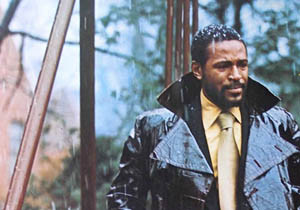
You probably think you know the story of Marvin Gaye’s standout album, What’s Going On, how the Artist recognized what’s REALLY happening in the world and puts out a album designed to stick it to the Suits at the record company. The actual story was a bit more prosaic.

In fact, the title song began with a wisp of of an idea by Obie Benson, the bass singer of the Four Tops, who thought that maybe he had another song like the Coke commercial, “I’d Like to Teach the World to Sing.” He and Motown songwriter Al Cleveland thought it might fit Marvin, but he wasn’t impressed. They pushed, and Marvin gave it some tweaks, thinking he might produce it for the Originals.

In July 1970, he came into the studio, had some football buddies for the party noise, captured sax player Eli Fontaine warming up, and basically fell into a sound. He managed to slip it out as a single in January 1971, while Motown owner/brother-in-law Berry Gordy was out on the West Coast. Gordy thought two things: 1) he hated the song, and 2) wondered where’s followup album was after it became a hit.

The What’s Going On album was recorded in March and released in May, with a second mix by Gaye that defined not only the LP, but changed the expectation of listeners regarding what was expected from a Motown album. I played it a lot in college; Inner City Blues especially STILL seems relevant.

Another Motown artist was giving Berry Gordy headaches. Stevie Wonder was married, living in NYC with new wife Syretta, and about to turn 21. His lawyers sent a letter to Gordy disavowing his Motown contract.

Meanwhile, Stevie discovered The Original New Timbral Orchestra, or TONTO, keyboard system. Wonder had lost interest in his new album, Where I’m Coming From, which was actually the first Stevie album I ever bought, as his own sound was developing.

His next album, Music of My Mind, made in 1971 and released the next year, was more representative of the groove he was going for. The FOUR albums after THAT, all dominant on my turntable in the 1970s won FOUR Grammy albums of the Year awards in five years.

Sly Stone’s album was two years late, and he became “the least reliable superstar in the history of popular music.” The eventual downbeat, indecipherable There’s A Riot Goin’ On, released in November 1971, was a contact high of an album. One did not have to BE stoned to FEEL stoned listening to it.

Was Shaft blaxploitation or black empowerment? It was a movie by noted black photographer Gordon Parks, with Richard Roundtree as the handsome black detective, whose looks drove the lyrics written by STAX artist Isaac Hayes. The “shut your mouth” was delivered by Telma Hopkins, whose hit with Dawn, “Knock Three Times”, came out earlier that year. My sister Leslie owned this double LP, which he had to get partially replaced because the package had two of the same LPs.

Listen To

What’s Going On – Marvin Gaye
Inner City Blues – Marvin Gaye
The Revolution Will Not Be Televised – Gil Scott-Heron
Family Affair – Sly & the Family Stone
I Can’t Get Next to You – Al Green
Toussaint L’Ouverture- Santana

Ramblin' with Roger
Social media & sharing icons powered by UltimatelySocial