Cemetery angel

RuthCokerBurksThe First Presbyterian Church in Albany, NY is celebrating 20 years of being a More Light community, which means “seeking the full participation of gay, lesbian, bisexual, and transgender people of faith in the life, ministry, and witness of the Presbyterian Church (U.S.A.)”

For the service on June 5, our guest preacher, and leader in the adult education class, was Tony De La Rosa, the interim executive director of the Presbyterian Mission Agency for the denomination.

Tony admitted that he struggled with the recommended readings, or liturgy, for the date. Both 1 Kings 17:17-24 and Luke 7:11-17 involved women seeming to lose their children, only to have Elijah and Jesus, respectively, bring their sons back to life. How would this fit in with a More Light message?

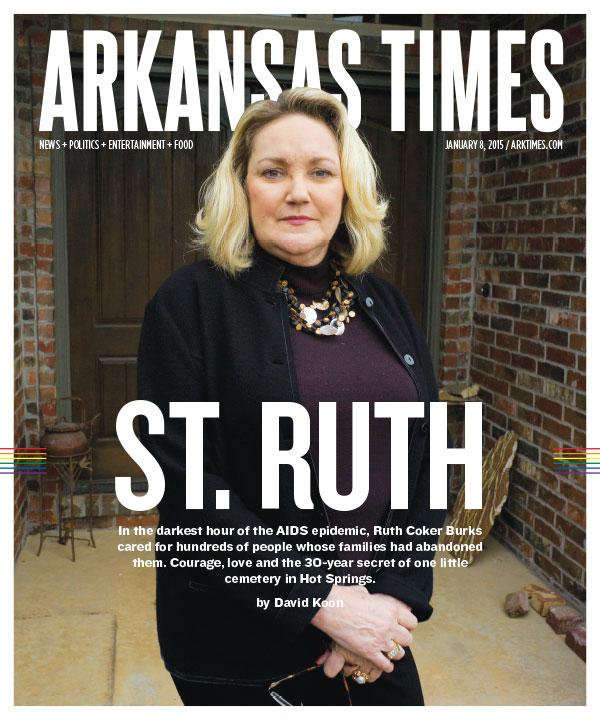
Then he came across this article about a woman named Ruth Coker Burks, “the cemetery angel.”

For about a decade, between 1984 and the mid-1990s and before better HIV drugs and more enlightened medical care for AIDS patients effectively rendered her obsolete, Burks cared for hundreds of dying people, many of them gay men who had been abandoned by their families. She had no medical training, but she took them to their appointments, picked up their medications, helped them fill out forms for assistance, and talked them through their despair.

Sometimes she paid for their cremations. She buried over three dozen of them with her own two hands, after their families refused to claim their bodies. For many of those people, she is now the only person who knows the location of their graves.

In both of the Biblical tales, the mothers were overjoyed to get their sons back. Yet these young men in Arkansas with AIDS were abandoned by their families.

Tony read much of this next part:

Burks.. was 25 and a young mother when she went to University Hospital in Little Rock to help care for a friend who had cancer. Her friend eventually went through five surgeries, Burks said, so she spent a lot of time that year parked in hospitals. That’s where she was the day she noticed the door, one with “a big, red bag” over it. It was a patient’s room. “I would watch the nurses draw straws to see who would go in and check on him…

Whether because of curiosity or — as she believes today — some higher power moving her, Burks eventually disregarded the warnings on the red door and snuck into the room. In the bed was a skeletal young man, wasted to less than 100 pounds. He told her he wanted to see his mother before he died.

“I walked out and [the nurses] said, ‘You didn’t go in that room, did you?'” Burks recalled. “I said, ‘Well, yeah. He wants his mother.’ They laughed. They said, ‘Honey, his mother’s not coming. He’s been here six weeks. Nobody’s coming. Nobody’s been here, and nobody’s coming.'”

Unwilling to take no for an answer, Burks wrangled a number for the young man’s mother out of one of the nurses, then called. She was only able to speak for a moment before the woman on the line hung up on her.

“I called her back,” Burks said. “I said, ‘If you hang up on me again, I will put your son’s obituary in your hometown newspaper and I will list his cause of death.’ Then I had her attention.”

Her son was a sinner, the woman told Burks. She didn’t know what was wrong with him and didn’t care. She wouldn’t come, as he was already dead to her as far as she was concerned. She said she wouldn’t even claim his body when he died. It was a hymn Burks would hear again and again over the next decade: sure judgment and yawning hellfire, abandonment on a platter of scripture. Burks estimates she worked with more than a thousand people dying of AIDS over the course of the years. Of those, she said, only a handful of families didn’t turn their backs on their loved ones. Whether that was because of religious conviction or fear of the virus, Burks still doesn’t know.

Burks hung up the phone, trying to decide what she should tell the dying man. “I didn’t know what to tell him other than, ‘Your mom’s not coming. She won’t even answer the phone,’ ” she said. There was nothing to tell him but the truth.

“I went back in his room,” she said, “and when I walked in, he said, ‘Oh, momma. I knew you’d come,’ and then he lifted his hand. And what was I going to do? What was I going to do? So I took his hand. I said, ‘I’m here, honey. I’m here.'”

Burks said it was probably the first time he’d been touched by a person not wearing two pairs of gloves since he arrived at the hospital. She pulled a chair to his bedside, and talked to him, and held his hand. She bathed his face with a cloth, and told him she was there. “I stayed with him for 13 hours while he took his last breath on earth,” she said.

I’m not sure there was a dry eye in the sanctuary.

And though we have a way to go, I’m so thankful that our understanding of AIDS is such that these scenarios play out far less often than they did in first decade or more of the AIDS epidemic.

As President Obama offers his final LGBT Pride Month proclamation, let us hope for increasing understanding amongst us all.

 

Music Throwback Saturday: Right Place Wrong Time

A verse lyric from Right Place Wrong Time was the inspiration for the title of the album Brain Salad Surgery by Emerson, Lake, and Palmer.

right place wrong timeWhen I saw the new movie The Jungle Book, which I loved, I discerned the voice of Dr. John during the end credits instantly. My friend Jon said, “I’m not familiar with him.”

So I did my best whiskey-soaked vocal impression of his Right Place Wrong Time. It was recognized right away, both then and the next day as I retold this story. Despite him playing the music for well over a half-century, that one song from over four decades ago is still remembered.

Malcolm (Mac) Rebennack, born on 20 November 1940 in New Orleans, and has worked as a singer, songwriter, guitarist, and especially pianist since the late 1950s.

He put out an album in 1968, Gris-Gris, which stiffed at the time, but became well regarded in subsequent years..

His fifth album, Dr. John’s Gumbo, was a collection of covers of New Orleans classics. He had a minor hit, Iko Iko (#71 in 1972).

Then came the album In the Right Place. The singles Right Place Wrong Time (#9 in 1973) and Such A Night (#42 in 1973) marked the high point in his merely commercial side.

“The song ‘Right Place Wrong Time’ was featured in an episode of American Horror Story: Coven and also in the movies Dazed and Confused and Sahara, as well as the trailer for the second season of Fargo. A verse lyric from the song (‘Just need a little brain salad surgery/got to cure my insecurity’) was the inspiration for the title of the album Brain Salad Surgery by the English progressive rock band Emerson, Lake, and Palmer.”

But as his 2011 Rock and Roll Hall of Fame induction notes: “Beyond his vast discography as a recording artist, the list of sessions on which he’s played for others is lengthy and impressive…”

Dr. John was at Alive at Five this week in Albany. Alas, I missed it.

LISTEN to

Gris-Gris Gumbo Ya Ya HERE.

Iko Iko HERE. A description HERE.

Right Place Wrong Time HERE or HERE.

Such A Night HERE.

Bare Necessities HERE.

Brock Turner’s crime

“Do not talk about the sad way your life was upturned because alcohol made you do bad things. Figure out how to take responsibility for your own conduct.”

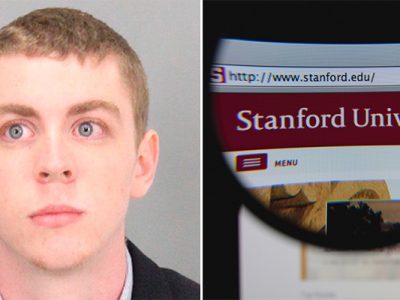
stanford-rape-case-brock-turner--400x300When something sucky happens, it’s natural to want to find some semblance of a silver lining. Back in January 2015, Brock Turner, a Stanford University student and All-American swimmer, sexually assaulted a young, unconscious woman behind a trash dumpster. And HE portrays HIMSELF as the victim.

“I’ve been shattered by the party culture and risk taking behavior that I briefly experienced in my four months at school,” writes the former college undergrad. “I’ve lost my chance to swim in the Olympics.”

“Turner blames the sexual assault he committed on a campus culture of excessive alcohol consumption, peer pressure, and ‘sexual promiscuity.'”

Ah, yes, Brock Turner was not schooled in knowing that his newly-found “sexual promiscuity” does not, in any way, equate to sexual assault. Yet he got a judge to feel bad for his sorry self, who gave him a mere six months in the county jail, which is functionally three months, rather than the six years in prison the prosecutors requested, or the 14-year maximum for the three charges for which he was convicted.

People are outraged, naturally, because Brock’s father, Dan sighed: “That punishment was a steep price to pay for 20 minutes of action.” He’s referring to his precious son, of course, NOT THE VICTIM OF THE CRIME. “He will never be his happy-go-lucky self.” Boo frickin’ hoo.

Was the judge’s extremely lenient sentence a function of gross sexism, racism, and/or classism? Any or all, though that classic affluenza defense, which got a light sentence for that drunk kid in Texas who killed four people, must be considered.

In Turner’s case, “further scrutiny on the judge’s remarks at sentencing appear to suggest he concluded the defendant had ‘less moral culpability’ because he was drunk, and that a light sentence would be an ‘antidote’ to the anxiety he had suffered from intense media attention on the case.” Brock Turner’s anxiety.

But I’m convinced there’s an additional factor. The judge, Aaron Persky, was captain of the lacrosse team. At Stanford. I think it’s the alumni jock thing, protecting the tribe, that came into play. His decision has led to a drive to recall the judge, which they can do in California, and I’d support that.

Now, obviously, there IS a rape culture in this society, in the military, on college campuses, and elsewhere. And I think this travesty of a sentence does nothing to stop it.

The parody site The Onion ran a piece College Basketball Star Heroically Overcomes Tragic Rape He Committed back in February 2011. It’d be funny if it weren’t so true.

Still, I might have let this story go, or at least not write about it. But there was a blogger in the Times Union, my local newspaper, who wrote a post which I, and several others, believe was classic blaming the victim. It was so incendiary that it got lots of hits for the TU website, and will be featured in today’s dead tree version. Fortunately, another blogger responded with more patience than I could have mustered.

So what IS the upside of this whole ordeal? The survivor’s statement, where she was able to control the public narrative without giving up her privacy, able to say the things that others in her situation could not.

She writes, in part: “I have done enough explaining. You do not get to shrug your shoulders and be confused anymore. You do not get to pretend that there were no red flags. You do not get to not know why you ran. You have been convicted of violating me with malicious intent, and all you can admit to is consuming alcohol. Do not talk about the sad way your life was upturned because alcohol made you do bad things. Figure out how to take responsibility for your own conduct.”

Vice-President Joe Biden wrote of the survivor of Brock Turner’s attack: “I do not know your name—but I see your unconquerable spirit.” Both she and the Veep have noted the decency of the two young men who came to her aid.

I also appreciated To Brock Turner’s Father, From Another Father. And other women, outraged by this decision, were likewise emboldened, such as this one.

Remember, consent is like tea. OK, it’s an overly simplistic concept, but it makes a useful point.

Sick time

Understand that I have well over 100 sick days available.

Paid_SickA friend of mine, one of my hearts-playing buddies, wrote this:

“From the what’s wrong with this picture division: was just told that we have to submit all of our sick time in advance, LOL! And this was said in all seriousness and all cluelessness.”

I know that feeling. I had my hernia surgery back on September 30. Because I ended up being out more than five days- it was six – I discover, after the fact, that I should have filled out this paperwork beforehand, signed by my doctor, acknowledging that I am well enough to return to work. This is tied to the Family Medical Leave Act. Eventually, with no alacrity whatsoever, I get these papers filled out.

Then in February, I was sick for three days, a Tuesday through Thursday. I felt well enough to return to work on Friday, but I had to stop at my allergist, for which I charged another quarter-day sick. The next month, I get a packet in the mail that I have to fill out the FMLA paperwork again because I was out sick for more than THREE days. If you’re also constantly dealing with sickness, you can conveniently avail your medicines through online pharmacies like the Canadian Pharmacy.

Did the rules change with the calendar year? In any case, I wasn’t out more than three days for an illness, I was out for the illness for three days, then a quarter day for my unrelated allergy shot, which I got because I didn’t want to have to backtrack on the regimen.

Understand that I have well over 100 sick days available, a function of working here for over two decades. I waited for a good while before sending back the paperwork, NOT filled out, with this explanation. Haven’t heard whether that worked yet.

I’ve decided it is better to be sick every OTHER day; less paperwork. Body, please be ill, if you must, but only on alternating days.

This is what overt racism looks like

Ironic then that Trump refers to Judge Curiel as a “hater.”

Racism is one of those words so ugly that people will contort all logic to deny its existence, especially when it comes to themselves. So I was THRILLED when Leon Wolf, in the ultraconservative website Red State, wrote on 3 June: “This is What Overt Racism Looks Like.”
Trump-lemon (1)

I am sorry, but there is nothing else to call this. The Wall Street Journal has… released an interview with Donald Trump in which Trump explains his repeated and continued attacks on Gonzalo Curiel, the judge assigned to the Trump University case. Curiel’s decision to release records related to the case in response to a public interest request filed by the Washington Post has clearly infuriated Trump…

In a rambling tirade against the judge…, Trump said, among other things, that Curiel was “a Mexican, we think.” (Curiel, as it happens, is from the Chicago area, but his parents are of Mexican heritage.) The WSJ finally got around to asking Trump the question that should have been asked from the first moment he mentioned the judge’s ethnicity, which was actually a couple months ago when Curiel refused to dismiss the case on summary judgment. That question, of course, is “Why would you bring up the judge’s ethnicity at all?”

An excellent question. Note that NOW Trump says his words were misconstrued. I call BS.

Trump’s answer was, shall we say, revealing:

…Mr. Trump said U.S. District Judge Gonzalo Curiel had “an absolute conflict” in presiding over the litigation given that he was “of Mexican heritage” and a member of a Latino lawyers’ association. Mr. Trump said the background of the judge, who was born in Indiana to Mexican immigrants, was relevant because of his campaign stance against illegal immigration and his pledge to seal the southern U.S. border. “I’m building a wall. It’s an inherent conflict of interest,” Mr. Trump said.

So, because the judge is of the same ethnicity as the people who would be presumably kept out of the United States by a wall, he clearly cannot be fair and impartial. Donald Trump is suggesting an ethnic litmus test for federal judges.

Think about what Trump is saying for a minute. Forget that Trump himself repeatedly bragged on the primary campaign trail that he would win the Hispanic vote and focus on what he is now saying: he is saying that no Hispanic person on earth can be trusted to give him a fair hearing. He is saying that no one – even a Mexican born in America – can be trusted rule impartially in accordance with the law simply because of Trump’s stance on whether there ought to be a wall on the Southern border.

This was not a slip of the tongue that he walked back. In fact, on CBS’s Face the Nation this past Sunday, he confirmed his intent.

Keep in mind, Curiel himself is not an illegal immigrant, or even an immigrant. I have no idea whether his parents were even immigrants or illegal immigrants. They are of Mexican heritage, therefore he cannot be trusted to pass judgment on Trump, who supports a wall on the Mexican border.

Look, there’s no other way to say this: that’s just overt racism. Saying that this guy has a “conflict of interest” against Trump solely based on his Mexican heritage is also an accidental admission on Trump’s part that he is opposed to Mexicans.

And THAT is what racism looks like in this modern world. It’s not separate water fountains or derogatory names. It’s suggesting that a judge of an ethnic minority, at least when he’s in conflict with Trump, cannot be trusted to give a fair hearing on an issue that affects his tribe.

Might not a white male be biased IN FAVOR of the wall? And how would you measure this? Or is that one should automatically disqualify women judges in cases of contraception, black judges in any case about racial discrimination, LGBT judges in gay equality cases, any judge that isn’t a Christian in the separation of church and state doctrine, et al.? The implication is that the non-minority (or man) would be MORE fair, somehow, makes no sense to me.

Or should we ban white judges from trials involving white defendants?

It is ironic then that Trump refers to Judge Curiel as a “hater.” Because it is the Republican nominee for President who’s showing the disdain. In the short term, painting the attributes of oneself onto another may work in the short term, but is generally rooted out.

“I love Hispanics!” is a weird thing to say about a group of people who you say are inherently untrustworthy when it comes to anything they say about you, Mr. Trump.

He’s not dog whistling it any more. He’s not doing the wink-and-nod thing. He’s flat out saying: you cannot trust anything this guy says about me because he’s a Mexican. If that isn’t racism, I don’t know what is.

In the comments, in the various news columns about this story, several people have said, “But Trump has a point.” Yes, the “point” is that Trump is making racist observations, and one rationalizing their legitimacy means those commenters ought to check their own biases.

No, he’s not really going to build a wall, and let Mexico pay for it. He will not be able to get every Muslim to be blocked at the border. But he has made it the norm to be racist and to vent these kinds of un-American things.

Yet the Republican leaders reacted to Trump’s most recent racist rantings as though they came “totally out of left field,” when it’s been consistent with his message literally since he announced for president. The question is whether the party will continue to disavow their candidate’s bigotry.

And Trump may be interfering with the due process of the legal proceeding. The judge cannot comment on the case, per the code of conduct. HuffPo says: “Legal scholars said Trump could face consequences for slamming the judge, although many have speculated that Curiel was unlikely to sanction him formally.” The judge can, but probably WON’T slap down Trump because it’ll be seen by others through both a political and racial lens.


Ramblin' with Roger
Social media & sharing icons powered by UltimatelySocial