Sunday Stealing: Good Luck Charm

An American Family

Welcome to Sunday Stealing. The quiz is stolen from the League of Extraordinary Penpals.

    Do you have a Good Luck Charm?

Oscar and Bellflower

    What was the last song you listened to?

I listened to many albums a couple of days ago, but I don’t remember the order. I Ain’t Marching Anymore by Phil Ochs? Holiday by the BeeGees? Maybe it was the Rolling Stones’ I Am Waiting.

    What is your favorite thing about the place you live?

Albany is the right size for me. I don’t want to live in a huge city, and I certainly don’t want to live out in the country or suburbs. A small/medium-sized city is just about right.

    What is your earliest childhood memory?

I don’t think I remember this as much as I’ve seen a picture of it. My family had gone to the Catskill Game Farm in Catskill NY, from Binghamton when I was three and a half. There was a plastic or metallic pumpkin large enough for me to sit in, and there’s there’s a photograph of this somewhere.

If you could be any animal, what would you be?

A platypus because it would be so contrary to any logic, It’s a mammal and it lays eggs. I love that.

Trust

  Who do you trust the most in your life?

Ostensibly, my wife, but I think there are things you trust some people in certain areas more than you trust other people. I have a couple of friends I’ve known since kindergarten and another I’ve known since the first day of college.

  How many languages can you say “hello” in?

From this list, I know French, Spanish, Chinese, Italian, and German.

What is your favorite kind of weather?

Partly cloudy and 72 light breeze

    How did you discover that Santa wasn’t real, and how old were you?

Santa Claus isn’t real?

    What is the best feeling in the world?

Listening to familiar music with headphones. It tends to be classical music, such as Pictures at an Exhibition or  1812 Overture, or especially Bach’s Toccata and Fugue.

    What is your favorite color?

Aquamarine

    Is there a language you would love to learn?

All of them, especially Chinese and Spanish, but it is not my strength

How do you feel about reality TV?

Early on, I actually watched a few reality shows, such as An American Family, Queeer Eye for the Straight Guy, the first season of Survivor, and the first four seasons of The Real World. But I’ve long ago lost my taste for them.

    Did you ever skip school when you were a kid?

Only to go to a couple of antiwar demonstrations

    What is your least favorite food?

Kale. People telling me how good it is has not swayed me.

Songs that resonate

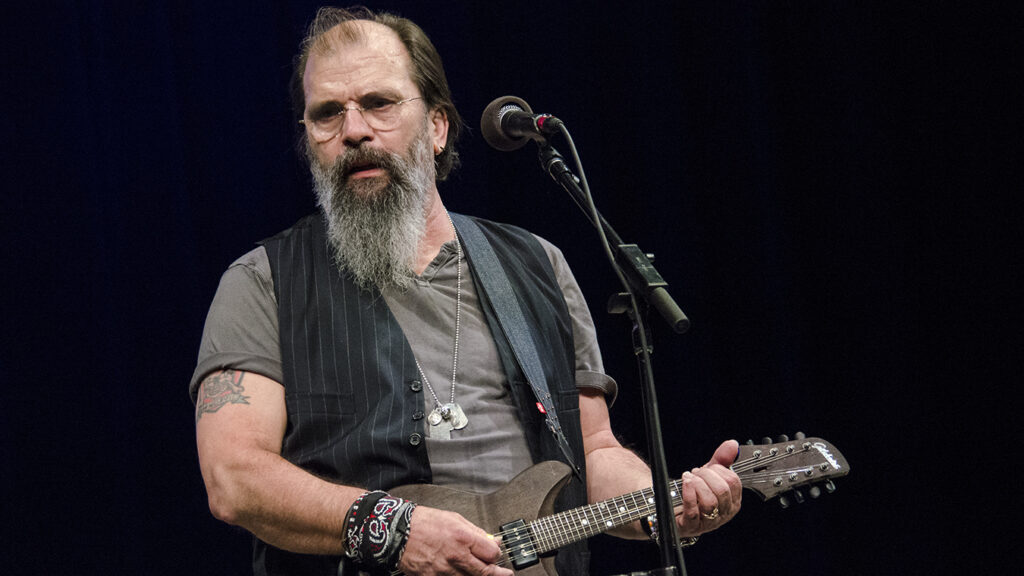
Neil Young

Many different factors create songs that resonate with me. I’m gonna touch on just a few of them here.

Tight vocal harmonies, especially by females, I find particularly affecting. The chorus of Telling Me Lies by the Trio – Dolly Parton, Linda Ronstadt, and Emmylou Harris – on the chorus gets to me. On a Carly Simon album, she, her sister Lucy, and Judy Collins sing The Fisherman’s Song.

Some time ago, I wrote about the inverted pedal point, yet I managed to forget my two favorite pop examples, both on the choruses: Maybe by Alison Krauss and Richard Thompson’s Dimming Of The Day; this version is by Bonnie Raitt. 

I have a great affection for shared lead vocals. Sly and the Family Stone did it a lot, including on You Can Make It If You Try. The Norman Whitfield-produced Temptations were fond of it, starting their second #1 hit, I Can’t Get Next To You. The Jackson Five used it on ABC. Some artists gave the first vocals to others before taking over, such as You Are The Sunshine Of My Life by Stevie Wonder and 1999 by Prince. 

Applause

Sometimes, I’m taken by the hand clap, such as Private Eyes by Hall & Oates and Where Did Our Love Go by the Supremes, both of which appear at this link of The Handclaps List, vol. 2. Also, Cinnamon Girl by Neil Young.

Of course, one of my favorite hooks is a great bass line. But there are so many of them it’s hard to pick. The first two that come to mind are Tell Me Something Good by Rufus featuring Chaka Khan and Keep On Running by the Spencer Davis Group featuring Steve Winwood.

Songs not controlled by the metronome please me. Two examples I’m thinking of are starting much slower than they finish. Do What You Want To by Billy Preston. I first heard the song in 1971 while visiting my old high school friend Steve when he was living in Poughkeepsie. You want the Apple version, not the A&M version, which is much more regulated. Another is When You Dance, I Can Really Love by Neil Young. My favorite thing to do is play each of these songs and then go back to the song at the beginning of the song to see just how much it had picked up the pace.

Shopping carts

newspapers

In mid-October, I went to the Price Chopper/Market 32 grocery store nearest my home on Madison Avenue, but I couldn’t find any shopping carts.  I used a basket they had in the store that I hadn’t seen for a while.

I did my shopping. When I checked out, I asked the cashier. They told me the store had done some work on its entrances and exits. Someone had turned off the mechanism that locked the shopping cart wheels when the carts reached the parking lot’s perimeter.

As a result, many shopping carts disappeared. When I went shopping the next week, I found a single cart outdoors. As I finished my shopping, I passed along my cart to a customer seeking one. It took about a month, but they have been replenished,

Evening Press

I thought about this a lot because shopping carts always hung out on the street when I was a kid. When I had a newspaper route when I was 12 and 13, I often used the shopping cart. I never took it from the store, but they would always be available, like a community resource. That was probably the delusion of a tween.

One day, as usual, I was taking a cart to the pick-up point for the Evening and Sunday Press in my section of Binghamton, NY. Some guy stopped his car and said, “Oh, that cart belongs to our store. Do you wanna get arrested?” I said no, and I let him take the cart. In retrospect, I don’t know that he worked for the supermarket since there was nothing on the car indicating that. But by the time I reached the pick-up point, I had found another cart.

Cities now have abandoned cart regulations, which I reckon is a good thing. Albany has such legislation, but it’s been not as successful as hoped. 

Speaking of crime, my Price Chopper store has had an armed security guard at the entranceway for about the last year. It startled me initially, but now I see the person and shrug. It does not make me feel any more secure—in fact, it is probably the opposite—but I know many other stores in the area have hired armed personnel.

Demographics of cigarette smoking

The Great American Smokeout

When I posted about the Great American Smokeout in a recent year, someone pointed out, as I had mentioned, that cigarette smoking is on the decline.

I want to look at the demographics of cigarette smoking. Check out this CDC report.

28.1% of adults who regularly had feelings of severe psychological distress were smokers, compared with 10.9% without such feelings. Is there a causal connection? I don’t know.

18.5% of adults with a disability smoke, compared with 10.9% of adults without a disability (10.9%). Did smoking aggravate the disability? IDK that either. 

Current cigarette smoking was highest among persons who were divorced/separated or widowed (16.8%) and lowest among those who were married or living with a partner (10.4%).

Money

But I was most intrigued by this:

Current cigarette smoking was higher among people with a lower annual household income than those with higher annual household incomes.

  • About 18 of every 100 adults with low income (18.3%)
  • About 12 of every 100 adults with middle income (12.3%)
  • Nearly 7 of every 100 adults with high income (6.7%)

This tracks why I see more people at the bus stop smoking cigarettes. I love public transportation, but let’s face it: more people who use it regularly tend to have a lower economic profile than the general public.

I was particularly taken aback when waiting for a bus to go downtown last month. There was a guy who was looking on the ground finding cigarette butts that had only been partially smoked to pick up to use at a later date. It was so disturbing that I almost wanted to walk to the corner store and buy him a pack.

I haven’t bought a pack of cigarettes for decades. It was usually for my father – his brand was Winstons – who was a smoker for many years before he got emphysema. He stopped, got better, and then started smoking again. Admittedly, I was really ticked off.

Eventually, he stopped again and stayed that way for the last 30 years of his life. I keep reminding people of the Great American Smoke Out because I’ve had several people who have died from smoking, most notably my grandma Agatha Green, at age 62.

Frequently, I hear people suggesting that poor people should give up a bad habit because it’s so expensive. I have not bought into this mindset. Being poor is HARD.

Still, the folks at the Great American Smokeout have strategies to encourage folks to give up the coffin nails.  

Classic Baseball Era Committee ballot

surgery named for a pitcher

The Classic Baseball Era Committee ballot was announced recently. “The Committee will meet on Dec. 8 at baseball’s Winter Meetings in Dallas…” These are folks who weren’t selected through other means.

“The Classic Baseball Era ballot includes Dick Allen, Ken Boyer, John Donaldson, Steve Garvey, Vic Harris, Tommy John, Dave Parker, and Luis Tiant. Among the candidates, Garvey, John, and Parker are living.”

I immediately recognized the names of all the players, save for Harris and Donaldson, who played and managed in the Negro Leagues. Based on the resumes, I imagine they should be in.

“Donaldson pitched in the Negro Leagues and pre-Negro Leagues for more than 30 years, earning a reputation as one of the best pitchers in the game. Also playing the outfield and managing, Donaldson helped establish the barnstorming business model that was profitable for Black teams for decades.”

“Harris played 18 seasons in the Negro Leagues, primarily as a left fielder for the legendary Homestead Grays. He compiled a .303 career batting average and was known as one of the most aggressive base runners in the Negro National League. Harris also managed the Grays for 11 seasons, winning seven Negro National League pennants and the 1948 World Series.”

But what of the others? Bill James has come up with a series of sabermetric markers.

Dick Allen

Allen “played 15 seasons from 1963 to 77 for five teams, compiling 351 home runs, 1,119 RBIs, and a .292 career average. He was named the 1972 AL Most Valuable Player and the 1964 NL Rookie of the Year, with seven career All-Star selections.” While he never got more than 18.9% of the standard BBWAA path to the Hall, the last two times he received 68.8% of the Veterans Committee, below the 75% threshold.

Allen’s batting – 99 (184th), Likely HOFer ≈ 100, so he’s around that.

Similar batters:

  1. Ryan Braun (933.6)
  2. Bryce Harper (906.0)
  3. Lance Berkman (903.2)
  4. Reggie Smith (894.0)
  5. Ellis Burks (890.8)
  6. Brian Giles (889.9)
  7. Larry Doby (884.9) *
  8. Jermaine Dye (880.7)
  9. George Foster (880.1)
  10. Mike Trout (877.9)

* – Signifies Hall of Famer

Borderline.

Ken Boyer

“Boyer played 15 seasons as a third baseman…, earning 11 All-Star Game selections and winning the 1964 National Leagu  Most Valuable Player Award en route to leading the Cardinals to a World Series championship.”

His high vote count for BBWAA was 25.5% On the Veterans Committee, his high was 18.8%, but he got zero votes the three times he was considered.

Batting – 36 (215th), Average HOFer ≈ 50

However, he won five Gold Gloves.

Similar Batters
  1. Bobby Bonilla (906.7)
  2. Cy Williams (897.7)
  3. Reggie Smith (895.5)
  4. Del Ennis (894.3)
  5. Paul O’Neill (888.8)
  6. Robin Ventura (886.2)
  7. Fred Lynn (885.7)
  8. George Hendrick (883.7)
  9. Ron Cey (877.2)
  10. Ron Santo (874.1) *

* – Signifies Hall of Famer

I wouldn’t vote for him.

Steve Garvey

“Garvey compiled a .294 career average over 19 major league seasons… amassing 2,599 hits, 272 home runs, 1,308 RBI, and 10 All-Star Game selections. He hit .338 with 11 home runs and 31 RBI in 11 postseason series… Garvey won four Gold Glove Awards.”

Separately, “Rep. Adam B. Schiff, a Burbank Democrat, defeated former Dodgers All-Star Steve Garvey, a Palm Desert Republican, to represent California in the U.S. Senate. He will serve out the remainder of the late Sen. Dianne Feinstein’s term, which ends in early January, and, separately, serve a subsequent six-year Senate term.”

He reached 42.6% of the vote with the BBWAA, and after being shut out by the Veterans thrice, he got 37.5% of the vote in 2020/

Batting – 131 (115th), Likely HOFer ≈ 100

  1. Garret Anderson (913.7)
  2. Al Oliver (889.5)
  3. John Olerud (865.4)
  4. Rubén Sierra (859.5)
  5. Mickey Vernon (857.1)
  6. Bill Buckner (855.5)
  7. Cecil Cooper (853.8)
  8. Orlando Cepeda (853.3) *
  9. Will Clark (849.4)
  10. Mark Grace (847.2)

* – Signifies Hall of Famer

Even though he is a fiscal and personal disaster, he’s probably worthy based on his talent.

Tommy John

“John pitched 26 seasons …finishing his career… with a record of 288-231 and 3.34 ERA. His 700 career starts rank eighth on the all-time list, and his 4,710.1 innings rank 20th all-time. A four-time All-Star Game selection – three of which came following his groundbreaking elbow surgery in 1974…”

Tommy John surgery is half a century old. This CBS News story notes that currently, “about 60% of Tommy John surgery recipients are under 19.” which is problematic.

His chase for the Hall peaked at 31.7% in his last year of eligibility. He’s received zero votes from four Veterans Committees.

Pitching – 112 (85th), Likely HOFer ≈ 100

Similar Pitchers
  1. Jim Kaat (923.3) *
  2. Robin Roberts (898.2) *
  3. Bert Blyleven (889.5) *
  4. Fergie Jenkins (885.4) *
  5. Early Wynn (869.8) *
  6. Tom Glavine (865.5) *
  7. Burleigh Grimes (865.2) *
  8. Tony Mullane (864.0)
  9. Don Sutton (861.6) *
  10. Eppa Rixey (857.3) *

* – Signifies Hall of Famer

Look at those inning-eating pitchers in the Hall. Tommy John belongs.

Dave Parker

“Parker compiled a .290 career average over 19 major league seasons…and amassed 339 home runs, 1,493 RBI, and two batting titles (1977-78). The 1978 NL Most Valuable Player was named to seven All-Star games and won three Gold Glove Awards in right field.” He is in the Pittsburgh Pirates Hall of Fame.

His highest BBWAA vote count was 24.5% in his second year of eligibility. But, after being shut out by two Veterans committees, he got 43.8% of their vote in 2020.

Batting – 125 (121st), Likely HOFer ≈ 100

Similar Batters
  1. Luis Gonzalez (907.1)
  2. Torii Hunter (906.8)
  3. Tony Pérez (895.7) *
  4. Billy Williams (883.9) *
  5. Garret Anderson (874.5)
  6. Harold Baines (871.6) *
  7. Andre Dawson (865.2) *
  8. Al Oliver (862.7)
  9. Chili Davis (859.1)
  10. Rusty Staub (857.1)

* – Signifies Hall of Famer

Yes, for Parker.

Luis Tiant

Tiant, who died October 8, 2024, “won at least 20 games in four of his 19 big league seasons… finishing his career with 229 wins and a 3.30 ERA while earning three All-Star Game selections. He won two American League ERA titles, including a 1.60 ERA in 1968, and led the league in shutouts three times.”

After getting 30.9% of the BBWAA in his first year of eligibility, he never got out of the teens thereafter. He received 18-25% of the Veterans vote in his first three tries but zero in the last three.

Pitching – 97 (111th), Likely HOFer ≈ 100

Similar Pitchers
  1. Catfish Hunter (942.3) *
  2. Jim Bunning (931.1) *
  3. Billy Pierce (922.0)
  4. Vida Blue (921.1)
  5. Mickey Lolich (913.4)
  6. Don Drysdale (913.3) *
  7. Jim Perry (908.6)
  8. Kevin Brown (903.0)
  9. Hooks Dauss (900.7)
  10. Orel Hershiser (898.3)

* – Signifies Hall of Famer

Just shy.

If I could vote, I’d pick Donaldson, Harris, John, and Parker.

Ramblin' with Roger
Social media & sharing icons powered by UltimatelySocial