

Waiting in a doctor’s office back in November, I finally got around to reading the New Yorker for January 27, 2020. The article that struck me most was Dream Worlds by Raffi Khatchadourian.
The subject was the science-fiction writer N. K. Jemisin. “In 2018, she released ‘How Long ’til Black Future Month?’ a collection of short stories.” I haven’t read them. In fact, I was not even familiar with Nora Keita Jemesin until this 20-minute read. She is fascinating.
“Jemisin mastered an outsider’s art of adaptation.” This is a skill lots of black people have developed. “Shifting between Alabama and New York, where she spent summers with her father, she adjusted to the jarring differences across the Mason-Dixon Line, both social and personal… Childhood, she told me, was ‘a schizoid experience.’ In Mobile, she shifted across racial divisions, too, attending a predominantly white school that had been forced to desegregate…”
“How Long ’til Black Future Month?” takes its name from an essay that Jemisin wrote in 2013. “It begins with two memories of watching ‘The Jetsons’: first as a girl, excitedly taking it all in, and then as an adult. ‘I notice something: there’s nobody even slightly brown in the Jetsons’ world,’ she wrote. ‘This is supposed to be the real world’s future, right? Albeit in a silly, humorous form.”
Representation
“‘The thing is, not-white people make up most of the world’s population, now as well as back in the Sixties when the show was created. So what happened to all those people, in the minds of this show’s creators? Are they down beneath the clouds, where the Jetsons never go? Was there an apocalypse, or maybe a pogrom? Was there a memo?’” One of the aspects of equality involves representation in the work.
Another was trying to break down the stereotypes surrounding black people and the science fiction genre. About a decade ago, Octavia “Butler’s sense of invisibility was still sorely felt. One of her blogposts was “‘If you’re a person of color who is into science fiction, speak up. We’re doing a headcount of how many of us exist.’ And it was a huge number… In fact, the post was titled ‘The Wild Unicorn Herd Check-in.'”
Backlash
“Amid a reactionary backlash, Jemisin became a target. In 2013, she gave an impassioned speech about race in the genre, noting that a white supremacist had just run for president of the Science Fiction & Fantasy Writers of America. Though he lost, he had secured ten percent of the vote, prompting her to criticize the ‘great unmeasured mass of enablers’ who had been silent. The former candidate, in turn, called her an ‘ignorant half-savage’ in a racist screed.
“As the cultural divide sharpened… conservative writers began interfering with the Hugos, using a loophole to shape the list of nominees. Until it was closed, two years later, people protested by selecting ‘No award’ on ballots. ‘The Fifth Season’ won its award just after the loophole was closed.
“Accepting her third Hugo, Jemisin stood at the lectern, with the rocket-shaped award beside her, and declared, ‘This is the year in which I get to smile at all of those naysayers, every single mediocre, insecure wannabe who fixes their mouth to suggest that I do not belong on this stage, that people like me could not possibly have earned such an honor, and that when they win it’s ‘meritocracy,’ but when we win it’s ‘identity politics.’ Holding up the award, she added, ‘I get to smile at those people, and lift a massive, shining rocket-shaped finger in their direction.'”
I like the idea of Black Future Month.

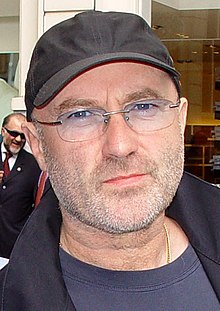 Among all the “cool,” snarky kids writing about the “bad” music of the 1980s, the oeuvre of Phil Collins often shows up. In The Worst Rock ‘n Roll Records of All Time (1991), Collins appears with Paul McCartney and Duran Duran as one of the worst artists. Only Billy Joel fared worse. There are lots of truly horrific artists in the decade. Yet Phil bashing became de rigeur.
 The Saturday night after the inauguration, I decided to view some recordings of Who Wants To Be A Millionaire. I had watched the January 3 episode, which ended with Amanda Peet in the middle of a game. Since it recorded automatically, I didn’t notice that there were three episodes on January 6. Well, ostensibly.
 Sound of Metal is a