ARA: The way my mind works

The hardest Presidents to remember were Taylor, Fillmore and Pierce, which sounds like a law firm

CHRIS: Ooo, what does the infinity symbol symbolize?

Gee, I thought it was a sidewards eight.

Good on you with the presidents’ thing. The three presidents in one year has happened twice and three in two years but more than one year happened once (by my count using http://en.wikipedia.org/wiki/List_of_Presidents_of_the_United_States), none of which I knew before the discussion came up.

Three in one year was 1841 and 1881, that’s correct. Hadn’t thought about three in two years, but that would be 1849-1850, with Polk, Taylor and Fillmore.

Which brings me to my next question: how do you learn so many random things? Did you, for example, set out to memorize all the presidents and the years? Or does your brain do that “naturally”?

After minutes of self-psychoanalysis, this is what I’ve concluded

1) As a child, I had the foolish notion that should know all the knowable things in the universe.

2) To that end, I used to read encyclopedias – the Americana as a child – dictionaries, and especially the World Almanac, which I have received for Christmas almost every year since I was nine or ten.

3) Realizing at some point that “all the knowable things in the universe” a) was impossible to know and b) was not interesting to me, I tended to concentrate on things like sports (Willie Mays hit .211 in his last season, with the New York Mets), and American history and politics.

4) My specific interest in Presidents, and the Constitution, now that I think about it, probably came from the trauma of the assassination of JFK. “Oh, no, what happens now?” Oh, they have a contingency plan for that! (I’m not sure I could have told you we HAD a Vice-President on November 21, 1963, when I was 10 and a half, let alone that Lyndon Johnson was that guy.)

5) Even more specifically, when JFK was killed, there were all these coincidences with Lincoln that showed up in the newspaper – oh, I used to read the newspaper even then:
a) Lincoln was elected in 1860, JFK in 1960
b) both had Vice-Presidents named Johnson
c) Lincoln reportedly had a secretary named Kennedy, and Kennedy a secretary named Lincoln (I never confirmed that, BTW)

6) This got me thinking about all those previous “accidental Presidents,” starting with Tyler, then Fillmore, A. Johnson, Arthur, T. Roosevelt, Coolidge, and Truman. So it was a small step to get all their dates in order. The hardest ones to remember were Taylor, Fillmore and Pierce, which sounds like a law firm. My daughter tests me regularly with weird stuff like “Who’s the 27th President?” I don’t know, but I remember Cleveland was the 22nd AND the 24th, so I get to Taft soon enough.

7) It seemed a natural progression to start reading the Constitution. (Sidebar: I got to talk to another Chinese delegation at work on the 5th of July. I just happened to come across a box of booklets with the Declaration of Independence and the Constitution, that I found while sorting things in the attic, so I gave them copies. I also gave a copy to a guy on the bus I know in the context of what the Supreme Court’s June decision on the Defense of Marriage Act did, and did not do.)

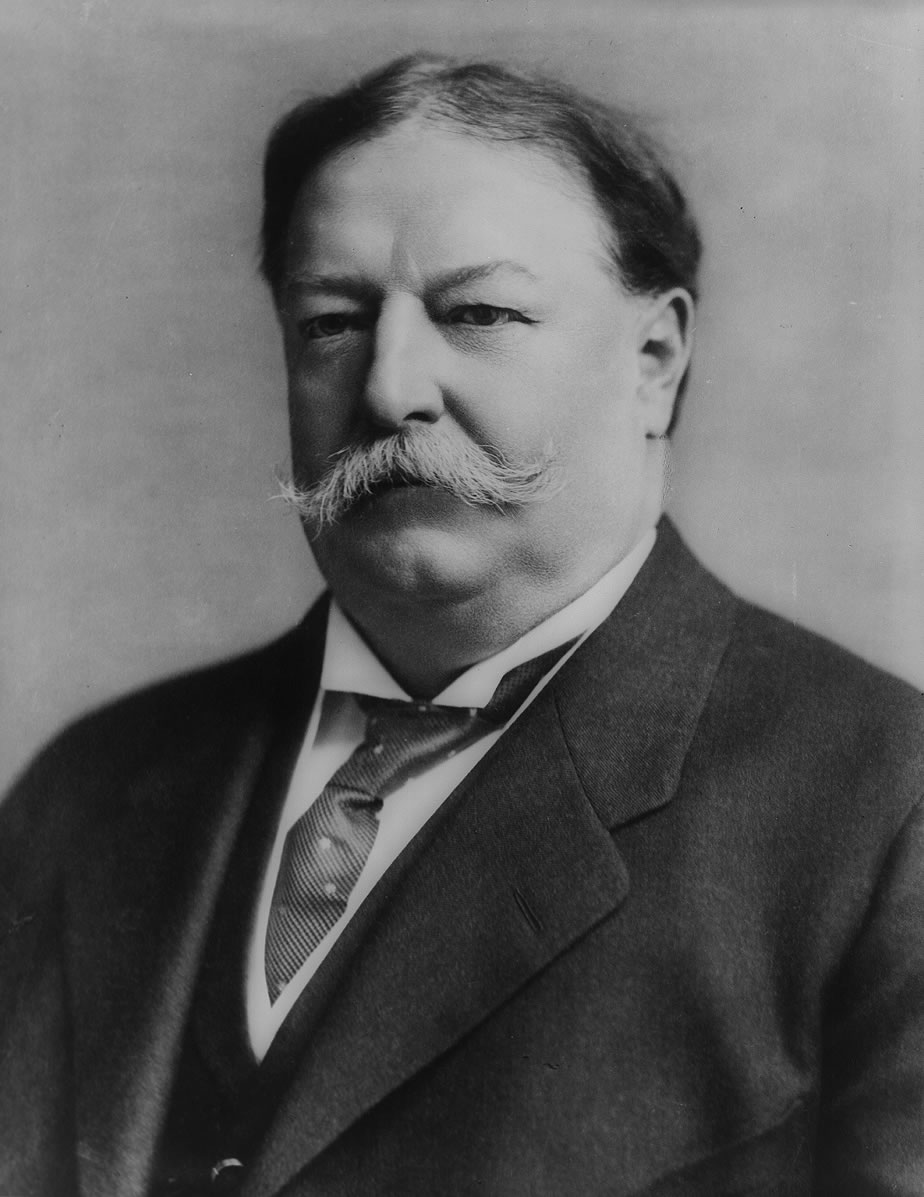
8) Of course, the interpretation of the Constitution came from the Supreme Court, and in the 1960s, the Court was dealing with a lot of significant issues involving freedom of the press, the rights of defendants in criminal trials, and civil rights. I could not have cited, e.g. New York Times v. Sullivan (1964) or Gideon v. Wainwright (1962) or Loving v. Virginia (1967), but I believe I was more aware of their implication than most of my classmates at the time. (Hey, speaking of Taft, which I did a couple of paragraphs back, did you know he became Chief Justice of the Supreme Court? Or that he’s the guy pictured?)

9) Conversely, there are plenty of things I DON’T know, starting with the makes and models of automobiles. I recognized a ’66 Ford Mustang recently, but in general, cars have two doors or four and are cars or those larger things (SUVs, minivans). All midsize silver-gray cars look the same to me.

 

Movie review: 20 Feet From Stardom

Merry Clayton sings on Lynyrd Skynyrd’s “Sweet Home Alabama”; juxtapose that with her cover of Neil Young’s “Southern Man.”

It pretty much starts off with Lou Reed’s “Walk on the Wild Side”: “And the colored girls go do doo doo, do doo …”. The movie 20 Feet From Stardom is an exceptional documentary about the generally ignored, unknown, but tremendous backup singers, often black women, who perform on some of the biggest hit songs and albums of all time.

Meet Darlene Love, Lisa Fischer, Merry Clayton, Tata Vega, Claudia Lennear, and Judith Hill, most of whom are or were figuring out whether they had the egos necessary to be solo artists, or whether the craft they engaged in, making the star performer look good, was good enough. Love, who was thwarted commercially by producer Phil Spector more than once, was cleaning houses when she heard one of her own songs on the radio and had to come back as a singer. Listening to Clayton’s voice on the Rolling Stones’ Gimme Shelter, bare without the instrumentation, is chilling.

There is some insight from folks such as Bruce Springsteen, Sting, Stevie Wonder, Mick Jagger, and music producer Lou Adler, among others. We also hear wisdom from former Raelette (background singer for Ray Charles) Mabel John, who has a second career. The film touches briefly on some of the folks who were background vocalists and became stars, such as Luther Vandross.

A couple highlights for me: the segment on Clayton’s role in Lynyrd Skynyrd’s “Sweet Home Alabama”, especially juxtaposed with her cover of Neil Young’s “Southern Man,” the latter of which is on the soundtrack album for the film. Also on there is Love’s cover of Bill Withers, appropriately with three of the background singers we had already seen in the movie.

How shall I put this? If you have enjoyed the popular music of the past six decades, see 20 Feet from Stardom, if you can. There were only a dozen people at the Spectrum in Albany when my wife and I saw it Thursday night. Certainly catch it on video, because it’s quite likely NOT playing at a theater near you.

The “Slow Audience Participation” movement

Exasperated, I turned around, said nothing since that would have been likewise disruptive, but gave that universal palms-up symbol for, “Will you please shut up?”

The Wife and I saw Les Miserables at Proctors Theatre in Schenectady a couple of months ago, and it was as marvelous as the reviews in the Times Union and Metroland suggested. I had never seen any stage production of Les Miz before. Though I didn’t love the movie adaptation, we were both glad to have seen it so we would better understand the plot.

Here’s what I didn’t like: During that last, very stirring, song, six or eight people got up and left, which I found really distracting, especially since they were seated near the front and in the middle section. If they were so worried about getting home, they should have left at intermission to beat the crowds. I’d never seen that particular behavior before.

It wasn’t the only annoying activity during the performance. Someone, two or three seats from us kept turning on his mobile device. I don’t know if he was texting or just checking the time; no one of his generation seems to know what a watch is. I’ve seen similar behavior at the movie theaters, even the tony Spectrum Theatre in Albany. Even someone using their device on the opposite aisle and two rows up I will notice because the illumination distracts me from the film.

At the end of Billy Elliot at Proctors in June, the lead leaves the stage via an aisle on the theater. When he makes his return, he’s literally bumping into folks getting ready to leave. (I was so annoyed.)

Some folks at the Albany Symphony Orchestra at least wait for the final note before they rush off. Likewise, moviegoers depart when the credits come up, even when a bit of the movie is still going on, such as in Hope Springs and Bernie.

I was at a conference at the end of April, and two guys were talking through the introduction of the speaker, and even when the speaker began. Exasperated, I turned around, said nothing since that would have been likewise disruptive, but gave that universal palms-up symbol for, “Will you please shut up?”

Apparently, even Broadway audiences are not immune to bad behavior.

The slow food movement>was designed so that people could ENJOY eating more, by eschewing fast food, processed products cooked in the microwave, and the like. Not only is it healthier, but it’s also more enjoyable to be part of the process.

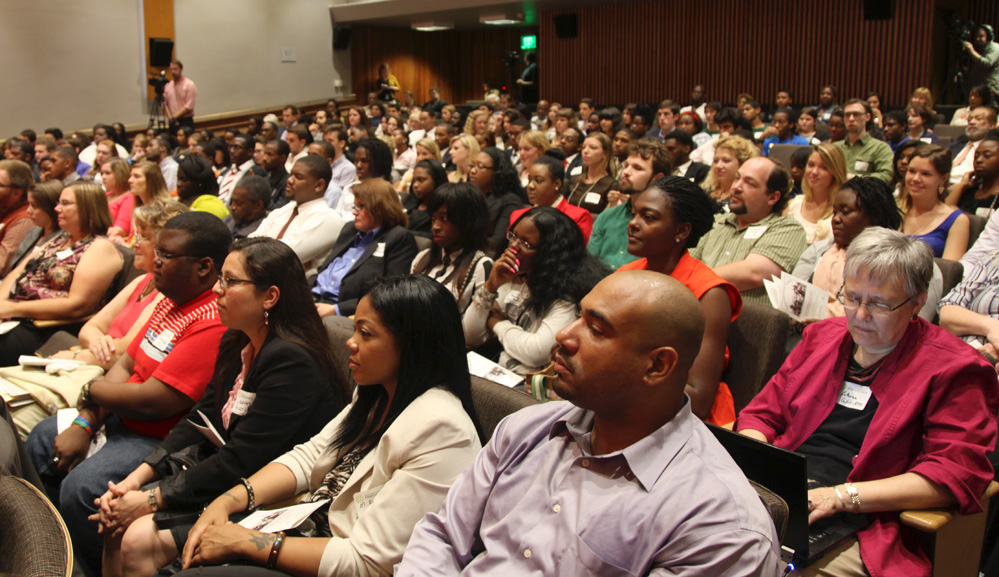
In a similar mode, I’m suggesting a “slow audience response” movement. Please stop talking when the speaker/movie/concert starts, and wait for the event to actually end before fumbling with your keys. You may actually enjoy it better if you are “present” at the event, rather than treating it as one more thing to check off the to-do list. I KNOW your fellow audience members will appreciate it.
***
The Muppets of Sesame Street tell you how to watch a movie…


ARA: Eddie asks about food

The day I got married to Carol, I rode my bike to Friendly’s on Delaware Avenue in Albany for breakfast.

Dolly Madison Raspberry Zingers

A couple of weeks ago, Eddie, the Renaissance Geek, who has been one of the bloggers I have been following the longest, asked a series of questions.

What’s your favorite vegetable?

Spinach, no lie. It was one of the few vegetables I would eat as a child, along with peas, corn, green beans, and carrots. In the day, it was all canned. Fairly recently (2013, maybe for my birthday), The Wife bought a can of spinach; it was AWFUL! Fresh, preferably; frozen, if necessary.

Yes, I was heavily influenced by Popeye, who was featured on some local afternoon kiddie shows on WNBF-TV, Channel 12 in Binghamton, on which I appeared a few times.

Your preferred comfort food?

Boring, I know, but it’s mac and cheese. When I was in college, I might put a can of tuna fish in. BTW, in those days, a can of tuna was a lot bigger. Occasionally, I’d put in some cooked ground beef.

Do you ever eat a bowl of cereal just because you want one?

I mean, and why not?! I’ve blogged about cereal here, FCOL, complaining that people were too busy to eat cereal, which I think is absurd. Also blogged specifically about mixing cereals here.

What is your junk food weakness–the one you cautiously indulge because it would be too easy to go overboard with it?

Raspberry Zingers. Of all those junk-filled cakes, it wasn’t Twinkies or those chocolate things, it was the combination of coconut and faux fruit. There are knockoff brands, but none are as good as Dolly Madison.

Finally, what was your favorite, but now defunct, local restaurant?

I guess I’ll say Friendly’s. It’s not defunct, but it’s no longer in the city of Albany, or indeed in Albany County. The day I got married to Carol, I rode my bike to Friendly’s on Delaware Avenue in Albany for breakfast, a structure that’s been closed for years, and nothing’s been done with it. More recently, the restaurant on Central Avenue, which always took great care about The Daughter’s peanut allergy, disappeared, oddly only months after the building was rehabbed. The location on Wolf Road in Colonie also disappeared.

Going to the suburb of East Greenbush (which we did once) or the neighboring city of Troy (which I went to for the very first time just last week) is not the same, in terms of convenience.

I suppose it’s also that I am peevish that we had purchased some discounted coupons from our local restaurant, which closed the VERY NEXT WEEK!

By the way, the food questions come because I have chemo on Tuesday and my eating will be all screwed up for the rest of the week.

And you KNOW I wish you nothing but the best, Eddie!

Z is for Zone

Those of us in the northeast US felt pretty secure about avoiding the remnants of hurricanes until Irene and Lee in 2011 and Sandy in 2012 roared through.

I came across this article: Alaskan villages try “climigration” in the face of climate change. The subhead is “When a town turns to a perpetual disaster area, it might be time to move it.”

I was thinking about this in following the Oklahoma tornadoes in May; the picture is from the aftermath. How DOES one live in a tornado alley? There was an intense storm in Moore, Oklahoma in 1999, after all. There have been a few articles about why there are few underground shelters in the area; Dustbury linked to one.

This led me to muse on other disasters; repeated flooding on parts of the Mississippi River, e.g. A couple of towns, I’ve read, moved to a safety zone several miles away from the river, but others get sandbags together for a near-annual threat of the town being swallowed up.

I recall after Hurricane Katrina in 2005, there was lots of chatter about someone who could be so crazy to build a city, New Orleans, that actually below sea level. It’s a major port, that’s why, and the government is building walls that – likely – will protect it from another storm.

Wildfires and earthquakes and the occasional avalanche in the western US, hurricanes in the southeast. What is the zone one can go to that is immune to the ravages of Mother Nature? Those of us in the northeast US felt pretty secure about avoiding the remnants of hurricanes until Irene and Lee in 2011 and Sandy in 2012 roared through. Sandy made a left turn; it’s not supposed to do that! The American meteorological models didn’t even predict that path, though the European models did.

So where in your country, or part of the country, are the danger zones, the safety zones? Of course, one cannot be 100% safe anywhere, but there are greater and lesser risks.

I’m still convinced that my locale in upstate New York is still a relatively safe zone to live in. That IS subject to change…

ABC Wednesday – Round 12

Ramblin' with Roger
Social media & sharing icons powered by UltimatelySocial