W is for Weddings

It appears that heterosexual marriage is doing a bang-up job of imperiling heterosexual marriage.


In November 2010, Pew Research reported that about half of all adults in the U.S. are married, down from 72 percent in 1960, while four in 10 people consider marriage obsolete. The Census Bureau added that American men and women are waiting longer before the wedding.

But from the Time magazine story concerning that Pew poll: “Americans still venerate marriage enough to want to try it. About 70% of us have been married at least once, according to the 2010 Census. The Pew poll found that although 44% of Americans under 30 believe marriage is heading for extinction, only 5% of those in that age group do not want to try to seek their own wedded bliss.

Sociologists note that Americans have a rate of marriage — and of remarriage — among the highest in the Western world.

The divorce rate, while down from its peak in the l970s, is higher in America than in most other countries. (And what IS the real divorce rate in the US?)

So I am filled with a cross between bemusement and incredulity at the notion, suggested by some, that the prospect of legalized gay marriages, or even civil unions, poses some sort of threat to heterosexual wedlock. It appears that heterosexual marriage is doing a bang-up job of imperiling heterosexual marriage.

(Arthur links here and here regarding his home state of Illinois’ new civil union law.)

Not incidentally, I got a form letter from my annuity company quite recently, adding the following proviso to my certificate:
“Pursuant to Section 3 of the federal Defense of Marriage Act (“DOMA”), same-sex marriages currently are not recognized for purposes of federal law. Therefore, the favorable income-deferral options afforded by federal tax law to an opposite-sex spouse under Internal Revenue Code sections 72(s) and 401(a)(9) are currently NOT available to a same-sex spouse.”

So even in those states allowing same-sex marriages, those couples won’t be fully equal until DOMA is repealed.

Oh, BTW, you may be wondering whose wedding this is. It’s the nuptials for the Pakistani couple I mentioned a couple of months ago, which took place on Labor Day weekend. My daughter was in the wedding, but I pulled her photos solely for the purpose of posting them on December 26; I always write about Lydia on the 26th of the month.

ABC Wednesday – Round 7

V is for Victor and Voice

I wonder if she knew about REAL kitsch, and a REALLY big dog.


The story of Nipper is rather interesting, involving struggling artist Francis Barraud, and his by-then deceased dog, which had previously belonged to his brother. The painting was originally called “Dog looking at and listening to a Phonograph”; only later would it be dubbed “His Master’s VOICE”. Through a series of transactions, as described here, Nipper became the trademark of the VICTOR Talking Machine Company. The original 1900 trademark is shown below.


Ultimately, the logo was on a wealth of RCA Victor records. RCA Victor put out an 80th anniversary series of albums in 1997. The earliest album represented a period when “Victor was the leading jazz label.” But I associate RCA V with classical music, often played by the RCA Victor Symphony Orchestra. RCA Victor was always a technological pioneer, experimenting with 33 1/3 RPM as far back as 1934, and introducing the 45 RPM in 1949.

When a Long Island photographer recently described a local Nipper as “a big kitschy dog”, I wonder if she knew about REAL kitsch and a REALLY big dog:

From Wikipedia: “A huge, four-ton Nipper can be seen on the roof of the old RTA (former RCA distributor) building on Broadway in Albany, New York.” It is likely the largest extant Nipper in the world, though the Baltimore Nipper DOES include “a gramophone for Nipper to listen to.” More details about Albany’s Nipper, a local landmark that I see every weekday on my way to work, can be found here.

Local musician Greg Haymes, a/k/a Sarge Blotto from the legendary Albany band Blotto, has a blog with Sara Ayers called Nippertown, where they run down the current happenings in and around New York State’s capital city. And guess what appears in the logo?


ABC Wednesday – Round 7

U is for the United Nations

Would an American presence have help the world avoid WWII?


The United Nations turned 65 years old on 24 October 2010. Representatives of 92 nations met in San Francisco, CA USA just after the conclusion of the European theater portion of World War II, even before the end of the war in the Pacific theater to come up with a document.

I must admit to being a bit of a UN addict. I know all of the former Secretaries-General and their nations, as well as the current one; I’ve been to the Dag Hammarskjold Plaza more than once – usually at a protest of some sort – and the Swede’s death in 1961 was one of the first things I remember external to my life. When the UN is a topic on a game show, as it was recently on JEOPARDY!, I generally do well.

UNICEF

For as long as I can remember, there has been a coterie of Americans that have wanted the nation to get out of the United Nations. Ostensibly, it was because the UN is limited in what it can do in achieving peace. Even if that is partially true, it is hardly the totality of the organization’s mission, which includes addressing issues of health, climate change, human rights, the role of women, and much more.

Probably the UN organ best known in the US is UNICEF, which addresses, among many other things, AIDS, cholera in Haiti, and malnutrition in flooded sections of Pakistan.

When I was younger, I couldn’t help but recall that the US, despite President Woodrow Wilson’s efforts, balked at joining the UN’s predecessor, the League of Nations; would an American presence have help the world avoid WWII? Perhaps, I thought, perhaps naively, if the US were to have called for a less punitive attitude toward the failed German state.

I suspect that some of the UN naysayers are convinced that the United Nations is the vehicle by which the Apocalypse, presumably described in the Biblical book of Revelation, will take place. While the previous link provided doesn’t specifically mention the UN, this one does. Frankly, I find it unlikely, if only because the organization just doesn’t work in concert as well as the New Testament reading would require.

DC Comics PSA: Gifts to the United Nations! (December 1956).

In honor of the upcoming summer solstice in the Southern Hemisphere, three versions of a song that mentions the United Nations, Summertime Blues:
Eddie Cochran
Blue Cheer
The Who

ABC Wednesday – Round 7

T is for Thirty-Three and a Third

I put my LPs in full order in 2010, for the first time since we moved into our house in 2000.

As you may be aware, sales of physical manifestations of music have been dropping like a stone, in favor of digital forms. The Record Industry Association of America notes that from 2007 to 2009, the sale of digital music (i.e., downloads) grew from 23% to 34% to 41% of the market in the United States.

Yet the statistics also reveal a countervailing trend. The sale of long-playing, and extended play records (LPs and EPs), made from vinyl, has INCREASED over the same period, from 1.3 million units to 2.9 million to 3.2 million. These are minuscule numbers compared with the hundreds of millions of albums sold annually in the LP’s heyday in the 1960s through the early 1980s when compact discs were introduced. Still, it’s an interesting phenomenon.

Here are the Top Ten Selling Vinyl Albums of 2009:
#01 The Beatles – Abbey Road – 34,800 (#2 in ’08)
#02 Michael Jackson – Thriller – 29,800
#03 Animal Collective – Merriweather Post Pavilion – 14,000
#04 Wilco – Wilco – 13,200
#05 Fleet Foxes – Fleet Foxes – 12,700 (#8 in ’08)
#06 Pearl Jam – Backspacer – 12,500
#07 Grizzly Bear – Veckatimest – 11,600
#08 Guns N’ Roses – Appetite for Destruction – 11,500
#09 Dave Matthews Band – Big Whiskey… – 11,500
#10 Radiohead – In Rainbows – 11,400 (#1 in ’08)
Notice that big names such as The Beatles, Michael Jackson, and Radiohead share the pantheon with more obscure groups such as Fleet Foxes and Grizzly Bear.

And this is not solely an American phenomenon. Vinyl is also enjoying a renaissance in Great Britain as well.

Personally, I haven’t purchased vinyl since about 1989, a Ray Charles greatest hits album. The forces promulgating CDs made it too difficult for me to pass up the shiny objects by putting on an extra cut on the CD not present on the LP, e.g., Murder by Numbers on Synchronicity by the Police and This Is the Picture (Excellent Birds) on So by Peter Gabriel.

Yet I never gave up my vinyl. And when friends of mine did decide to get rid of their 12″ platters, they often gave them to me. I put my LPs in full order in 2010, for the first time since we moved into our house in 2000. I’ve discovered that I now have developed my collection of Frank Sinatra and Barbra Streisand, e.g. It’s also why I currently own multiple copies of Fragile by Yes; Deja Vu by Crosby, Stills, Nash, and Young, and of course, Tapestry by Carole King, the longest-charting album by a female solo artist.

I think I’ll hold my LPs for a while. Some of them have tracks that I haven’t found anywhere. Maybe one day I’ll get one of those machines that turns vinyl into digital. Meanwhile, I’m enjoying playing my vinyl, looking at artwork that’s about six times the size of what you’d find on a CD.

(It suddenly occurred to me that younger readers may not understand the title. LPs are played on record players at 33 1/3 revolutions per minute, as opposed to singles, which are 45 RPM, and earlier vinyl recordings, which were 78 RPM.)

ABC Wednesday – Round 7


S is for Sorry…and Second Chances

How DO we give someone a second chance after an apology?

An interesting article in the Wall Street Journal recently: I’m Very, Very, Very Sorry … Really? We Apologize More to Strangers Than Family, and Why Women Ask for Forgiveness More by ELIZABETH BERNSTEIN. Fascinating stuff. Also intriguing is this graphic indicating the hierarchy of apologies, from most to least effective.

There was a sidebar called “Saying ‘I’m Sorry'” which declares, “A ‘comprehensive’ apology is more likely to win forgiveness, researchers say. There are eight elements,” according to the University of Waterloo:
Remorse
Acceptance of responsibility
Admission of wrongdoing
Acknowledgment of harm
Promise to behave better
Request for forgiveness
Offer of repair
Explanation

Probably the apology I hate the most is the one that goes, “I’m sorry if you’re feeling bad,” (or whatever) as though it is MY fault that THEIR inappropriate behavior bothered me. In general, a bad apology – usually followed by the sentence, “Let’s move on” – is about as bad as no apology at all.

So how DO we give someone a second chance after an apology? I think about this, a lot.


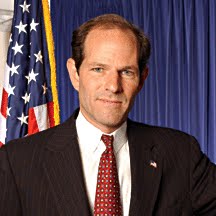
Eliot Spitzer was governor of New York State. As state Attorney General and as governor, he slept with expensive call girls; he was designated as “Client 9.” He had to resign as governor, not because he cheated on his wife, but because the “sheriff of Wall Street” was a hypocrite, prosecuting the very laws he was breaking. They’ve even made a movie called “Client 9”: The Eliot Spitzer case: How we were bamboozled. “An intriguing new movie dissects the thicket of money, lies, and rumors around the governor’s downfall.” Now he has a TV news show with Kathleen Parker. Should he be given a second chance? I say: Yes. He apologized and lost his office. And from sources I trust, he is good at what he does.


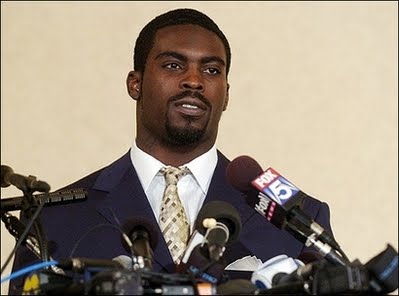
Michael Vick was the very talented quarterback of the Atlanta Falcons in the National Football League. “In April 2007, Vick was implicated in an illegal interstate dogfighting ring that had operated over five years [some of it on property he owned]. In August 2007, he pleaded guilty to federal felony charges and served 21 months in prison, followed by two months in home confinement.” He has subsequently: filed for bankruptcy, and has been picked up as the Philadelphia Eagles’ backup quarterback, playing as the starter (when healthy) after the Eagles traded former starter, Donovan McNabb, to Washington. Should he be given a second chance? I say: Yes. He has also been mandated to be involved in making others aware of the wrongness of animal cruelty.

I’m sure there are other examples, such as actor Mel Gibson, who got booted from the movie The Hangover 2 because of several incidents, some involving him seeming to threaten the mother of his youngest child, that you can discuss. From a purely business decision, they might have thought Gibson would have been box office poison.

What do YOU think, about these and any other examples you can think of?

ABC Wednesday – Round 7

Social media & sharing icons powered by UltimatelySocial