Loss Leaders Revisited by Dustbury

Charles G. Hill

Dustbury was the nom de plume of one Charles G. Hill of Oklahoma. He was an old-school blogger, going back to at least the mid-1990s, as I noted here. Most unfortunately, he died as a result of an automobile accident in early September 2019.

I had decided to retrieve parts of his page. Specifically, I was fascinated by his encyclopedic analysis of the Warner Brothers Loss Leaders, which ran from the late 1960s to the early 1980s, which I discussed, but it slipped my mind. Then I discovered that some other company had snatched the dustbury.com URL, an entity “preparing legal documentation.”    

Fortunately, the site is still on the Internet Archive, a/k/a the Wayback Machine.  Internet Archive is a non-profit library of millions of free texts, movies, software, music, websites, and more. Not incidentally, I’ve been donating a little bit of money to them each month.

So with Dustbury’s daughter’s permission, I want to capture pages he has, going back to 1996. I haven’t figured out the platform or the technology. So I thought I’d just post the one piece that led me to follow him. 

I own 31 of the 36 albums pictured.

Loss Leaders Revisited

In the early Sixties, no one would have mistaken Warner Bros. Records for anything other than a subsidiary of a Big Corporation trying to dip a toe into those confusing rock and roll waters. When the British began Invading, Warner’s big signing was Petula Clark. (Sister label Reprise, a long way from its Rat Pack origins, managed to snag the Kinks.) The Warners roster was solid, but nothing you’d accuse of being hip.

But by the early Seventies, Warner Bros. and Reprise had become the unofficial arbiters of musical taste. The roster included acts ranging from the Association to Frank Zappa, a level of diversity unheard of in a mid-sized record company. (The Warner Communications juggernaut, later to be part of the Time Warner behemoth and ultimately absorbed by AOL, was still in its formative period: Atlantic had been acquired in the late Sixties, Elektra in 1970, but there was little synergy among the labels, which were still operated as separate companies, a situation which hasn’t changed much today.)

The happy state of affairs at Warner/Reprise was mostly due to the willingness of Mo Ostin and Joe Smith, heads of the labels, to sign acts they thought would make a difference; however, merely signing acts does not guarantee they’ll get a hearing, and with Top 40 in decline and MTV still unimagined, it was necessary to do something more.

The beginning

“Something more” appeared in a two-LP gatefold cover in the spring of 1969, and this is what the first page had to say:

What we have here, to be out front about it, are some of our favorite records by 23 of the artists currently recording for Warner Bros.-Seven Arts and Reprise Records. We have put this double album together not only for our own enjoyment — since it includes worthy singles that never made it commercially as well as tracks from current albums — but hopefully to win new friends for some very creative people.

The Sinatras, the Dean Martins, the Pet Clarks have their own songbooks. This one is for those of you who may never have heard of Van Morrison but remember “Brown Eyed Girl”. Who are interested to know that Jethro Tull and The Pentangle are both outselling Sammy Davis, Jr. Who dig The Mothers of Invention and are wondering what Frank Zappa is up to now.

And so, with this modest manifesto, The 1969 Warner/Reprise Songbook opens. Wild Man Fischer, recorded live on the Sunset Strip, hawks “Songs for Sale”, which segues nicely into “My Sunday Feeling”, off Jethro Tull’s This Was album. On the way to the last track — Miriam Makeba’s version of Dylan’s “I Shall Be Released” — you’ll hear from everyone from the Beau Brummels to Randy Newman to the Fugs. Around an hour and a half of the finest Burbank had to offer, for the ridiculously low price of $2, by mail only from Warner Bros. And not even “plus shipping”.

So it began

The Songbook was a success, and Warner followed it up with The 1969 Warner/Reprise Record Show, or Son of Songbook. From then on, there were at least two samplers a year from Burbank through the Seventies and into the early Eighties, until the series finally petered out. Early on, the liner notes, the sort of thing usually done to perfection at Warners by VP Stan Cornyn, were uncredited. Eventually, the job of compilation and annotation was turned over to eminent musicologist Barry Hansen, a.k.a. Dr. Demento, who presided over most of the Seventies releases. The albums were advertised on the inner sleeves of almost all Warner/Reprise albums, and some of the advertising material is rather demented in its own right. A sleeve from 1971, by which time there had been half a dozen officially-designated Loss Leaders, proclaimed the following:

The pitch

These Warner/Reprise specials are full stereo, double albums in deluxe packaging. The double albums ($2 for two records) average about 28 selections, each of them is filled with the best of the artists’ work, plus some extra collectors’ items (like unreleased singles, even an Ice Capades commercial by our Van Dyke Parks).

You can’t buy these albums in a store; they are available only by mail, for the ridiculously low price of $2 for the doubles, $1 for Zappéd, and $3 for the deluxe three-record set, Looney Tunes & Merrie Melodies.

We can get away with that low price because these celebrated artists and this benevolent record company have agreed not to make a profit on this venture. We (and they) feel it’s more important that these samples of musical joy be heard.

If you’re as suspicious of big record companies as we feel you have every right to be, we avert your qualms with the following High Truths:

This is new stuff, NOT old tracks dredged out of our Dead Dogs files. If our Accounting Department were running the company, they’d charge you $9.96 for each double album. But they’re not. Yet.

We are not 100 per cent benevolent. It’s our fervent hope that you, Dear Consumer, will be encouraged to pick up more of what you hear on these special albums at regular retail prices.

That you haven’t heard much of this material we hold obvious. Over 8000 new albums glut the market (and airwaves) each year. Some of our Best Stuff has to get overlooked. Or underheard. Underbought. Thus, we’re trying to get right to you Phonograph Lovers, bypassing the middle man.

Each album is divinely packaged, having been designed at no little expense by our latently talented Art Department.

Changing times

Warners kept on putting out Loss Leaders through the Seventies and into the early Eighties, despite rising costs — frills were eliminated along the way, and the last couple of albums went out the door at $3 for two discs. Did the Accounting Department finally start running the record company after all those years? Not really. What ultimately killed off the Loss Leaders, it appears, was that what had been “alternative” in the Songbook days eventually became the musical mainstream itself, which left the series without much raison d’être. Warners’ Stan Cornyn explained it to me this way:

“[I]t was an idea whose time had gone. James Taylor was on the cover of Time, the underground had risen, and if we’d been righteous, we’d be trying to re-introduce artists who’d been left in the dust, whose careers were overshadowed by the new guys with long hair and sideburns.”

In other words, the Sinatras, the Dean Martins, the Pet Clarks. What goes around indeed comes around.

I remember them fondly!

Still, I’d suggest, based simply on how much they got me to spend, the Loss Leaders must have been one of the most successful music-industry promotions of all time, and while I don’t have the complete series on my shelf just yet, I do have a fairly detailed list of the discs I do have, along with updates from the field and cover art where available.


Praise be unto Jeff Tamarkin for mentioning this little screed in Where the Interaction Is in the April 1997 issue of Discoveries magazine.

Much of the information from the Loss Leaders list is mirrored with permission by Audiogalaxy’s Power Pop group at http://home.clara.net/fil/rocksamplers/warner.htm.

Special thanks to Keith Hanlon, Larry Hooper, Peter and Darlene Morris, Terrence Michael Gabor, Tom Smith, Drew Shomer, and Mike Clarson, for contributions to the list beyond the call of duty, and to Stan Cornyn, who helped put it all into perspective.

Last update: 5 February 2007


Music Throwback: Good Day Sunshine

Redmond’s Good Day Sunshine was in the middle of three Beatles songs on COOK BOOK.


In the early 1990s, Paul McCartney appeared on Later with Bob Costas, a late night program on NBC-TV. The host asked Paul what Beatles covers that he most enjoyed. We Can Work It Out by Stevie Wonder was named, as well it should be.

Paul also mentioned Roy Redmond’s version of Good Day Sunshine, which he acknowledged was a rather obscure track. In fact, the ONLY reason I know it is because it appears on one of those Warner Brothers Loss Leaders that I collected in the 1970s. COOK BOOK, from 1977, focused “on Warner’s black acts,” which were negligible only a few years earlier.

This version was released as Loma 2075 way back in July 1967. The B-side of the single was That Old Time Feeling. Oddly, It would appear that Roy Redmond recorded two 45s – both on Loma… – and then, mysteriously, nothing more.

The other single, from April 1967, was Ain’t That Terrible/A Change Is Gonna Come. Yes, the latter is the Sam Cooke song.

“Loma Records was established in 1964 in order for Warner Brothers to capitalize on the emerging soul market – but almost exclusively as a singles label. Bob Krasnow, who ran the San Francisco branch of King Records from 1958-1964, was tapped by Warner Brothers to run Loma Records from its founding until the label ceased operations in 1968.”

Redmond’s Good Day Sunshine was in the middle of three Beatles songs on COOK BOOK, codifying yet again that the effect black music had on the Beatles was reciprocated.

Randy Crawford’s version of Don’t Let Me Down appears on her 1976 album Every Must Change. The Long and Winding Road was a 1976 B-side to a song called Hurry, Hurry by New Birth, “the Detroit band that helped invent American funk music.”

Listen to:

Don’t Let Me Down – Randy Crawford here or here

Good Day Sunshine – Roy Redmond here or here

The Long and Winding Road – New Birth here or here

Music Throwback Saturday: Cuba

“The mix of disco beats, Latin percussion, soulful vocals and a catchy tune propelled” Cuba by Gibson Brothers to #1 in several countries, but not the US.

gibson.bluegrassAs I have noted, I bought a lot of the Warner Brothers Loss Leaders all through the 1970s, where I would discover all sorts of eclectic music at two or three dollars for a double album (LP) set. There was always a track or three that I had to play repeatedly. My absolute favorite song on the 1979 A La Carte collection was a song by the Gibson Brothers.

No, not those Gibson Brothers, Eric, born October 23, 1970; Leigh, October 11, 1971, in Plattsburgh, NY. The bluegrass music mavens with tight-knit two-part harmonies started performing publicly in 1987 but didn’t really emerge until the following decade. They have been International Bluegrass Music Association Entertainer of the Year in 2012 and 2013.

gibson-brothers-585x400

THESE Gibson Brothers, the Latin sibling trio, Chris (lead vocals, percussion), Patrick (vocals, drums), and Alex (vocals, keyboards) are the ones I mean. They were all born in Martinique, West Indies, but were based in France when they recorded their first single “Come To America” in 1976,

Their only hit in the US was Cuba, and it’s only got to #81; it was #41 in the UK in 1979, but was re-released in 1980 and got to #12. “The mix of disco beats, Latin percussion, soulful vocals, and a catchy tune propelled the song to #1 in several countries, and earned them four gold records worldwide.”

They had further success in Europe with tunes such as “Ooh! What A Life”, “Que Sera Mi Vida” (which sold over 5 million copies worldwide), and “Mariana”, all of which went Top 11 in the UK. These Gibson Brothers have recorded as recently as 2014, and they continue to tour worldwide.

Of course, those WB albums are not easy to come by these days, so I was happy when the song Cuba appeared on the 2-CD set Island Story 1962-1987, along with an interesting mix of songs, so that others might get turned on to the tune. Unfortunately, that collection ALSO appears to be out of print, though one can buy it from dealers on Amazon.

Listen to Cuba HERE (3:22 running time). Listen to the extended play (c. 7:30) HERE or HERE.

W is for Warner Brothers Loss Leaders

Someone gave me this album after someone else died, saying he would have wanted me to have it.


Back in the 1970s, when I was a poor college student, I would occasionally indulge my desire to purchase a new record album. When I’d buy one of James Taylor or Bonnie Raitt or the Doobie Brothers or Seals and Crofts – yes, Seals and Crofts – the record would come with an inner sleeve that would promise an eclectic set of music, a double LP, for only $2, postpaid, from the Warner Brothers roster of artists; the single albums were just $1. Eventually, I was so intrigued that I bought one, liked it, then bought another, and another…so that, to this day, I still possess most of them.

Rather than describe all three dozen of them, 31 of which I own, I’ll refer you to this essay by Charles Hill and his roster of albums. Chaz also links to The 30 Days Out blog’s history of these discs.

I will make brief mention of some of the albums, highlighting my personal history or a notable track. The ones I do not own are in italics.

1969
THE 1969 WARNER/REPRISE SONGBOOK (Warner Bros. PRO 331)
Like several of the early albums, at least one side was dominated by Frank Zappa and his musical allies. But also featured the Everly Brothers. Eclectic.
THE 1969 WARNER/REPRISE RECORD SHOW (PRO 336)
Subtitled “Son of Songbook”, it has one EXTRAORDINARY soul ballad by Lorraine Ellison called Stay with Me. Read about it here and listen to it here.
OCTOBER 10, 1969 (PRO 351)
Chaz wrote: “A single-disc slipped into the mix while Warners was trying to decide if the doubles would sell.” By the time I was buying these albums, this disc was no longer listed.
1970

THE BIG BALL (PRO 358)
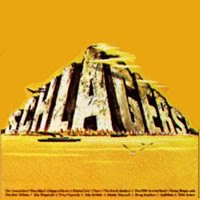
SCHLAGERS! (PRO 359)
Chaz: “Showcasing some Warners tracks that might conceivably get MOR airplay.” (MOR means Middle of the Road,” the title of a future package.)
ZAPPÉD (PRO 368)
“A single disc featuring acts on Frank Zappa’s Bizarre/Straight labels,” that I actually tried to order, but it must have been sold out.
LOONEY TUNES & MERRIE MELODIES (PRO 423)
The only triple-disc set in the series, which cost $3 in the day, but I never bought it. Someone gave me this album after someone else died, saying he would have wanted me to have it. Subsequently, I’ve lost the middle record, which contained Side 2 and Side 5. But I still have Side 6, which is an unusually spiritual, even religious platter. The last song: Turley Richards: I Heard the Voice of Jesus.

1971
NON-DAIRY CREAMER (PRO 443)
Another single disc, and one I never actually ordered. I may have requested Zapped and gotten this.
HOT PLATTERS (PRO 474)
TOGETHER (PRO 486)
The last of the single-disc samplers, and I have no idea how WB sent it to me since I never specifically ordered it.

1972
THE WHOLE BURBANK CATALOG (PRO 512)
“First set to credit Barry Hansen (Dr. Demento) for assemblage and annotation.” Not every subsequent album was annotated by him, but he was singularly entertaining when he did. Now, this was the point where the albums really became fun. There were radio spots for Sgt Preston of the Yukon or Inner Scantum inserted. Just before Arlo Guthrie’s Ukulele Lady, there’d be a snippet of a version recorded a half-century earlier.
MIDDLE OF THE ROAD (PRO 525)
“Just like it sounds.” Even features Frank Sinatra.
BURBANK (PRO 529)
Features the 57-second Voter Registration Rag by Arlo Guthrie, which I cannot find.
THE DAYS OF WINE AND VINYL (PRO 540)

1973
APPETIZERS (PRO 569)
Included Martin Mull: Licks off of Records.
ALL SINGING, ALL TALKING, ALL ROCKING (PRO 573)
“Features sound bites from Warner Bros. movies,” which made it probably my favorite album of the bunch.

1974

HARD GOODS (PRO 583)
This collection has at least two rarities: War Song by Neil Young and Graham Nash, which was on a B-side of a Young single, but then “unreleased in any other format until June 2009, when it was finally released…on a box set by Neil Young called The Archives Vol. 1 1963–1972.”
Immediately after that is The ’68 Nixon by Denver, Boise, and Johnson, which you can hear and read about here. Yes, the Denver is John Denver, who went on to some commercial success.
PEACHES (PRO 588)
“A compilation of tracks from the Georgia-based Capricorn label, then distributed by Warners,” which I don’t have and never saw offered until years later.
DEEP EAR (PRO 591, 1974)

1975
THE FORCE (PRO 596)
By this time, I was buying them as soon as I saw them advertised.
ALL MEAT (PRO 604)
“‘Not a speck of cereal,’ insists Frank Zappa.
PEACHES, VOL. 2 (PRO 605)
“A second collection from Capricorn Records, which I haven’t seen.”
I DIDN’T KNOW THEY STILL MADE RECORDS LIKE THIS (PRO 608)
“Back to the middle of the road.”
THE WORKS (PRO 610)
The rarity here was The Beach Boys: Child of Winter, which was a single that showed up in a Beach Boys collection more than two decades later.

1976
SUPERGROUP (PRO 630)
THE PEOPLE’S RECORD (PRO 645)

1977
COOK BOOK (PRO 660)
“Focusing on Warners’ black acts.” I have no idea how I got this album. I may have sent WB money and said “Anything else in the vaults?”
WB in the 1960s was not a label with lots of black artists. Someone quipped that their only soul artist was comedian Bill Cosby. But by the 1970s, the label made a concerted effort to change that. I must admit that I loved the fact that the album had a trio of Beatles covers in a row: Randy Crawford- Don’t Let Me Down; Roy Redmond- Good Day Sunshine, and New Birth- The Long and Winding Road.
LIMO (PRO 691)

1978
COLLECTUS INTERRUPTUS (PRO A-726)
“Twenty-Six Earbinding Songs of Unique Delight, Derring-Do, Heartbreak, Scandal, and Lurid Sensation”.
With Soft and Wet, probably the first Prince I owned.
PUMPING VINYL (PRO A-773)
As a musical eclectic, I tend to eschew labels. That’s why my favorite song in this collection is Funkadelic: Who Says a Funk Band Can’t Play Rock?

1979
A LA CARTE (PRO A-794)
The song I tended to overplay here was Gibson Brothers: Cuba
MONSTERS (PRO A-796)

1980

ECLIPSE (PRO 828)
“A new price: 2 LPs for $3.” Still a bargain.
MUSIC WITH 58 MUSICIANS, VOLUME 1 (PRO 850)
“Issued to mark the German jazz label ECM’s distribution deal with Warner Bros., this set, billed as ‘An International Array of Innovative Jazz Music and Performers,’… Roger Green found this one for me.”
Well, yeah, I did, actually. And Charles added me to his “beyond the call of duty” list. As far as I know, there was never a Volume 2.
TROUBLEMAKERS (PRO A-857)
“This is as punk as Burbank would get.”
Marianne Faithfull: Broken English.

1995
LOSS LEADERS REVISITED (PRO-CD-7955
“A limited-edition CD (3500 copies) with retro-cool; not properly a Loss Leader, since it was given away, but it caps the series with panache.”
I’d never heard of this until I read about it.

These are more underplayed vinyl, records I listened to a LOT in the day, but less since I got the first CD player. Still, I now have a turntable, so they can provide me with additional hours of pleasure.

ABC Wednesday – Round 8

Social media & sharing icons powered by UltimatelySocial