
Music throwback: Boredom by Procol Harum

Boredom shows up on the A Salty Dog album that came out in 1969.

In the 1970s, I owned a greatest hits album by Procol Harum, for some reason, on cassette. I don’t remember the title – there are so many of them! – but it ended with a live version of Conquistador. Eventually the tape wore out, as cassettes were wont to do, and I replaced it with a 2000 CD, imaginatively called Greatest Hits.

I was gobsmacked when I got to the song Boredom. I was unfamiliar with it, as it wasn’t on my cassette. The lyrics began:

Some say they will and some say they won’t
Some say they do and some say they don’t
Some say they shall and some say they shan’t
And some say they can and some say they can’t

Back in high school and early in my college days, I tried my hand at songwriting. I didn’t think they were very good, and I seldom shared them with anyone. I had them in a notebook which is now lost or at least misplaced.

One was called Inconsistent:

The most consistent thing about me
Is my inconsistency…

But here’s the chorus (or a variation thereof)

If you think I will, well, then I won’t
If you think I do, well, then I don’t
If you think I can, well, then I can’t
If you think I shall, well, then I shan’t

And it goes on from there. The very specific use of the word “shan’t” makes me think that I must have heard the song Boredom on some FM radio station late at night and inadvertently purloined it.

Boredom shows up on the A Salty Dog album that came out in 1969. Technically I DO own it now, since some friends of mine gave me their LPs when they were just holding on to their CDs, but I’ve actually never played it, apparently.

Listen to:

Boredom
A Salty Dog, arguably, my favorite PH song

And for good measure:
Conquistador, from the live album, which actually got to #16 on the US Billboard charts
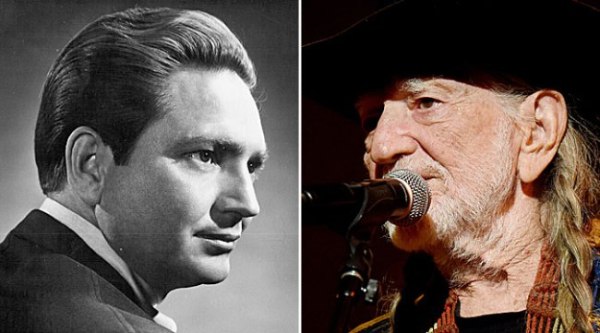
Willie Nelson turns 85 (April 29)

It features songs by Paul Simon, Ry Cooder, John Hiatt, Bob Dylan, Lyle Lovett, and Willie Nelson.

Long before I knew who Willie Nelson even was, I was listening to the music he wrote. Pretty Paper was a hit for Roy Orbison in 1963. On The Supremes Sing Country, Western & Pop (1965), they covered Funny How Time Slips Away.

Of course, the big hit was Crazy by Patsy Cline which went to #2 on the Adult Contemporary charts in 1961 and #2 on the country charts early the next year. More significantly for, it hit #9 on the pop charts in 1961, and was covered by Linda Ronstadt (#6 country in 1977).

I don’t know when I was first aware of Nelson as a performer. He was the “outlaw” country star who owed money to the IRS due to bad management and who got arrested several times for marijuana possession.

I do know the first album of his that I bought was Across the Borderline (1993), produced by Don Was, Paul Simon, and Roy Halee. It features songs by Simon, Ry Cooder, John Hiatt, Bob Dylan, Lyle Lovett, and Nelson. It features songs such as Getting Over You, a duet with Bonnie Raitt; and Peter Gabriel’s Don’t Give Up, a duet with Sinead O’Connor.

I thought that his 40th album would be a commercial pop breakthrough. For a while, it was out of print, but it’s currently available as an add-on from Amazon for five bucks.

Subsequently, I got other Nelson albums, including his hit, Red Headed Stranger (1975). I know at least one work colleague who simply cannot stand his voice, but I’ve grown to enjoy it.

Listen to

Crazy – Patsy Cline
Crazy – Willie Nelson
Crazy – Linda Ronstadt

Pretty Paper – Roy Orbison, #10 adult contemporary, #15 pop, #27 on the Christmas singles chart in 1963
Pretty Paper – Willie Nelson, 1964

Funny How Time Slips Away – Willie Nelson
Funny How Time Slips Away – Supremes

She’s Not for You, #43 country in 1965

Blue Eyes Crying in the Rain, #1 country, 21 pop in 1975

On the Road Again, #1 country, #7 adult contemporary, #20 pop in 1980

Always on My Mind, #1 country, #2 adult contemporary, #5 in 1985

Still is Still Moving to Me, single that failed to chart in 1993

American Tune, a duet with Simon, #70 pop in 1993

Something You Get Through, 2018

Coverville 1214: The Willie Nelson Cover Story III

Music throwback: Magnet and Steel

“I happened to be behind a metal flake blue Continental with ground effects and a diamond window in back.”

Nicks, Egan, Buckingham. 1977
Blasting from someone’s car radio last summer, I heard the familiar strains of Magnet and Steel by Walter Egan, a song from his Not Shy album. It reached #8 on the Billboard Hot 100 (US) and #9 in Canada. “It spent 22 weeks on the American charts.” It was featured in the movies Boogie Nights (1997), Overnight Delivery (1998) and Deuce Bigalow: Male Gigolo (1999).

I’m a sucker for tracks that serve as the title of the album but only via the lyrics. For instance, the Nirvana album Nevermind contains the hit Smells Like Teen Spirit, which features the word Nevermind.”

Likewise, Magnet and Steel has the lyric:
With you I’m not shy, to show the way I feel
With you I might try, my secrets to reveal
For you are a magnet and I am steel…

As is true of a lot of Fleetwood Mac-related songs, this has a complex story. From Songfacts, Egan explains:

“In 1976 I was living in Pomona, California and I had a notion to write a song with the ‘stroll’ beat… and so began the rough outline of what was tentatively called ‘Don’t Turn Away Now.’ Now, this was also at the time of putting together my first album, Fundamental Roll, and my two new friends and producers, Lindsey Buckingham and Stevie Nicks and I were starting the recording process.

“On the night when Stevie did the background vocals for my song ‘Tunnel o’ Love,’ my nascent amorous feelings toward her came into a sharper focus – I was smitten by the kitten, as they say. It was on my drive home at 3 AM from Van Nuys to Pomona that I happened to be behind a metal flake blue Continental with ground effects and a diamond window in back. I was inspired by the car’s license plate: “Not Shy.”

“By the time I pulled into my driveway I had formulated the lyrics and come up with the magnet metaphor. From there the song was finished in 15 minutes.

Egan and Nicks dated briefly when Nicks and Buckingham had broken up.

“It was especially satisfying to have Stevie sing on ‘Magnet,’ since it was about her (and me).”

Listen to Magnet and Steel:

Walter Egan here or here

Matthew Sweet here with Buckingham on guitar

Third World here

Music throwback: Flow Gently Sweet Afton

How’s your Scottish brogue when you recite it?

At the end of December 2017, the family was traveling to Afton, NY to meet with a couple dozen of our Olin relatives for lunch – or was it dinner? (this WAS a source of conversation) – when I asked my wife if she were singing Flow Gently Sweet Afton in her head, since I was.

She had no idea what I was talking about, not entirely unusual. This surprised me nevertheless because I’d known it since fourth grade. It was included on a book of tunes that our music teacher, Mrs. Joseph, had us singing from. I must admit it was an old book even then. (I swear I bought a replica of this book in the last decade, but I simply cannot find it.)

There appears to be no question that Robert Burns wrote the poem Sweet Afton. “There is a small river, Afton, that falls into the Nith, near New Cumnock [in Scotland], which has some charming, wild, romantic scenery on its banks.”

The first verse:

FLOW gently, sweet Afton, among thy green braes,
Flow gently, I ’ll sing thee a song in thy praise;
My Mary ’s asleep by thy murmuring stream,
Flow gently, sweet Afton, disturb not her dream.

And I’ve also heard it with a tune by William James Kirkpatrick from late in the 19th century. It is a hymn tune called Cradle Song, which is a variant tune to the Christmas hymn Away in the Manger.

Now I have no idea which version I originally learned because these three not dissimilar tunes are all blurring in my head. And there are other tunes which may predate Spilman.

I’m curious: are you familiar with the poem Flow gently sweet Afton? And how’s your Scottish brogue when you recite it? What tune do you associate with it?

Listen to Sweet Afton:

Jo Stafford

Nelson Eddy

a Livervox recording

accordion player named Glenn

Nickel Creek

Music throwback: The Rite of Spring

“The tumult began not long after the ballet’s opening notes — a meandering and eerily high-pitched bassoon solo that elicited laughter and derision from many in the audience.”

In November 2017, my wife and I were given tickets to the Albany Symphony Orchestra by friends who couldn’t use them. Coincidentally, another couple of friends were also given tickets.

The Rite of Spring by Igor Stravinsky was the piece played in the second half of the program. I used to play this music every vernal equinox. I fell out of the habit , but I don’t know why, as it’s one of my favorite pieces.

Andrew Appel’s review in the 20 November Times Union describes it well: “it requires that we listen to music in a way not demanded by any other work… Brutal energy, fragmented melodies, repeated rhythmical figures that are hard to define but impossible to ignore…”

Well, if you put it like THAT, no wonder The Rite of Spring incited a riot in a Paris theater premiere of the ballet in 1913.

“The tumult began not long after the ballet’s opening notes — a meandering and eerily high-pitched bassoon solo that elicited laughter and derision from many in the audience. The jeers became louder as the orchestra progressed into more cacophonous territory, with its pounding percussion and jarring rhythms escalating in tandem with the tensions inside the recently opened Théâtre des Champs-Élysées.”

As often as I listen to CDs and LPs and YouTube videos, there is something especially satisfying about hearing music in person. Even when a piece is familiar, and theoretically boring in the recording – think Ravel’s Bolero, which we also heard at the ASO a few seasons ago – it can really become vibrant in the live setting. After the performance of the Rite of Spring, conductor David Alan Miller rightly required about three-quarters of the orchestra, section by section, to take a bow.

So I loved it, my wife loved it. The guy who had gotten one of the other tickets did NOT love it, but I’m sure he did not riot.

Listen to The Rite of Spring:

Atlanta Symphony Orchestra conducted by Yoel Levi

London Symphony Orchestra – Leonard Bernstein, conductor

BBC Proms 2013 – François-Xavier Roth conducts, after 6-minute introduction

Social media & sharing icons powered by UltimatelySocial