The Twilight Man: Rod Serling and the Birth of TV

time well spent

Twilight ManI made my semiannual trek to my local comic book emporium, Earthworld Comics, this fall. On the shelf was a graphic novel The Twilight Man: Rod Serling and the Birth of Television by someone named Koren Shadmi. I perused it for about ten seconds and decided to buy.

The book, of course, is about the creator of the legendary television program the Twilight Zone. In my book collection is The Twilight Zone Companion, an episode guide. I only have two DVD sets of complete television series; one is The Twilight Zone.

And there is that time I met the Man. (I’ve mentioned that, right?)

I found The Twilight Man to be thoroughly reached. The book had about three dozen items in the bibliography. The art was quite decent. I read the 170-odd pages in a couple of hours, and it was time well spent. There were bits of Serling’s biography I did not know or had forgotten about.

Speaking ill of the dead?

From a three-star review in Amazon: “A lot of the information presented seemed very personal and came across as a bit off-putting knowing that this was written by someone after the person in question was already dead. I would hope much of this type of information came from interviews or people who knew Rod..”

Yes, there is nothing in The Twilight Man that was out of character or inconsistent with the books and articles that I had previously read. If you can find it, check out Rod Serling: The Dreams and Nightmares of Life in the Twilight Zone – a biography by Joel Engel.

About THAT book, I wrote: “The subject of the book was unable to be content with his life, believe his success, [or] be happy with his first writing critic, his wife Carol.” The Shadmi book shows Serling with those same insecurities.

I was motivated to buy The Twilight Man because 2019 is the 60th anniversary of the first broadcast of Twilight Zone. Christmas Day would also have been Rod’s 95th birthday, though he didn’t get anywhere near reaching it.

Videos

Tell It To Groucho with Rod Serling (April 2, 1962). Rod plugs an Italian singer, leaves, but then returns

I’ve Got A Secret – 1972

Jack Benny Program – TWILIGHT ZONE LOST EPISODE –

Garry Shandling would have been 70

Zen Diaries

Garry Shandling
per UCLA
In the 2016 article, Why Garry Shandling Was One of the Greatest Jewish Comedians Ever, Jason Diamond noted, “His persona was an anxiety-ridden, grimacing, guarded, confused man on the verge of losing control.” I think I related to that.

Though his two signature shows were initially on premium cable, I managed to see many episodes of each of them. It’s Garry Shandling’s Show, which he co-created with Alan Zweibel, ran from 1985 to 1990 on Showtime. The edited reruns started playing on FOX, which I watched regularly, starting in 1988.

Like The George Burns and Gracie Allen Show decades earlier, the series frequently broke the “fourth wall” and spoke directly to the audience There were 72 episodes, and it began with the intentionally silly theme.

No flipping

His experience as the frequent guest host of The Tonight Show Starring Johnny Carson led to his next series. “In 1992, Shandling launched another critical and commercial success by creating the mock behind-the-scenes talk show sitcom The Larry Sanders Show… It ran for 89 episodes… on HBO.”

It featured Jeffrey Tambor as sidekick Hank Kingsley, Wallace Langham as Phil, and the late Rip Torn, who died in July 2019, as Artie, “the foul-mouthed, dyspeptic talk show producer.”

I don’t think I subscribed to Home Box Office regularly, yet somehow I managed to view several episodes. The finale was titled “Flip,” a reference to Sanders saying to TV audience, “no flipping.” I watched it in a Boston hotel either the day I taped my JEOPARDY! episodes or the night before, in September 1998.

He even co-wrote with David Rensin Confessions of a Late Night Talk Show Host: The Autobiography of Larry Sanders in the voice of his alter-ego, published in 1999. Ken Levine wants you to meet comedian/writer Jeff Cesario– He was also a writer/producer on THE LARRY SANDERS SHOW.

Back when I used to watch those things, “Shandling hosted the Grammy Awards in 1990, 1991, 1993, and 1994. He hosted the Emmy Awards in 2000 and 2004 and co-hosted (giving the opening monologue) in 2003.

Dead at age 66

“Shandling suffered from hyperparathyroidism, a condition that can be fatal. On March 24, 2016, Shandling died at Saint John’s Health Center in Santa Monica, California at age 66… The autopsy showed that he died from a pulmonary embolism… On February 4, 2019, Shandling’s estate bestowed $15.2 million to benefit medical research at the David Geffen School of Medicine at UCLA.”

In The New Yorker, Naomi Fry describes Judd Apatow’s four-hour documentary for HBO, The Zen Diaries of Garry Shandling. Janis Hirsch briefly worked on the first series, where she had a less-than-positive experience. Nevertheless, she recommended the study.

Both Naomi Fry and Jason Diamond noted “the scene in the ‘Dead Dogs and Gym Teachers’ episode of ‘Freaks and Geeks.’ Specifically, the part where Martin Starr’s Bill comes home to an empty house, fixes himself a snack and watches one of Shandling’s sets…

“It’s the connection, those few moments removed from the real world that Bill gets, that makes that scene so easy to relate to. The lonely kid doesn’t feel so alone for a few minutes.” That was a gift of Garry Shandling for many, including his peers.

Garry Shandling would have been 70 on November 29.

Black people on television in 1968

Ruby Dee was on Peyton Place

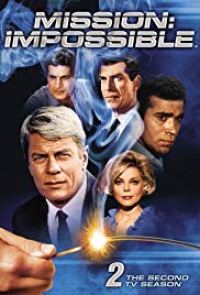
Mission ImpossibleAfter Diahann Carroll, star of the sitcom Julia (1968-1971) died in October 2019, I wondered how many black people on television were there in 1968.

I came across a list of all the American television shows with black actors in that pivotal year. It did not indicate the performers by name, but I could easily come up with:
Bill Cosby as tennis trainer/spy on I Spy (1965-1968), who won three Emmys for the role
Ivan Dixon as Sgt. James Kinchloe on Hogan’s Heroes (1965-1970)
Nichelle Nichols as Lieutenant Uhura on Star Trek (1966-1969)
Hari Rhodes as Mike on Daktari (1966-1969)
Greg Morris as electronics expert Barney Collier on Mission: Impossible (1966-1973), probably my favorite performer at the time
Don Mitchell as aide Mark Sanger on Ironside (1967-1975)
Clarence Williams III as “youth squad” member Linc Hayes on The Mod Squad (1968-1973)
Gail Fisher as secretary Peggy Fair on Mannix (1968-1975)

Also

There were blacks on some other programs, but I don’t remember the shows. Cowboy in Africa (1967-1968) featured Gerald Edwards as an orphaned ten-year-old named Samson. N.Y.P.D. (1967-1969) had Robert Hooks as detective Jeff Ward. The Outcasts (1968-1969) co-starred Otis Young as Jemal Davis as a freed slave turned bounty hunter after the Civil War.

Then there were the programs I recall but not the characters. Gentle Ben (1968-1969) had a guy named Willie (Angelo Rutherford) its second and final season. In its fifth and final season, Peyton Place (1968-1969) added a family: Dr. Harry Miles (Percy Rodriguez), his wife Alma (Ruby Dee), and the teenage son Lew (Glynn Turman).

The High Chaparral (1967-1970) featured Frank Silvera, who was born in Jamaica, playing Don Sebastian Montoyo until Silvera died in 1970, and his character died as well. Daniel Boone (1968-1970) also had black actors, initially Don Pedro Coley as Gideon, a “black Indian.”

Laugh-In

Finally, I certainly remembered Chelsea Brown and her 26 episodes on Rowan and Martin’s Laugh-In in 1968-1969. But I had to look up the fact that Dewey ‘Pigmeat’ Markham also appeared 15 times during that season. The show had started in January 1968.

Per Mark Evanier, there were two different black guys named Gilliam who were on Laugh-In. Byron Gilliam was born on November 3, 1940, in Gary, IN. He was known for his work on Playboy After Dark (1969). He died on November 22, 1990, in Wisconsin. He was on Laugh-In from the beginning of the 1968-1969 season to 1971, for 41 episodes.

He’s not to be confused, as Google has done, with Stu Gilliam, who was on Laugh-In for four episodes in 1970. Stu was born on July 27, 1933, in Detroit, MI, as Stewart Byron Gilliam. I remember him from Roll Out, created by Larry Gelbart and Gene Reynolds in the early 1970s. He was married to Vivian White. He died on October 11, 2013, in Ceské Budejovice, Czech Republic.

Country Music: Ken Burns, PBS

Can The Circle Be Unbroken?

Country Music.Ken BurnsSixteen hours of the history of country music. I watched it all. Some bits of it I knew about, but I learned a lot, especially the parts before I was born. It starts with the 1920s when the birth of radio and the growth of the phonograph record propelled country/hillbilly music as well as other musical genres.

The beginning of the Grand Ole Opry is outlined. The documentary posits that there were two early giants of country music, the Carter Family and Jimmie Rodgers. Rodgers brought forth the yodel in recorded music, often replicated by others for decades. The second episode, “Hard Times (1933-1945),” touches on Gene Autry and Bob Wills.

Oddly, it was the story about the creation of the music licensing entity BMI that was a big revelation for me. It was “founded by a group of radio industry leaders meeting in September 1939 at the National Association of Broadcasters annual convention in Chicago. The move [was] prompted by ASCAP requesting to double license fees to the radio industry…”

“Hillbilly Shakespeare 1945-1953” certainly described Hank Williams, who dominates Episode 3. Eddy Arnold and Bill Monroe are also included. Episode 4 is called “I Can’t Stop Loving You 1953-1963”, which meant that it had to mention the seemingly unlikely crossover of Ray Charles. Johnny Cash, Patsy Cline, Willie Nelson, and early Elvis are some of the others highlighted.

The parts I remember

“The Sons and Daughters Of America (1964-1968)” is the title of Episode 5. Loretta Lynn, Charlie Pride, Merle Haggard, and Roger Miller are among the stars. The Beatles even get a mention with their Buck Owens cover. This is the period of my first recollections listening to WWVA in Wheeling, WV late at night.

Episode 6, “Will The Circle Be Unbroken (1968-1972),” gets into the period I was collecting music. More than one person I know discovered Kris Kristofferson from this show. Bob Dylan and The Byrds get coverage, as well as The Nitty Gritty Dirt Band.

“Are You Sure Hank Done it This Way? (1973-1983)”, in Episode 7, discusses the ongoing tension between “traditional” country and countrypolitan. Olivia Newton-John beats out Loretta Lynn for the best female artist at the CMA? Highlights include Dolly Parton, George Jones, Tammy Wynette, Hank Williams Jr, Roseanne Cash, Waylon Jennings, and Emmylou Harris.

Finally, Episode 8, “Don’t Get Above Your Raisin’ (1984-1996)”, shows the development of Ricky Scaggs, Reba McEntire, George Strait, Randy Travis, The Judds, Dwight Yoakum, and especially Garth Brooks.

Among the complaints were that Burns, et al. left out any number of artists from Jim Reeves to Linda Ronstadt, while spending too much time on Johnny Cash. I suppose this may have some legitimacy. Sometimes, for licensing, artistic, or other reasons, you work with what you have. On the other hand, Marty Stuart’s knowledge of the genre continues to amaze.

The music

There’s a five-CD set of the music mentioned in Country Music. I thought I’d link to just a handful. I’m ignoring any cuts I already own, such as tracks by JR Cash, Charles, Cline, Kristofferson, Lynn, and Williams.

Can the Circle Be Unbroken – The Carter Family
Blue Yodel No. 8 (Mule Skinner Blues) – Jimmie Rodgers
Fox Chase – DeFord Bailey, the first black at the Grand Ole Opry
Mountain Dew – Grandpa Jones and his Grandchildren; by the time Jones was on the TV show Hee Haw, he didn’t need the makeup anymore

I Want to Be a Cowboy’s Sweetheart – Patsy Montana & The Prairie Ramblers
New San Antonio Rose – Bob Wills and His Texas Playboys
Wabash Cannonball – Roy Acuff
It’s Mighty Dark to Travel – Bill Monroe & his Blue Grass Boys

New Mule Skinner Blues – Maddox Brothers and Rose
Foggy Mountain Breakdown – Lester Flatt & Earl Scruggs, who I first knew from The Beverly Hillbillies
It Wasn’t God Who Made Honky Tonk Angels – Kitty Wells
Crazy Arms – Ray Price

The Long Black Veil – Lefty Frizzell; I have The Band and Mick Jagger versions of this
El Paso – Marty Robbins
Stand by Your Man – Tammy Wynette, later covered by Lyle Lovett
Are You Sure Hank Done It This Way – Waylon Jennings

Boulder to Birmingham – Emmylou Harris
Pancho and Lefty – Merle Haggard and Willie Nelson
He Stopped Loving Her Today – George Jones
Don’t Get Above Your Raisin’ – Ricky Skaggs

Somebody Should Leave – Reba McEntire
Why Not Me – The Judds
Streets of Bakersfield – Dwight Yoakam with Buck Owens
Where’ve You Been – Kathy Mattea
Go Rest High on That Mountain – Vince Gill
I Still Miss Someone – Rosanne Cash

Diahann Carroll as Julia was a big deal

“Are you just trying to be fashionable?”

Diahann Carroll.TV GuideWhen Diahann Carroll played the title role in the sitcom Julia in 1968-1971 on NBC, it was a very big deal in America. She was the first black woman to star in her own network program not playing a maid. She was the first black star of a scripted show since the controversial Amos and Andy a decade and a half earlier.

With the number of television outlets now, it may be difficult to imagine how rare it was any for any blacks on TV who weren’t maids or other marginalized roles. The trick with the show Julia is that a black person was expected, by various factions, be all things African American, an impossible task. Julia was a middle-class, attractive, professional woman (nurse) and didn’t speak like folks from the “ghetto.”

She was a single mom, which irritated a number of people who felt an emasculation of the black family. (Conversely, read What Diahann Carroll meant to black single moms like me.) Julia was a war widow raising her pretty perfect, cute “little man” (Marc Copage as Corey).

The show actively eschewed social issues at a time in America when there was war, racial divide, and assassinations. When “Julia” talked to her potential employer and told him on the phone about her race, he quipped, “Have you always been a Negro, or are you just trying to be fashionable?”

Magic?

Carroll was acutely aware of this tension. In a 1968 interview, she said, “With black people right now, we are all terribly bigger than life and more wonderful than life and smarter and better—because we are still proving. For a hundred years we have been prevented from seeing ourselves and we’re all overconcerned and overreacting. The needs of the white writer go to the superhuman being.” In other words, what would be later dubbed The Magic Negro.

Still, our household watched it. Every black person I knew watched it, because “WE” were on the screen in a positive light. “Julia” was beautiful, talented, and poised when “WE” had hardly been represented at all. It was just as most African Americans watched the short-lived Nat King Cole Show a decade earlier, my parents told me.

Julia was ranked seventh by Nielsen among the most popular show in its first season. In its second season, it was ranked twenty-eighth. It may have been canceled not because of her race but because it was a tad bland and the creative team wanted new horizons. Still, it was a major step for television.

Before and after

Diahann Carroll had already been making major strides. She was featured in some of the earliest major studio films to feature black casts, such as Carmen Jones in 1954, and Porgy and Bess in 1959. She was the first African-American woman to win a Tony for lead actress in a Broadway production, for the Richard Rogers musical No Strings.

Later, Diahann Carroll starred as Dominique Deveraux – great name, that – in the nighttime soap operas Dynasty and its crossover, The Colbys. I’ll admit I did NOT watch. But I did see her as recurring characters on A Different World (1989-1993), and Grey’s Anatomy (2006-2007).

Diahann Carroll, born Carol Diann Johnson in NYC on July 17, 1935, was a trailblazer in the entertainment industry. When Tyler Perry opened his new movie studio in Atlanta, he named one of the sections after the illustrious actress, even before she died October 4, 2019.

Social media & sharing icons powered by UltimatelySocial