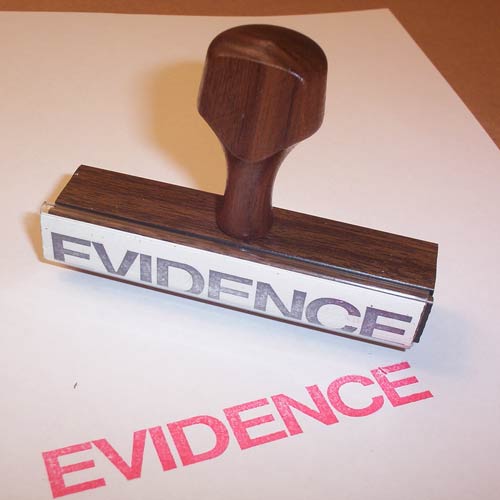
The Supreme Court has firmed my resolve

But the Supreme Court, in a decision written by Clarence Thomas, “tossed out the verdict, finding that the district attorney can’t be responsible for the single act of a lone prosecutor.

In case you missed the story:

In 1985, John Thompson was convicted of murder in Louisiana. Having already been convicted in a separate armed robbery case, he opted not to testify on his own behalf in his murder trial. He was sentenced to death and spent 18 years in prison—14 of them isolated on death row—and watched as seven executions were planned for him. Several weeks before an execution scheduled for May 1999, Thompson’s private investigators learned that prosecutors had failed to turn over evidence that would have cleared him at his robbery trial. This evidence included the fact that the main informant against him had received a reward from the victim’s family, that the eyewitness identification done at the time described someone who looked nothing like him, and that a blood sample taken from the crime scene did not match Thompson’s blood type.

A jury awarded Thompson $14 million for this prosecutorial misconduct, this civil rights violation, “one for every year he spent wrongfully incarcerated.” Thompson…successfully sued the prosecutor’s office in New Orleans, arguing former District Attorney Harry Connick showed deliberate indifference by not providing adequate training for assistant district attorneys. Yes, it’s the singer’s father.

But the Supreme Court, in a decision written by Clarence Thomas, “tossed out the verdict, finding that the district attorney can’t be responsible for the single act of a lone prosecutor. The Thomas opinion is an extraordinary piece of workmanship, matched only by Justice Antonin Scalia’s concurring opinion…[They] have produced what can only be described as a master class in human apathy.”

This was not the first recent violation of the Brady ruling in Louisiana; it was at least the fifth. “In 1963, in Brady v. Maryland, the Supreme Court held that prosecutors must turn over to the defense any evidence that would tend to prove a defendant’s innocence.”

I find this all oddly comforting. I wrote here concerning a recent conversation I had discussing the death penalty with a work colleague. But I didn’t get much into WHY I oppose it. I admit that much of it is the fact that I am generally queasy about the state as an agent of death.

But even if that were not the case, it’s clear that the state gets it wrong sometimes, and this ruling, making prosecutors seemingly exempt from suffering any consequences of their malfeasance, makes me more resolute in my opposition to capital punishment. If people can literally die from such horrific prosecutorial sloppiness that receives no consequence, then it makes virtually all capital trials inherently suspect to my mind.


L is for Loopy Language

“Nobody really k-nows why or when it became silent but this change is believed to have transpired sometime around the 16th to 17th centuries.”


As my daughter is LEARNING the English LANGUAGE, I find it more difficult to explain to her WHY certain things happen. For instance, as this list shows, at least half the letters of the alphabet will appear in a word but will be silent. So my response to my daughter is “Don’t ask.”

To be fair, the real reason for these seeming discrepencies is that English is a LANGUAGE rooted in multiple LINGUISTIC traditions.

OK, so I’ve sussed out the logic of the silent E, which (usually) means the vowel is long.

But other letters I understand less well, particularly those silent letters that appear in the beginning of a word.

I have learned, however that:
Silent B is often after m.
Silent G is often before m or n, and that the Greek root in a word such as gnome did sound the G.
Silent H is …complicated, and appears sometimes sounded, sometimes not, in many languages.

Silent K before n once WAS sounded. The silent ‘k’ in words like ‘knight’, ‘knock’ and ‘knob’ is a remnant of Old English, and wasn’t silent at all but was pronounced along with the ‘n’. “Nobody really k-nows why or when it became silent but this change is believed to have transpired sometime around the 16th to 17th centuries. For some reason, the ‘kn’ consonant cluster became hard for English speakers to pronounce.”
Why is the letter -L- silent in words such as salmon and solder? “In those two cases, the English spelling originally did not have an L, so there was no such letter to pronounce.”
Silent P often appears before n, s, t.
And here’s some background on Silent T and Silent W.

Yet, I tend to oppose the movement to simplify English spelling. I would find it unreadable, as I do in this example. The LOOPINESS of the LANGUAGE is also its beauty, its charm, its LIVELINESS.
ABC Wednesday – Round 8

Pass the Paste, Please

I remember quite distinctly the first time I recall experiencing déjà vu.

A couple of links, first off.
Arthur and Jason’s 2political podcast makes mention of my article re the Triangle Shirtwaist Fire.
Recent articles on my Times Union blog include the old YMCA becoming a church, the collective wisdom of the bus, and me asking if it is the job of a news organization to change behavior.


From Thursday Thunks, and this was the order of the questions; I don’t know why.

1. There is a song out there about you… it’s on the radio, the video is on tv (just not MTV) and everybody in the world knows this song is about you. Who sings it?

For some reason, I’ve had stuck in my head, for a couple of weeks, Whatcha See Is Whatcha Get by the Dramatics, which got to #9 on the pop charts and #3 on the soul charts in 1971. My daughter has been singing, “Some people are made of plastic; You know some people are made of wood”. Then instead of “Some people have hearts of stone; Some people are up to no good,” she makes up something else. It’s something basically honest, and therefore comforting, about WYSIWYG.

4. Have you ever sneaked..snuck…snucked…what is the right word? into a movie?

Actually no, and this proved to be a source of a rather heated discussion. My sister’s dopey then-boyfriend, who always had an angle, boasted how he’d pay for one movie but then see two or three. He was so proud of himself. “Everybody does it,” he proclaimed. “I never did,” I replied and my wife responded likewise. It was also the weekend he went on about what a superior Christian he was. Meh.

3. Déjà vu; meaning “already seen”, is the experience of feeling sure that one has already witnessed or experienced a current situation, even though the exact circumstances of the previous encounter are uncertain and were perhaps imagined. Thoughts on what it is? Have you experienced it?

I don’t know what it is, but I remember quite distinctly the first time I recall experiencing it. I was working at a summer camp when I was 17, mowing the acres of lawn on the boys’ side of the camp, then the girls’ side. I was walking down the dirt road that led from one side to the other, when I had the distinct impression that I had traveled that road before, though, at least in this lifetime, I had not.

2. Stick it to me, baby. What is the last bumper sticker you saw and why do you remember it?

There’s one I see all the time in my neighborhood: “Well-behaved women rarely make history”; seems to be true.

10. Ever wonder what fish think about?

Their school lessons, no doubt.

8. If you could paint President Obama’s fingernails any color, what would it be?

Yellow, for the cowardice he’s shown in a number of issues.

7. Do you have seat covers on your car seats? What do they look like?

No.

6. For the rest of your life you can eat one spice and one spice only (on whatever food you want, of course), what spice do you choose?

Allspice. If you’re going to be a spice, might as well be versatile

9. If you could slide down a rainbow, which side would you slide down?

The outside.

5. So a mom is suing her kids’ preschool because it failed to prepare the child for the kindergarten entrance exam… did you eat paste in preschool?

I’m fascinated by how much homework my daughter had in kindergarten and has in first grade. (I never went to preschool; not sure it’d been invented yet.)

Assuming Facts Not In Evidence

“What has been also interesting is how we have heard from several people how common it is for people to get better before they depart.”


One of the things that have puzzled, occasionally annoyed, but ultimately mystified me was that, when my sisters and I told people that my mother had died, and knowing that she hadn’t died in an accident or the like, not a small number of them, whether they got the news in person or by e-mail, said something along these lines of “I didn’t know she was sick.” Well, that’s just the thing; she wasn’t.

I’m stealing an e-mail my sister Leslie sent to one of those people. “She was not physically ill. In fact, she was feeling great, had just taken her shower and was getting dressed in anticipation of having the bus pick her up to take her to Adult Day Care. She complained about her head hurting but did not have any of the typical stroke symptoms.

[Our sister] “Marcia decided to call 911 to be safe, again, not because she had the typical symptoms. They determined that she had had a massive stroke and moved her to a facility that has a better neuro dept.” This was referred to as a brain bleed, a rarer, and apparently more problematic, type of stroke, which measured 9 cm, when the “average” stroke is 2 to 3 cm.

“She was in ICU for 2 days before they moved her to a regular room in the neuro. dept. They monitored her closely, taking her blood pressure, temp, etc. every few hours.

“On Tuesday, her eyes were opened a bit, so we were feeling very hopeful. When Marcia cleaned out her mouth with a swab, she grimaced, and when Marcia said ‘oh, you don’t like that’ she answered ‘no’.” She also raised her eyebrow in response to another comment. “So, we got all excited, thinking that perhaps she could have pulled out of it, as we know, nothing is impossible to God.

“We met with the Dr. and he said we needed to add the feeding tube or let her go peacefully, which could have been 1 or 2 weeks to live…We agreed to give her a fighting chance and elected for the feeding tube. The MD had agreed to make it so and was going to do so later on Wed. Guess Trudy and God had different plans.

“Roger had spent [Tuesday night in her room]. The nurses had been in and out that [Wednesday] AM, and he was staying out of their way. At 8:56 they told him to call us, which he did, and we went to the hospital immediately. She was already gone…went very peacefully, and looked as if she was just sleeping.

“Interesting that Marcia and I were with Dad when he passed and Roger was with Mom…

“What has been also interesting is how we have heard from several people how common it is for people to get better before they depart.”

BTW, the article title comes from dialogue from one of the countless law shows I grew up watching, from Perry Mason and Judd for the Defense to Owen Marshall and the lawyer section of The Bold Ones.

Westboro redux QUESTION

Nuance sucks.

Sometimes, I’m really quite the talented prognosticator. Back in October, I suggested that the Snyder v. Phelps case, involving this so-called religionist protesting at the funerals of American soldiers killed in action would be decided 8-1 or 7-2 in favor of Phelps, and it was 8-1 in Phelps’ favor. Again, I think it was the right decision constitutionally; indeed, if it had gone the other way, one could reasonably complain about the Court making law. Do not, though, confuse my First Amendment backing for the SOBs with any kind of theological support.

In fact, that handful of inbreed charlatans, like the Florida pastor/rube last year who threatened to burn the Koran, represent such a small segment of theological thought that it’s painful to come to their defense in any way. Nuance sucks.

Yet, I’m reminded of a just as repugnant SCOTUS case, involving a band of Nazi sympathizers wanting to march in Skokie, Illinois. The Supreme Court refused to review the lower court ruling allowing the assembly; ultimately, the march did take place, albeit not in Skokie.

So where should government draw the line regarding free expression? I’m particularly interested in the opinions of those living outside of the United States, and thus without First Amendment traditions.
***
And sometimes, I’m a lousy prognosticator. My NCAA men’s basketball picks were SO awful that I haven’t even checked them since the first weekend. I had Pitt, who lost in the second round, in the finals, which should give you some idea.

Ramblin' with Roger
Social media & sharing icons powered by UltimatelySocial