The Heart of Christianity

Marcus Borg uses the term metaphor, not as a negative, “nonliteral,” but as a positive, “more-than-literal.”

Heart of ChristianityIn trying to explain what I believe, in terms of my faith, I found that the right words were not always available. Then I read the 2003 book The Heart of Christianity: Rediscovering a Life of Faith by Marcus Borg this past winter. My answer became: “Mostly what HE said.”

Borg was a “world-renowned Jesus scholar” who, as the book sleeve notes, is out to reclaim “terms and ideas once thought to be the sole province of evangelicals and fundamentalists.”

As the Amazon description of The Heart of Christianity notes: “Being born again… has nothing to do with fundamentalism, but is a call to radical personal transformation. Talking about the kingdom of God does not mean that you are fighting against secularism, but that you have committed your life to the divine values of justice and love. And living the true Christian way is essentially about opening one’s heart—to God, and to others.”

Borg writes about the “earlier paradigm” of literal Biblical interpretation and heaven-focused. Then there’s the “emerging paradigm” which is “the product of Christianity’s encounter with… science, historic scholarship, religious pluralism, and cultural diversity… it is [also] the product of our awareness of how Christianity has contributed to racism, sexism, nationalism, exclusivism and other harmful ideologies.”
MarcusBorg_1
The emerging paradigm sees the Bible metaphorically…its…’more-than-factual,’ meaning…It doesn’t worry that the stories… are metaphorical rather than literally factual accounts… ‘What is the story saying?'” He uses the term metaphor, not as a negative, “nonliteral,” but as a positive, “more-than-literal.”

He uses Garrison Keillor’s “News from Lake Wobegon” on the radio program Prairie Home Companion as an example. “We all know that Keillor is making them up, and yet we hear truth in these stories.” Borg acknowledges the comparison that the “analogy to the Bible is not exact,” since the latter is “the product of a thousand years of community experience.”

I was inclined to like Marcus Borg, especially when I realized that we had similar experiences: growing up in the “earlier paradigm” church, leaving in confusion for over a decade, and reframing to find our way back. I’m sorry that he died back on January 21, 2015, in a way that I was not before reading this book.

Music, April 1971: What’s Going On

More random music recollections based on the book Never A Dull Moment.

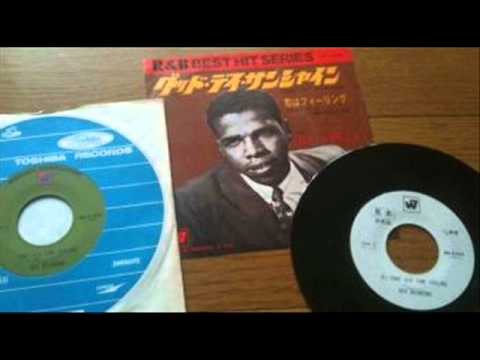
You probably think you know the story of Marvin Gaye’s standout album, What’s Going On, how the Artist recognized what’s REALLY happening in the world and puts out a album designed to stick it to the Suits at the record company. The actual story was a bit more prosaic.

In fact, the title song began with a wisp of of an idea by Obie Benson, the bass singer of the Four Tops, who thought that maybe he had another song like the Coke commercial, “I’d Like to Teach the World to Sing.” He and Motown songwriter Al Cleveland thought it might fit Marvin, but he wasn’t impressed. They pushed, and Marvin gave it some tweaks, thinking he might produce it for the Originals.

In July 1970, he came into the studio, had some football buddies for the party noise, captured sax player Eli Fontaine warming up, and basically fell into a sound. He managed to slip it out as a single in January 1971, while Motown owner/brother-in-law Berry Gordy was out on the West Coast. Gordy thought two things: 1) he hated the song, and 2) wondered where’s followup album was after it became a hit.

The What’s Going On album was recorded in March and released in May, with a second mix by Gaye that defined not only the LP, but changed the expectation of listeners regarding what was expected from a Motown album. I played it a lot in college; Inner City Blues especially STILL seems relevant.

Another Motown artist was giving Berry Gordy headaches. Stevie Wonder was married, living in NYC with new wife Syretta, and about to turn 21. His lawyers sent a letter to Gordy disavowing his Motown contract.

Meanwhile, Stevie discovered The Original New Timbral Orchestra, or TONTO, keyboard system. Wonder had lost interest in his new album, Where I’m Coming From, which was actually the first Stevie album I ever bought, as his own sound was developing.

His next album, Music of My Mind, made in 1971 and released the next year, was more representative of the groove he was going for. The FOUR albums after THAT, all dominant on my turntable in the 1970s won FOUR Grammy albums of the Year awards in five years.

Sly Stone’s album was two years late, and he became “the least reliable superstar in the history of popular music.” The eventual downbeat, indecipherable There’s A Riot Goin’ On, released in November 1971, was a contact high of an album. One did not have to BE stoned to FEEL stoned listening to it.

Was Shaft blaxploitation or black empowerment? It was a movie by noted black photographer Gordon Parks, with Richard Roundtree as the handsome black detective, whose looks drove the lyrics written by STAX artist Isaac Hayes. The “shut your mouth” was delivered by Telma Hopkins, whose hit with Dawn, “Knock Three Times”, came out earlier that year. My sister Leslie owned this double LP, which he had to get partially replaced because the package had two of the same LPs.

Listen To

What’s Going On – Marvin Gaye
Inner City Blues – Marvin Gaye
The Revolution Will Not Be Televised – Gil Scott-Heron
Family Affair – Sly & the Family Stone
I Can’t Get Next to You – Al Green
Toussaint L’Ouverture- Santana

Death knell for the Environment Protection Agency?

After four and a half decades of progress on the environment, we’re aiming for a regression.

The Environmental Protection Agency was created 47 years ago this coming December. Why was that? How Did the U.S. Look Before the EPA?

“Time [magazine]’s story on the burning Cuyahoga River [near Cleveland] sparked outrage among Americans, and brought national attention to the country’s need to clean up its waterways and protect the environment. It eventually helped lead to changes like the Clean Water Act…

“The Cuyahoga article was even instrumental in President Richard Nixon forming the Environmental Protection Agency (EPA) in 1970. Its mission then — and now — is to ‘protect human health by safeguarding the air we breathe, water we drink and land on which we live.'”

The regime announced its morally obscene budget proposal in March, and it’s even worse than most observers expected. For instance, EPA is looking at a 31% cut in the agency’s budget, eliminating 3,200 staff positions and zeroing out funding to enforce the Clean Power Plan. It is an all-out assault on our planet.

The proposal now needs to be negotiated in both the House and Senate — and with EPA antagonist Scott Pruitt leading the agency, the budget director proclaiming that fighting climate change is “a waste of your money” and the House already taking steps to abolish the agency entirely — it is pretty much a worst case scenario.

From the very beginning of this regime, scientists have been muzzled and research blocked. After four and a half decades of progress on the environment, we’re aiming for a regression. And of course, the added pollution that will be allowed won’t stop at our national borders.

The United States was a signatory to the Paris Agreement on Climate Change agreed to in 2016. It appears, though, that this administration has chosen to go in another direction.

O beautiful for spacious skies,
For amber waves of grain,
For purple mountain majesties
Above the fruited plain!
This was disappearing, but had started coming back. On this Earth Day, there is most unfortunately very little to celebrate, certainly not in the United States.

April rambling #2: Knowledge, Freedom, Democracy

The Public Library: A Photographic Love Letter


Do Not Lose Heart; We Were Made for These Times

On earth as it is in heaven: Why Jesus didn’t call his followers to be safe

The Gaslight Zone, Part 1 and Part 2

Last Week Tonight with John Oliver: Gerrymandering and Marijuana

Can We Get Real About Opioids? and Opioids, My Mom’s Death, and Why People Trust Science Less

How my daughter died from a simple case of flu

The Perception of Liberal Bias in the Newsroom Has Nothing Whatsoever to Do With Reality

Facebook use is a predictor of depression

The Internet Isn’t the Wild Wild West Anymore, It’s Westworld

Killing the Church with Sunday School

Girl, 2, defends her choice of doll to cashier

Carolyn Kelly, R.I.P.
Mark Evanier’s getting by, with the help of Henry Fonda

Sheryl Sandberg: ‘Everyone looked at me like I was a ghost’

Letterman’s mom was everyone’s mom: Dorothy Mengering dead at 95

A Tribute to Carrie Fisher

The Public Library: A Photographic Love Letter to Humanity’s Greatest Sanctuary of Knowledge, Freedom, and Democracy

Dianne Bentley saved receipts, helped take down her cheating governor husband

Arts in the Parks

Not me: Two longtime artists offer stunning works in ‘Traces’ exhibition

“Let me help” (Thoughts on “The City on the Edge of Forever”)

Bette Davis and Joan Crawford in the 1960s

Ken Levine interview: Voiceover artist Randy Thomas

I wrote about helicopter parenting four and a half years ago, and someone wanted to know if I wanted to read Abandon Helicopter Parenting, Embrace Negotiation Parenting; xooloo has developed an app for that.

7 Tips for Donating Old Books Without Being A Jerk

Now I Know: The Slave Who Spied on the Traitor and The Campaign for the Other Gary and Taking “One Person, One Vote” Literally — and Accidentally

Queen Elizabeth has someone break in her shoes before she wears them

Dawn Wells: Forever Mary Ann

I keep seeing references to crushed Doritos in recipes, e.g. replacing bread crumbs on fried chicken, or as the crust for mac and cheese. Have YOU used them?

Chopped liver

Music

Just a clown singing Pinball Wizard to the tune of Folsom Prison Blues

The Beatles – Home Recordings, May 1968 (white album)

Coverville: Elton John cover story

Back in June 1980, the legendary Chuck Berry performed in the little village of Ladner, British Columbia, Canada

K-Chuck Radio: Music to help pretty plants grow

5 truly explosive performances of Tchaikovsky’s 1812 Overture

Appreciating an Unusual Beach Boys Album

Who has opened for the J. Geils Band?

Linda Hopkins; blues singer won Tony for best actress

The Neuroscience of Singing

There is a reason to have a B# and an E#

John Coltrane Draws a Picture Illustrating the Mathematics of Music

Monkees Star Mike Nesmith Reveals All on Drugs, a Near-Crippling Illness, and Jack Nicholson ‘Bromance’ in New Memoir

Where Have All The Bob Seger Albums Gone?

Genesis Tour Manager Recalls His Role in One of Rock’s Most Embarrassing Moments

Rock’n’roll shrimp named after Pink Floyd because of its deafening vocal ability

How to center yourself to write

You actually know how to bring an issue to light and make it important.

centeringI had a quick question which I’d like to ask:
if you don’t mind. I was interested to find out how you center yourself and clear your thoughts prior to writing.
I have had a hard time clearing my mind in getting my thoughts out there.
I truly do enjoy writing however it just seems like the first 10 to 15 minutes are lost just trying to figure out how to begin. Any ideas or hints? Thanks!

First, it helps to know what you want to write about. The reason I have well over 100 posts in draft is that sometimes, I’m not always motivated to write about the item I thought I was going to write about.

For instance, late in 2015, I looked at a list of people who were going to turn, or would have turned, 70, in 2016. I created a post for all the people I considered writing about. When you have a daily blog, it helps not to have to come up with something from whole cloth daily. And I’ve already done the same thing for 2017.

Then I do…nothing. I just let the topics percolate in the subconscious of my brain. Then when I read something about that person, I throw the link into that draft post. By the time I actually start writing, I usually know where I want to go, even it eventually takes another track.

As for the actual writing, I try very hard not to worry about grammar, spelling, that sort of thing. Just get the ideas down.

That said, there may be nothing wrong with spending 10 or 15 minutes figuring out how to begin. Maybe that’s your process.

Check out this article from writer Ken Levine.

The question, BTW, came from my spam folder, some German company. I was always jealous of Dustbury’s ability to milk a blogpost from his spam folder every Monday. This was a rare shot to do the same.

Oh, yes, this was also from the spam:

May I simply just say what a relief to uncover a person that truly understands what they’re talking about online. You actually know how to bring an issue to light and make it important. More people should look at this and understand this side of your story. I was surprised you are not more popular since you definitely possess the gift.

It’s always nice to be flattered, even by a bot.

Ramblin' with Roger
Social media & sharing icons powered by UltimatelySocial