
Spamilton: An American Parody

created, written, and directed by Gerard Alessandrini

SpamiltonMy wife, my daughter and I enjoy the musical Hamilton. But we can also appreciate a bit of a takedown of the phenomenon. Spamilton: An American Parody fits the bill. My family saw it on a Saturday night at Proctors Theatre in Schenectady. I was attending a library gala at the time, so I went on the previous Thursday.

The first song made it clear that it was Lin-Manuel Miranda who would be the target of many of the jokes. And, according to the program, a skewering was allowed by Manuel and his co-creators.

The bulk of the ninety minutes were played by five actors. Jared Alexander played Daveed Diggs, who played Lafayette and Jefferson in the original cast. Datus Puryear was Aaron Burr and the actor who played him, Leslie Odom, Jr. Rendell DeBose played various other characters, from Ben Franklin to Annie. Adrian Lopez is a ringer for a younger Lin-Manuel.

Paloma D’Auria played ALL of the leading ladies, sometimes with puppets. She also portrayed many of the divas of Broadway. Brandon Kinley only played King George III and one other role.

Not every setup worked. But the piece, created, written, and directed by Gerard Alessandrini, was so full of ideas that it barely mattered. The energy and talent of the five primary players were astonishing for ninety minutes, with no intermission.

Reviews

The New York Times review calls Spamilton “convulsively funny”. The Huffington Post raves “you don’t have to see Hamilton to have side-splitting fun at Spamilton.” True, but it DOES help to be at least familiar with the Tony-winning musical. Here’s a preview clip. The show will be in Kansas City, MO, and Greenville, SC, in the coming weeks.

Incidentally, my wife and I also attended a lecture on September 29 at Siena College. Hamilton: How the Musical Remixes American History by Richard Bell, a history professor from Maryland was presented by the Albany Institute of History and Art.

Bell is a HUGE fan, yet he noted the shortcomings of Miranda’s work, notably the role that women played. She suggested that Hamilton failed the Bechdel Test in that the women in it who talk to each other, mostly talk about a man, the named character. It may be an overly simplistic metric, but it is a tool.

Singer/guitarist Bonnie Raitt is 70

The Road’s My Middle Name

Bonnie RaittBecause I hitchhiked to New Paltz, I first heard of Bonnie Raitt. I had traveled from Binghamton to visit my girlfriend in May 1971. But when I got there, she had decided to break up with me. I was devastated.

There wasn’t enough daylight to hitch back home. Instead, I went to visit my friend Steve in Poughkeepsie, in the next county over. We had gone to Binghamton Central High School before he moved.

Steve talked at length about this great bluesy singer and guitarist named Bonnie Raitt, who I had never heard of. He predicted great things of her. Her eponymous first album, which came out in November 1971 sold poorly, though it reviewed well. I never bought it.

Bonnie’s second album, Give It Up, I LOVED. It got all the way up to #138 on the US album charts. The subsequent albums improved commercially up to 1977’s Sweet Forgiveness at #25. But her next albums sank, never improving on the charts.

Warner purge

In 1983, the year after I saw her at the No Nukes concert, “There was a corporate sweep at Warner’s… and they needed to trim the fat,’ Raitt recalled in 1990. ‘I just had completed an album called Tongue & Groove… I don’t think they maliciously said, ‘Let’s let her finish her album and get the tour all lined up and print the covers and hire the people to do the video and then drop her.’ You know, ha, ha, ha. But that’s what they did.

“‘It was literally the day after I had finished mastering it… They dropped me and pulled the rug out from under my tour. I thought the way they did it was real crummy. They sent a letter. I think I suffered from not having a relationship with the A&R department there, because I had an independent production deal…’

“The material for Tongue & Groove was shelved until two years later when ‘Warner’s suddenly said they were going to put the record out,’ Raitt recalled… I mean, I was out there touring on my savings to keep my name up, and my ability to draw was less and less. So they agreed to let me go in and recut half of it.’ The result was Nine Lives, which was finally released in 1986” to tepid reviews and worse sales.

Capitol signing

After seeing her perform, Prince “offered Bonnie Raitt a recording contract on his own label, Paisley Park Records. Raitt agreed and traveled to Minneapolis. Before she recorded any material, she suffered a skiing accident and was hospitalized for two months.” The Paisley Park deal fell through.

Then Capitol Records signed her after over a dozen other labels passed on her. She put out the Nick of Time album in 1989, which went to #1 on the US album charts, sold over five million copies and was named Album of the Year by the Grammys.

The followup album in 1991, Luck of the Draw, went to #2 in the US, sold seven million copies and generated a Top 10 single. 1994’s Longing in Their Hearts went to #1, sold two million copies and contained a Top 20 single. Five subsequent albums, all of which I own, have each reached the Top 20 on the album charts.

LISTEN

Sugar Mama (5)
No Way to Treat A Lady (9), a Bryan Adams song
The Road’s My Middle Name (10), a Bonnie Raitt song about how she survived
I Can’t Make You Love Me (11), #18 in 1992

Runaway (6), the Del Shannon hit, #57 in 1977
You (12), #92 in 1994
Angel From Montgomery (4), the John Prine song they’ve done live together

Love Me Like a Man (2); lyrics adapted by Raitt
Love Has No Pride (2)
My, there are a lot of “love” songs on this list!
Love Letter (10), one of two Bonnie Hayes songs on the list

Love Sneakin’ Up On You (12), #19 in 1994
Thing Called Love (10), a John Hiatt song
Something to Talk About (11), #5 in 1991

Too Long at the Fair (2)
Have a Heart (10), the other Bonnie Hayes song, #49 in 1990. It has one of my favorite first lines in any song. “Hey, shut up. Don’t lie to me.”
Dimming of the Day (12), a Richard Thompson song
Give It Up Or Let Me Go (2), a Bonnie Raitt song
The last four are probably my top 4; the last seven are probably my top 7.

(2) Give It Up; (4) Streetlights; (5) Home Plate; (6) Sweet Forgiveness; (9) Nine Lives; (10) Nick of Time; (11) Luck of the Draw; (12) Longing in Their Hearts

10 and 2? 9 and 3. No, 8 and 4!

used to be auto safety gospel

8 and 4 steering wheelMy wife recently took a defensive driving class. It cost $25 for the six-hour course over two weeknights. (Note to self: remind my wife, when she decides to take a class again, to avoid weeknights during the school year.)
The purpose of the class is to learn things. But the motivation for taking it was to save money on car insurance. Frankly, most of the information she found familiar and/or boring. She did, however, learn two things.

Once upon a time, you were supposed to hold the steering wheel at 10 and 2. By 2012, experts were suggesting 9 and 3.

“As cars have become safer over the years, ‘the steering wheel and associated mechanisms (have) changed dramatically,’ meaning the familiar driving maneuvers ‘needed to turn the wheel have all changed.’ Principal among them is the incorporation of airbag modules in the steering column, which are designed to deploy upward to protect your head and chest.

“That means the higher up the wheel your hands are, the more likely they are to be directly over the plastic cover when it opens — that is, when superhot nitrogen gas flashes and inflates the bag at 150 to 250 mph (241.4 to 402.3 kph)”

8 and 4?

But the instructor is suggesting using 8 and 4. “The jury is very much out. Many state’s driving handbooks recommend this position as an alternative to the 10 and 2 position when driving a vehicle fitted with airbags. Hand position 8 and 4 has a slight advantage over 9 and 3, in that it is a more comfortable position to maintain for longer periods.

“Though, the 8 and 4 position receives equally wide criticism from driving experts who are not convinced it gives drivers sufficient leverage on the steering wheel.” The instructor posits that at 9 and 3, the driver’s hands if the airbag is deployed, could hit the door and the passenger.

Also, new info for the wife is the notion that driving a car length apart for every 10 mph (16 kph) is outmoded. It used to be part of the automotive safety gospel. With all the congested highways, the instructor suggests two-car lengths when traveling at 60 mph (86.5 kph).

Black people on television in 1968

Ruby Dee was on Peyton Place

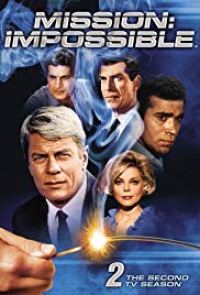
Mission ImpossibleAfter Diahann Carroll, star of the sitcom Julia (1968-1971) died in October 2019, I wondered how many black people on television were there in 1968.

I came across a list of all the American television shows with black actors in that pivotal year. It did not indicate the performers by name, but I could easily come up with:
Bill Cosby as tennis trainer/spy on I Spy (1965-1968), who won three Emmys for the role
Ivan Dixon as Sgt. James Kinchloe on Hogan’s Heroes (1965-1970)
Nichelle Nichols as Lieutenant Uhura on Star Trek (1966-1969)
Hari Rhodes as Mike on Daktari (1966-1969)
Greg Morris as electronics expert Barney Collier on Mission: Impossible (1966-1973), probably my favorite performer at the time
Don Mitchell as aide Mark Sanger on Ironside (1967-1975)
Clarence Williams III as “youth squad” member Linc Hayes on The Mod Squad (1968-1973)
Gail Fisher as secretary Peggy Fair on Mannix (1968-1975)

Also

There were blacks on some other programs, but I don’t remember the shows. Cowboy in Africa (1967-1968) featured Gerald Edwards as an orphaned ten-year-old named Samson. N.Y.P.D. (1967-1969) had Robert Hooks as detective Jeff Ward. The Outcasts (1968-1969) co-starred Otis Young as Jemal Davis as a freed slave turned bounty hunter after the Civil War.

Then there were the programs I recall but not the characters. Gentle Ben (1968-1969) had a guy named Willie (Angelo Rutherford) its second and final season. In its fifth and final season, Peyton Place (1968-1969) added a family: Dr. Harry Miles (Percy Rodriguez), his wife Alma (Ruby Dee), and the teenage son Lew (Glynn Turman).

The High Chaparral (1967-1970) featured Frank Silvera, who was born in Jamaica, playing Don Sebastian Montoyo until Silvera died in 1970, and his character died as well. Daniel Boone (1968-1970) also had black actors, initially Don Pedro Coley as Gideon, a “black Indian.”

Laugh-In

Finally, I certainly remembered Chelsea Brown and her 26 episodes on Rowan and Martin’s Laugh-In in 1968-1969. But I had to look up the fact that Dewey ‘Pigmeat’ Markham also appeared 15 times during that season. The show had started in January 1968.

Per Mark Evanier, there were two different black guys named Gilliam who were on Laugh-In. Byron Gilliam was born on November 3, 1940, in Gary, IN. He was known for his work on Playboy After Dark (1969). He died on November 22, 1990, in Wisconsin. He was on Laugh-In from the beginning of the 1968-1969 season to 1971, for 41 episodes.

He’s not to be confused, as Google has done, with Stu Gilliam, who was on Laugh-In for four episodes in 1970. Stu was born on July 27, 1933, in Detroit, MI, as Stewart Byron Gilliam. I remember him from Roll Out, created by Larry Gelbart and Gene Reynolds in the early 1970s. He was married to Vivian White. He died on October 11, 2013, in Ceské Budejovice, Czech Republic.

Rhode Island: longest name

What’s not to like?

Rhode IslandRhode Island I always favored conceptually because it was founded by Roger Williams in the 17th century. As a kid, I was a sucker for people named Roger: Bannister, Daltrey, Maris, Miller, e.g., but not Taney.

Williams was “a Puritan minister, theologian, and author… He was a staunch advocate for religious freedom, separation of church and state, and fair dealings with American Indians, and he was one of the first abolitionists.” What’s not to like?

Ironically, the smallest state in the United States bears the longest official name. It is the State of Rhode Island and Providence Plantations. The state is the seventh least populous, but the second-most densely populated.

The Ocean State is also the 13th state, the last of the original colonies to ratify the Constitution, on May 29, 1790. In fact, it was “the only state not to send a representative to the Constitutional Convention,” which had approved the document on September 17, 1787. The First Congress subsequently “passed 12 proposed amendments to the Constitution” without RI, most of which became the Bill of Rights.

I have visited Providence a few times. Its view of the Atlantic Ocean was spectacular. My daughter particularly enjoyed it. But back in 2007 or so, a friend of mine tried to wean her from her fear of dogs with his very tame canine; it did not work at the time.

In 2012, many of my in-laws were staying in Newport at a couple of timeshares. We spent a good chunk of time visiting the mansions of the Gilded Age. Very Upstairs/Downstairs, or I suppose now, Downton Abbey.

Some of us also visited the Tennis Hall of Fame. I STILL get emails from the organization, where I give my opinions on who should next be enshrined. I’m a sucker for a good Hall of Fame, and that one definitely qualified.

RI Rhode Island, a US state in New England. Capital and largest city: Providence. I recommend the New England Clam Chowder.

Little Rhody for ABC Wednesday

Social media & sharing icons powered by UltimatelySocial