The Obama Presidency: Five Years Down, Three To Go

Whether you see Edward Snowden as whistleblower or unpatriotic – I land in the former camp – it’s difficult to think that we would not have been talking about this had he not released the information he had.

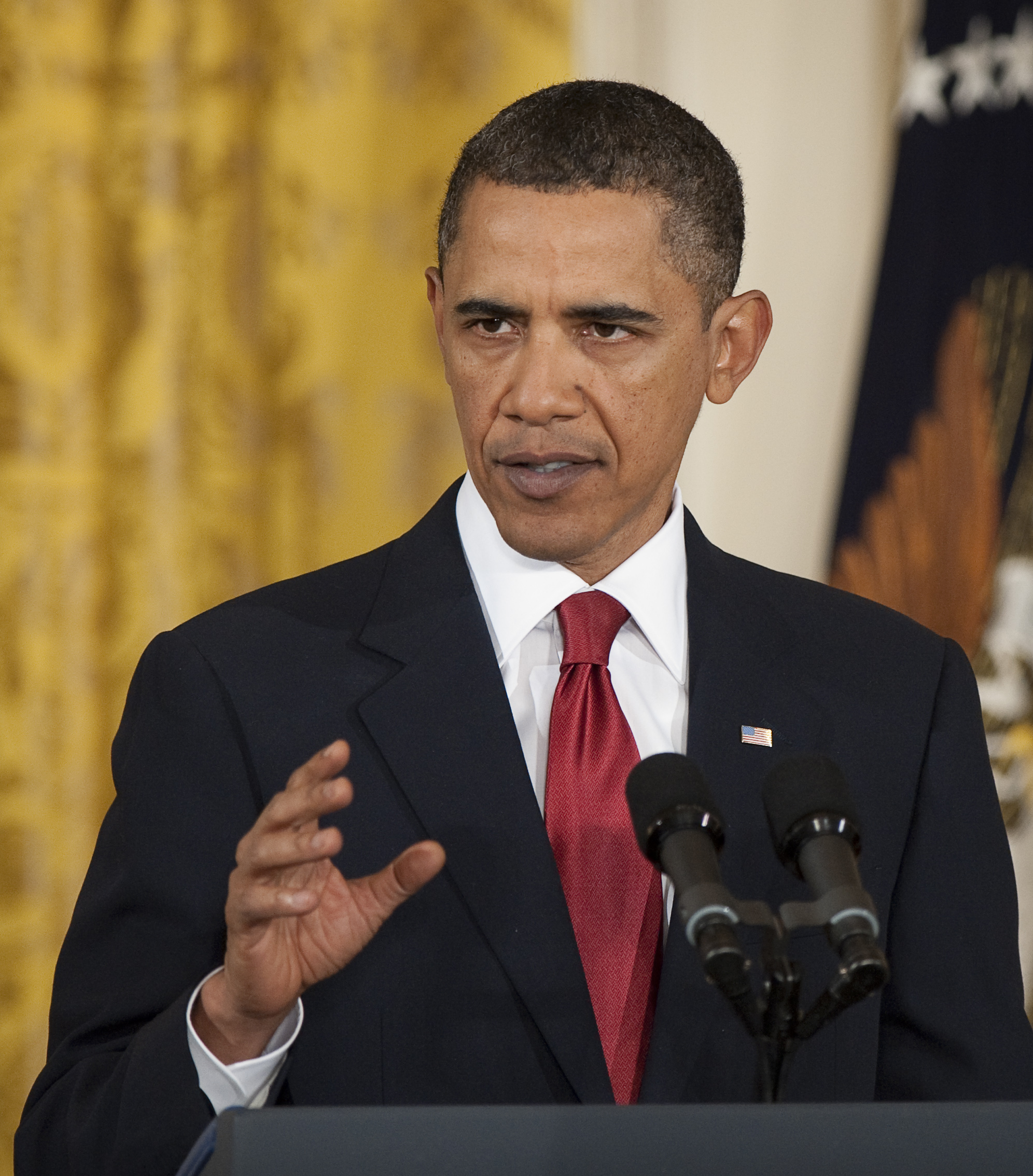
President Barack Obama Honors TeachersI know judging a two-term presidency with 36 months to go is a dodgy proposition, but what is the point of writing a blog if not to make these brilliant observations?

THE GOOD:
I had great hopes because the very first thing he tackled was wage discrimination. He was stuck with a horrendous economy in freefall, and the stimulus, despite spending that ought to have been better targeted, had an overall good effect. GM and Chrysler were saved from almost certain death, which would have had a huge ripple effect on other parts of the economy.

The Affordable Care Act, a/k/a Obamacare, was not what I wanted, as I think his team took the single-payer option off the table WAY too early. Still, the fact that it doesn’t doom persons with pre-existing conditions to, likely, no insurance is a plus, and I appreciate the provision of keeping young adults on their parents’ policies.

Although he may have become more directed on the issue because of something his Vice-President said “too early,” Obama has been strong on LGBT issues, and in particular on marriage equality. One can argue about the US participation at the Sochi Olympics, but his delegation sends a message to Russia.

Obama is rather good at speechifying. From his talks after the shootings in Arizona to Nelson Mandela’s celebration, I often like listening to what he has to say, and how he says it.

The GOOD (but late):

The commuting of the sentences of eight federal inmates who were convicted of crack cocaine offenses, when the crime, if committed today, would not have engendered as much jail time, is the right thing.

THE BAD:

Here’s what I believe: our use of drones in Pakistan and Afghanistan and Yemen, with its inevitable loss of innocent life/”collateral damage”, is creating more terrorists. If you review the news stories about the various heads of terrorist organizations that have been killed abroad, it doesn’t appear to have had any long-lasting effect on the problem.

In the case of the NSA spying, the President is only now making plans to limit its reach, as though he had been oblivious to the extent it had been going on, which I found quite disquieting. Whether you see Edward Snowden as a whistleblower or unpatriotic – I land in the former camp – it’s difficult to think that we would not have been talking about this had he not released the information he had.

Surely, the Benghazi bombing, while not the unique situation that it has been painted, was never really well explained, and, as a recent Congressional inquiry suggests, avoidable.

The Trans-Pacific Partnership is awful, and it’s little wonder Congressional Democrats are unexcited about it, citing the “potential to undermine important environmental, public health and labor standards.”

While I’ll tentatively tout Obamacare, there’s no defense to the terrible rollout on the website. If it’s your signature accomplishment, you’d think you’d make sure it worked.

THE HMM:

Every credible thing I read about the IRS targeting of conservative groups, suggested that it was 1) also done to liberal groups and 2) fairly limited in scope. I suppose I should define “limited” to clarify that there was no suggestion that this was directed by the White House since some groups wanted to use it as grounds for impeachment.

The bluster about going to war with Syria sounded like a bluff to get Congress to own it, and at least got Damascus to the table. How that situation will play out is still up in the air.

The Iraq war is one which the US shouldn’t have been fighting in the first place, and now the country seems to be falling into the sectarian violence that I had feared would happen. Not sure WHAT should happen there.

Much of the media point to the negative but see photos you didn’t see from the President’s trip to South Africa.

THE UGLY:

Yeah, the Obamacare rollout was a mess, but it’s become an excuse for bad behavior of other players: Insurance Scam; How Private Insurance Companies Are Using Obamacare Fears To Rip People Off.

And comparisons of Obama to Hitler and Mao are just stupid. Likewise the notion that he is paving the way for the Antichrist.

To suggest that none of these tasteless characterizations, not to mention calls for his assassination are about race would be disingenuous. Hey, The New York Post cover involving President Obama’s selfie at the Mandela event managed to be racist AND sexist.

I voted for Obama, TWICE. Never bought the HOPE stuff all that much, but I thought he was better than McCain, certainly better than Romney. This does not mean I approve of everything he’s done; far from it, and I’m undoubtedly leaving some stuff out.

At the same time, I’ve thought, pretty much from the outset, that being the first black President was going to prove to be very difficult, with folks on FOX Noise and its allies complaining about what he had not accomplished as early as January 28, 2009. The “spontaneous” Tea Party opposition was in full swing by April; where was the honeymoon presidents usually get?

Unfortunately, he’s getting to be pretty much a lame-duck president. Still, maybe something unexpected will come around to burnish his legacy.

When does life end, and begin?

An individual is dead when he or she “has sustained either (1) irreversible cessation of circulatory and respiratory functions, or (2) irreversible cessation of all functions of the entire brain, including the brain stem.

lifeanddeathI had this very good friend in college named Lynn, who I started thinking about recently after I read two disturbing news stories. We met in the autumn of 1975, and within a year of that, she and I had made a pact that if either of us were seriously injured or ill to the point where the quality of life was gone, then the other would pull the plug, literally, if necessary. This was at a time before living wills and health care proxies and the like were common.

I was reading this terrible story about 13-year-old Jahi McMath in Oakland, CA, who has been brain dead since December 12, “three days after she underwent a tonsillectomy and adenoidectomy.” She’s been moved to a facility in New York.

As the article notes:

While laymen tend to use the words “coma” and “brain dead” interchangeably, in medicine they mean very different things.

“Coma” is the broader term used to describe a prolonged state of unconsciousness, according to the Mayo Clinic. Outwardly, it resembles sleep. Doctors may sometimes purposefully put a patient into a coma to give the brain time to heal. Comas rarely last longer than a couple of weeks…; patients can fully regain consciousness or may transition from a coma into a persistent vegetative state.

Someone in a persistent vegetative state has lost most higher cognitive function, but his or her brain shows some activity. The patient may open their eyes or exhibit small movements, but cannot speak or respond to commands, according to the National Institutes of Health. Some patients can recover from this state, according to the NIH.

A persistent vegetative state would describe the infamous case of Terri Schiavo, a “legal struggle involving prolonged life support … that lasted from 1990 to 2005,” and managed to involve Congress and President George W. Bush.

If I were in that state, I’d be OK with my health care proxy pulling the plug on me, thank you.

Both these situations are different from brain death: According to the Uniform Determination of Death Act, an individual is dead when he or she “has sustained either (1) irreversible cessation of circulatory and respiratory functions, or (2) irreversible cessation of all functions of the entire brain, including the brain stem.”

What that essentially means is that the brain, an extremely complex organ, no longer helps the patient function.

Thus, brain dead, as I understand it, means DEAD. You can keep the organs going for a bit artificially, so that out-of-town family can be by the bedside and ready themselves for the loss. The ventilator, at least in the short term, also makes it possible to harvest organs for transplant.

Yes, I will be an organ donor.

I was talking with a nurse friend of mine, who notes that when the ventilator keeps blood and oxygen pumping around the body artificially to keep the organs functioning, the skin looking pink and warm, even though the person is dead. But it cannot do this for an extended period before organs start to fail.

The other case I read about:

At 33, Marlise Munoz was brain-dead after collapsing on her kitchen floor in November from what appeared to be a blood clot in her lungs.

But as her parents and her husband prepared to say their final goodbyes in the intensive care unit at John Peter Smith Hospital [in Fort Worth, TX] and to honor her wish not to be left on life support, they were stunned when a doctor told them the hospital was not going to comply with their instructions. Mrs. Munoz was 14 weeks pregnant, the doctor said, and Texas is one of more than two dozen states that prohibit, with varying degrees of strictness, medical officials from cutting off life support to a pregnant patient.

Her case has become a strange collision of law, medicine, the ethics of end-of-life care and the issues swirling around abortion — when life begins and how it should be valued.

In the six weeks and counting, if she is in fact brain dead, one must assume organ deterioration, which certainly must affect a not yet viable fetus.

Two sad stories, to be sure. I was talking to my PCP (doctor) a few months ago, who notes that these extraordinary, “heroic” measures are factors that drive up the cost of health care for everyone.
***
Related: How Doctors Die: It’s Not Like the Rest of Us, But It Should Be.


MOVIE REVIEW: Philomena

Steve Coogan co-wrote the screenplay with Jeff Pope, based on Martin Sixsmith’s book, “The Lost Child of Philomena Lee.”

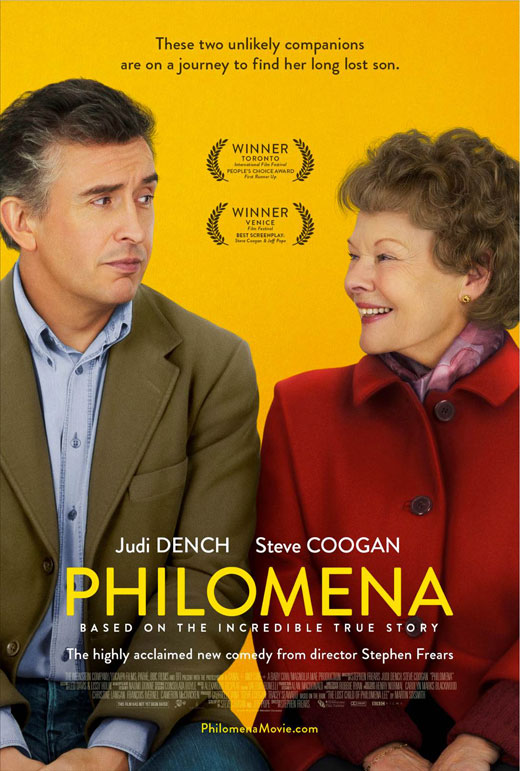
Philomena_posterI was watching The Daily Show with Jon Stewart recently, and Steve Coogan was on talking about the movie Philomena. I must admit that I had no real idea who he was. When I was talking at work about the fact that The Wife and I gave the movie two thumbs up after we had seen it a couple of weekends ago at the Spectrum Theatre in Albany, one of my colleagues said, “But doesn’t it star Steve Coogan?” After I confirmed this, she indicated that he always plays a real jerk in movies, particularly in some comedies I had never seen.

As “world-weary political journalist” Martin Sixsmith, Coogan’s character is more than a little arrogant as he lowers himself to investigate “the story of a woman’s search for her son, who was taken away from her decades ago after she became pregnant and was forced to live in a convent.” He finds the now-aging Philomena (Judi Dench) quite pedestrian. But during the journey to two continents, he develops a different relationship with her.

Coogan not only costars in the film, but he also co-wrote the screenplay with Jeff Pope, based on Sixsmith’s book, “The Lost Child of Philomena Lee,” after he happened upon an article about the true story. AND he is a producer of the film.

Ever since I saw the film, I’ve wanted to extol its praises, including the fact that the trailer does not give away too much. But the less you know, the better your viewing experience will be. I will say the second half of the touching film is even better than the first, Dench and Coogan are very fine, at under 100 minutes it is efficiently made, and that a late American President figures prominently in the narrative.

OK, since the Academy Awards nominations were announced – it’s up for Best Picture and Dench for Best Actress – there’s been a debate whether the Church gets a pass; that, I think, is not the film I saw.

Not in an upstate New York State of mind

I REALLY liked Madison, Wisconsin when I was there in 1988. Always appreciate the state’s progressive tradition.

LONG-time blogger Dustbury asks a question for this round of Ask Roger Anything:

If a purely arbitrary decision was handed down to the effect that you could no longer remain in upstate New York, where would you first consider going?


I’ve thought on this a lot, actually. It’s pretty much a process of elimination.

Not moving to anywhere there is no fresh water, so desert states such as Arizona, Nevada, and New Mexico are definitely out. California – well, is the big earthquake still coming?

I’d like to be out of direct range of hurricanes, which eliminates Florida, not that I wouldn’t have passed on it for other reasons; and the parts of the states on the Gulf coast and southern part of the Atlantic are unlikely.

Not Texas, because Texas is Texas.

I’m wary of being in tornado alley, which seems to encompass much of the center of the country from Oklahoma to Ohio.

Places I had considered before I’m now rethinking; I worry about Washington and Oregon after the Fukushima nuclear plant meltdown in Japan, maybe not enough to eliminate them, but it’s a factor. I wouldn’t pass on all the states along with the flood-prone Mississippi River, but any place that’s flooded in the last 15 years, I can imagine flooding again.

I hear the Deep South is more enlightened than it used to be; not sure I’d want to move there.

I REALLY liked Madison, Wisconsin when I was there in 1988. Always appreciate the state’s progressive tradition. Don’t love the current governor, though.

Do I want somewhere warmer? Certainly NOT colder, which eliminates Minnesota and Maine.

Ultimately, it would be either in a small college town or a larger college town with decent mass transit in New England, but probably not Connecticut, which often feels like suburbia. Rhode Island is a possibility. I’m fond of Northampton, Massachusetts.

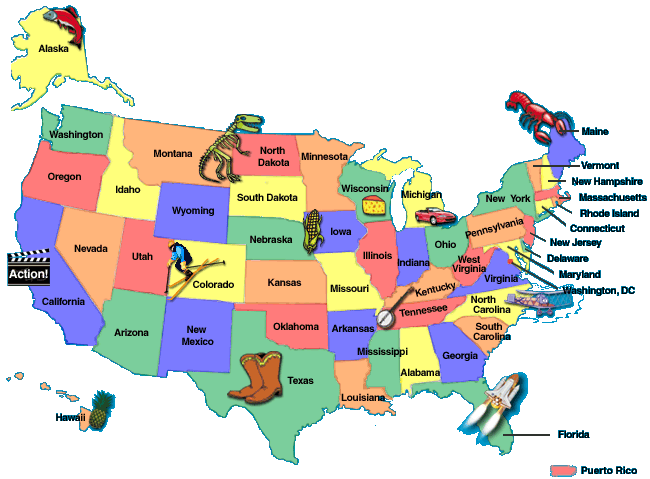
My pick, all things being equal, is southern Vermont. After all, Vermont was part of New York, before it was broken off to become the 14th state. Both New York and Vermont have a maple syrup tradition. And, in spite of damage from some recent hurricanes, both tend to be out of hurricane alley.

The bain of my existence: keys and locks…

That missing key chain also has my home rear door house key, the car key, the fob to get me onto the third floor of my work building, and, notably, apparently the remaining key to the shed.

Sunday, December 15, while we were cleaning off/digging out the car – we have on-street parking, and the snowplows know how to pack in vehicles – I gave my set of keys to The Daughter so that she could open the shed and get her snowboard. She says she gave the keys to The Wife, who doesn’t recall that action, but that is inconclusive. Regardless, I didn’t have any keys, except my spare key to the front door, and one other.

This was particularly annoying because I don’t really need help to lose my keys; I’m actually an expert at misplacing them on my own. I had to see here to know how I could rectify that habit. The one other “key” I did have isn’t really a key at all, but rather a swiper card to get into the rear door of my work building at Corporate (frickin’) Woods, or into the front after hours, when the security desk is closed. I had only recently rediscovered it, under my bed, after three or four months of it being MIA.

I’m not quite sure why we needed badges to get into my building. They had these signs throughout the floors that say, “Stop tailgating,” which means to avoid allowing someone behind you to get into the building on your swiper pass, but that’s PRECISELY how I had been getting in when I was still riding the bicycle into November and had to park it in the garage in the rear.

That missing key chain also has my home rear door house key, the car key (useful when we’re loading a car on a trip), the fob to get me onto the third floor of my work building (embarrassing to have to either wave at someone to get them to let me in or to call my office), and, notably, apparently the remaining key to the aforementioned shed (the Wife or the Daughter having misplaced the other.)

Finally, on Christmas Eve, I asked the administrator at work for another fob to get on the third floor. This was born of necessity. It seems inevitable that when I need to go to the bathroom on my floor, it’s being cleaned, which means I have to go down to the first floor facilities, requiring me to get someone to let me in again.

About an hour later, we got an e-mail notifying us that all the building entry cards would be deactivated and that we’d be getting new ones. In fact, the deactivation took place BEFORE the cards were distributed, so if you went out for a cigarette in mid-morning, you might not be able to get in the back door.

Of course, most people were on vacation Christmas Eve, so this necessitated our office people calling or e-mailing people at home to notify them of the change. The building people, realizing their amazingly lousy timing, came up with an inventive solution; keeping the back door UNLOCKED during business hours until January 2, 2014, thus defeating the purpose of the security system altogether. As it turns out, the unlocked doors, from 6 a.m. to 6 p.m. weekdays is the new policy, which pleases me no end.

I hate locks, and keys, and swiper entry cards, and swiper entry fobs…

Postscript: Got a call from the Bach branch of the Albany Public Library on Monday, December 27. Someone found my keys and turned them into that library because I had my daughter’s library card on my key chain. HAPPY.

Ramblin' with Roger
Social media & sharing icons powered by UltimatelySocial