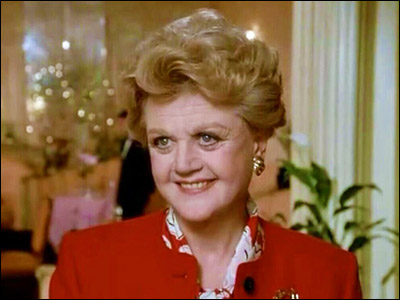
Angela Lansbury: stage, screen, TV icon

The Manchurian Candidate

When I was crashing at my parents’ house in Charlotte, NC, in the spring of 1977, I went to the downtown library to watch the 1944 version of the movie Gaslight. It starred Charles Boyer, Ingrid Bergman, and Joseph Cotten. In her film debut, 19-year-old Angela Lansbury, as the young maid Nancy, received a best-supporting actress Oscar nomination. (Some folks did not know the meaning of gaslighting in 2013.)

In 2018, my family went to the cinema to see Mary Poppins Returns. In her antepenultimate film, she had a cameo at the end as the Balloon Lady. Her final film appearance was Glass Onion: A Knives Out Mystery, in which she played Angela Lansbury.

Her greatest film role was as the mother of a would-be assassin in The Manchurian Candidate (1962). Casey Seiler of the Albany Times Union newspaper says she was “absolutely perfect” in “one of the few paranoid political thrillers that haven’t been outstripped by reality.” Here are just three minutes.

One of my favorite parts, though, is her voicing Mrs. Potts in Beauty and the Beast (1991). Here’s Tale As Old As Time.

She received an honorary Oscar in 2013 for her career as “an entertainment icon who has created some of cinema’s most memorable characters, inspiring generations of actors.”

Cabot Cove, Maine

Of course, the performer was best known as Jessica Fletcher, novelist and an amateur sleuth in Murder, She Wrote. She appeared for a dozen seasons (1984-1996) plus four TV movies between 1997 and 2003. She received an Emmy nomination for best actress in a drama series for every season, yet never won.

As The Hollywood Reporter noted, the program was “a huge ratings hit on Sunday nights following 60 Minutes. Both CBS shows appealed to intelligent, older viewers, and Lansbury was the rare woman in the history of television to carry her own series… ‘Nobody in this town watches Murder, She Wrote,’ Lansbury, referring to the TV industry, said in 1991. ‘Only the public watches.’

“The show was ranked in the top 13 in the Nielsen ratings (and as high as No. 4) on Sundays in its first 11 seasons but plummeted to No. 58 when CBS moved it to Thursdays in 1995-96 against NBC’s then-powerful lineup. The series finale, quite appropriately, was titled ‘Death by Demographics.'”

LA Times quotes her: “What appealed to me about Jessica Fletcher is that I could do what I do best and [play someone I have had] little chance to play — a sincere, down-to-earth woman. Mostly, I’ve played very spectacular bitches. Jessica has extreme sincerity, compassion, extraordinary intuition. I’m not like her. My imagination runs riot. I’m not a pragmatist. Jessica is.”

I freely admit to watching the program regularly. Maybe, as one critic noted, it was an opportunity to try to solve the crime with, or maybe before, the author.

Theater!

As the Los Angeles Times noted, “It was her deep roots in the theater, and the many Tony Awards that followed that won the hearts of theatergoers and critics, who were often rhapsodic in their praise…

“Critic Rex Reed declared that she brought ‘the Broadway stage about as close to an MGM musical as the Broadway stage is likely to get,’ according to the 1996 biography ‘Angela Lansbury.’

“Her charismatic performance as the eccentric title character in a 1966 production of Mame vaulted her to Broadway superstardom and resulted in the first of her four Tonys for best actress in a musical.

“At 83, she tied the record for most Tony Awards won for acting when she received a fifth for portraying a medium in the 2009 revival of ‘Blithe Spirit. (Audra McDonald set a new record in 2014 when she won her sixth.)”

I saw the TV movie Sweeney Todd: The Demon Barber of Fleet Street in 1982, which was quite compelling. Her Broadway performances were undoubtedly even greater.

Here are Hollywood notables paying tribute to Angela Lansbury, plus A Critic’s Appreciation by David Rooney.
Electric Light Orchestra and the Beatles

a reasonable choice

Electric Light OrchestraFor my next answer to Ask Roger Anything, our contestant once again is Kelly Sedinger, the fine Buffalo-area blogger at ForgottenStars.net.
I read somewhere that ELO did the kind of music that The Beatles WOULD have done had they remained together into the 70s. Agree? Disagree? (I’m not really equipped to assess the claim, but it kind of feels right to me, at least in part.)

First, I have to note that you wouldn’t have gotten this question from Kelly two decades ago because he wasn’t a fan of the Beatles at all and likely was unfamiliar with the Electric Light Orchestra. For some reason, I remember what I believe was his first Beatles song of the week, Don’t Let Me Down, a B-side.

In  2010, I asked him: “OK. How the heck could you dislike the entire oeuvre of The Beatles for so long? I can see if one doesn’t like the more avant-garde stuff or thought the early material wasn’t as good as the later tunes. But to reject the whole eclectic eight years? And how did you finally become enlightened?”

His reply: “The flip answer is, ‘Tastes change.’ The more serious answer is… ‘Tastes change.'”

Me? Obsessing?

Anyway, I started obsessing with this. I found a list of bands with three or more songwriters. Eh. The Band, the Eagles. Nah, not the right vibe.

Reddit has a list of Beatlesque bands, but of a later period. The only one I even considered was the Christine McVie/Buckingham/Nicks version of Fleetwood Mac, which is unrecognizable from the Peter Green Days. Heck, they even have their own white album, Tusk.

I thought the snake-bitten band Badfinger could have been it. The group was on Apple Records; their first hit, Come and Get It, was written by Paul McCartney. Day After Day has a lovely guitar line by George Harrison. And No Matter What is definitely of the Beatles genre.

I began fixating on When The Beatles Hit America by John Wesley Harding, the very strange song in which “John, Paul, George and Ringo are going to be reforming as The Beatles in 1993.” Which was, of course, impossible.

But it has this section, “And for anyone who didn’t realize or know, it sounded a lot like ELO, or ELP, or XTC, ABC, YMO, BTO. But it didn’t sound much like P.S., I Love You.”

The candidates

Well, not much like Emerson, Lake, and Palmer, though the Billy Preston organ, especially on I Want You (She’s So Heavy), is very nice. Bachman- Turner Overdrive? Not really.

ABC is an interesting consideration. Wikipedia notes, “Their early-1980s success in the US saw them associated with the Second British Invasion.”

Yellow Magic Orchestra, I’ll admit I don’t know musically. It’s a “Japanese electronic music band formed in Tokyo in 1978… The group is considered influential and innovative in the field of popular electronic music… and effectively anticipated the “electropop boom” of the 1980s. They are credited with playing a key role in the development of several electronic genres, including synthpop, J-pop, electro, and techno while exploring subversive sociopolitical themes throughout their career.”

XTC was actually the band I first considered. “The band gained popularity during the rise of punk and new wave in the 1970s, later playing in a variety of styles that ranged from angular guitar riffs to elaborately arranged pop.” Eclectic, like the Beatles.

And, in the end

But Electric Light Orchestra is a reasonable choice. The group formed in 1970, the year the Beatles officially broke up. They were more commercially successful than many of the other candidates, selling “over 50 million records worldwide, making them one of the best-selling music groups of all time.” They made it into the Rock and Roll Hall of Fame.

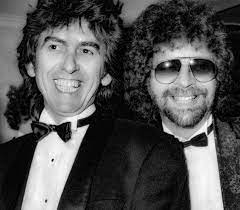
John Lennon remarked that ELO were the “Sons of the Beatles.” George and Ringo played with ELO. Jeff Lynne played with Paul McCartney. And of course, Jeff shows up in the Traveling Wilburys with George and produced an album of his and the 1995 Beatles songs. This is a bit ironic because “In an article from the 1970s, when the writer described an ELO song coming on the radio, [George] said, almost dismissively, ‘Sounds like the Beatles.'”

Check out the 2008 article in The Guardian. ELO: The band the Beatles could have been. “Critics called them ‘dull’ and laughed at the spaceships. Did they not realise Jeff Lynne was a songwriter to rival Lennon and McCartney?” And Lynne visited the Abbey Road studios while the Beatles worked on the white album.

So, sure, ELO can claim the title. How are Jeff Lynne, ELO, and The Beatles connected?

What’s your favorite vacation?

two Olin reunions

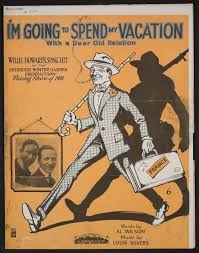
vacationThat Greg Burgas, the scoundrel, asked What’s your favorite vacation?

Overthinking this, as usual, I don’t recall any vacations growing up. Oh, we would go camping, which I hated, and we might see some attractions. Day trips to Eldridge Park in Elmira, NY; Catskill (NY) Game Farm et al. Maybe the trip I took with dad to Lake George, NY was a vacation, though it was only a few days.

My family visited NYC several times, but it was partly to see my mom’s cousins. Going to the Empire State Building, Coney Island, or Jones Beach was a secondary consideration. Likewise, trips with my wife’s family to Massachusetts didn’t usually feel like vacay, mostly because it was often logistically or interpersonally… complicated. However, the trip to Newport, RI, in 2012 was far less stressful far than most.

My wife and I did take a trip to Maine, New Hampshire, and Vermont at some point before the daughter was born; THAT was a vacation, as was the trip to Maine in 2003. My favorite was my trip to Portland, ME, with my soon-to-be wife in March 1999, when we got snowed in for a couple of days. And even the three of us going to Yorktown in 2008.

V-a-c-a-tion

But when I think of vacations, I think of three trips, or maybe four. There’s the one in 1998, which I wrote about while attempting to write about my 2011 vacation.

2011: the Olin international reunion in Peterborough, ON, Canada. We stopped at Niagara Falls (more ); Toronto  (moremoremore);  eating in Canada; reunion; Canton, NY

2016:the Olin international reunion in Ashtabula, OH.  Corning (NY) Museum of Glass; Seneca Nation; Lucy-Desi Museum; Pro Football Hall of Fame; First Ladies National Historic Site; Rock And Roll Hall of Fame (more); reunion; traffic; Letchworth State Park. There was more, but I didn’t write about it until the following year.

Closer to Albany, NY, than San Diego

The fourth is our honeymoon in Barbados in May 1999. Considering it’s the only time I’ve ever been anywhere besides the US, Canada, and Mexico, I’ve written relatively little about it, in part because it predated this blog.

Truth to tell, it was just grand to go to any all-inclusive resort for six nights, especially as a prize for coming in second on JEOPARDY on my second episode. But arranging for the trip was terribly complicated, and it makes sense that the show has since opted for cash prizes for second and third place.

The ocean was gorgeous. My wife went snorkeling, but I opted out. There were three different places to eat dinner, and the food was fabulous. We bought a rum cake to take home; it was extraordinarily delicious. We enjoyed having tea at 4 p.m.

Everything was interesting to us, from the way the news was far more international to the wall-to-wall coverage of cricket. I must say that the cab ride from the airport to the resort was a white-knuckle affair, and there was a fatal automobile accident that very afternoon we arrived.

When we returned to the States, we needed to pay $13 apiece for the privilege. (If we didn’t have it, would that mean we could stay forever?) Somehow, we were bumped to first class on the five-hour flight home. Customs at the JFK airport, though, was chaotic, with the queue somehow turned into a figure eight.

The Great Dying in the Americas after 1492

Unbound

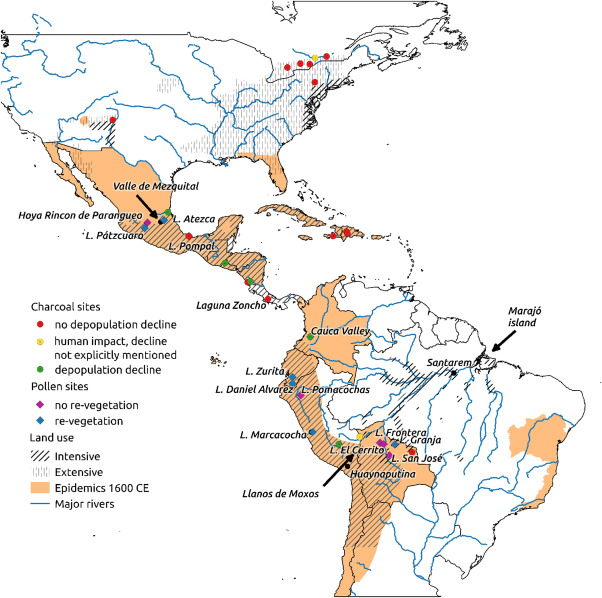
Great DyingI had heard of the Great Dying in the Americas after 1492. Still, it was a shocking headline in my newsfeed. 56 MILLION. This is the “estimated number of Indigenous Americans killed by violence, famine, and disease due to European colonization from 1492 to 1600. That’s a 90% drop in the Indigenous population – a decline so rapid it caused the earth’s temperature to cool.”.
“We know the story. Or, at least, we think we do: In 1621, a shared feast between Pilgrims and Indigenous Americans in Massachusetts to give thanks for the harvest and survival of Plymouth colonists created a 400-year tradition Americans mark annually.

“Most of us know that tale is, in large measure, a lie

“That story exists in part to obfuscate the quite bloody reality of how the nation was actually claimed by the colonists who arrived here,” said Julian Brave NoiseCat, a journalist, activist, and advisory board member for The Emancipator.”

When facts such as these are shared, I hear so many non-Indigenous people complain, “Why are they ruining the best holiday?” I understand. Hey, I grew up with the myth as well. It was such an affirming, positive story that one wanted it to be true.

Instead

“So how do Indigenous people in America mark Thanksgiving? The ways are as diverse and complex as the communities themselves. They do mourn the atrocities their ancestors suffered. But Indigenous culture is also firmly rooted in the tradition of giving thanks. They find a way to do both.

“One of NoiseCat’s traditions is attending Sunrise Ceremonies at Alcatraz Island, the Indigenous land that became the now-shuttered prison, to commemorate a 19-month occupation that began in 1969. Bay Area Native American activists sought to reclaim the island under the terms of a 19th-century treaty.”

The article is from Unbound, a newsletter from The Emancipator, published by the Boston Globe. In each issue, “Kimberly Atkins Stohr, senior columnist for The Emancipator and The Boston Globe, explores past to present-day themes centered on antiracism and democracy.” She examines “some of the most urgent conversations on racial justice infused with context, news, and perspective.

The statistical citation is from Quarternary Science Reviews’ 2019 study Earth system impacts of the European arrival and Great Dying in the Americas after 1492 by Alexander Koch, Chris Brierley, Mark M. Maslin and Simon L. Lewis. You can hear Koch on the Last Born In The Wilderness podcast.

Favorite topics: history, books, movies, music

100 $100 bills;

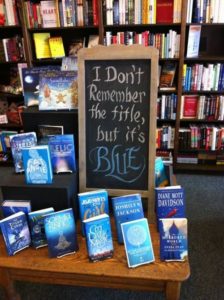
blue booksAnother Sunday Stealing meme. This one concerns some of my favorite topics: history, books, movies, and music.

What period of history is your favorite to read about?

“Favorite” may be stretching it, but it’s the period in American history between the end of the Civil War (1865) and the beginning of the Civil Rights era of the mid-20th Century.

Reconstruction included several black legislators; Jim Crow, which largely undid the progress; the “scientific” rationalization of bigotry; the Red Summer of 1919; the civil rights leaders who were ahead of the curve.

Tomes

What is your favorite genre of fiction?

I like fiction rooted in real events. The only Stephen King book I ever read was 11/22/63.

Do you choose a book by its cover?

Sometimes. Or at least the book jacket. Does this tell me something I didn’t know AND want to find out? Incidentally, it is true: some librarians DO refer to books by their color. “Can you get me that tall green book, please?”

Where do you do most of your reading?

On the sofa, near an end so that I can put one arm up.

Without looking, guess how many books are in your TBR pile. Now, look. Were you right?

Hundreds. Yup, hundreds.

Films

How many movies are on your TBW list?

That’s quite a different calculation. There are tons of movies on various platforms that make the enumeration of the same to be quite impossible. Now, if you’re talking about movies I have on DVD that I have not watched, maybe a half dozen. But I also have lots of unwatched TV episodes and the like.

What’s your favorite genre of movie?

Quite possibly the documentary. Beyond that, comedy.

Do you still go to see movies in the theater?

Yes, but it’s much more difficult. Albany County is currently COVID-red, so my wife is reluctant to go, even though we both got COVID in August.

Moreover, I got out of the routine. When I went regularly, there were a lot of trailers that helped me decide whether or not to see that film in the future. Now, I know there are trailers online, but 1) there are so many that I don’t have the time, and 2) trailers on a computer are not the same dynamically as trailers in a cinema.

BTW, I dislike seeing movies on a computer screen, though I’ve seen several since March 2020. I’m trying to decide if I should get Roku or a newer, larger television set.

Money

You have $10,000 and no strings or obligations for one full day. Where do you go, and what do you do?

Let’s further assume I can’t give it away to a charity, a political campaign, or to random strangers (100 $100 bills; it DOES appeal to me). It can’t be something practical. The one-day limit is a hassle. What I’d LIKE to do is buy out a large theater with at least a 500-person capacity and show a movie that people might want to see on the big screen, such as The Wizard of Oz or Casablanca. But I don’t know if I could pull it off logistically.

Tunes

How many songs are on your favorite playlist?

About 3,753. I don’t know that I have a favorite playlist. The idea of hearing the same songs more than a dozen times a year is alien to me.

What method do you use to listen to music (Spotify, iTunes, Pandora…)?

I play compact discs. In fact, I’m playing the Psychedelic Soul album by The Temptations as I write this. Before that, I listened to Lyle Lovett, Rebecca Jade, Paul Simon, Tom Petty, Weird Al Yankovic, The Beatles, and Television’s Greatest Hits (TV theme songs).

I do have songs on Amazon, but that’s my fallback position.

Ramblin' with Roger
Social media & sharing icons powered by UltimatelySocial